Santa Fe in Spring
Emilee and I had some errands to run in Albuquerque and Santa Fe this week so we extended our stay through the weekend around Santa Fe. Santa Fe is pretty high elevation at around 7200’ and the Santa Fe mountains provide some more montane habitats that are not common throughout the state. Plus, the food around town is phenomenal!
On Saturday we visited the Randall Davey Audubon Center on Canyon Road. This Audubon Center is situated on the far East side of town past all of the Canyon Road galleries right on the Santa Fe River (very small - by most standards a creek). We had birded here once or twice before, and there is a good feeder setup and trail network that makes for a fun outing.
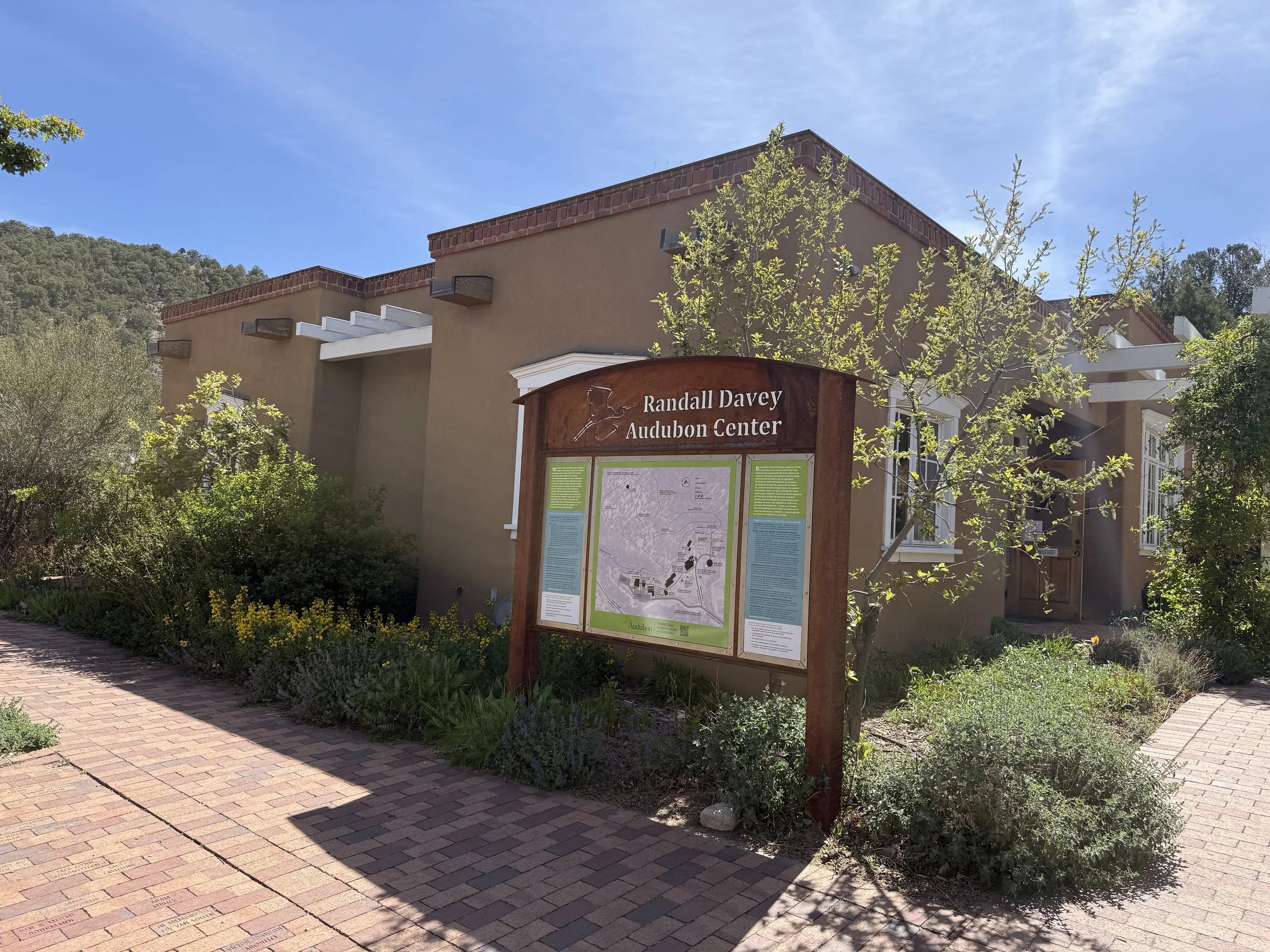
The Randall Davey Audubon Center
The bulk of the trails spread across a pinyon - juniper hillside that is a habitat we know well, as it is probably the most common habitat around Cortez. With our decently early start, many birds were singing from all around. We heard birds from the riparian section along the Santa Fe River and also from throughout the p/j. We were excited to hear the scratchy song of Black-throated Gray Warblers. These warblers breed in this habitat and have only recently arrived from their wintering grounds. We also heard a loud song coming from a Pinyon Pine but we could not quite place it. Then, out popped this Juniper Titmouse! This bird sings such a varied song that even though we hear it year-round, we were not sure who was singing until we got eyes on it!
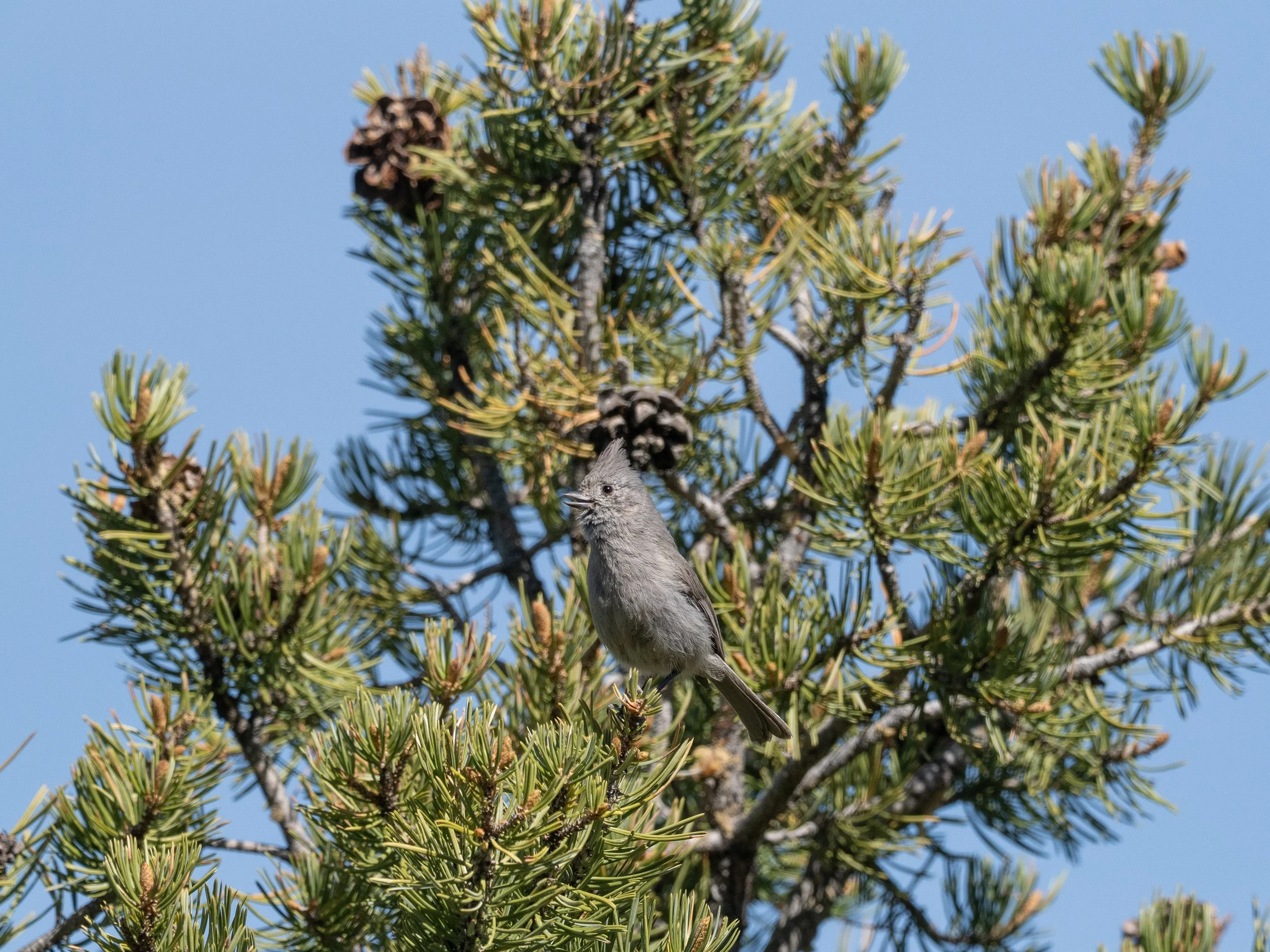
This drab gray coloration is shared by a few of the pinyon / juniper specialists (Gray Vireo, Gray Flycatcher, and also some more generalist birds like Bushtits who live in this habitat). Juniper Titmouse is by far the best singer of the bunch.
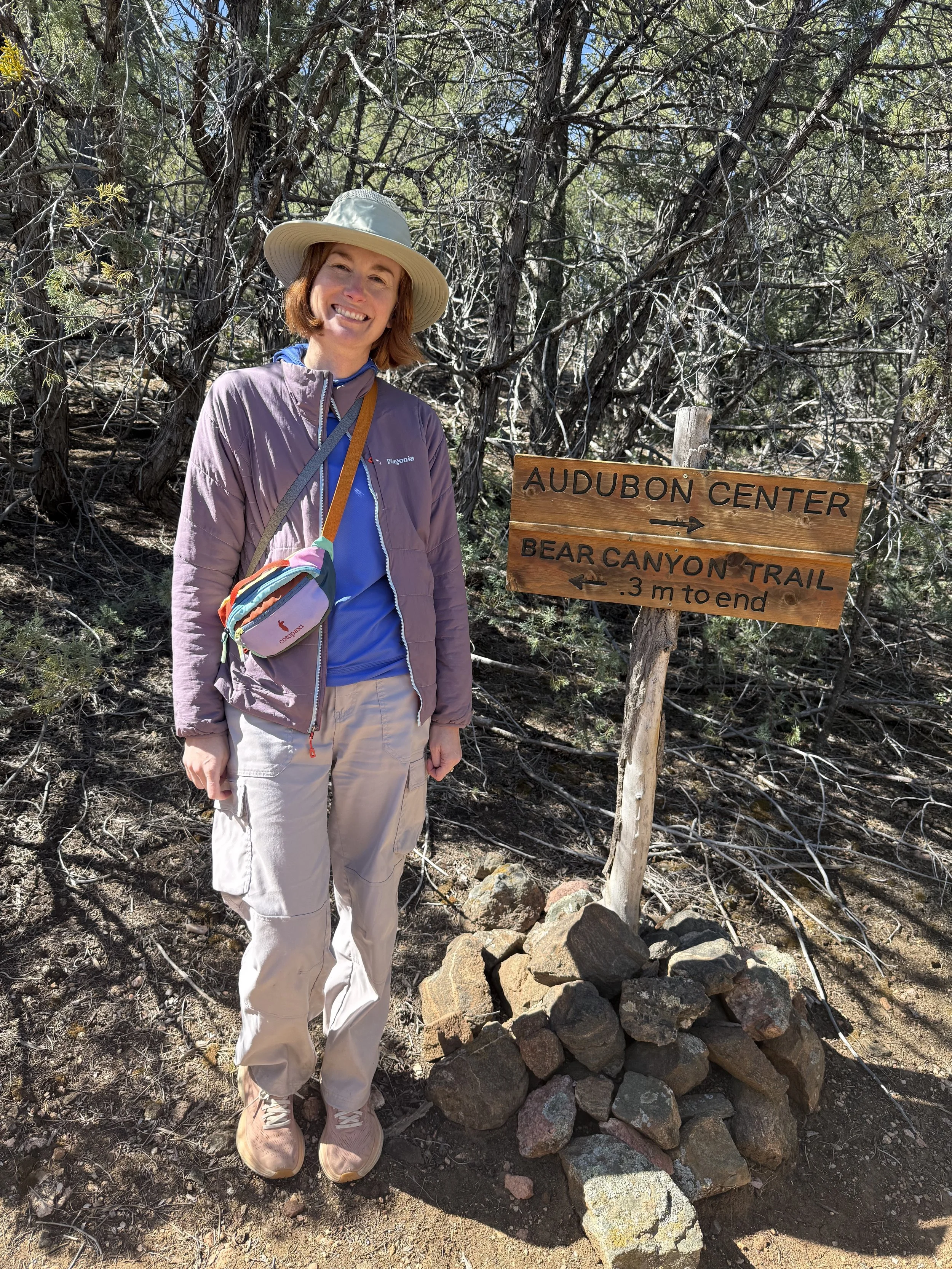
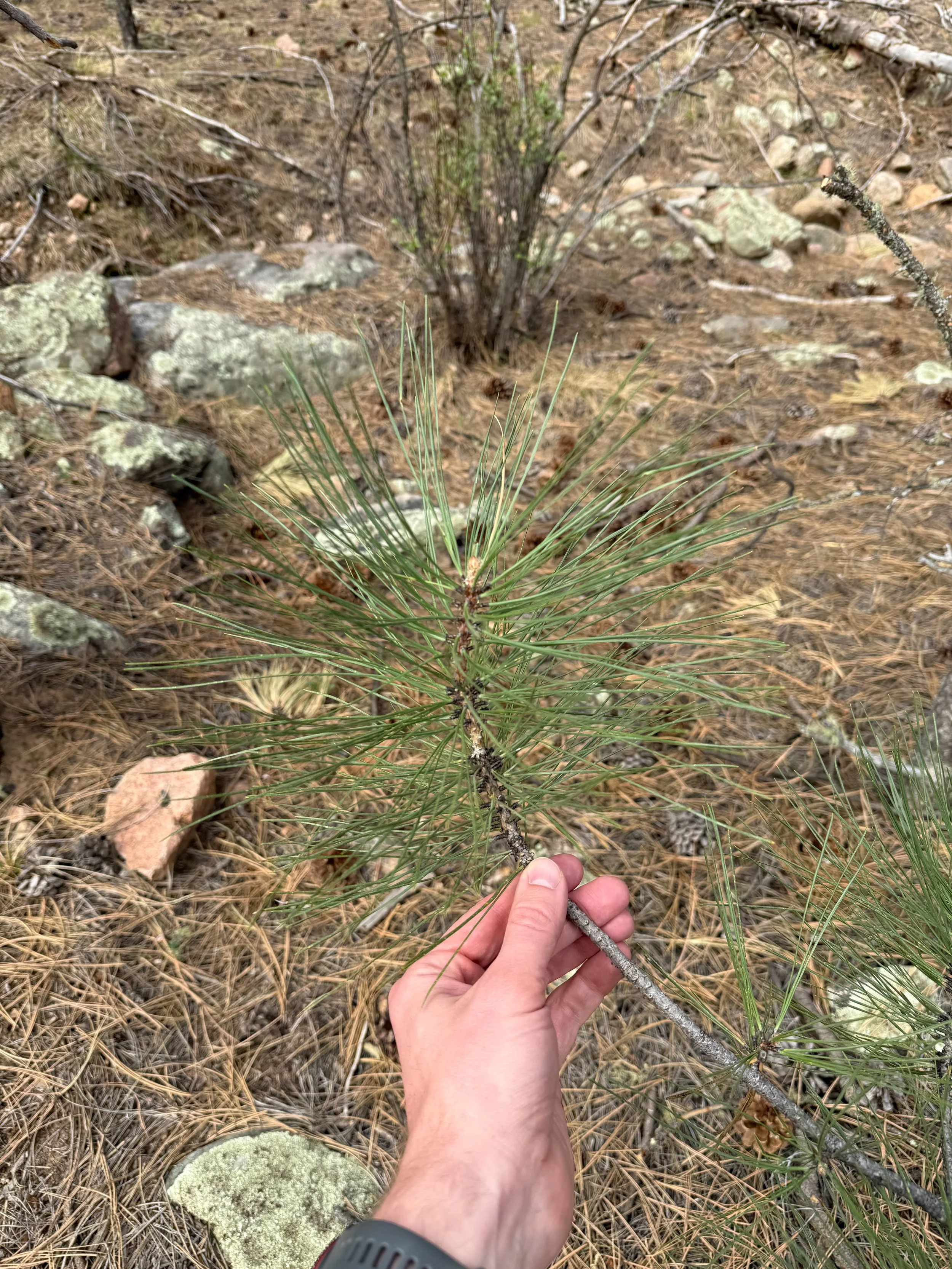
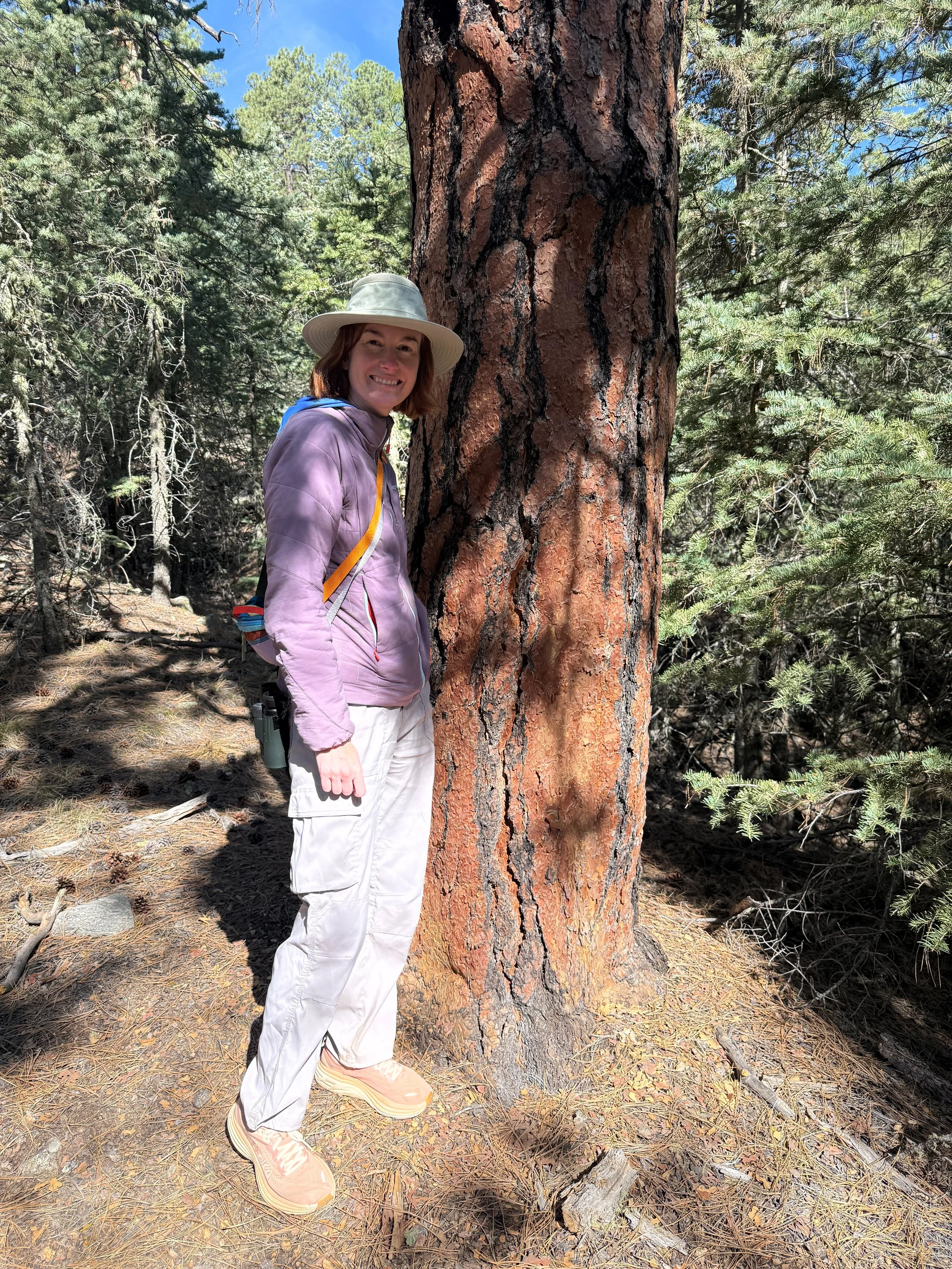
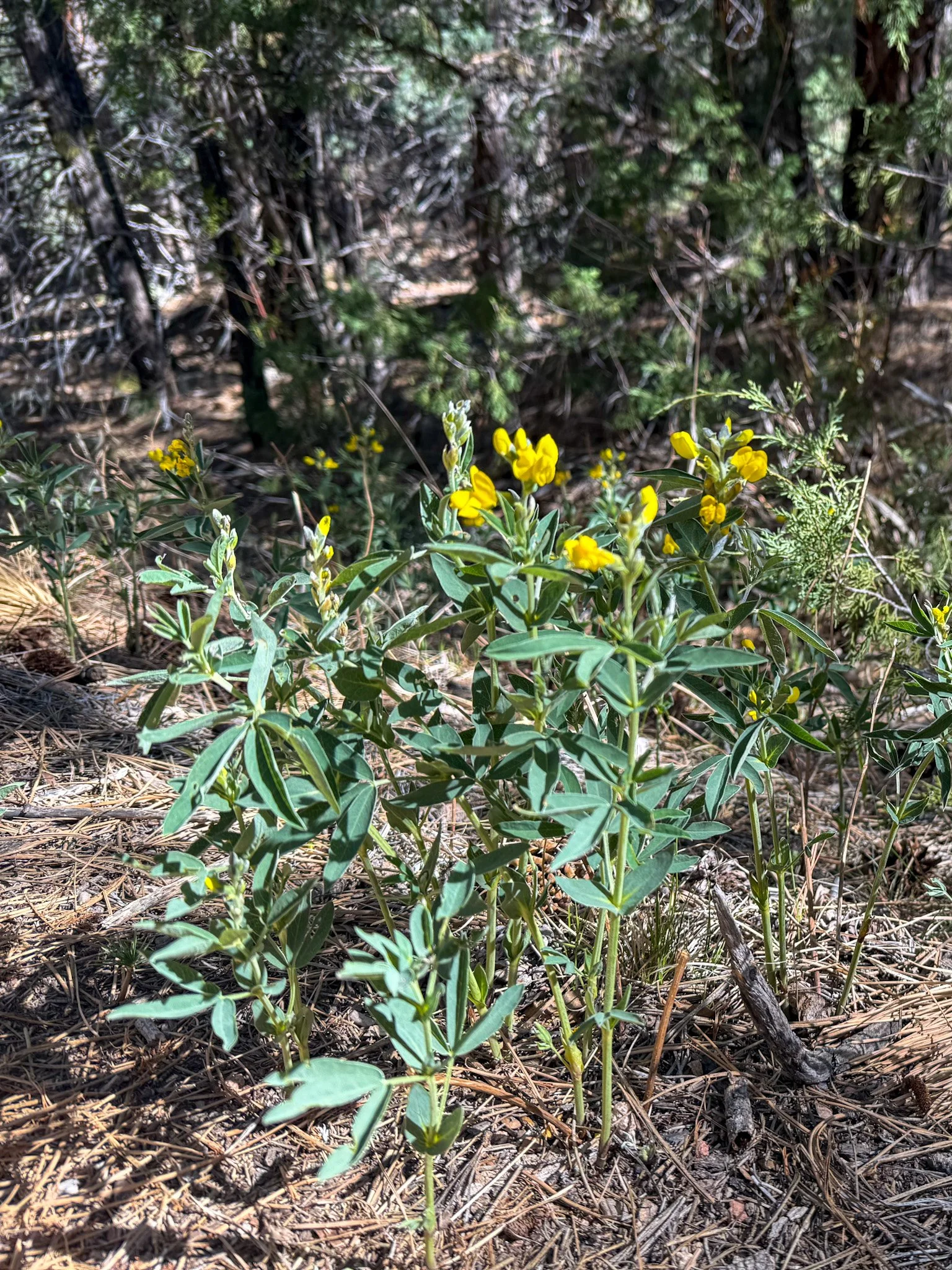
We made our way up to the higher elevations of the Bear Canyon Trail, where the cooler, wetter interior reaches of the canyon support a strip of Ponderosa forest. These pines are much taller than the pinyon pines, and have much longer needles. The older trees have a strong reddish cast to their bark that really stands out in the forest. We also encountered some patches of mountain gold bean, a pretty yellow flower.
This forest type supports some different birds - periodically we heard an eruption of pips, squeaks and chips emitted by a roving flock of Pygmy Nuthatches, a representative ponderosa forest bird. We also heard the song of quite a few Grace’s Warblers, a ponderosa obligate species that is heard much more often than seen due to its small size, and its foraging habit way up among the long ponderosa needles.
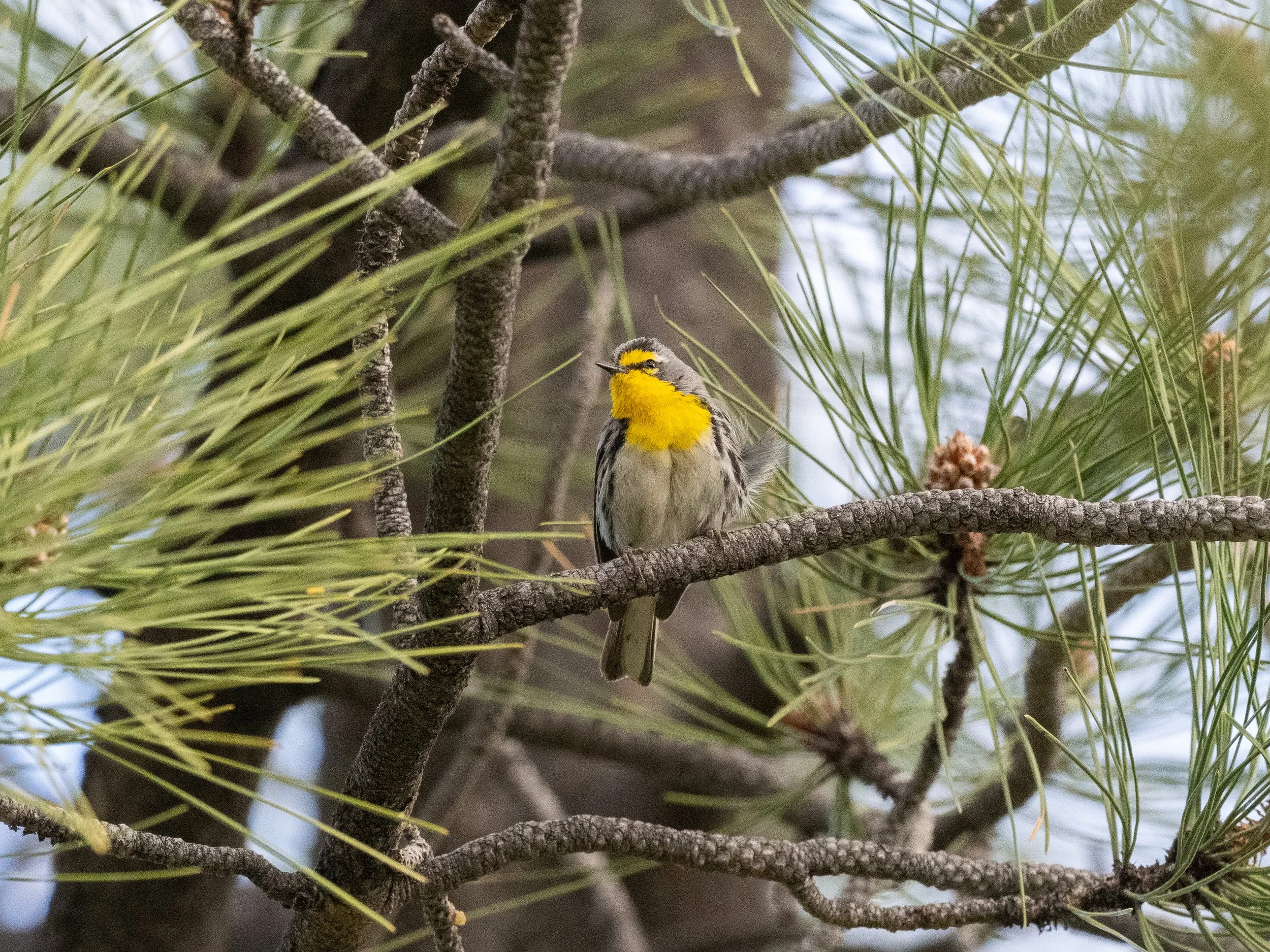
We had luck on our side as this Grace’s Warbler plopped down onto this low branch of a ponderosa pine just a few yards off the trail!
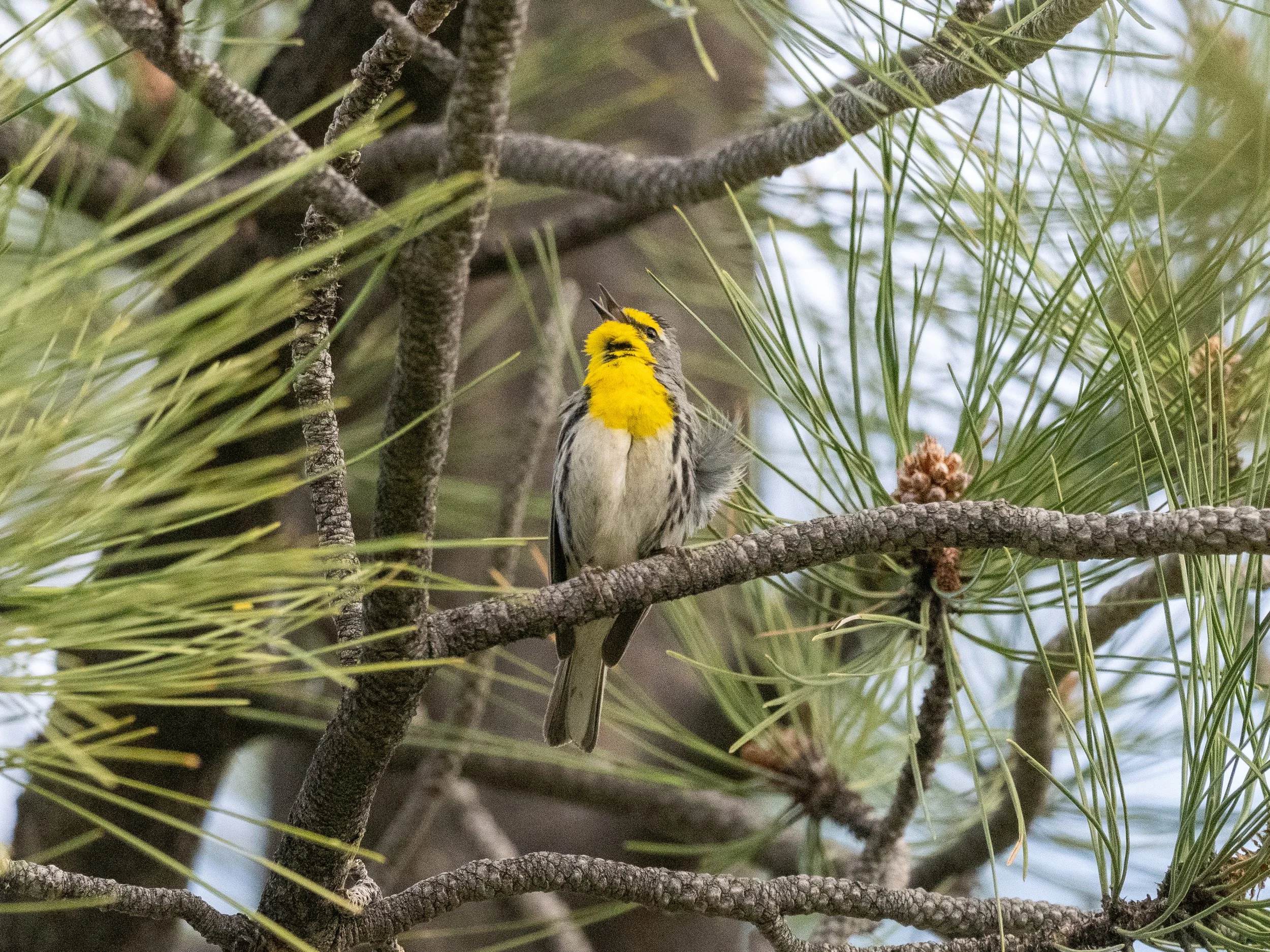
We got to observe it at close range as it sang its heart out. Even though we would hear this song throughout the rest of our hike, this was the only bird we saw of about 10 we reported.
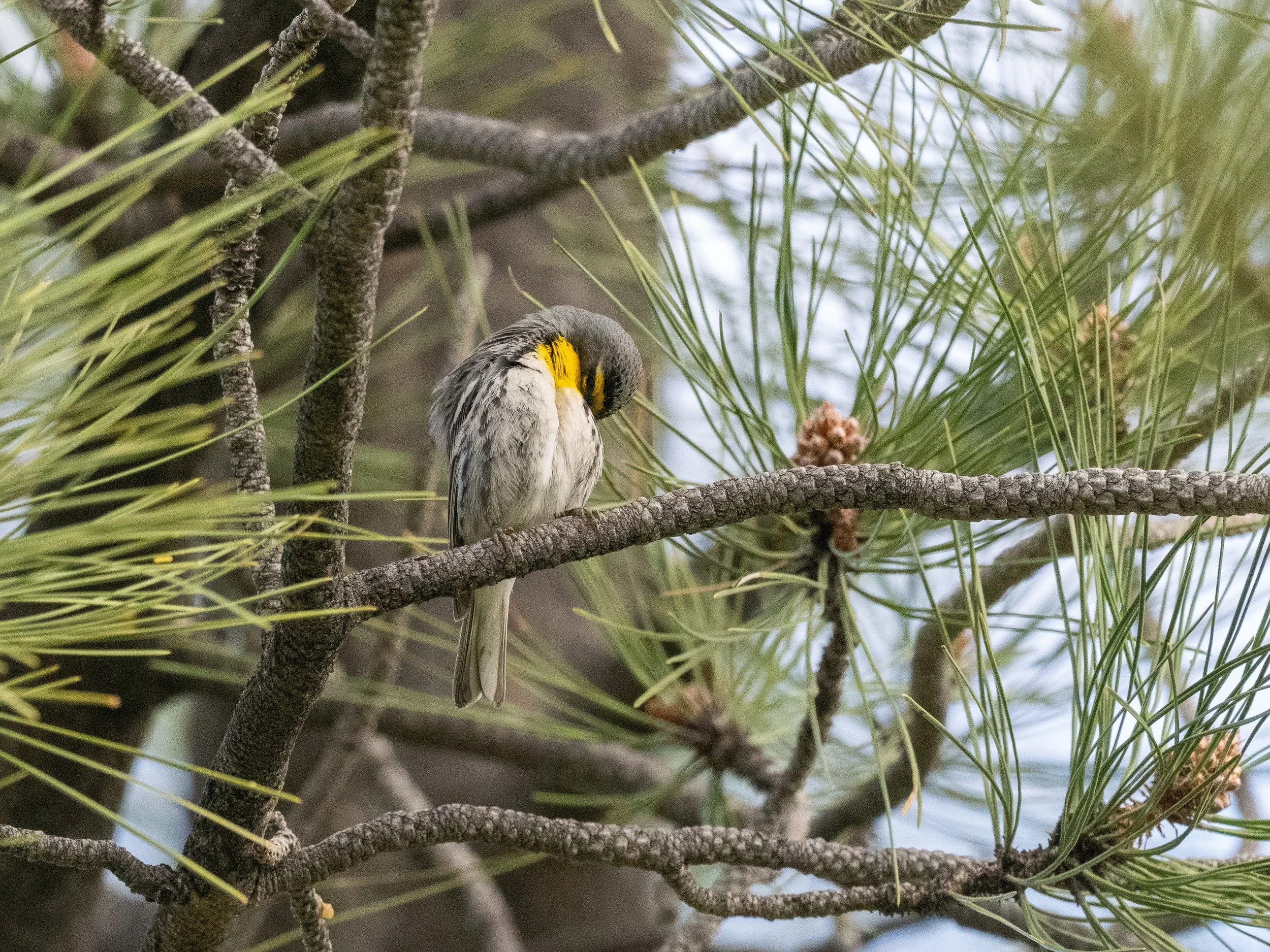
We even watched it preen away that pesky stray feather on its left flank
On our way back down through the pinyon / juniper forest a flash of color caught Emilee’s attention. “A butterfly!” Our luck continued, as the butterfly touched down on a juniper just ahead for closer inspection. It was an Arizona Sister - my favorite butterfly!
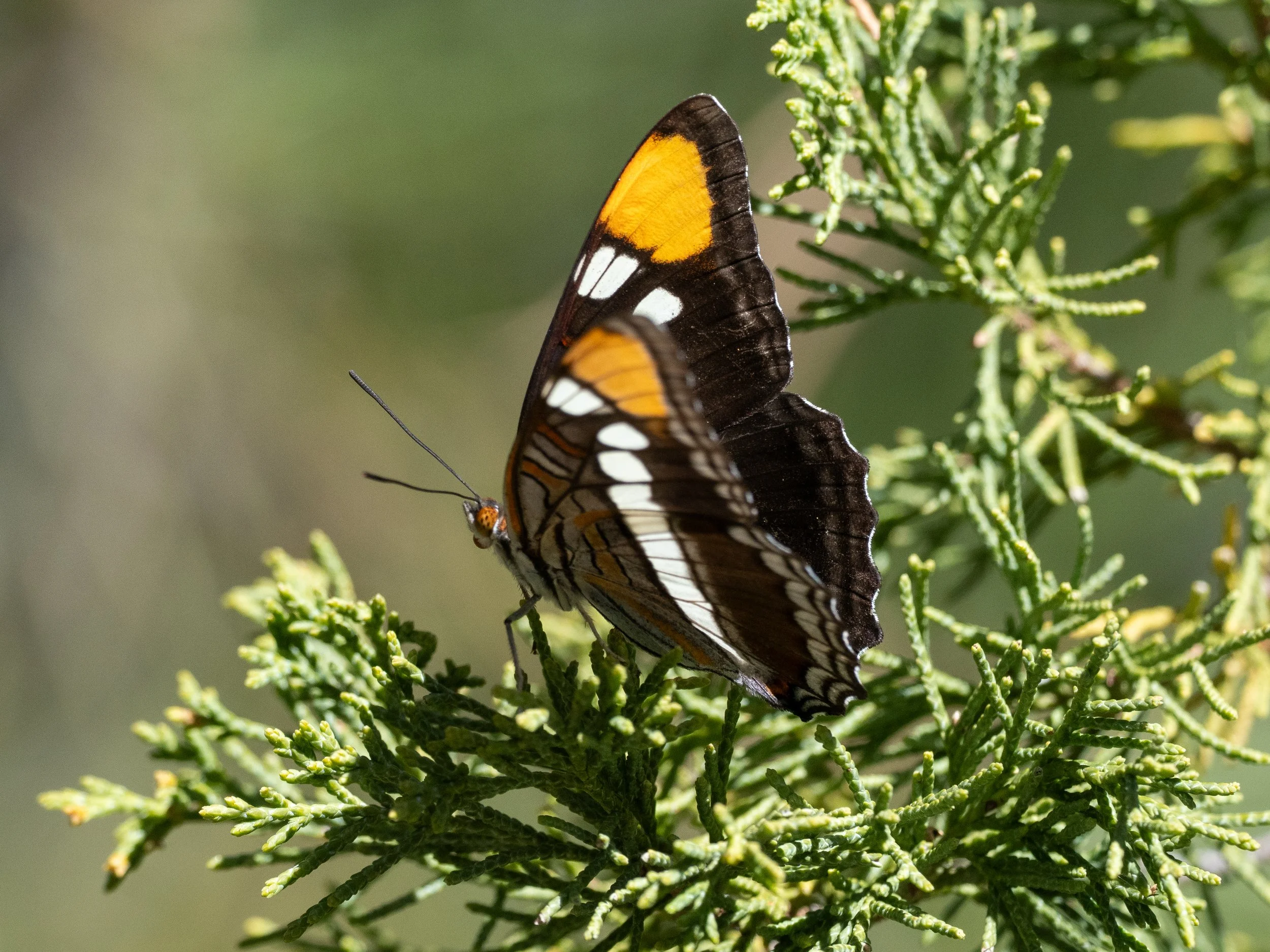
What a stunner!
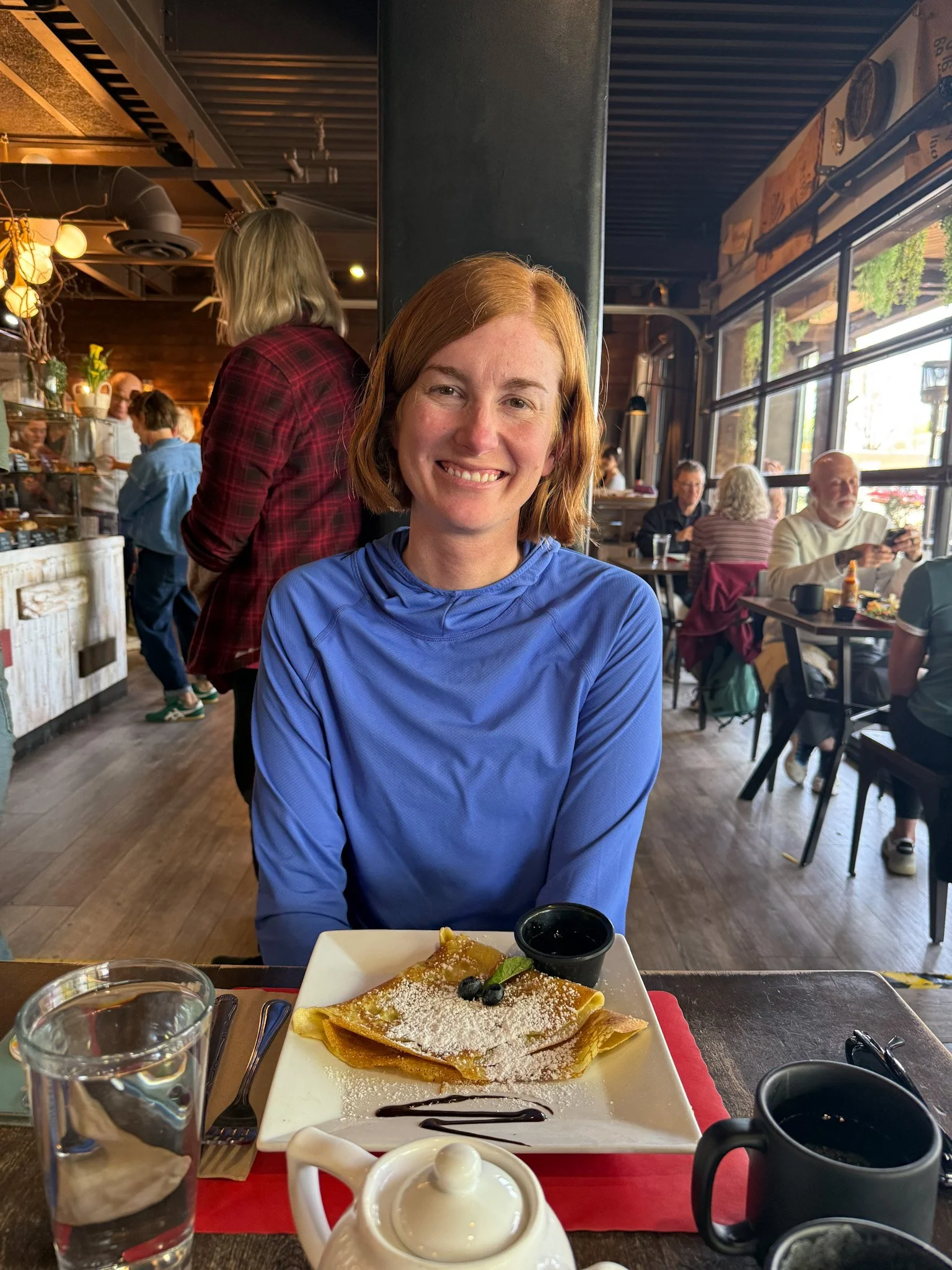
From there we hiked back to the parking area, took in the feeder birds, and then made our way to Clafoutis, a French pastry shop in Santa Fe. I enjoyed my Rosinenschnecke (German for “raisin snail”) or less excitingly raisin roll as it was called here, and Emilee enjoyed her crepe as well.
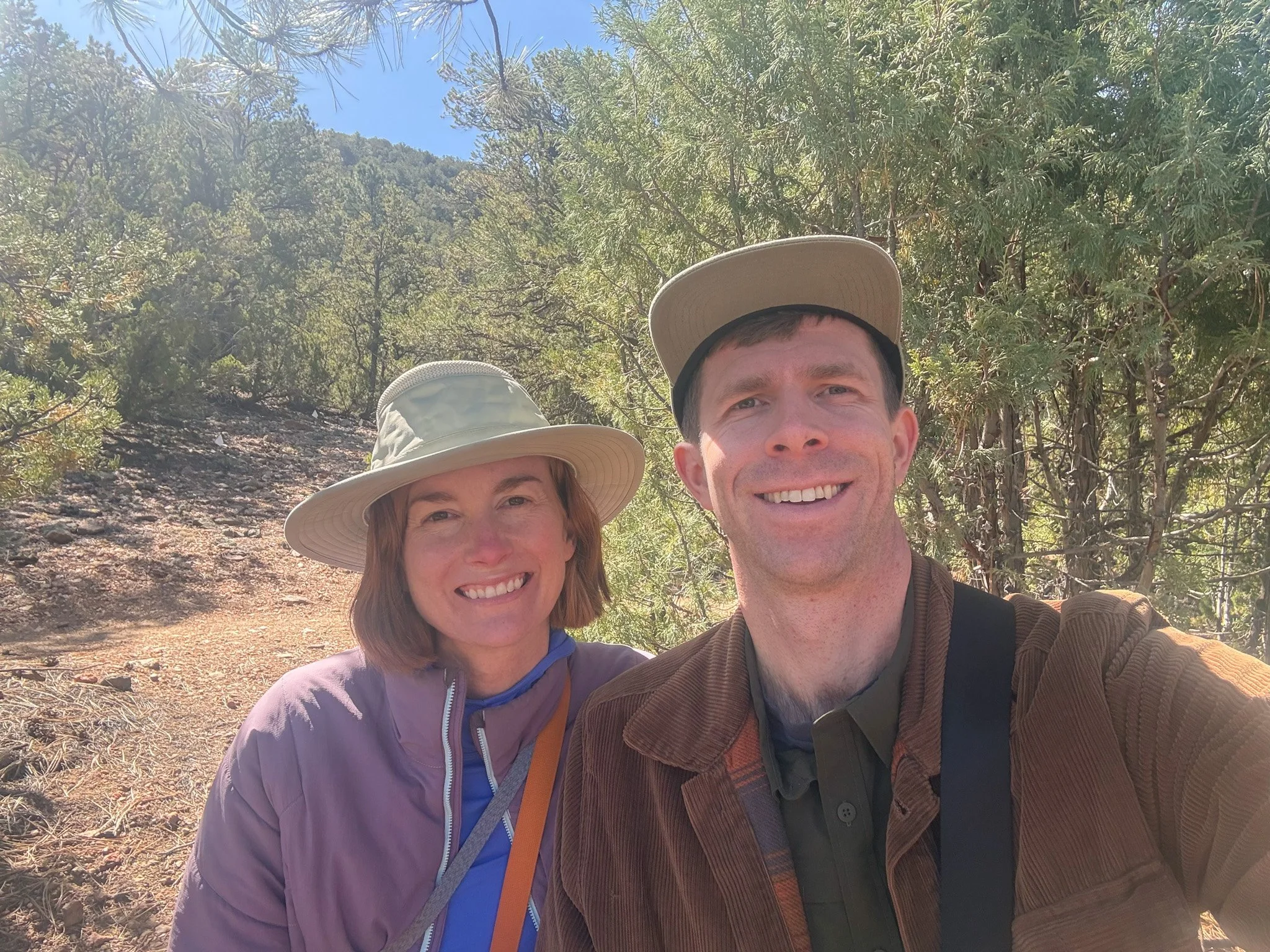

Sunday morning we had another forest hike picked out, this time a little higher up - the Borrego Trail in the Santa Fe National Forest on the road up to the Santa Fe Ski Area. The difference in elevation meant we had aspen stands, and mostly fur and spruce pines. Where the forest opened up, or where the trail got out of the canyon, we had more ponderosa trees which was a fun inversion of sorts to how the ponderosa was centered in the deeper canyon the day before at lower elevation. We had many patches of red columbines and clematis flowers along the trail, and Emilee took the camera for a stretch to do some flower photography.
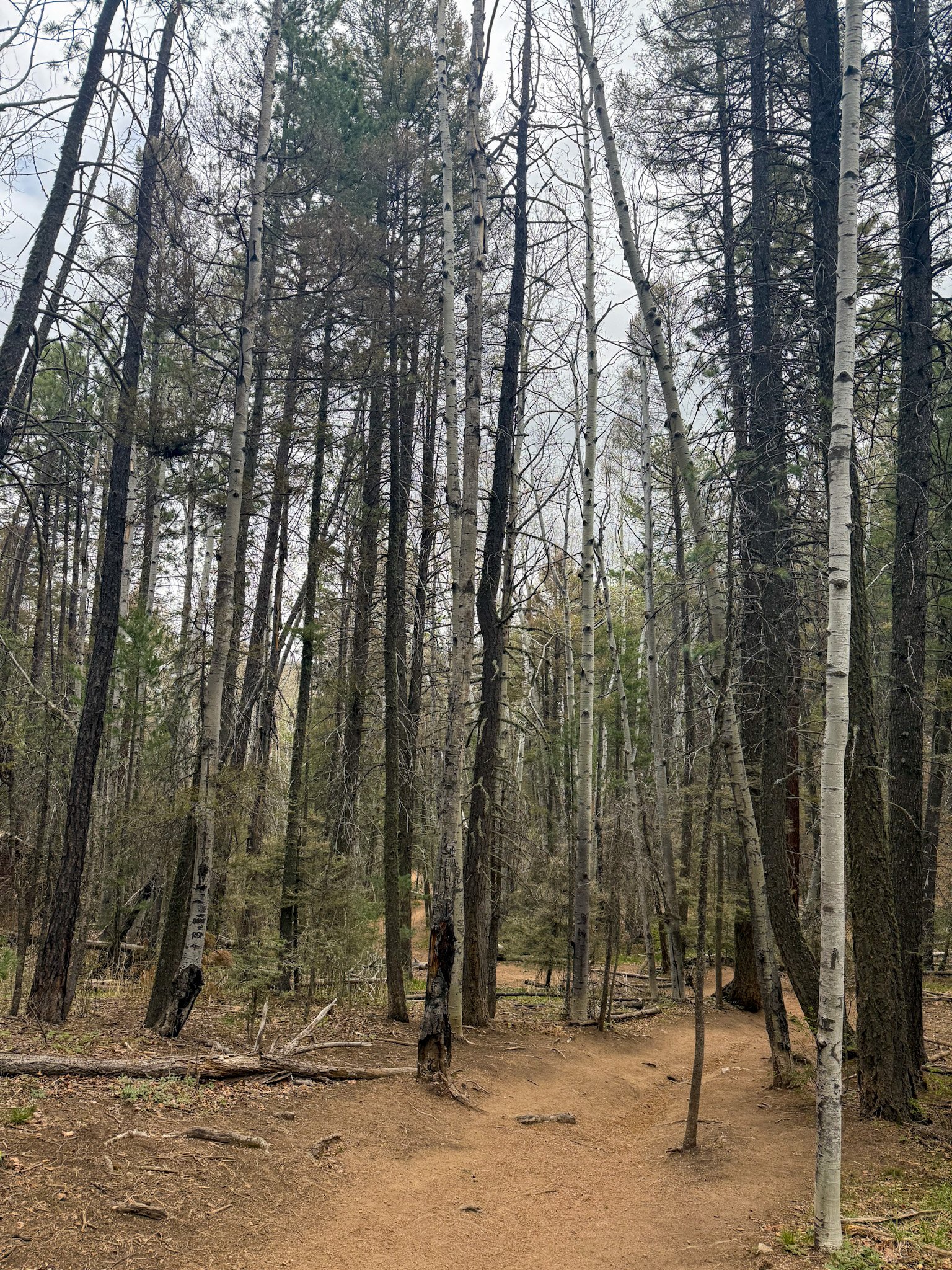
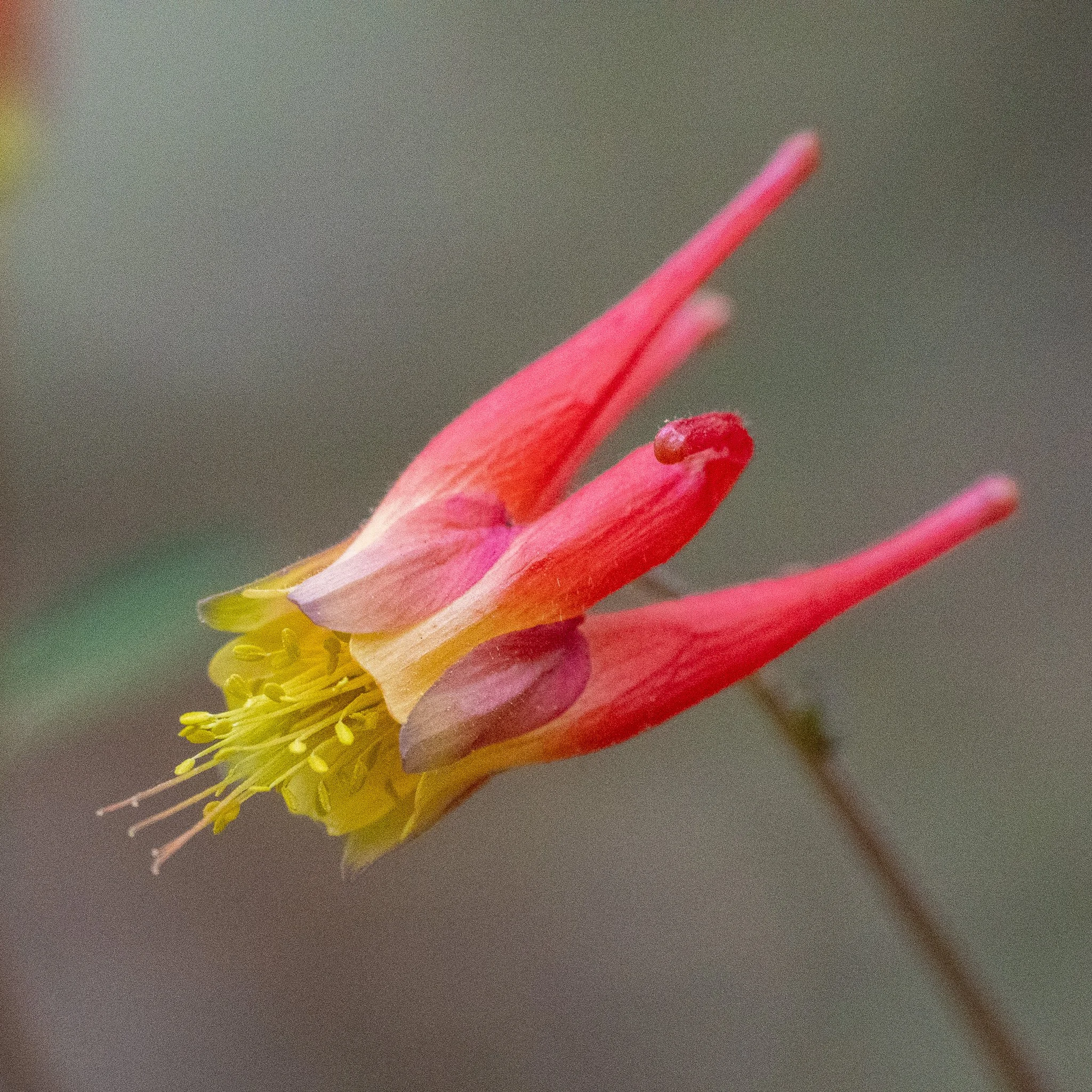
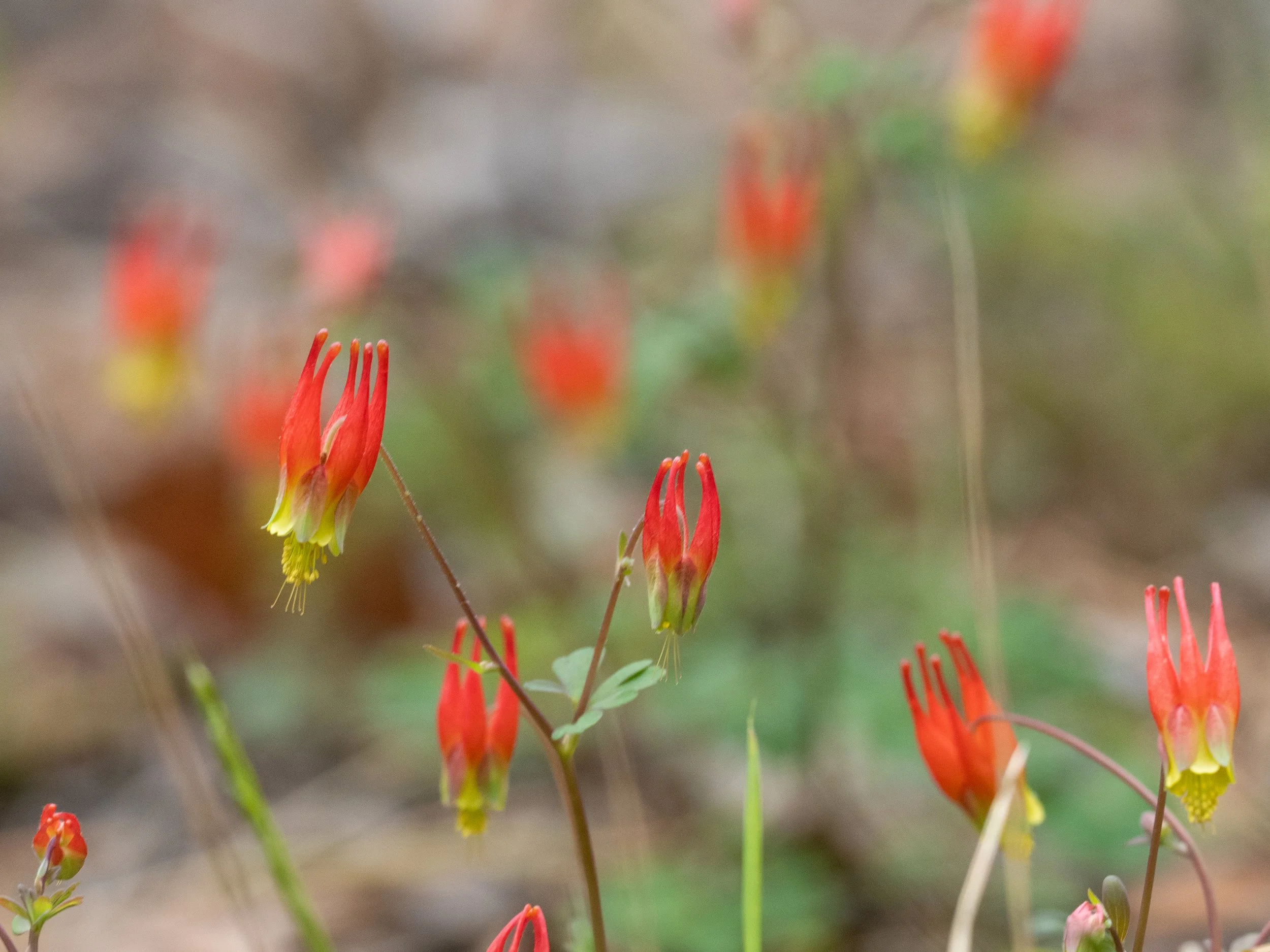
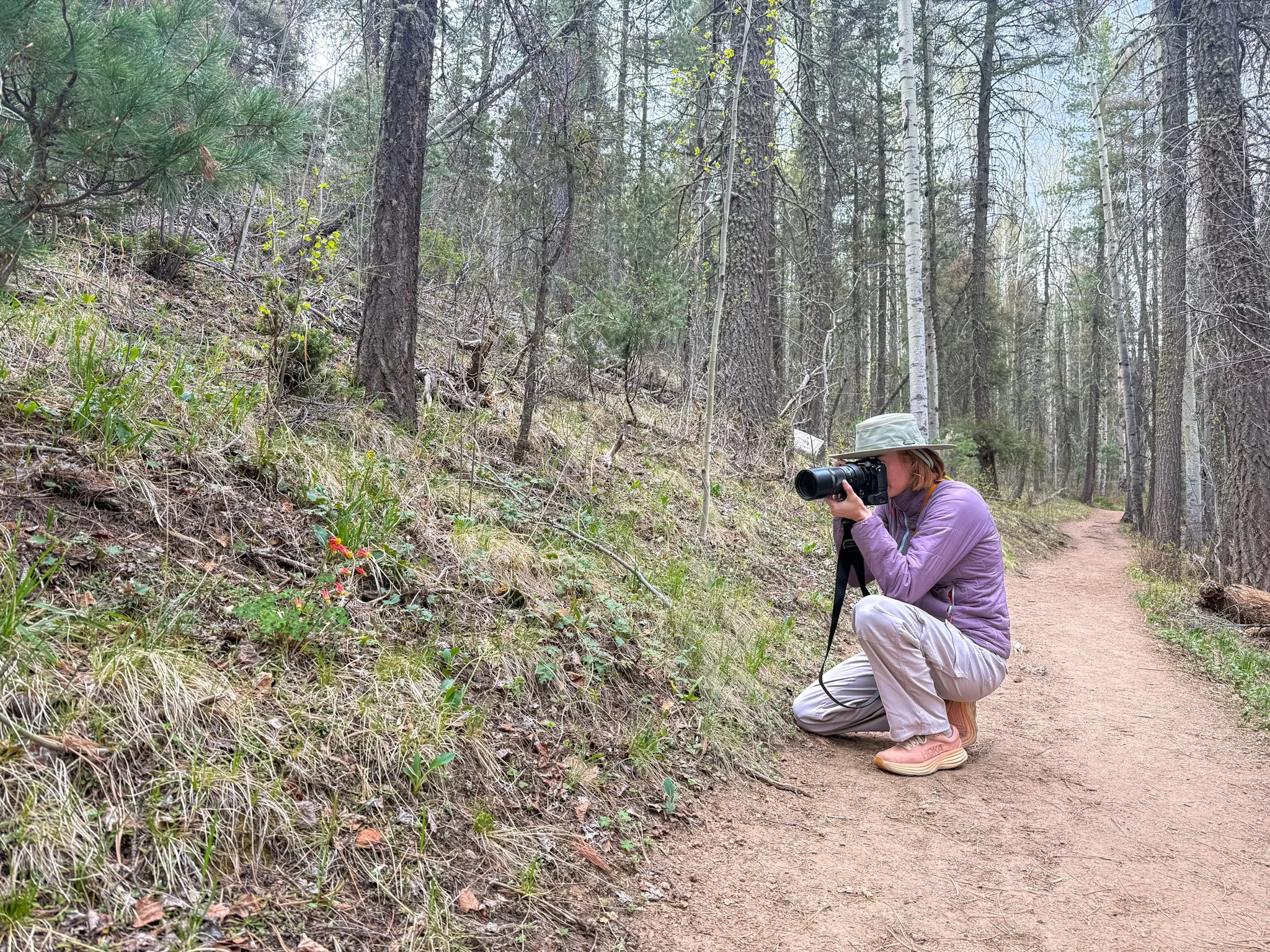
Birding in the forest can be very hit or miss - we call it a ‘low density’ habitat. Often it seems that many of the smaller birds travel through the trees in mixed flocks, and there can be long periods with little to no bird activity. That was not the case today - we had a lot of bird activity along the trail right from the start!
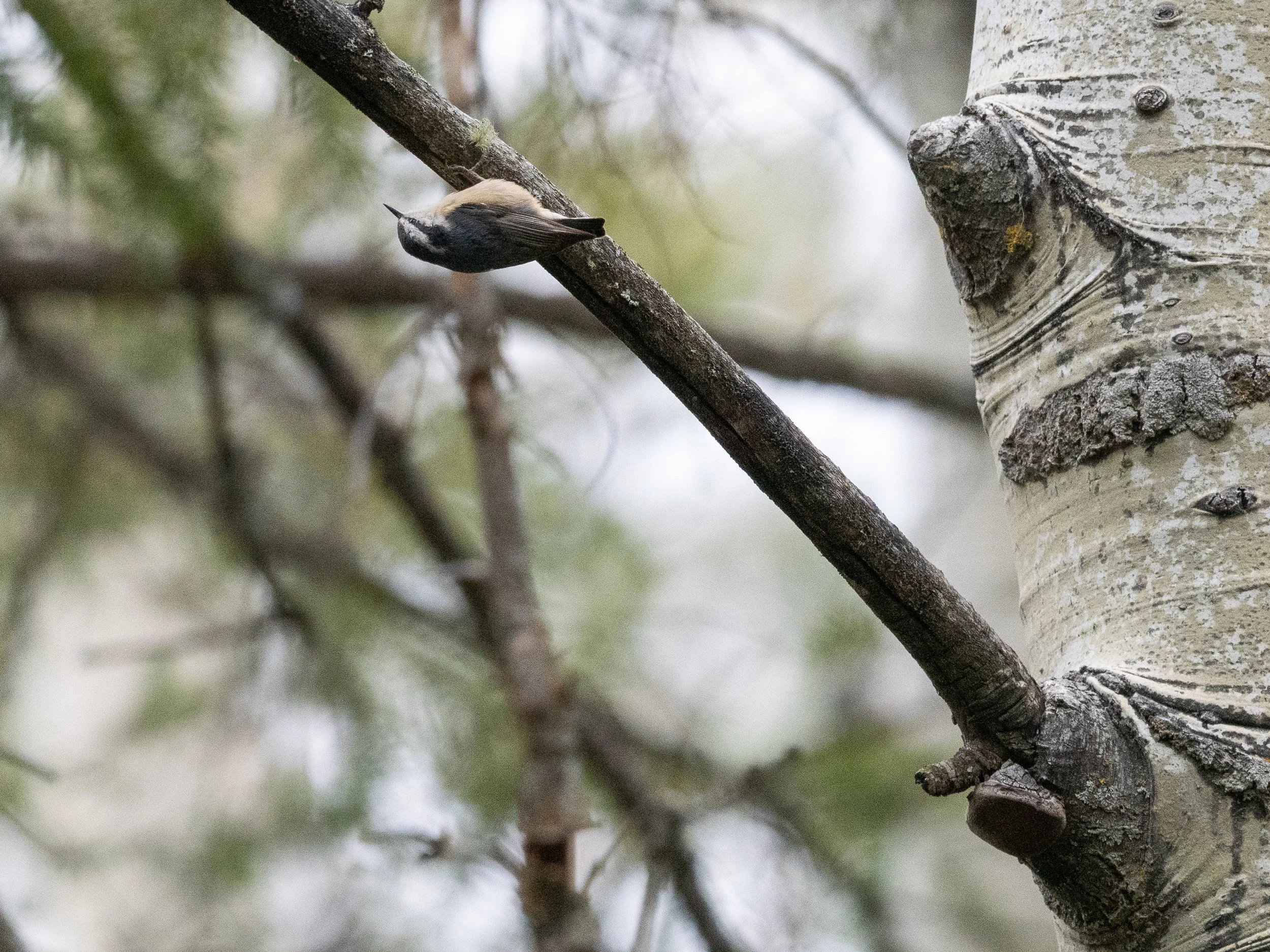
This Red-breasted Nuthatch was a fun highlight. On both days we had nuthatch ‘grand slams’ (observing all 3 nuthatch species: White-breasted, Red-breasted and Pygmy Nuthatches). They are all rather vocal and seem to defy gravity the way they move around tree trunks and branches. The Red-breasted Nuthatch has the most nasal call of the bunch: a nasal knaa knaa
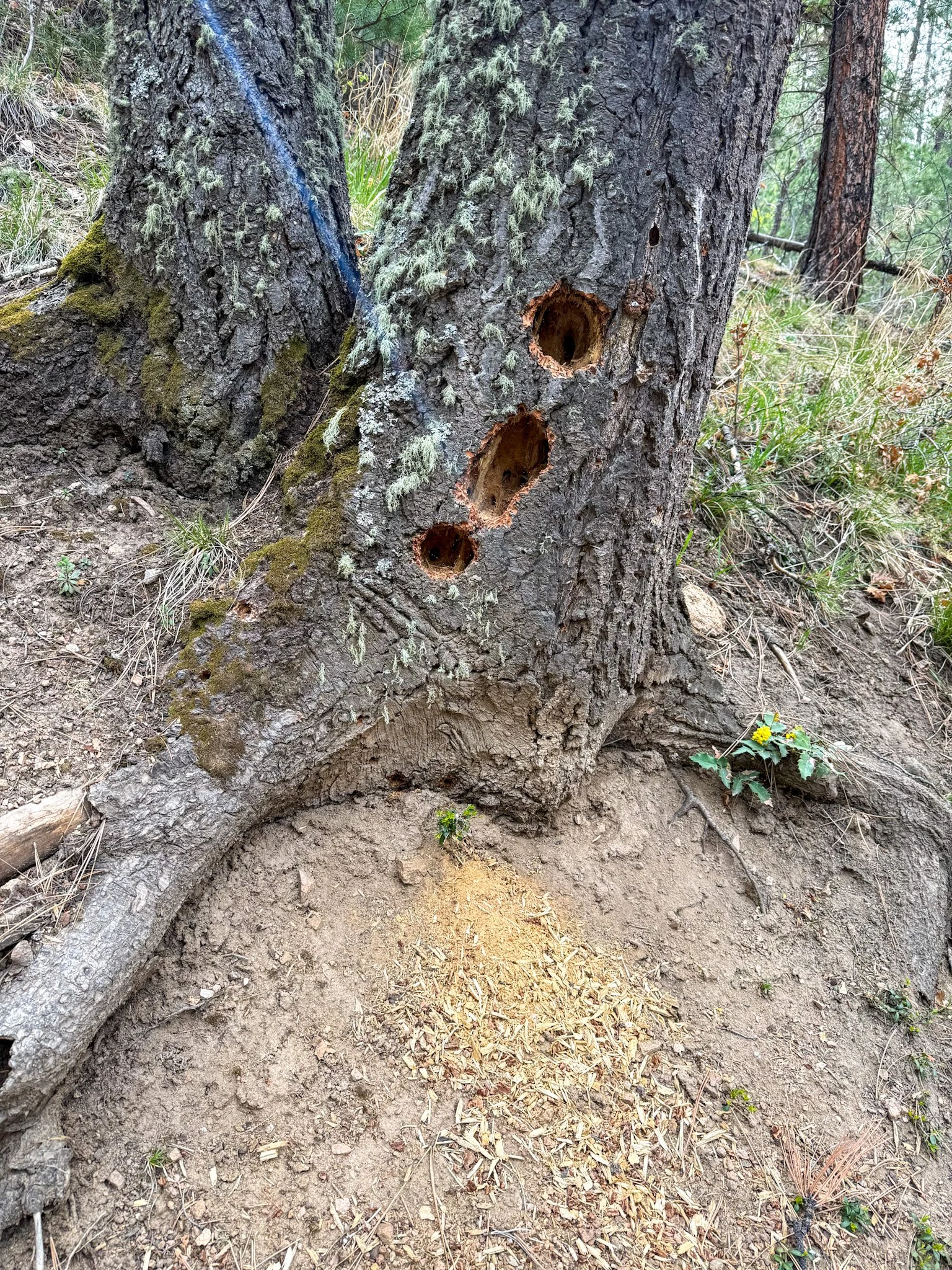
Along the trail we saw and heard many woodpecker species and signs of woodpecker activity. We are not sure who excavated these holes but they were huge!
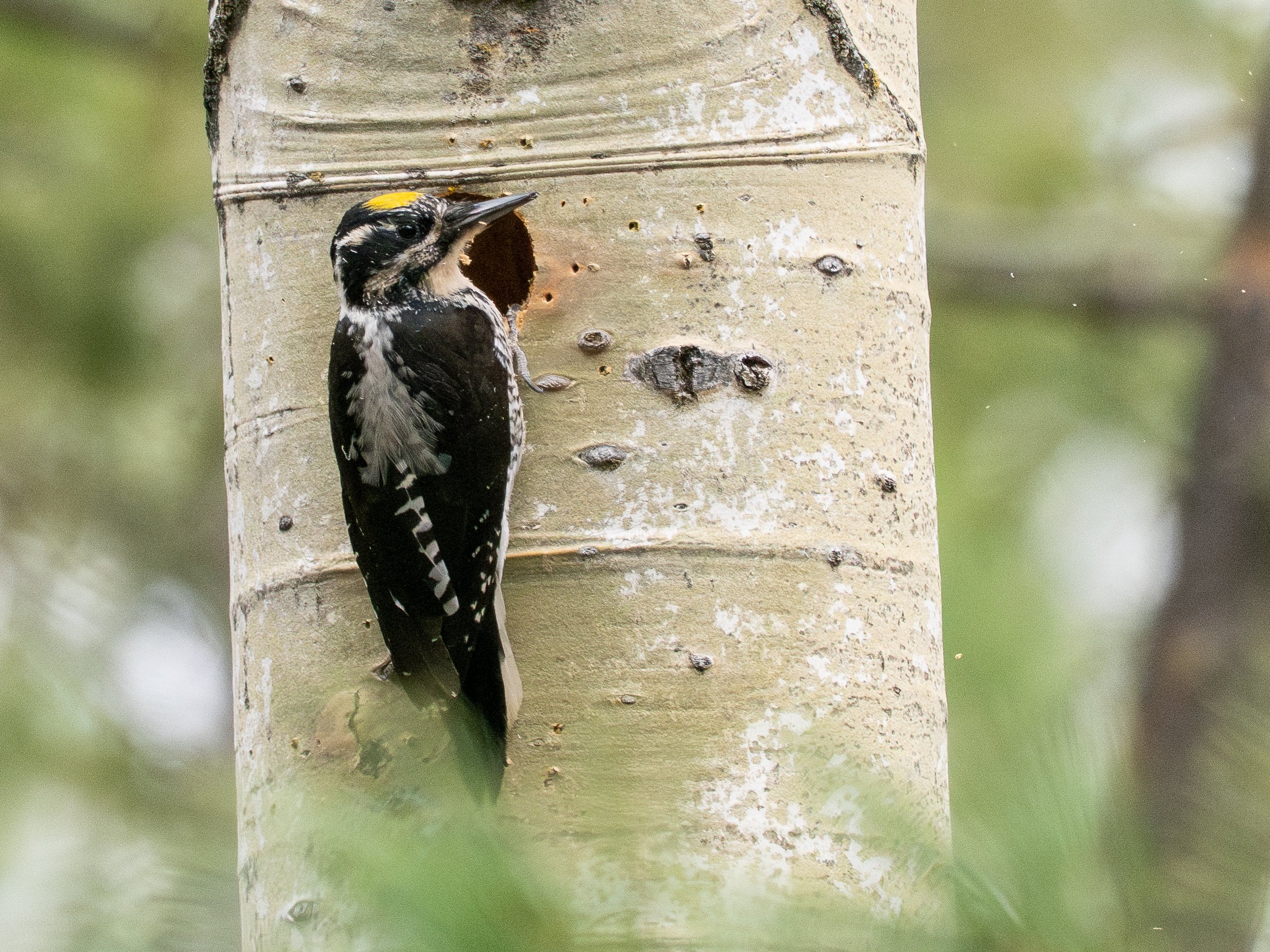
Perhaps THE stand-out bird on our hike was this American Three-toed Woodpecker. We found it excavating a nest cavity which made for a neat and extended observation. These birds primarily live in the spruce forests of Canada, but they also come down into the Rocky Mountains at higher elevations where there are similar forests. We don’t see a ton of these birds - usually only seasonally when we can get into the higher elevation habitats. It is the only woodpecker in the Four Corners where male has a yellow crown - the males of most other woodpecker species have a red crown.
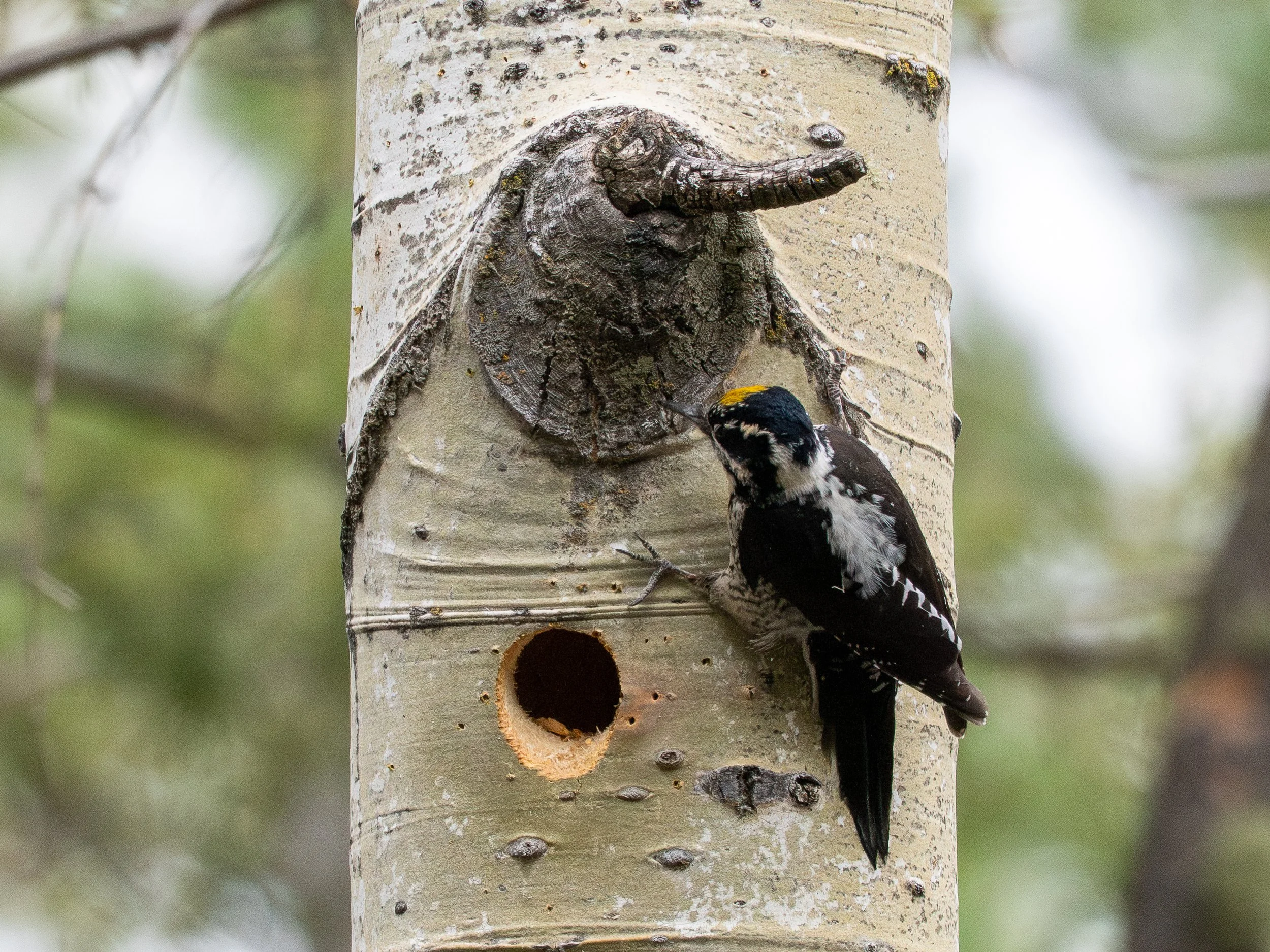
In this photo you can see that this woodpecker indeed has three toes on each foot. Most woodpeckers have four toes - two pointed forward and two backward! Woodpeckers also use their stiff tail feathers for support against trees. I think that must be especially true for these guys with all their toes pointing the same direction. I tried to read more about their unusual toe arrangement but it appears we don’t fully understand why this species and its close relative the Black-backed Woodpecker only have three toes.
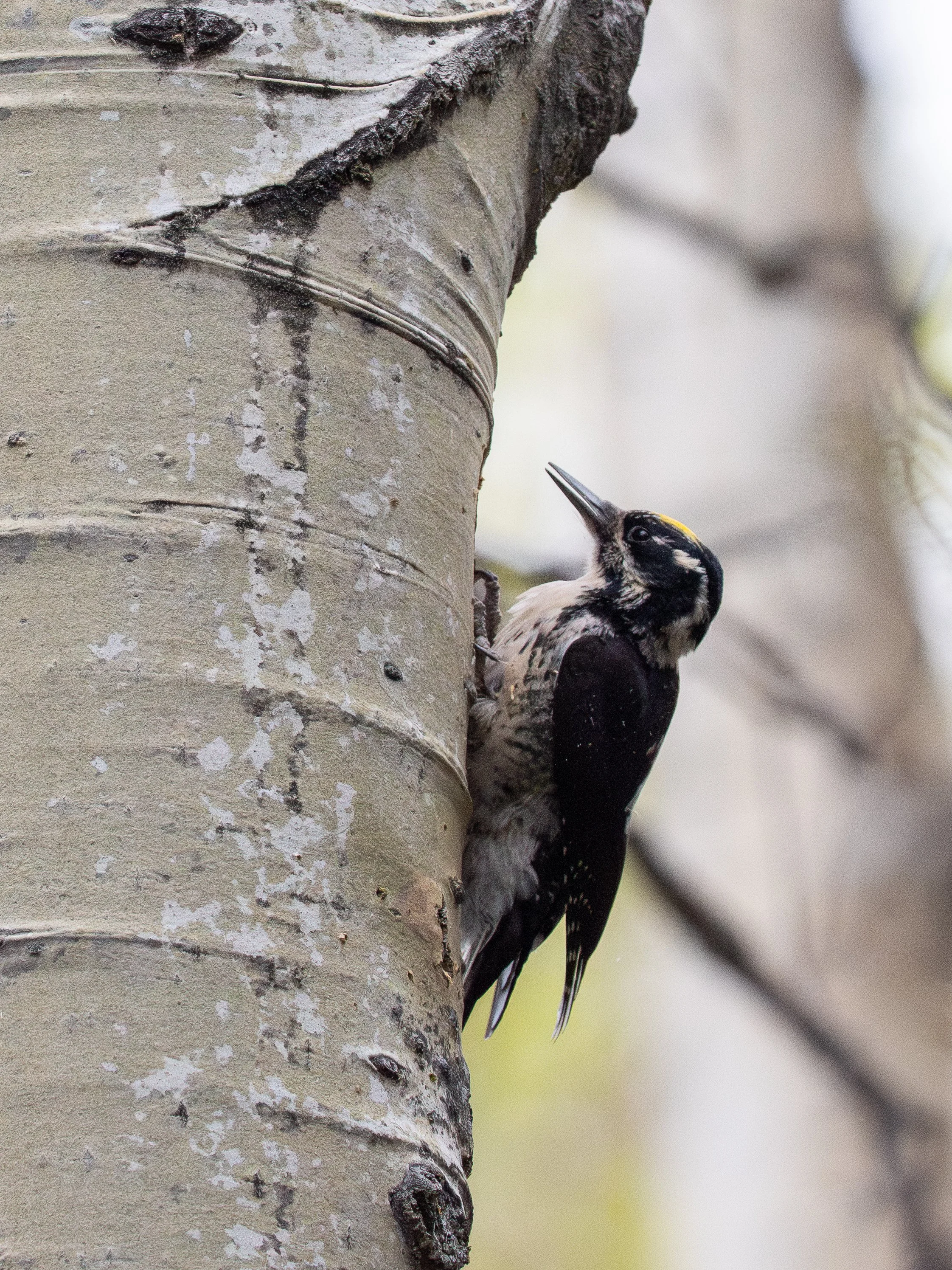
It was cool to see this guy working on his nest hole. There were so many birds along the trail, we did not make it very far! After about an hour and a half we turned around, having only made it a few miles of the 5 mile loop.
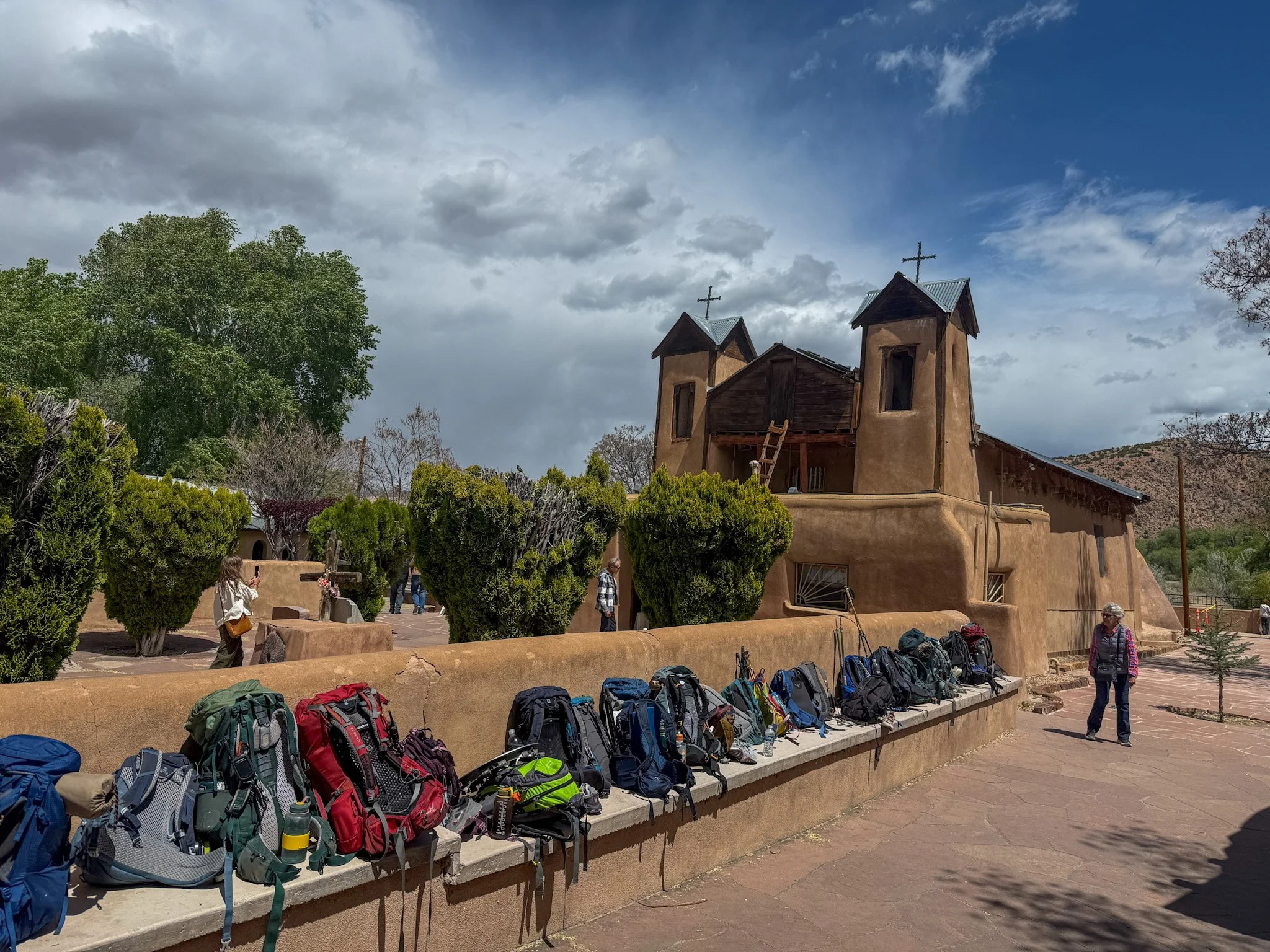
Our last stop was for lunch in Chimayo. Chimayo is a very traditional small town with strong roots in New Mexico’s Spanish history. There is a historic adobe church built in the early 1800s, the Sanctuario de Chimayo, renowned for its healing dirt. It is a pilgrimage site for Catholics from all over, and we saw pilgrims were attending an outdoor mass (delivered in Spanish) during our visit. Many pilgrims walk from Santa Fe or even Taos - not a small feat! A pilgrim statue features a plaque that read:
“Come pilgrims from the four corners of the Earth, the Lord has invited us to walk to this shrine of love in Chimayo. Here we will find the ‘holy dirt’ that strengthens us, and purifies the faith that takes away our pain.”
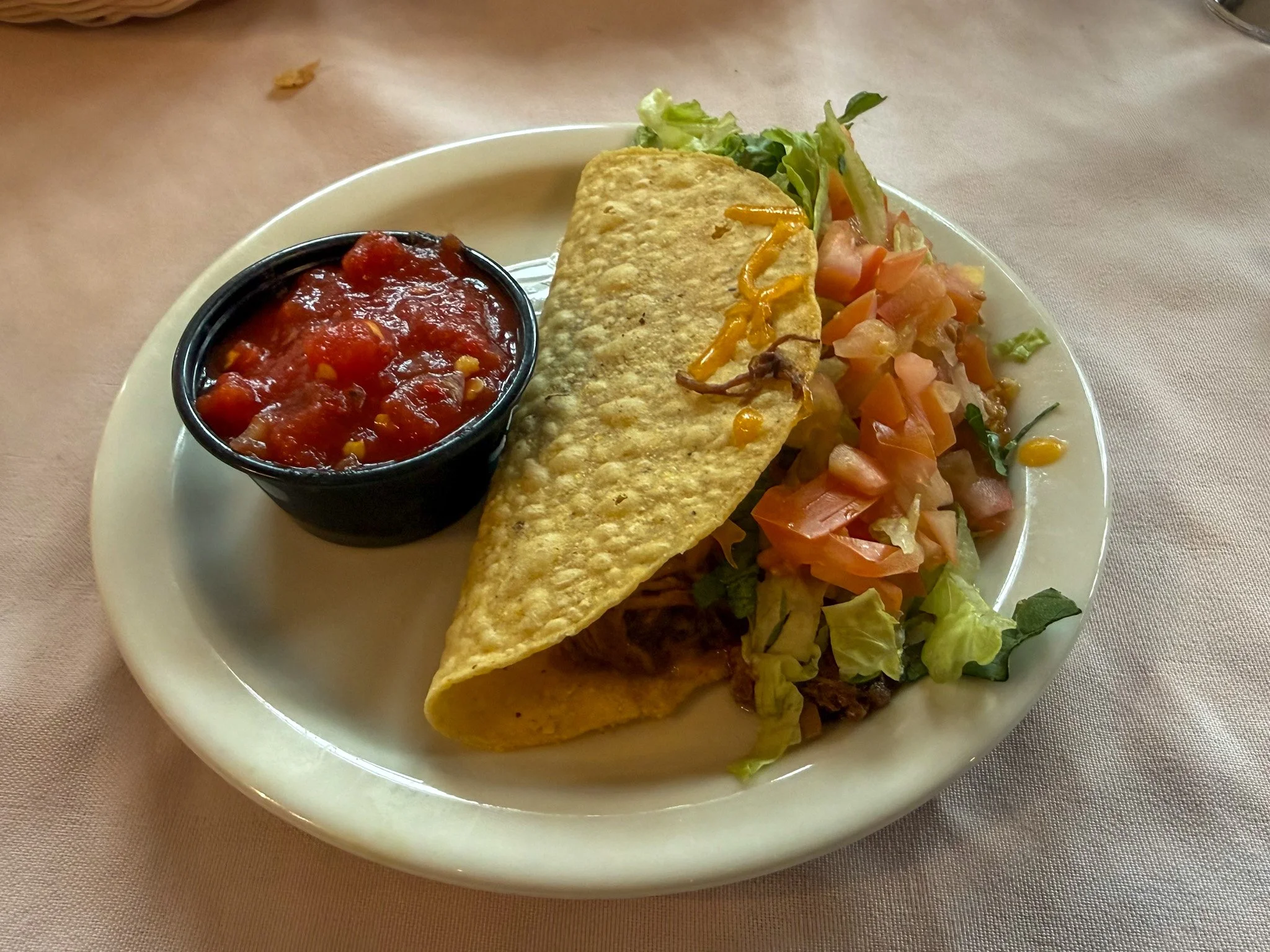
In the shrine there is a wall of crutches that worshippers left behind after they had been healed. There are also photographs of loved ones left by others for whom to pray for. Between the devotion of the pilgrims, the 18th century Spanish folk art , the Spanish hymns being sung and the walls of pictures, it was all very moving. We took some healing dirt with us to the Rancho de Chimayo where we ate some great New Mexican food before finishing the drive back to Colorado (tacos, combination plate with red chile and sopapillas).