Chicago: The Gull Frolic
Did I go to Chicago for the gull frolic? No, I was there to visit my brother Kevin in his new digs in Chi-town. But would I have been in Chicago in mid-February had it not been for the gull frolic? Definitely not!
Spending my summers down the Shore growing up, I have spent a lot of time looking at seagulls! Rather than contempt, my familiarity with these charismatic birds has given me a soft spot for them: their boldness, gracefulness and goofiness. In the Four Corners, the Farmington winter gull flock is one of the best in the whole region, and a focus of our winter birding for the past five or so years. Winter gull watching is not for the faint of heart - it is usually cold, can be windy, and the business of differentiating the gulls can be vexing between the different species and their various ages and plumages. There have been some interesting bird trends to observe: the growing numbers of Lesser Black-backed Gull, the early season November-ish peak of California Gull numbers, one or two Iceland Gulls annually, and the search for the “Calico Gull”, a Ring-billed Gull with wild plumage abnormalities. Some birds we end up reporting as “gull species(?)”. Many of the more interesting birds I have asked for ID help or verification in the North American Gulls facebook group, which is where I learned about the Gull Frolic. Gull watching some different gulls with a lot of other birders who are stoked on gulls? Sign me up!
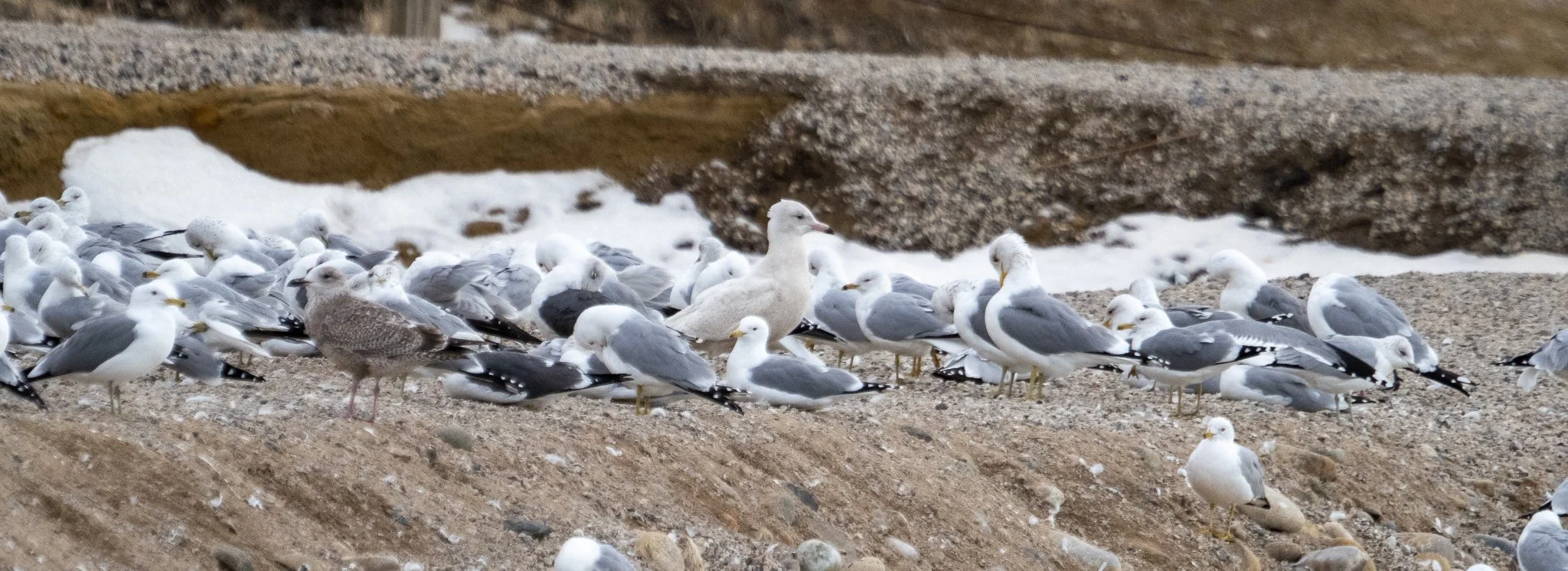
One of the more interesting assortments of gulls we have had at Farmington Lake. February 2023 this first winter Glaucous Gull (the big white one) in center was the star of the show - a rare visitor from the far North. Also present are California Gulls, Ring-billed Gulls and the very dark birds center-left, Lesser Black-backed Gulls. The second bird from the left facing left with the black bill and ‘checkerboard’ pattern on its back is a first winter bird - I think a Lesser Black-backed Gull.
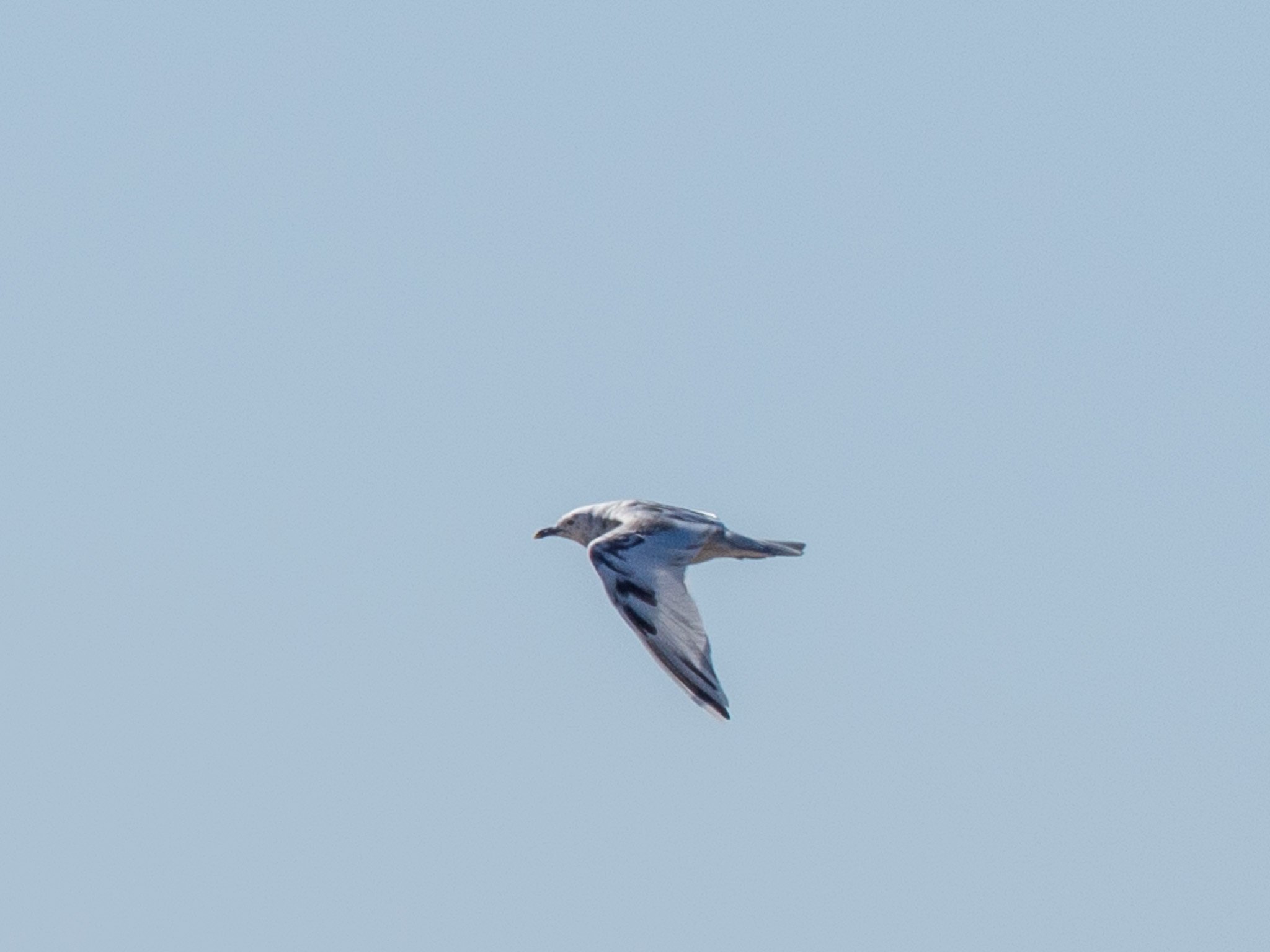
My 2025 winter documentation shot of the '“Calico Gull” at Farmington Lake - this unique bird is famous, making an appearance in the “Aberrations” section of the Gull Guide. Photographs of what is almost certainly the same bird date back to 2013 or so as far away as Nova Scotia.
We had a few days on either side of the Gull Frolic to hang out with Kevin and Ruby, and also explore the area. One bird on Emilee’s wish list was a Snowy Owl - a bird that basically never comes down to our neck of the woods, and neither of us have ever seen. Small numbers are usually present around the Great Lakes during the winter. As luck would have it, people had been reporting one from a park just South of Milwaukee for a few days prior to our arrival. We made the drive up our first evening and drove and hiked around the park, which was mostly a big open field. That habitat makes sense, because these birds breed on the open tundra in the high Arctic. But we did not find the bird. That night, we saw on ebird that someone did see the bird that evening on top of one of the nearby apartment buildings! I confess we were not looking at the tops of the apartments. We returned the next afternoon and this time, the bird was perched prominently on a street light! We could see it basically immediate upon arrival. We parked in one of the pull outs and set up about 25 meters away. During the half hour or so we observed it, probably 100 people stopped by to see it. We invited a few people over to look through the scope that we set up, and shared this awesome sighting with them. With its black and white barring on its back, this bird is a female. We were grateful we got to see her, and hope she has a good winter and makes it safely back up to the Arctic this summer.
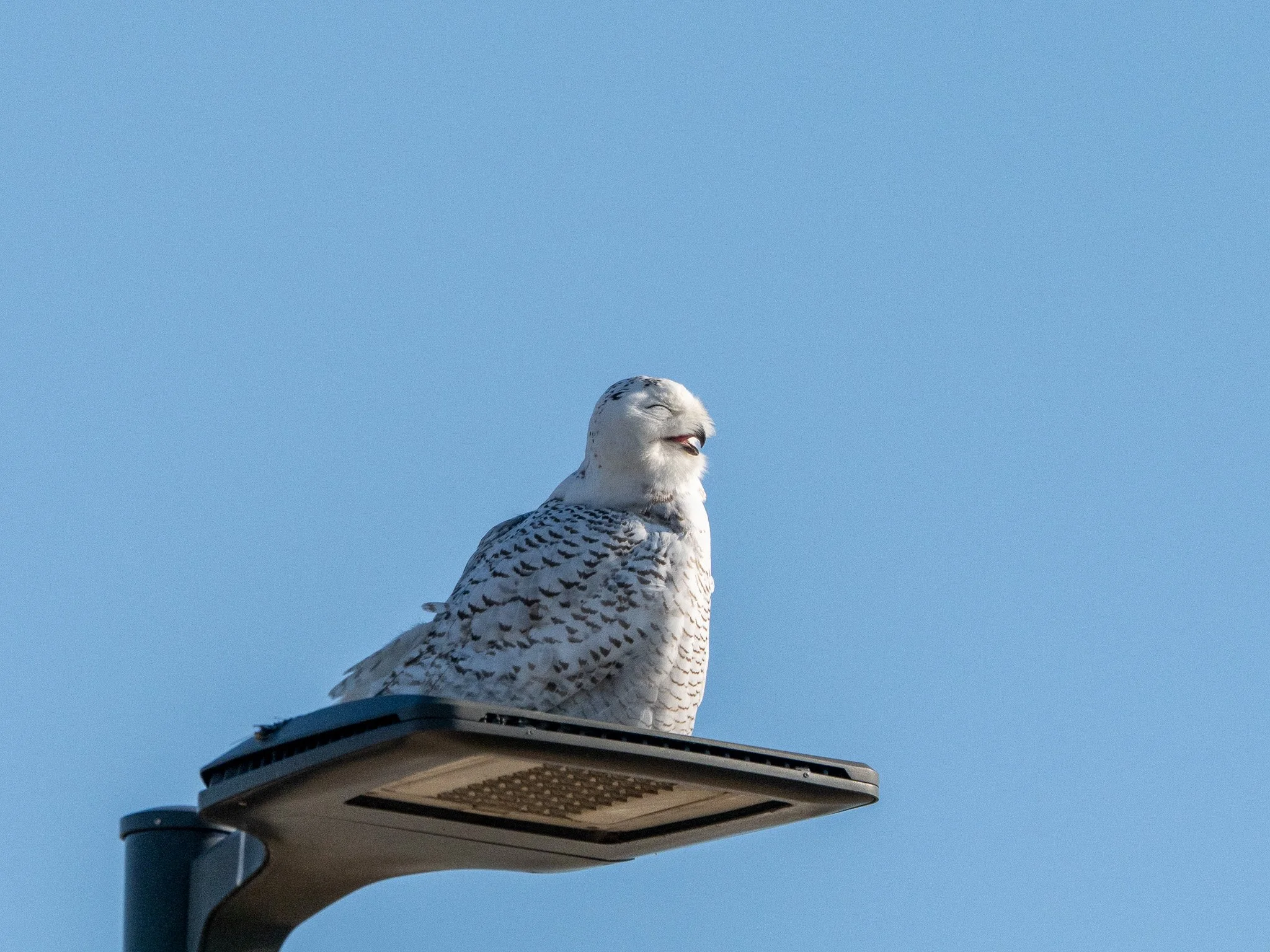
Emilee loved the Snowy Owl so much she got a stuffed animal Snowy Owl as a memento
While we were up looking at the Snowy Owl, Amar Ayyash, the author of the Gull Guide and one of the organizers of the Gull Frolic, found a Common Gull at a marina on Lake Michigan near where the Gull Frolic was scheduled the next day. Common Gull is part of the ‘Mew Gull complex’, a group of gulls on the small end of the ‘large white-headed gulls’ group. Our North American version is now called Short-billed Gull, and Common Gull is mostly a European species. This individual Common Gull was identified down to the Russian subspecies, which had never been reported in the United States before. Very exciting, but we did not chase this bird and opted for dinner with Kevin and Ruby instead.
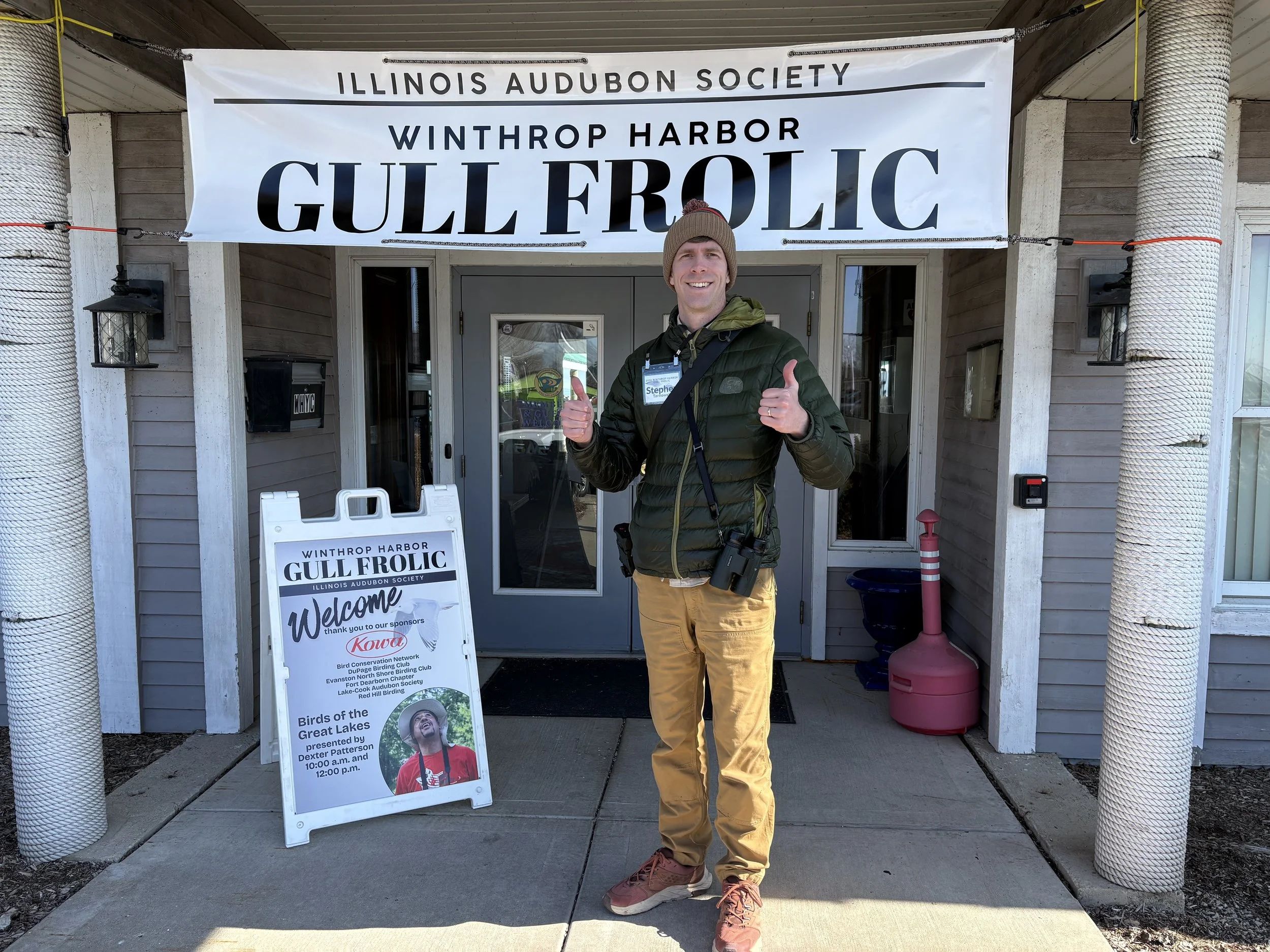
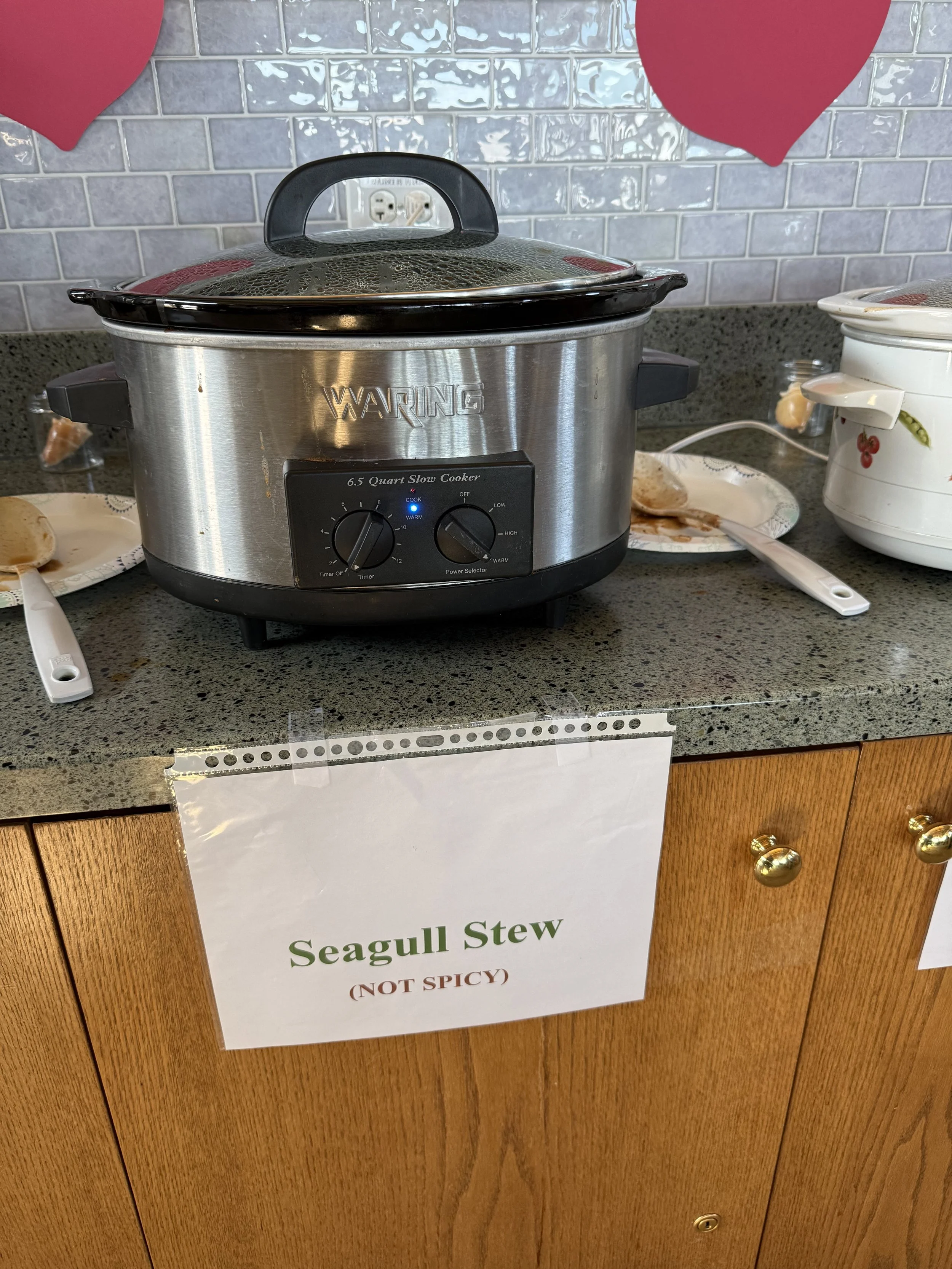
We did check that other marina for the Common Gull the morning of the Gull Frolic, but the bird had moved on. The Gull Frolic itself was a hit - the organizers had a sense of humor, and there were more participants than I expected. Probably 100 people were gathered at Winthrop Harbor to watch the gulls! (The seagull stew did not contain any seagulls).
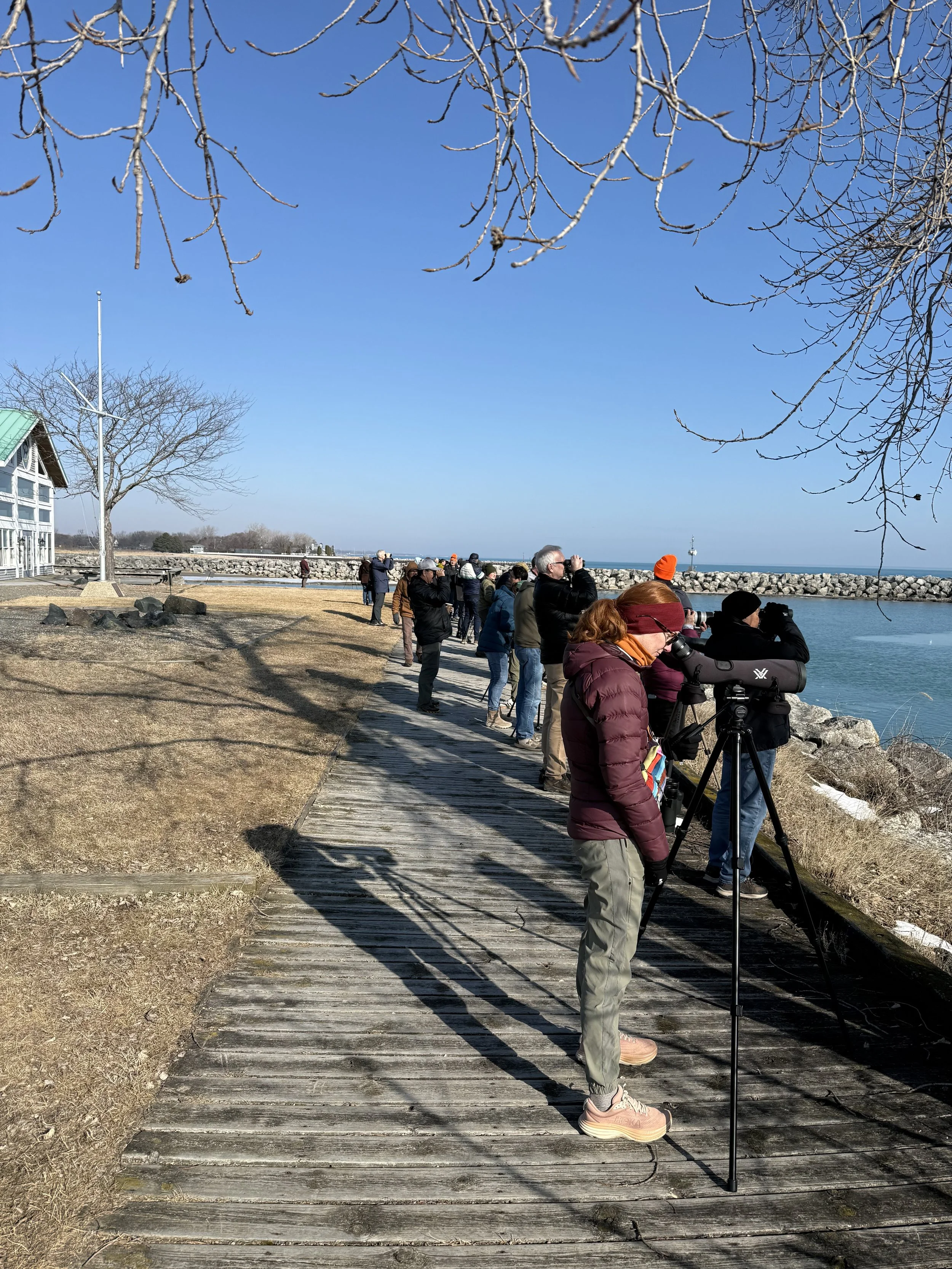
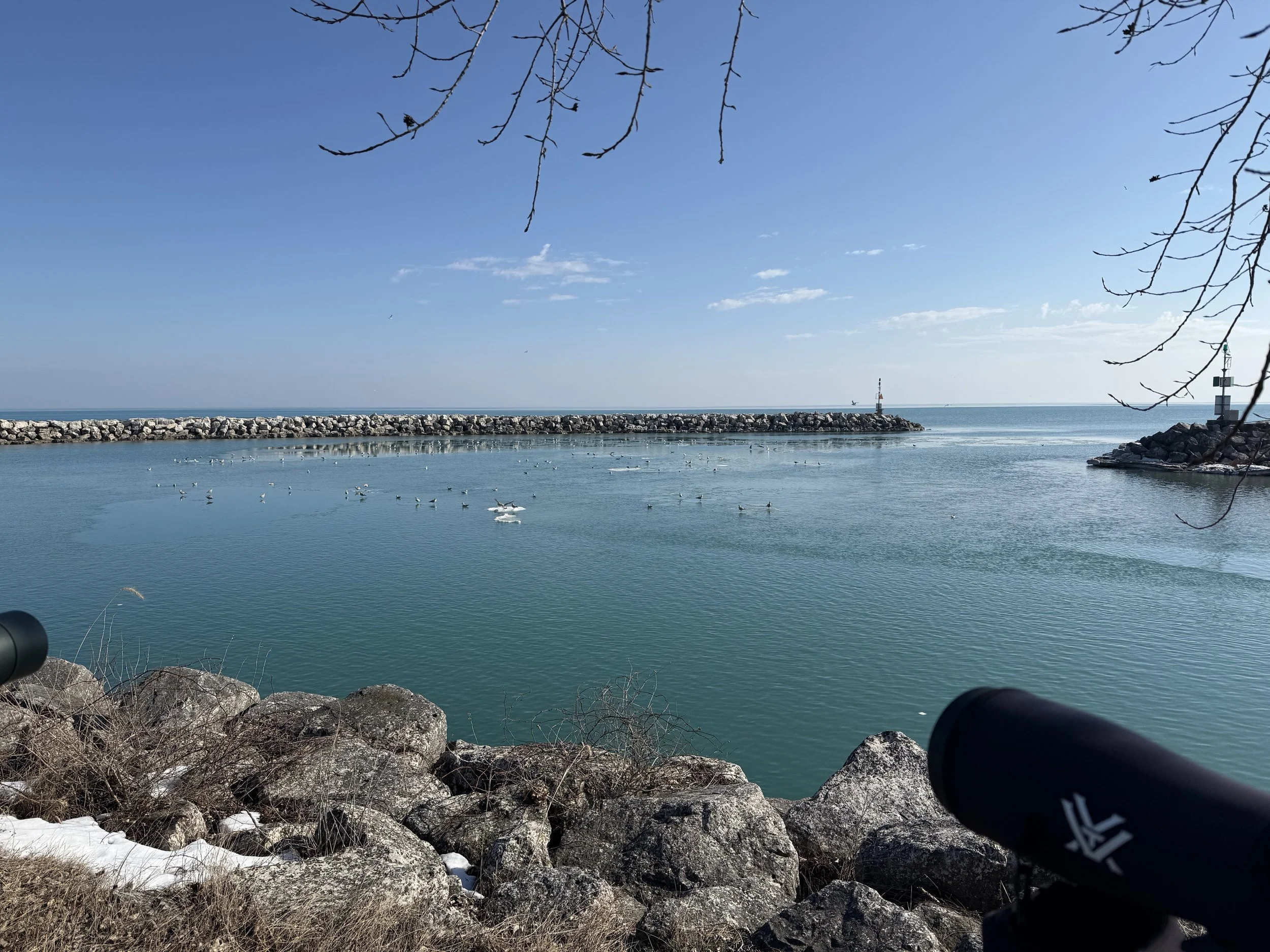
The gulling was the best early in the morning, when an ice floe was present in the harbor for the gulls to loaf on. The spotters, clad in orange hats, were calling out interesting gulls left and right. We had a good sampling of Iceland Gulls, which I was most looking forward to seeing more of. This is not a species we get to see much in Colorado, and I have only ever seen first-winter birds. I was hoping that seeing adult Iceland gulls would help me identify them in the future. Having that ‘search image’ and understanding what you are looking at can go a long way towards making that future ID. We also had a first winter Glaucous Gull, and a first winter Great Black-backed Gull mixed in with the larger numbers of American Herring Gulls for some more interesting comparisons. While much of the winter was brutally cold up in the Chicago area this year, this weekend was unusually warm and the temperatures got into the 50s for a pleasant viewing experience. An added bonus was a guest lecture from Wisconsin birder Dexter Patterson talking about one of my favorite things - the joy of birding!
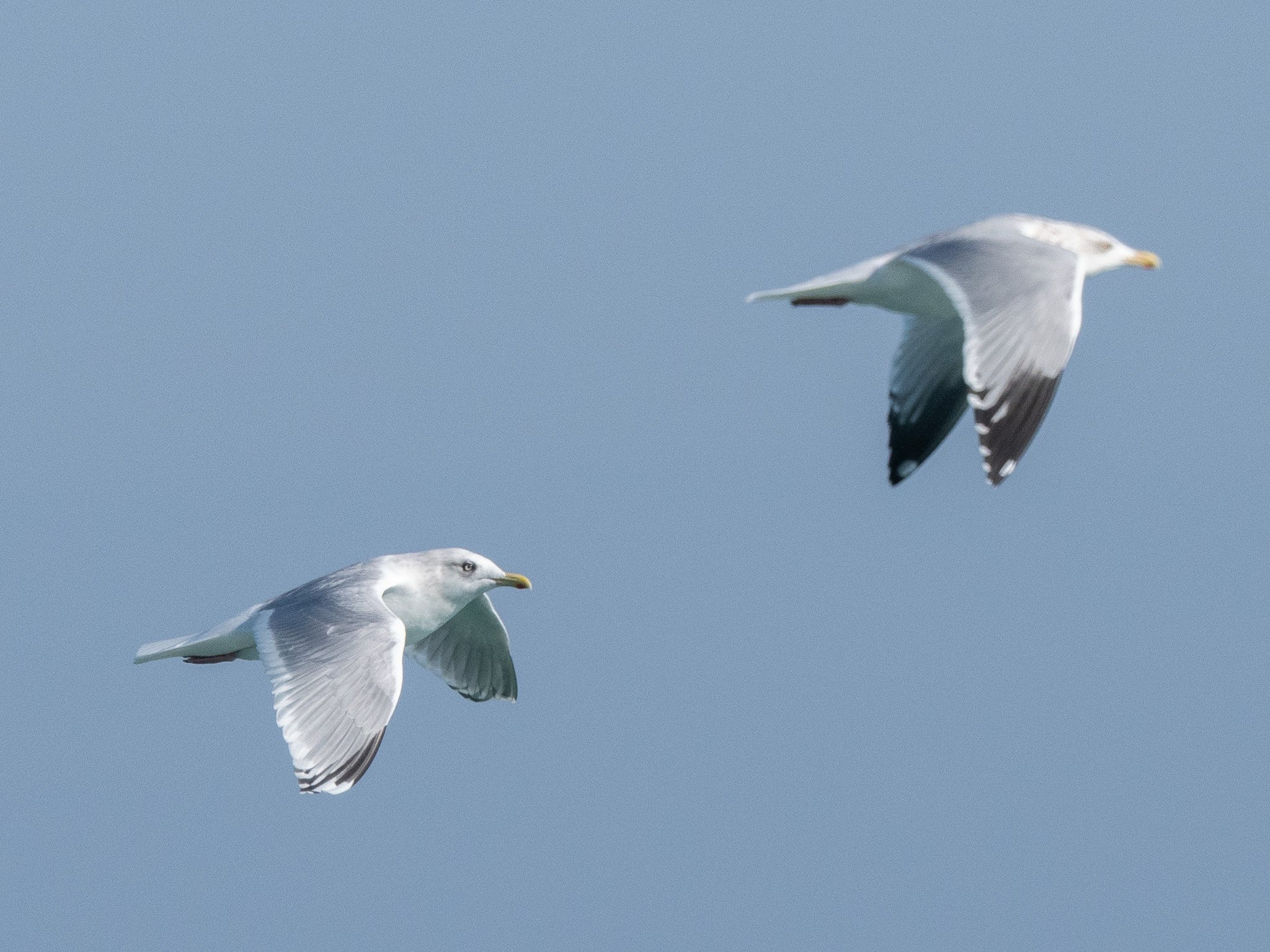
One of my better comparison photos from the frolic: the left bird is a ‘white winger’ - an Iceland Gull. The limited black in the wingtip (the white wing) is a trait that the spotters could pick out in a large mixed flock of gulls whirling around. The Herring Gull on the right has more individual primary feathers with black tips, and the black is a true black. Iceland gull’s dark tips vary in darkness from white to dark gray depending on which subspecies it belongs to. This one I believe was in the range for Kumlien’s type, which reportedly breeds in North Atlantic Canada. We had never seen this type before so it was very cool to study them at fairly close range (and it was unbelievably helpful to have the spotters call out their location within the whirling gull flock: “flying left, banking, flying away…)
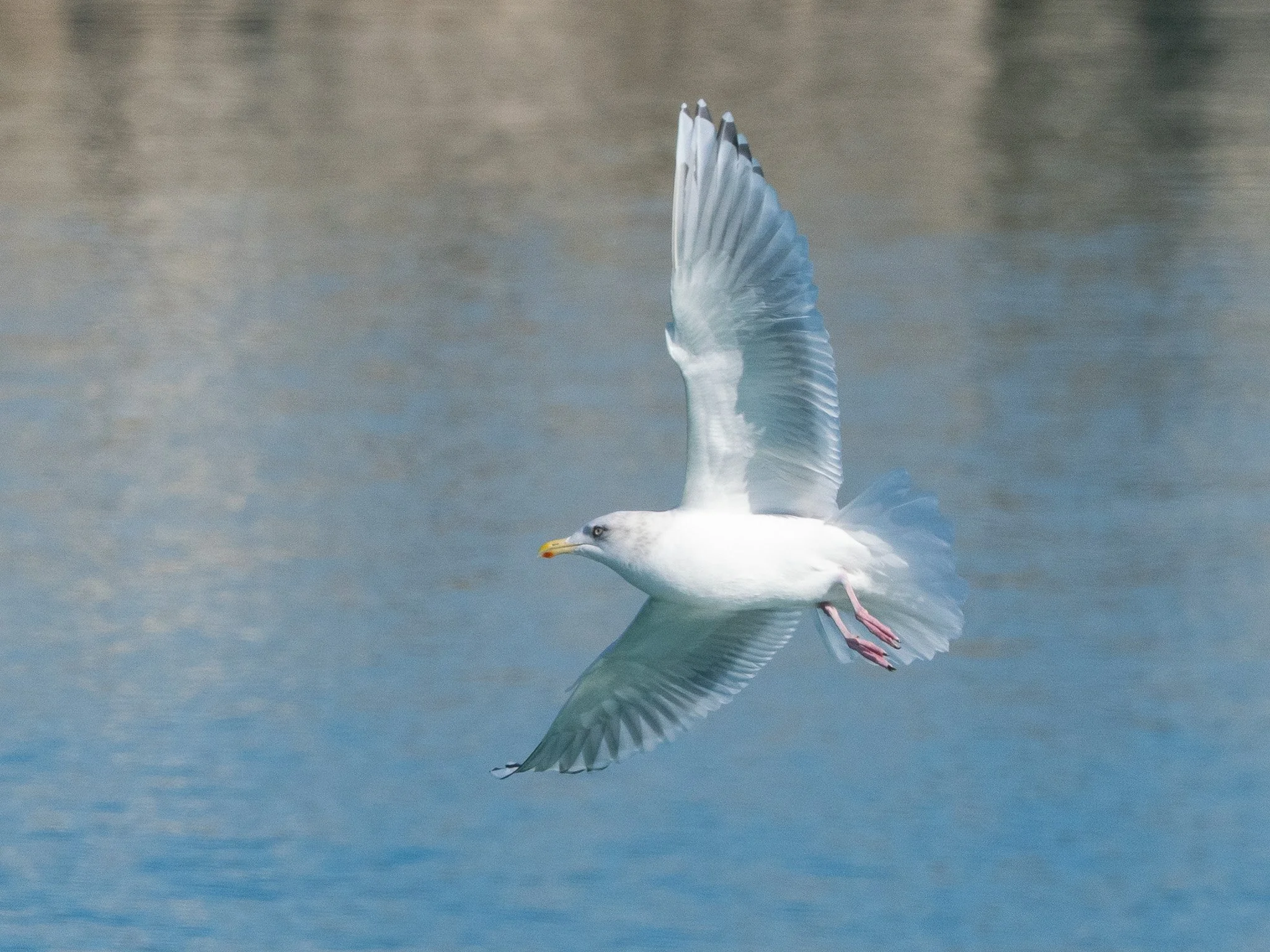
Another Kumlien’s type Iceland gull shot - very limited dark tips. And look at those bubblegum pink legs! One interesting thing was that the adult Iceland gulls we saw overwhemingly had light eyes. Thayer’s type, which we see one or two of each winter, more commonly have dark eyes.
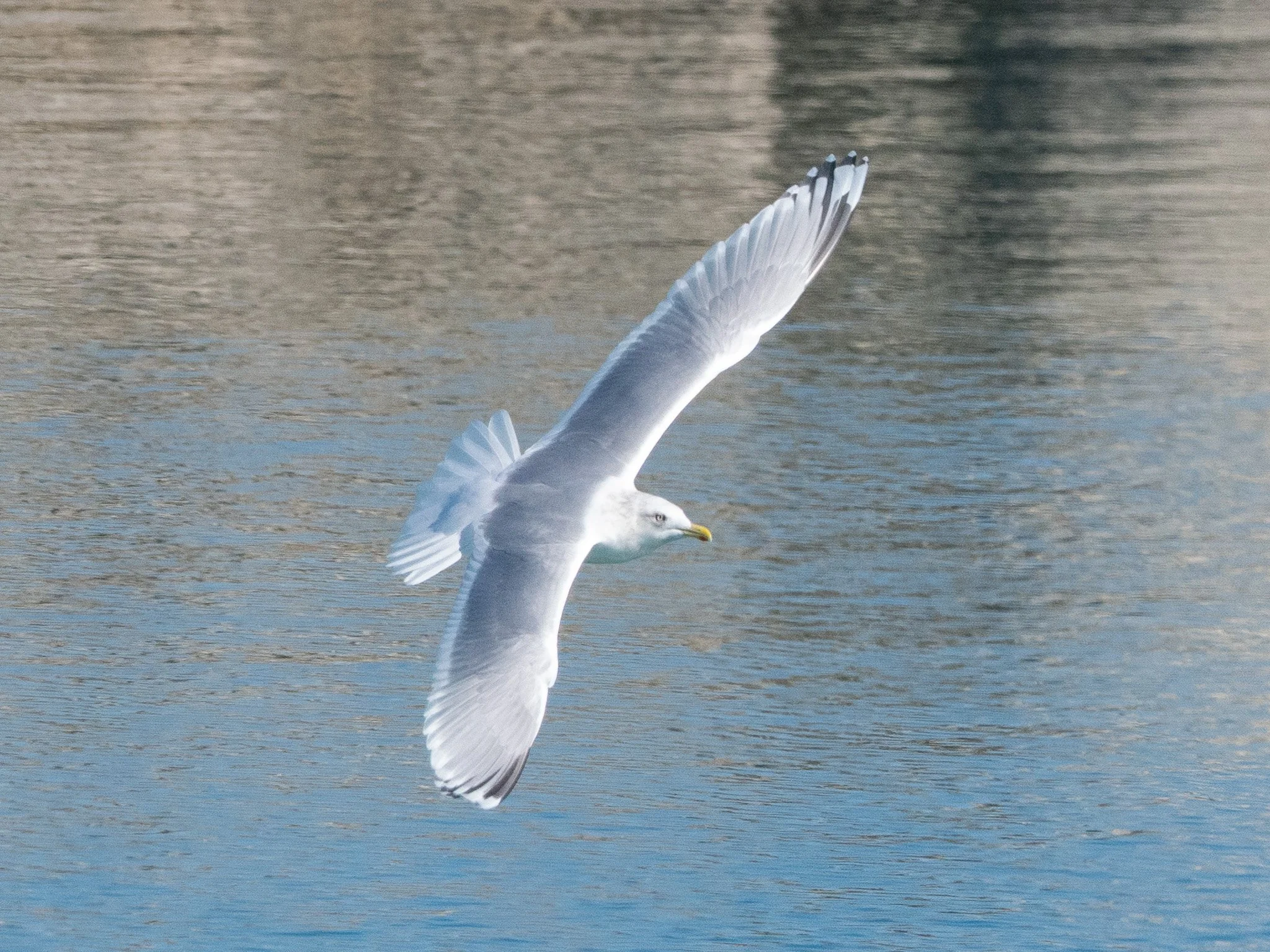
One more Kumlien’s Iceland Gull for good measure
During our time in the Chicago area, we got out to the shore of Lake Michigan at a few different locations. Winter is duck season, and we had good looks at some of my favorite ducks - Long-tailed Duck and Red-breasted Merganser. Some of the best looking ducks you’ll find anywhere!
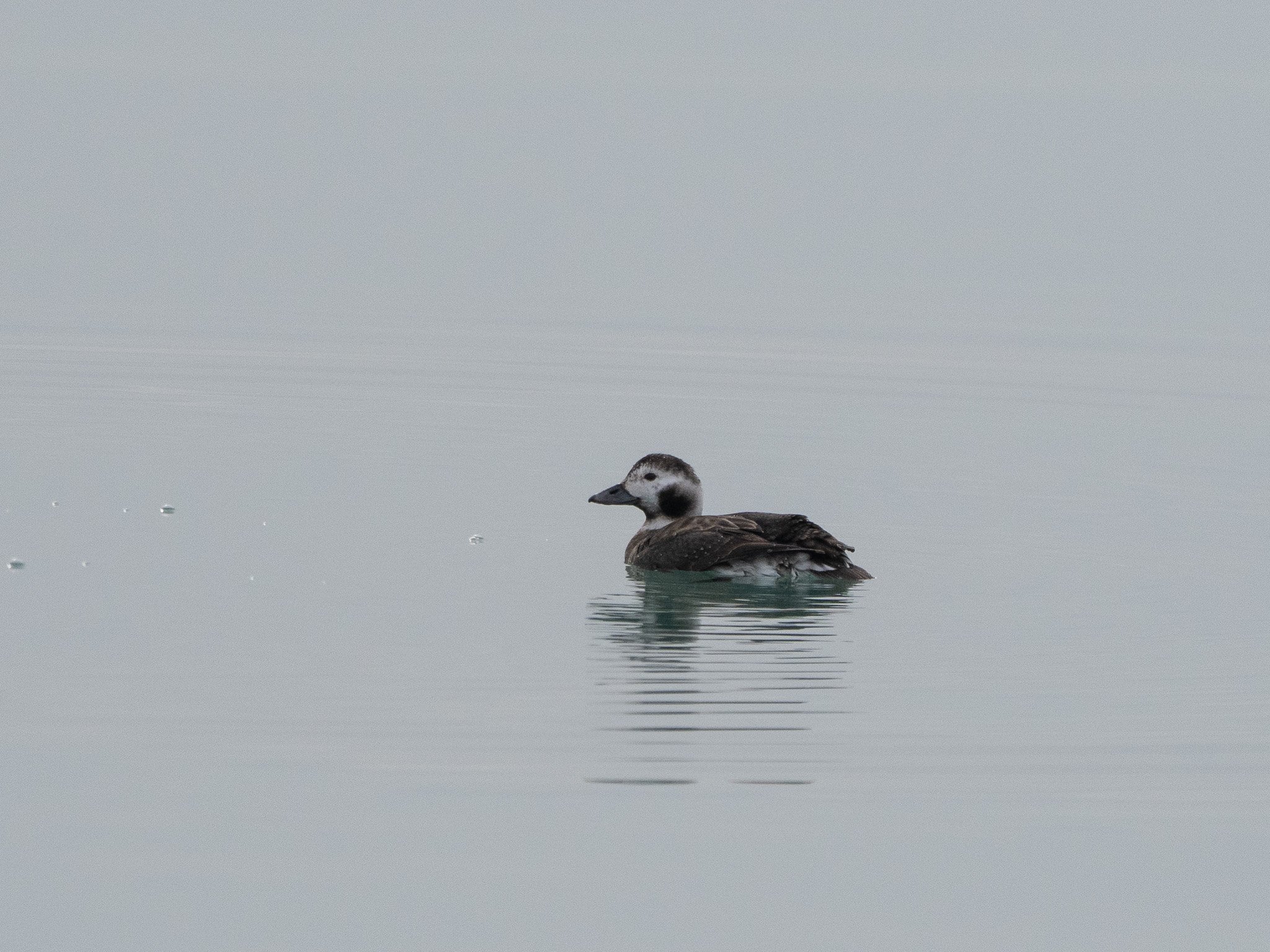
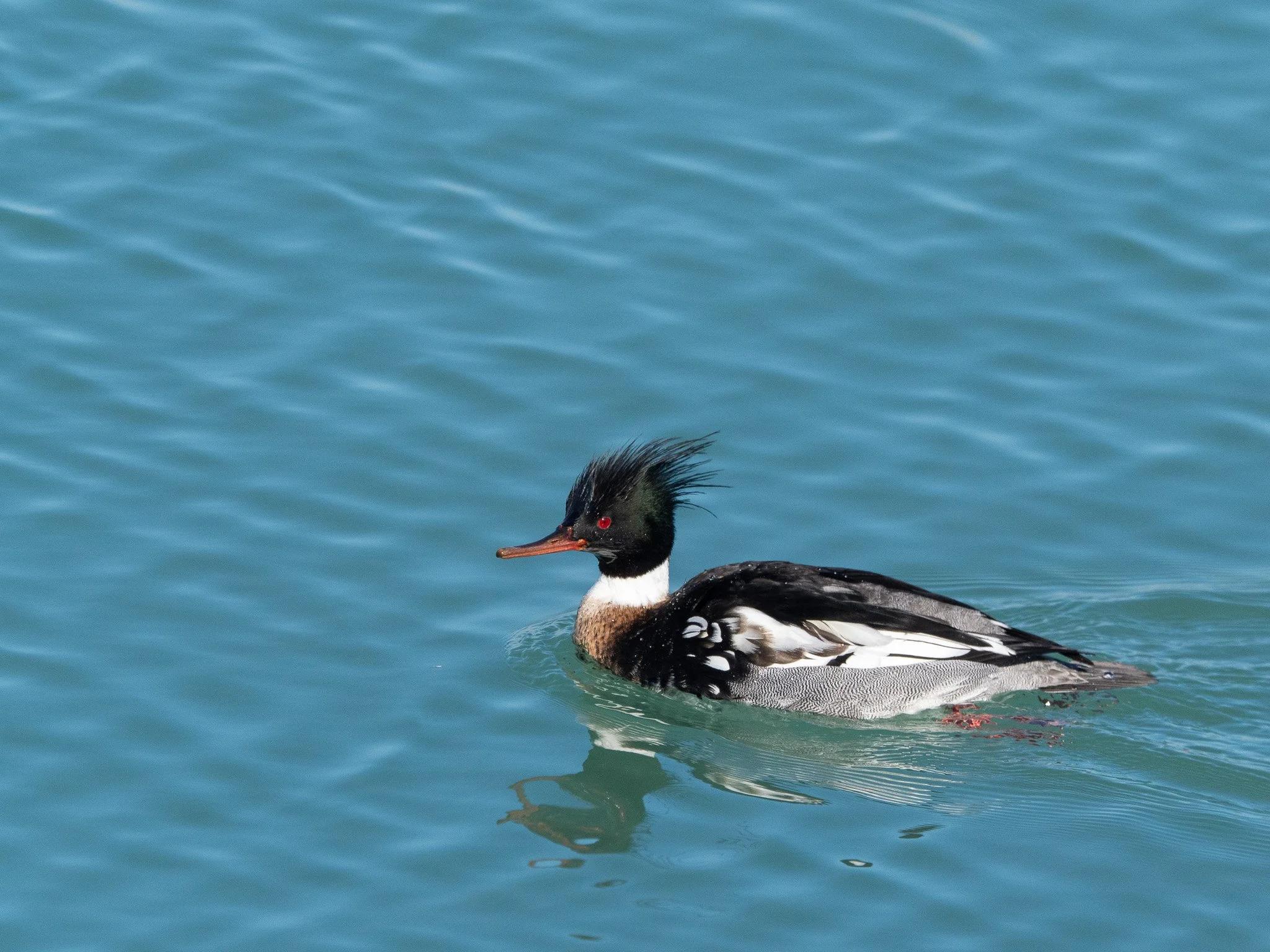
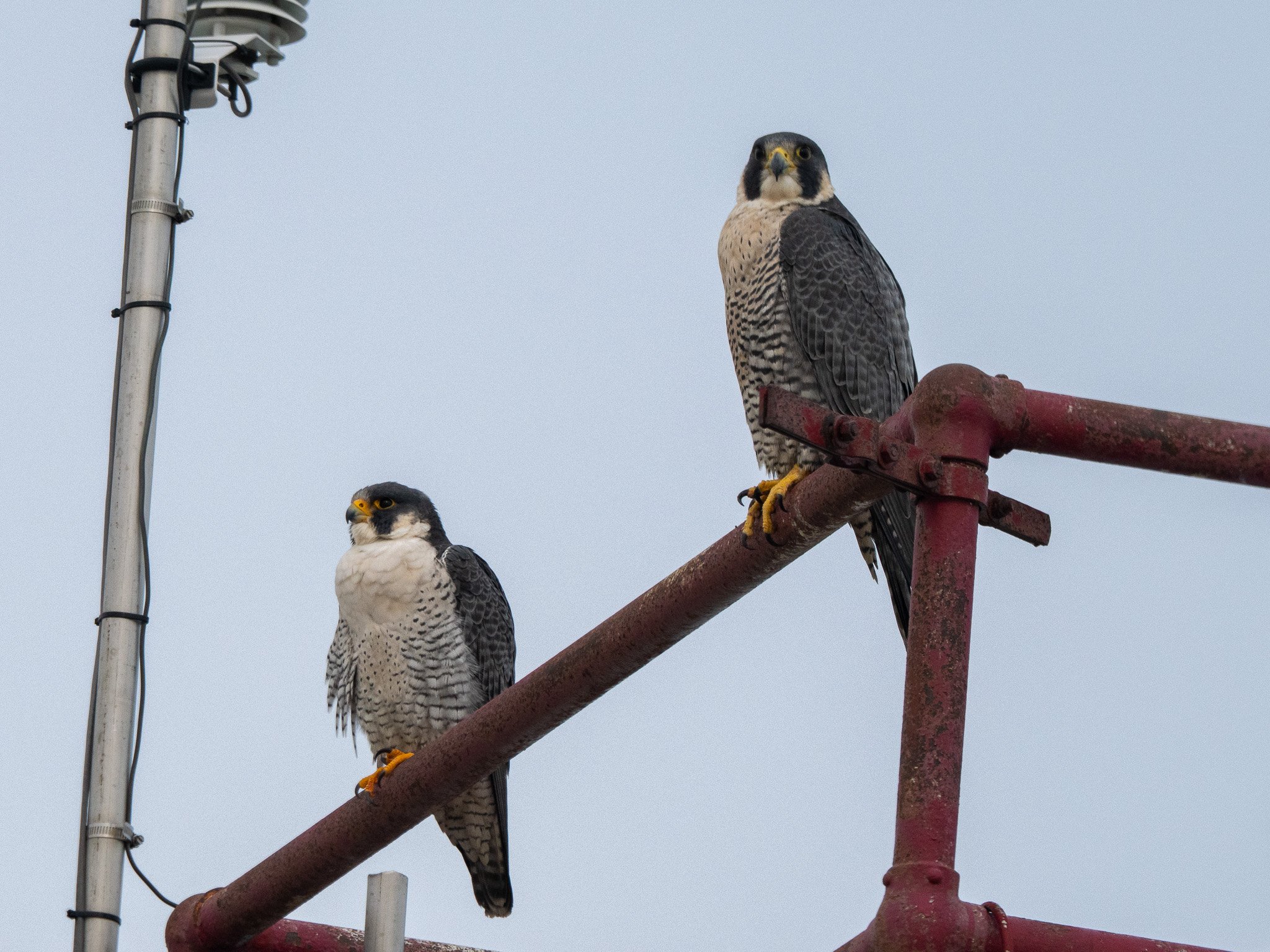
Our last major highlight of the trip was running into a pair of Peregrine Falcons at the Montrose Harbor Beacon. After resting calmly for a time on the beacon, one of the birds flew down to the ice for a brief stop before flying back up to the perch. What a treat to see these burly falcons from so close!
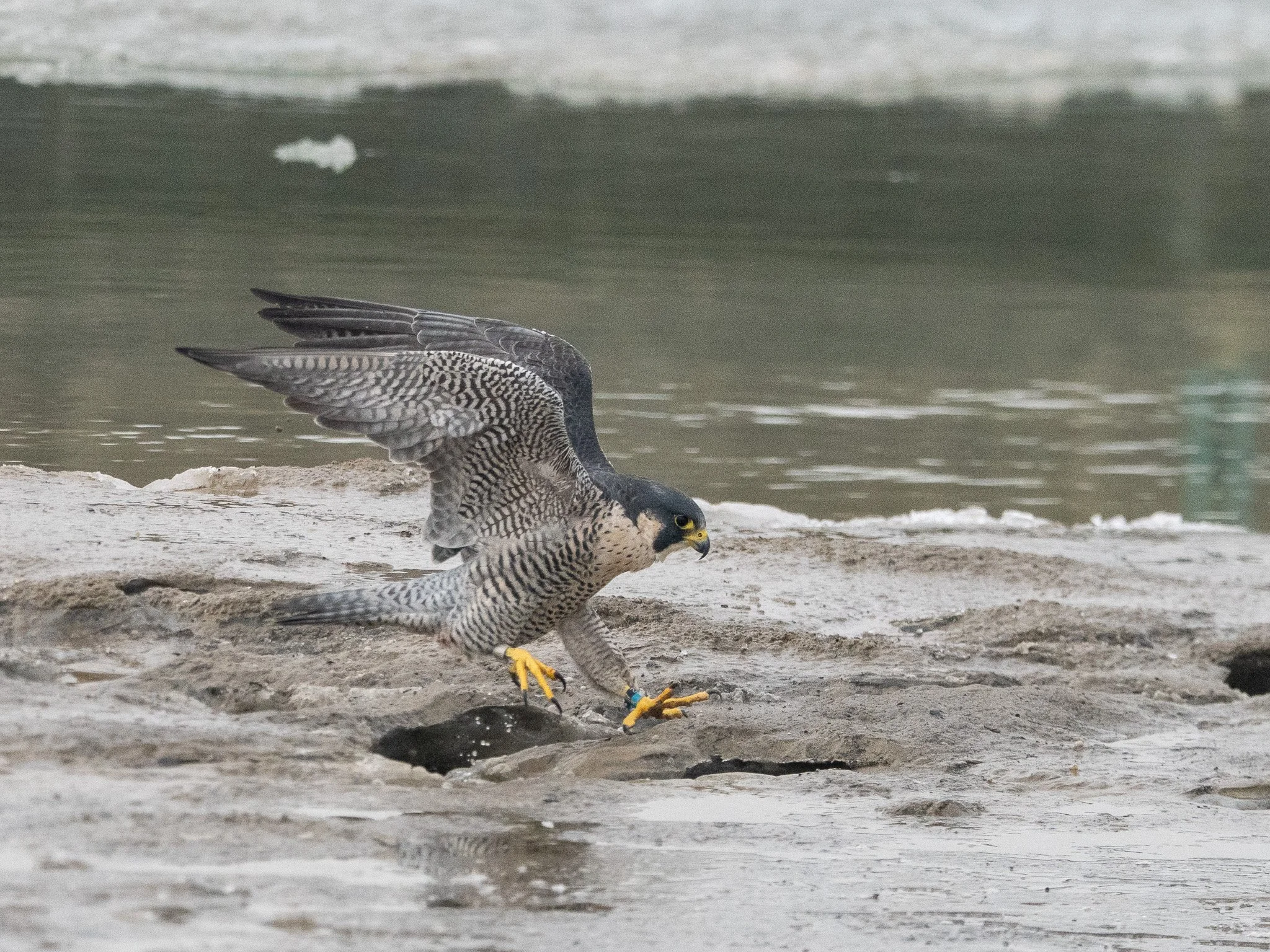
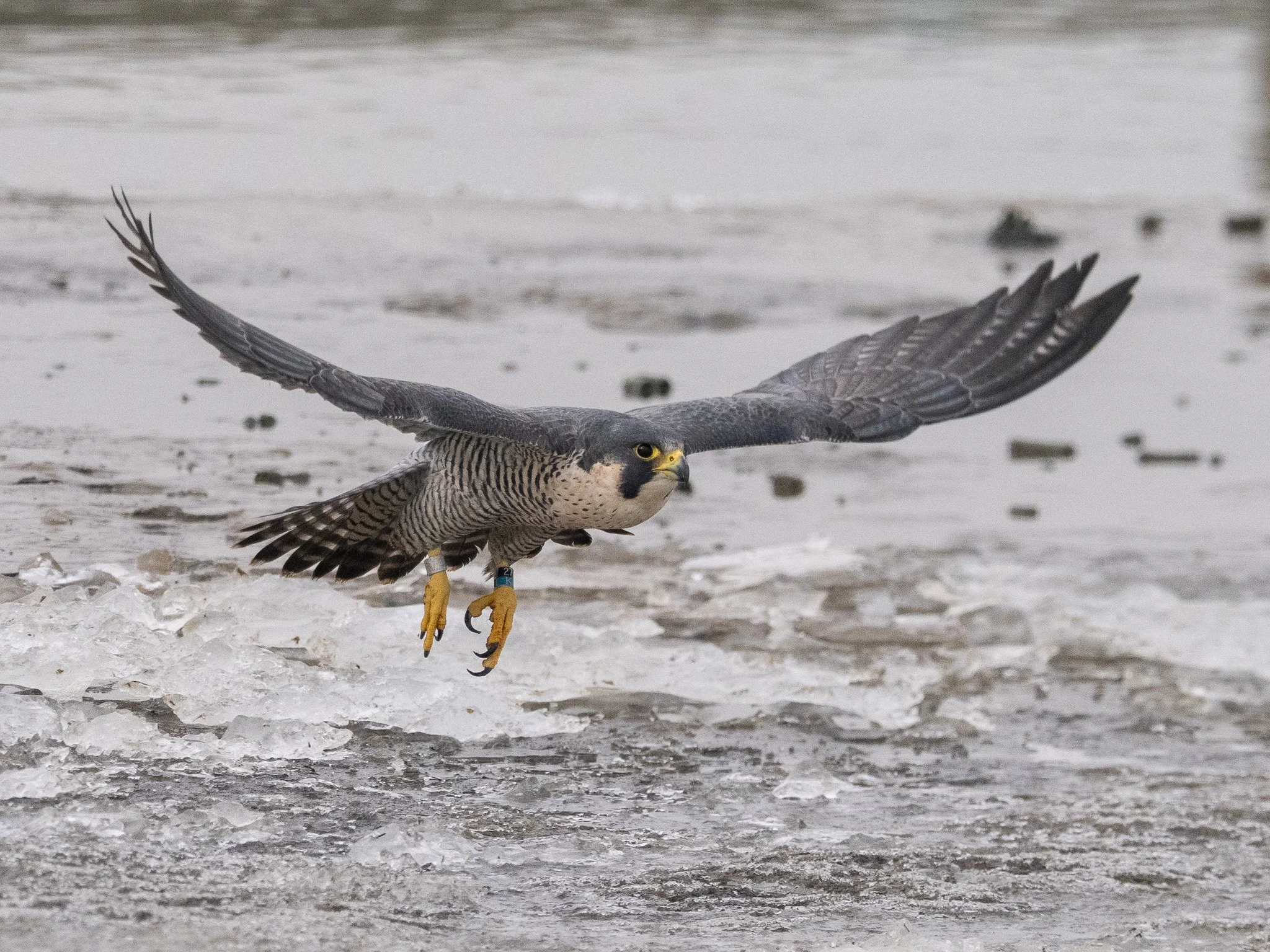
Look at those talons! You can see here this bird is a banded bird. I reported it to the Bird Banding database and hope to learn more about it!
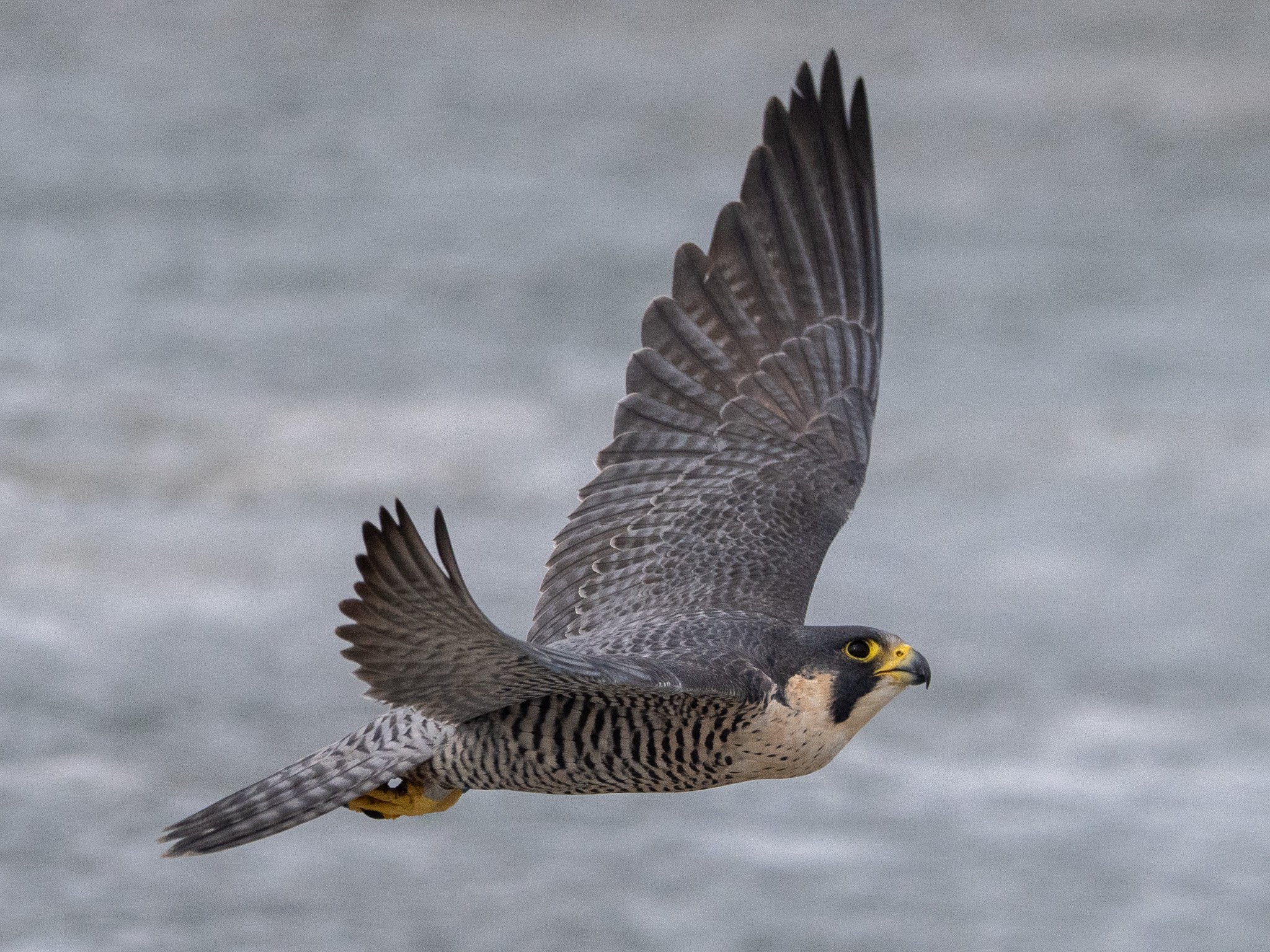
Majestic!
