Thanksgiving in the Chiricahuas
Arizona’s “Sky Islands” are ecological jewels. This series of mountain ranges rise out of the harsh desert and feature elevational habitat stratification most would associate with the Neotropics - traveling a relatively short distance uphill takes you from the Sonoran or Chihuahuan desert scrub or grassland, to oak and chaparral woodland, pine-oak, pine, and ultimately fir forests. The deep and steep canyons funnel cool air through riparian corridors full of Arizona sycamore trees that are prime excavation material for woodpeckers. The subsequent nest holes host magnificent birds like Coppery-tailed Trogon that only extend into the United States in these high elevation pockets of Southern Arizona. Aldo Leopold once called this region “the cream of creation” for its stunning biodiversity.
Over the years, Emilee and I have visited the Santa Catalina Mountains near Tucson (Mt. Lemmon), the Santa Rita Mountains (Madera Canyon), and the Huachucas (Ramsey Canyon), leaving the Chiricahua Mountains in the very Southeast corner of Arizona as a natural next step. Thanksgiving is one of the longer breaks in our work schedules, so it was a good time for us to get all the way down there and be able to explore both the Portal (East) and Wilcox (West) side of this range.
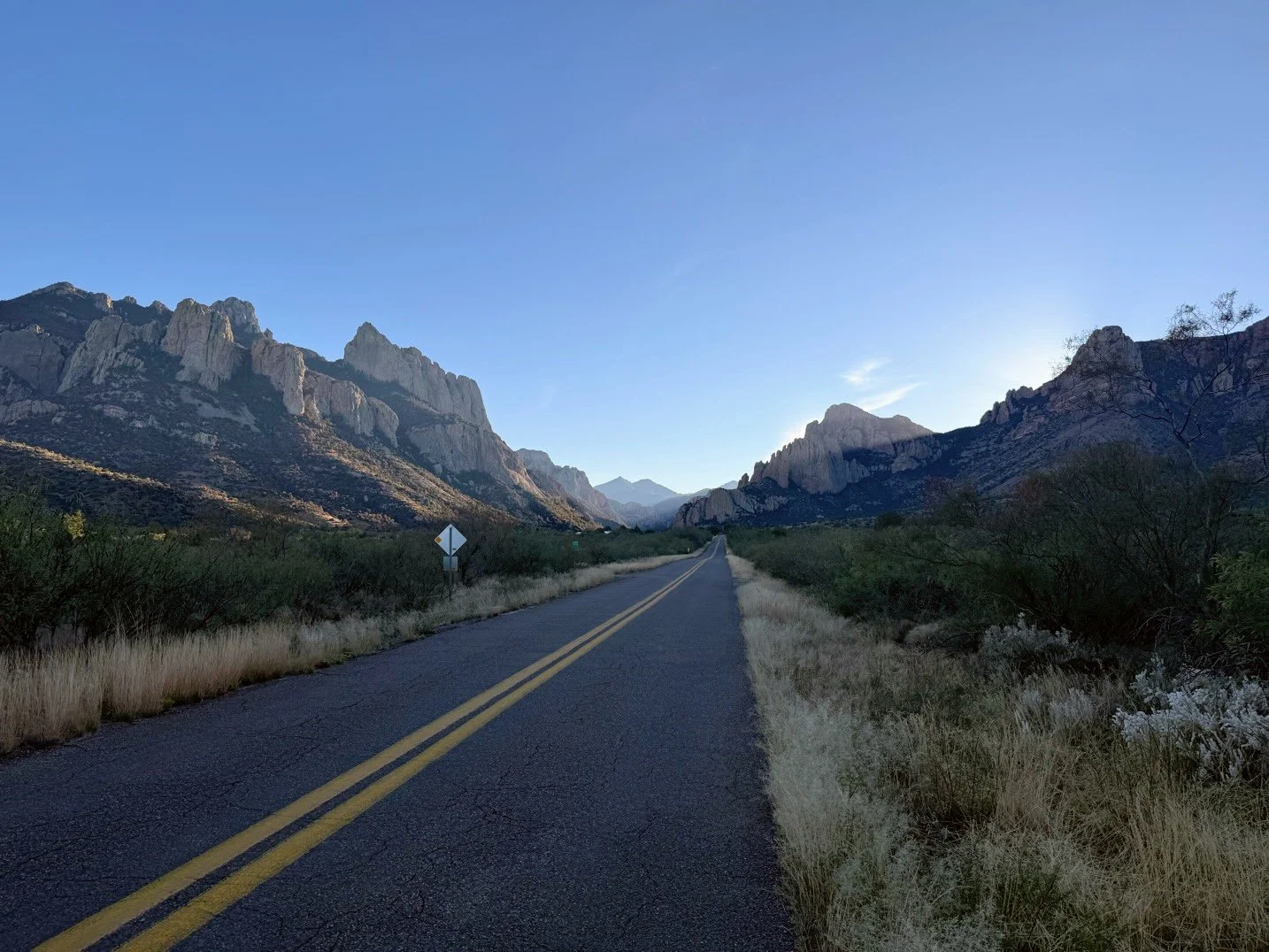
Our view as we arrived into Cave Creek Canyon in the evening- known as the “most scenic canyon in Arizona”, or “Arizona’s Yosemite”. Spectacular! My cameras were buried in the trunk, so this shot was taken with my cell phone
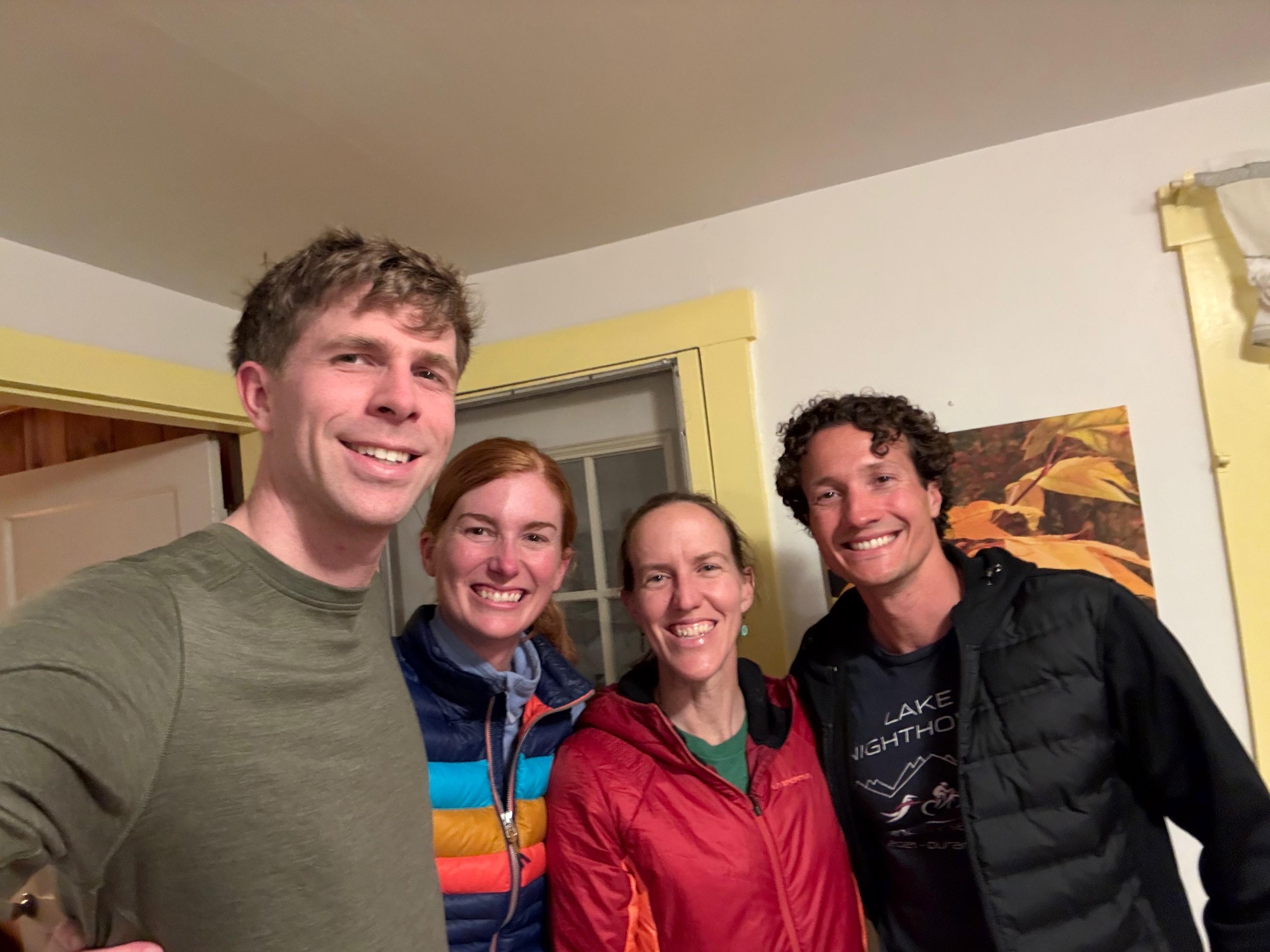
We stayed two nights at the Cave Creek Ranch, a cluster of historic buildings right along Cave Creek, and with an amazing feeder set up and a tranquil and spectacular setting with views of the cliffs rising above. In addition to a variety of birds coming and going throughout the day, Cave Creek Ranch also brought in our friends Jackie and James from Aztec, NM for a serendipitous reunion after not seeing each other for too long!
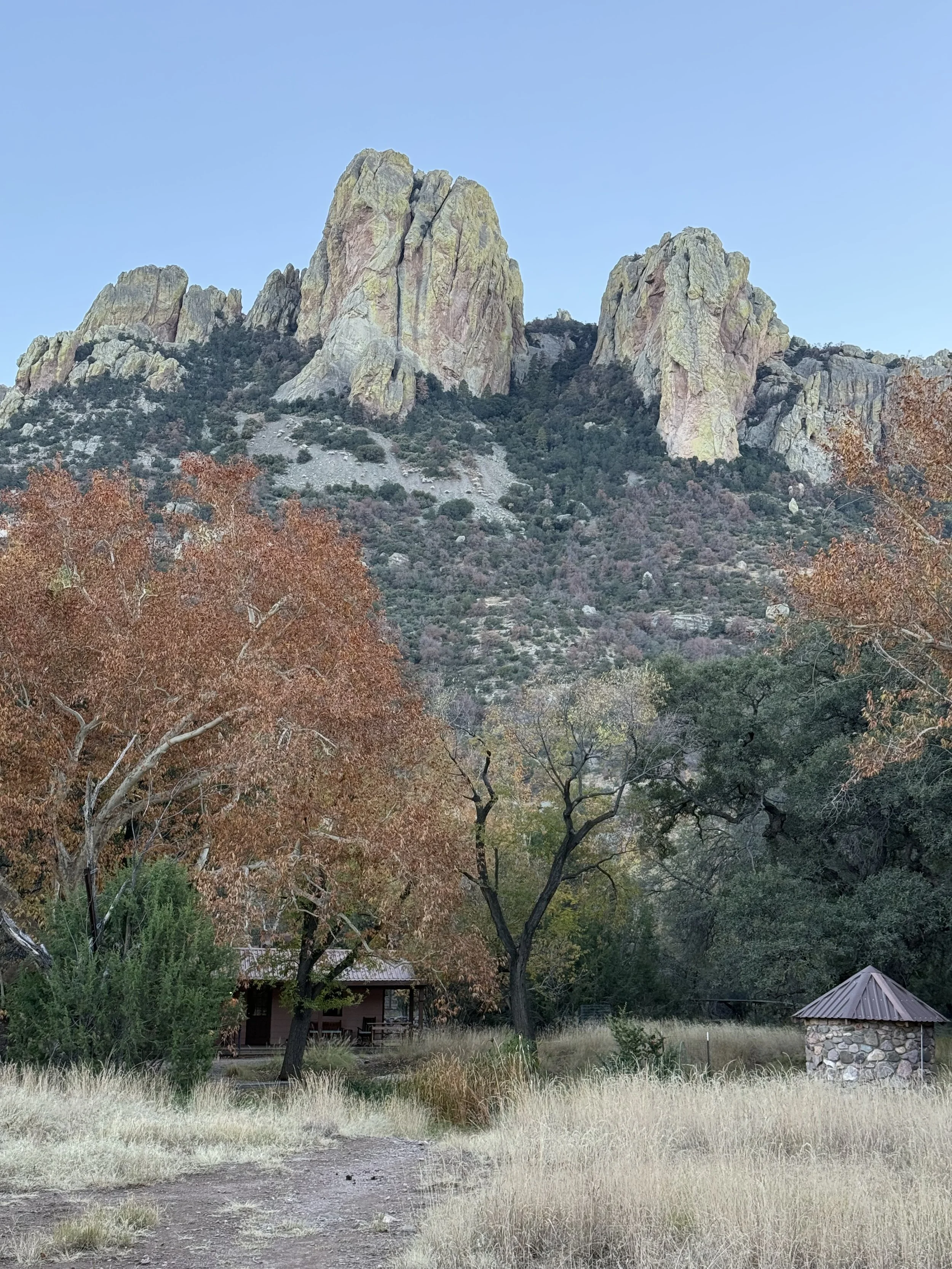
Cave Creek Ranch was a phenomenal setting to explore the Portal area and up to Cave Creek. Just a bit up the road you entered the Chiricahua Wilderness, where we spent a good chunk of the morning of Thanksgiving Day.
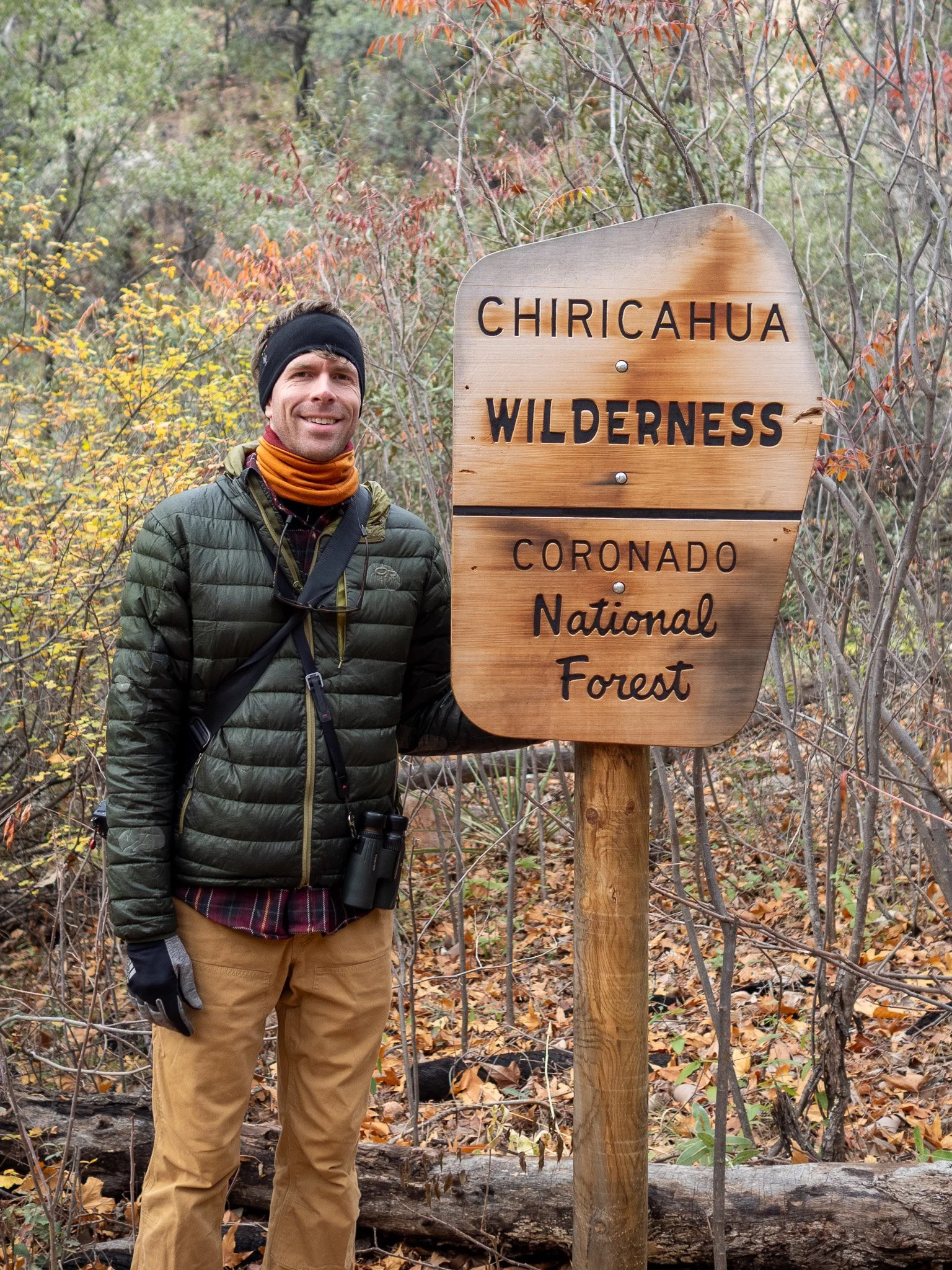
It was cold in the deep, shady, North-facing canyon!
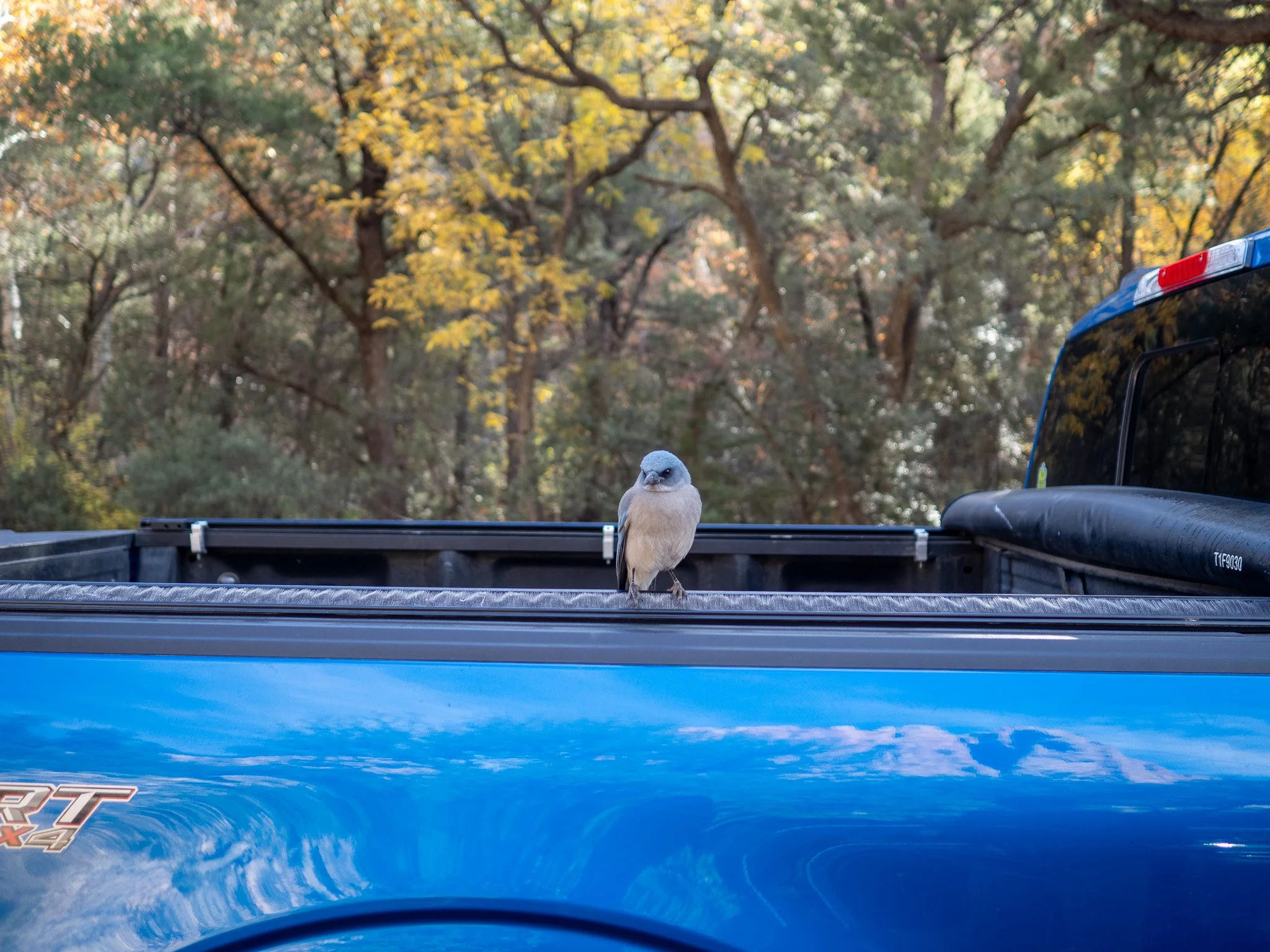
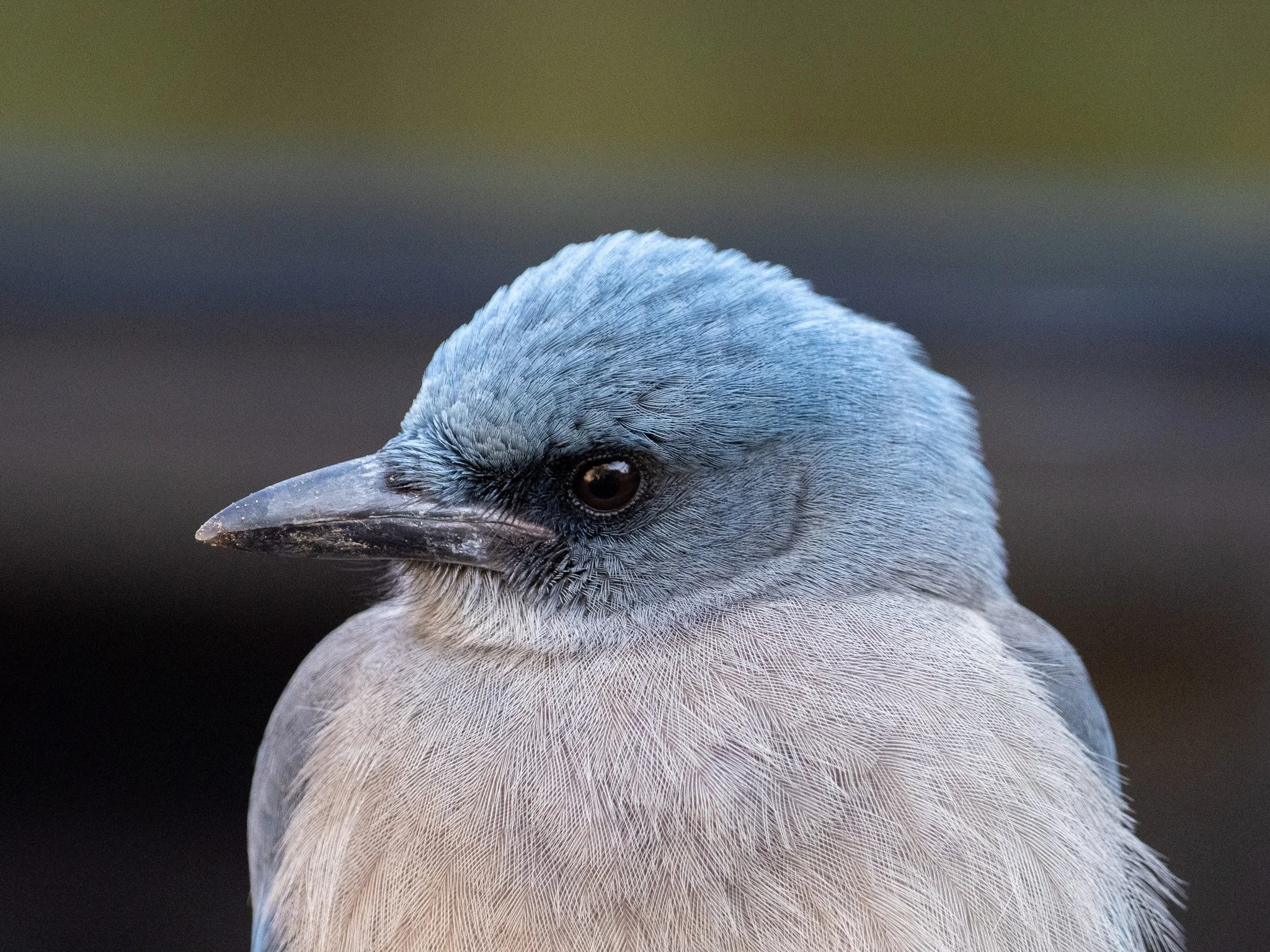
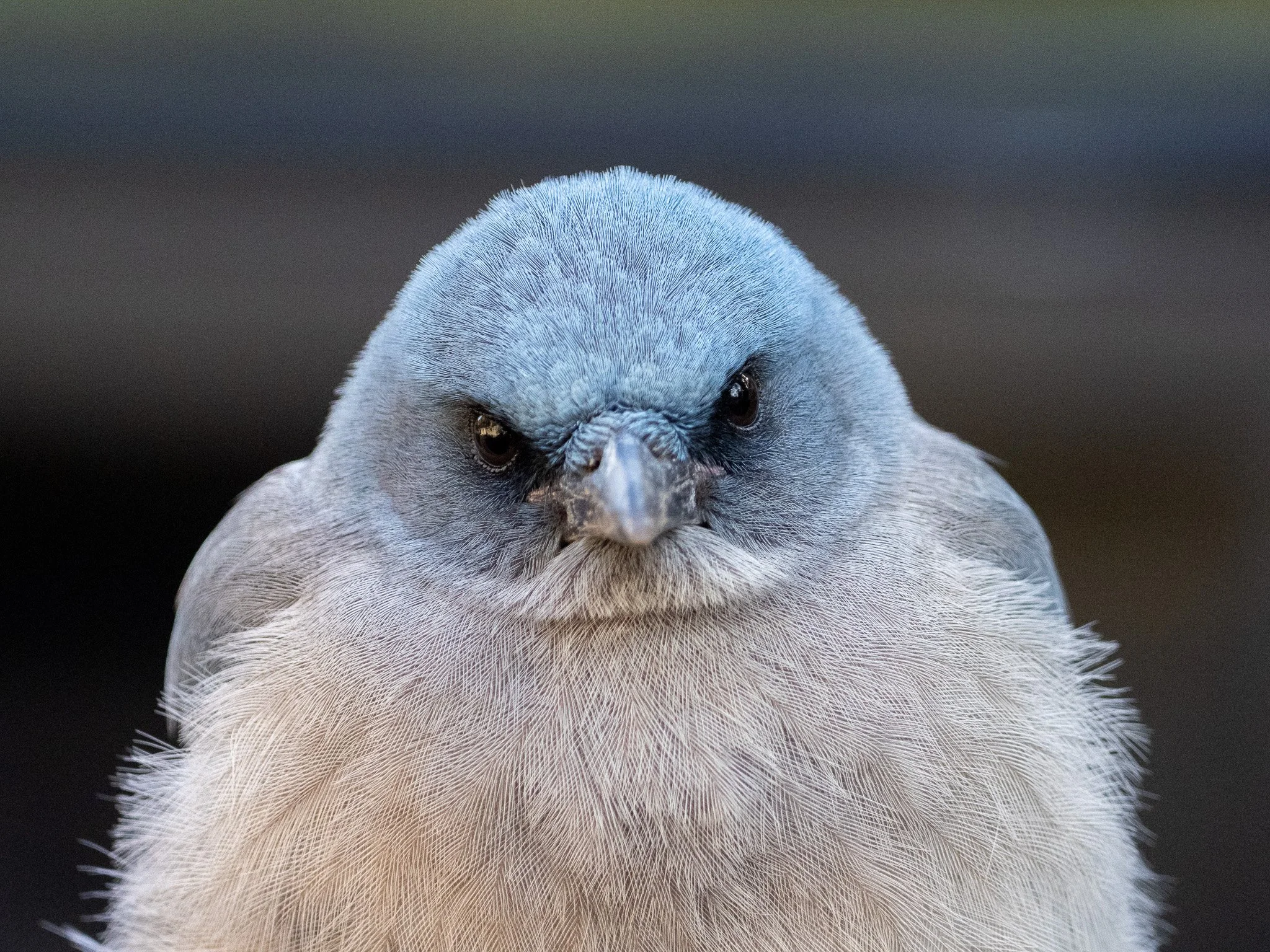
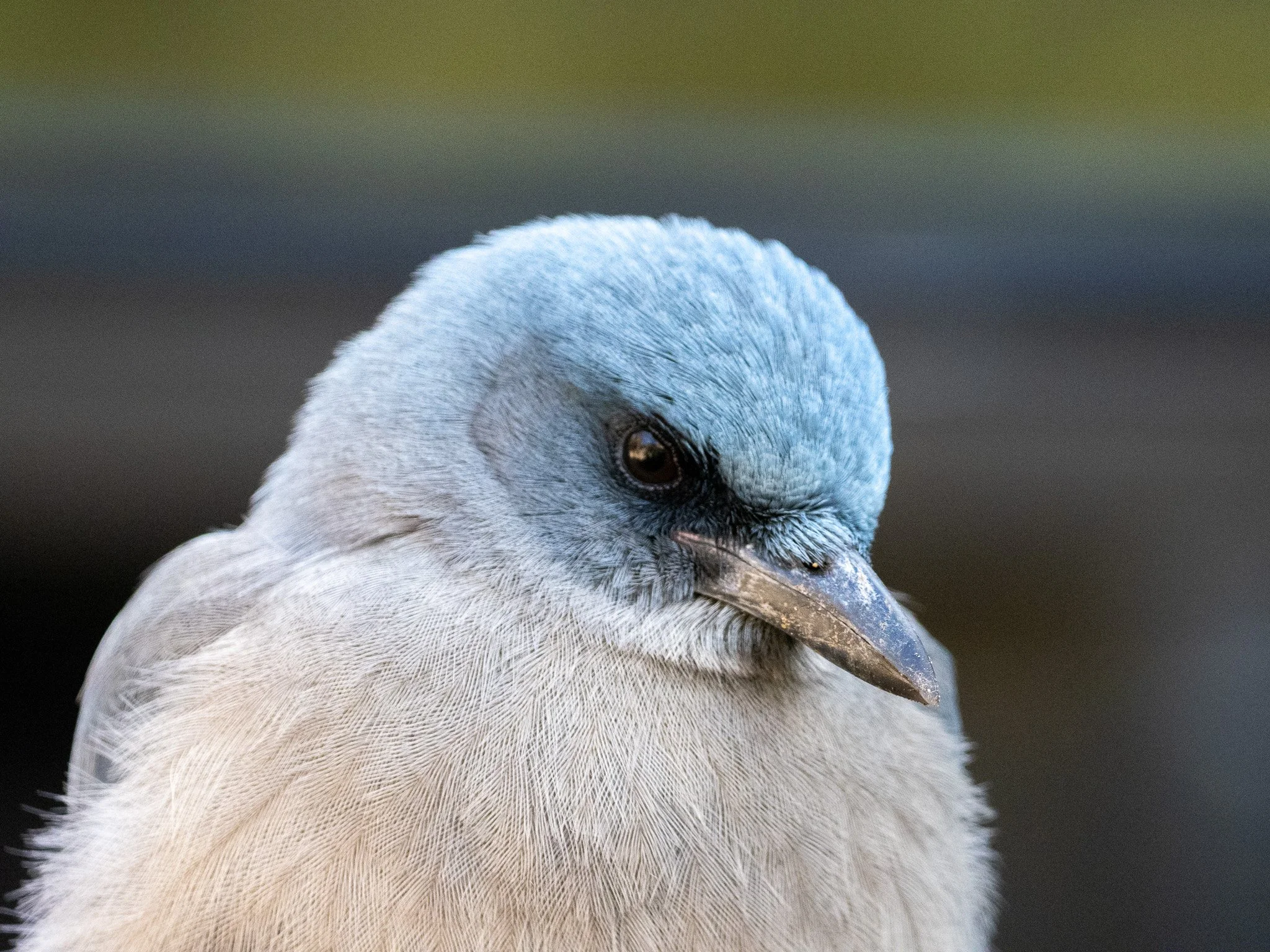
My best photos from our hike were taken in the parking lot - a bold and inquisitive Mexican Jay seemed to be running a productive snack-shakedown from the hikers starting into the forest. This bird posed nicely for a ‘mugshot series’ of portraits!
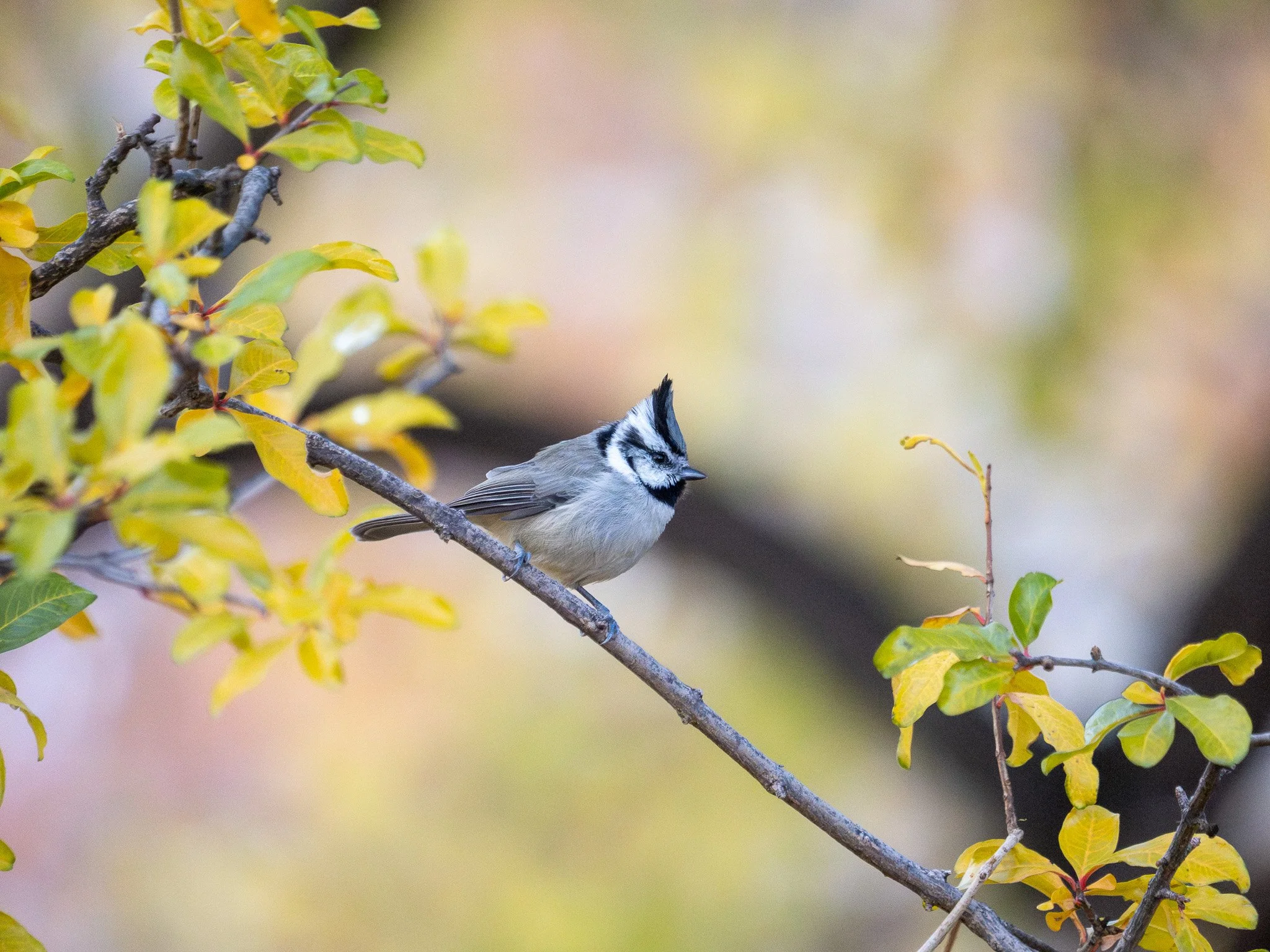
One of my favorite Arizona specialty birds - the Bridled Titmouse
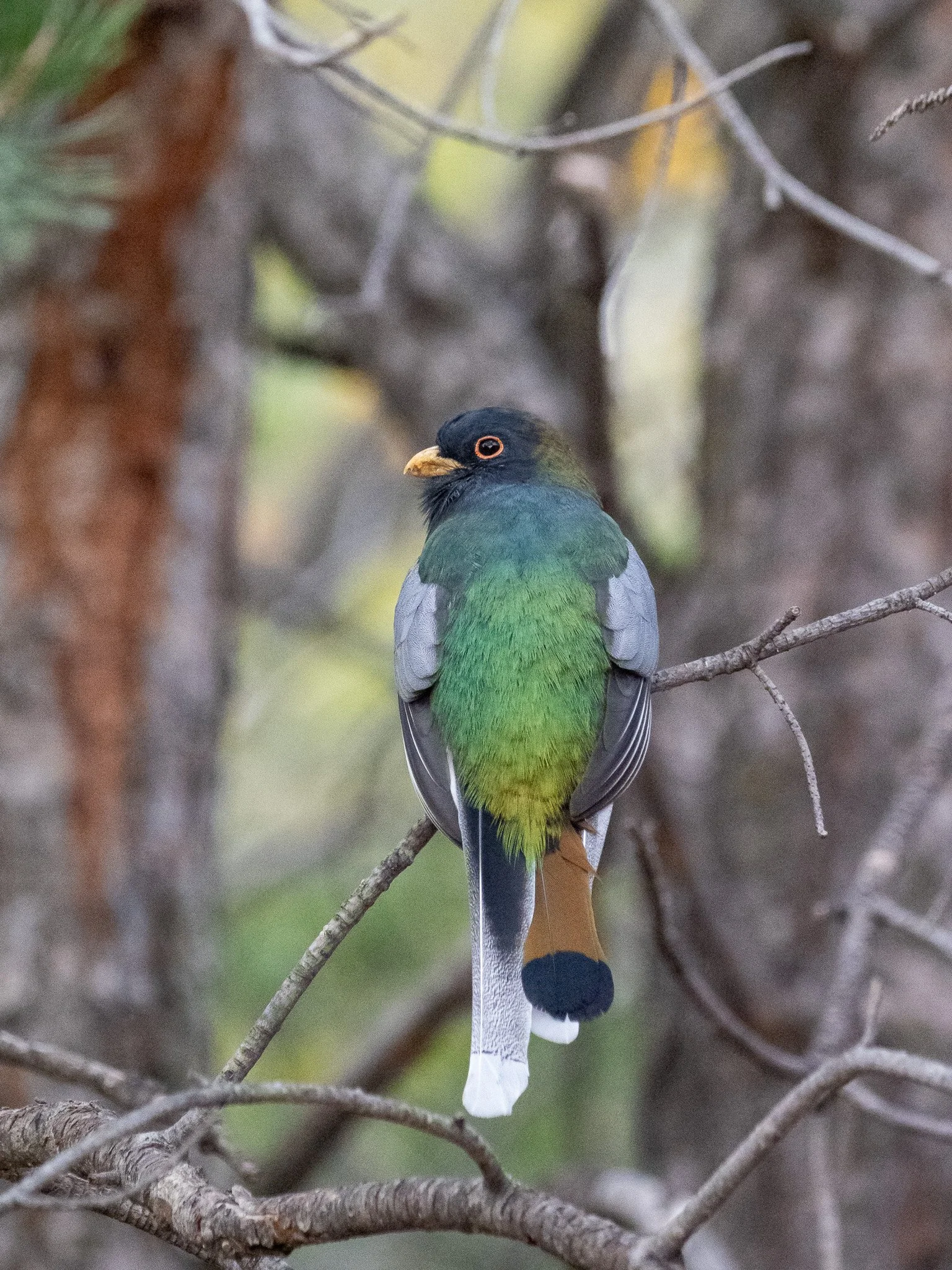
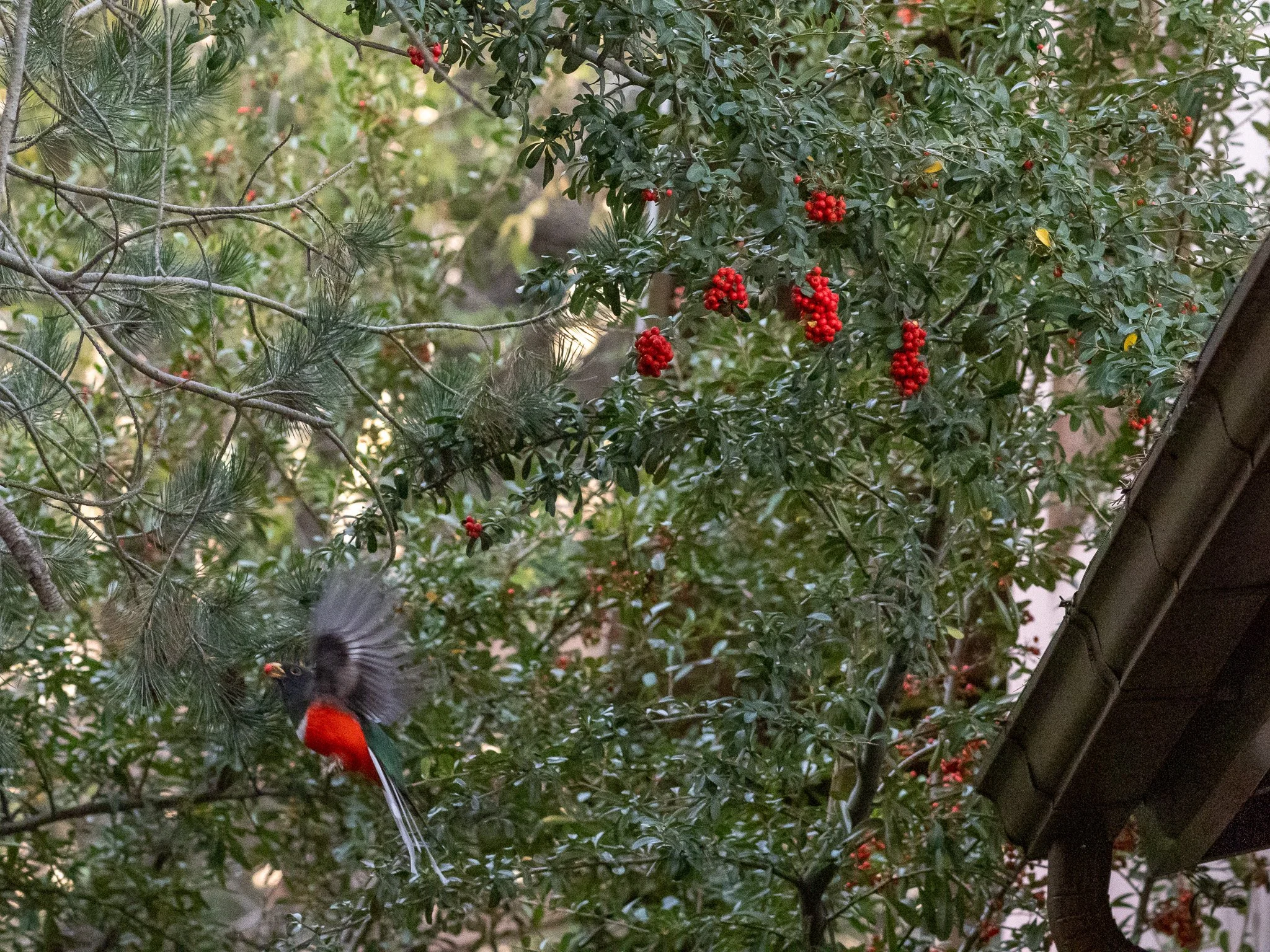
Perhaps the most well-known bird of the Arizona Sky Islands is the Elegant Trogon … I mean Coppery-tailed Trogon as of 2025! Still elegant, but now called Coppery-tailed following a species split, this bird is the only trogon species regularly present in the United States. It is a large, magnificent and brightly colored bird that draws many birders and nature lovers of all kinds to the forested canyons of the Sky Islands. Most regularly seen in summer, we had heard that one had been hanging around the Cave Creek Ranch into November, and had been seen eating the bright red pyracantha berries from near the feeding area of the ranch. The final morning of our stay, I spotted a flash of bright red in the large sycamore tree at the center of the feeding area that could only mean one thing: “Trogon!” I informed the cluster of birders at the feeders. It can be bedeviling how such a big bird with a bright red breast can disappear into the leaves just a few meters away. After a minute, it flew out of the sycamore towards the pyracantha bush where we observed it perch for a few minutes. Finally it swooped down and snagged a bright red pyracantha berry before disappearing for the day. One of the guests at the ranch told me it was his fifth time coming here hoping to see the trogon, and this was the first time he had seen it! He was overjoyed, and it was a great moment to share with the other birders.
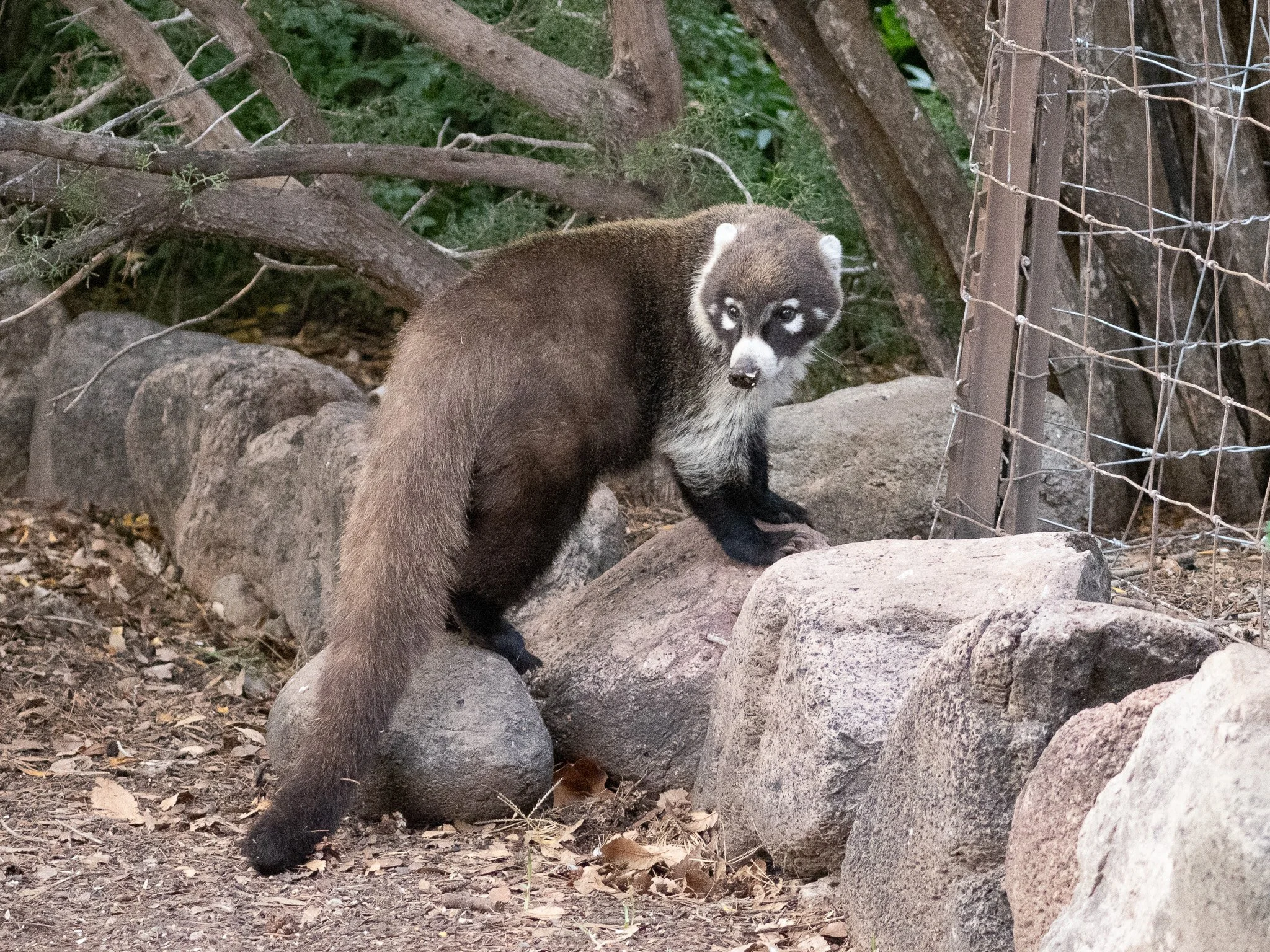
The Coatimundi, a relative of the raccoon, is another beautiful and charismatic animal living in the Sky Islands. This one had a pretty good thing going making early morning visits to the feeder setup at Cave Creek Ranch.
We crossed over from the East to the West side of the Chiricahuas by driving up and over the Onion Saddle. Our drive brought us up to the higher elevations of the range that are home to the Mexican Chickadee. This species, while more widely distributed in the Sierra Madre in Mexico, only lives in the United States in the high elevations of the Chiricahuas and nearby Animas Mountains in the bootheel of New Mexico. We were hoping to see it, and informed by our trusty copy of “Finding Birds in Southeast Arizona” stopped at a creek crossing that regularly produced sightings of this bird. We hiked up and downstream from the road for a while, until we encountered a mixed flock of Ruby-crowned Kinglets, Bushtits, and White-breasted Nuthatches about 100 yards upstream of the road. In the commotion, we heard some chickadee noises and started recording with our Merlin Bird ID app. Sure enough - it was flashing Mexican Chickadee! We managed to track the flock long enough to pick out our target bird - a chickadee with an extensive black throat. I managed to snap four quick photos before the birds flew further uphill where we couldn’t easily follow them. It is always thrilling to see a new bird species - lifer!
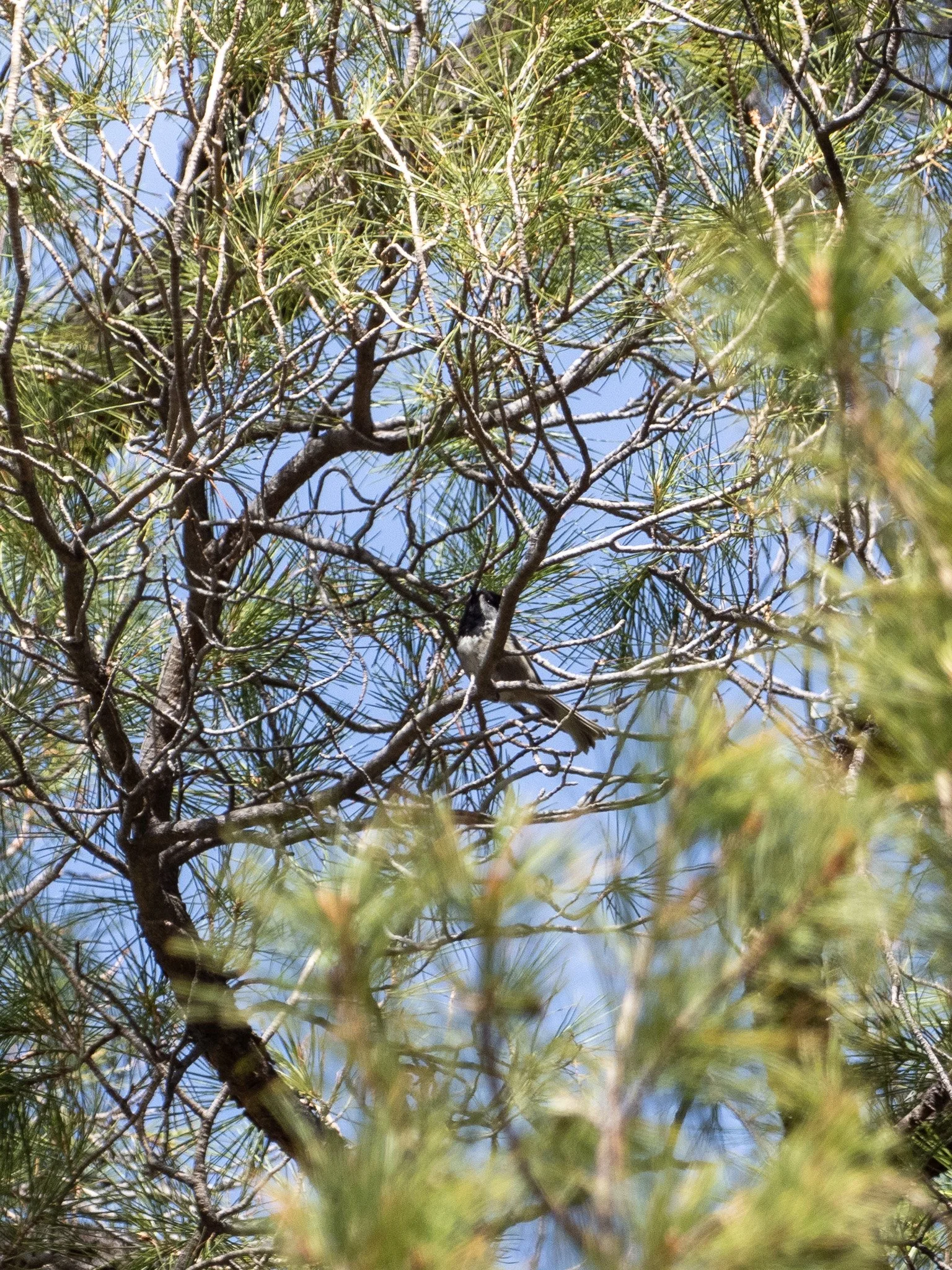
Mexican Chickadee with a view of its extensive black throat - the main field mark for distinguishing it from Black-capped Chickadee
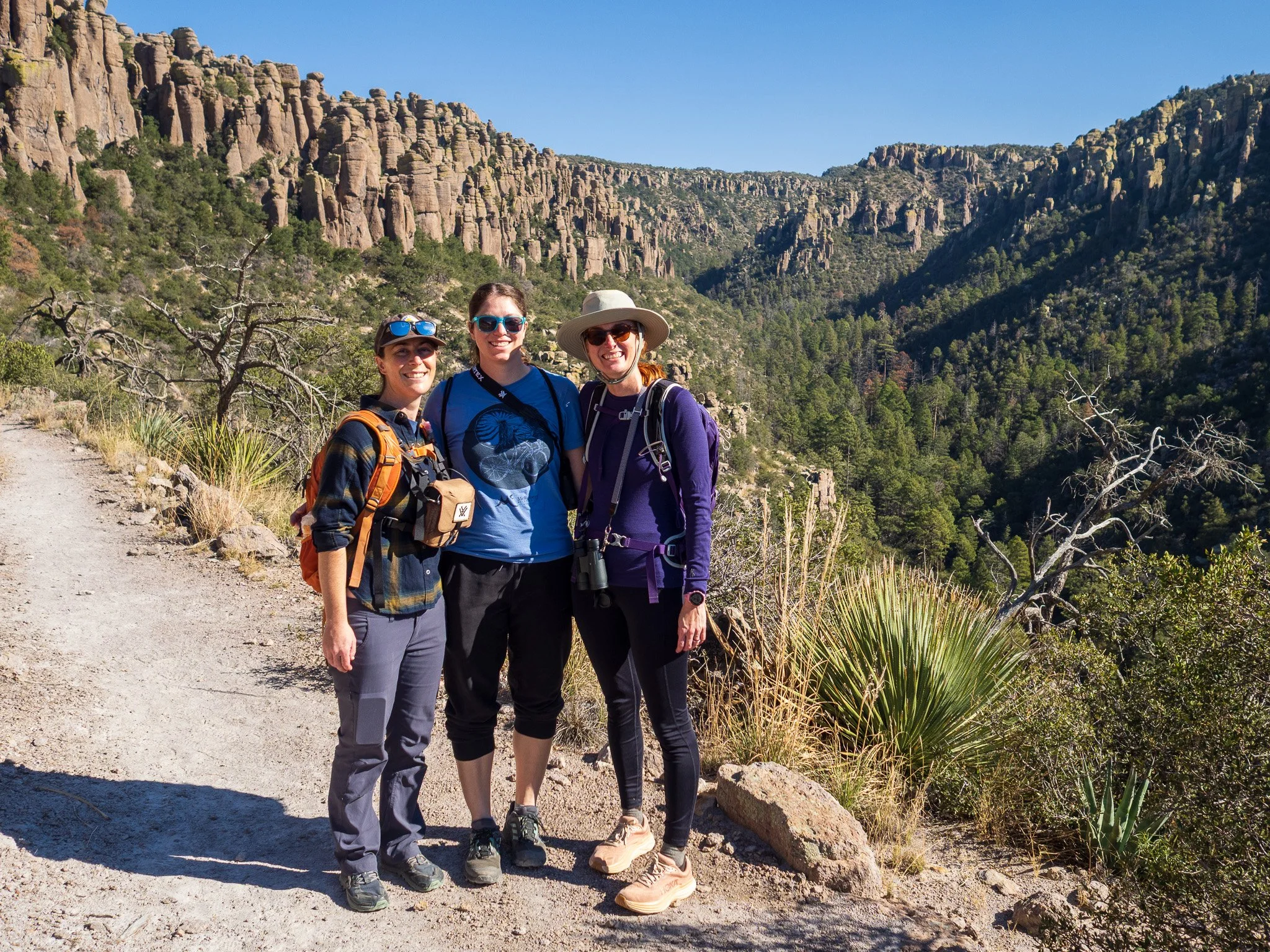
From the saddle, we continued to the West side of the range and met up with our friends Whitney and Shelly at Chiricahua National Monument. The Monument contains hundreds of rhyolite spires that mostly cluster in various formations. Between our late start and a stiff wind, birding was a background activity to our hike around the Echo Canyon loop
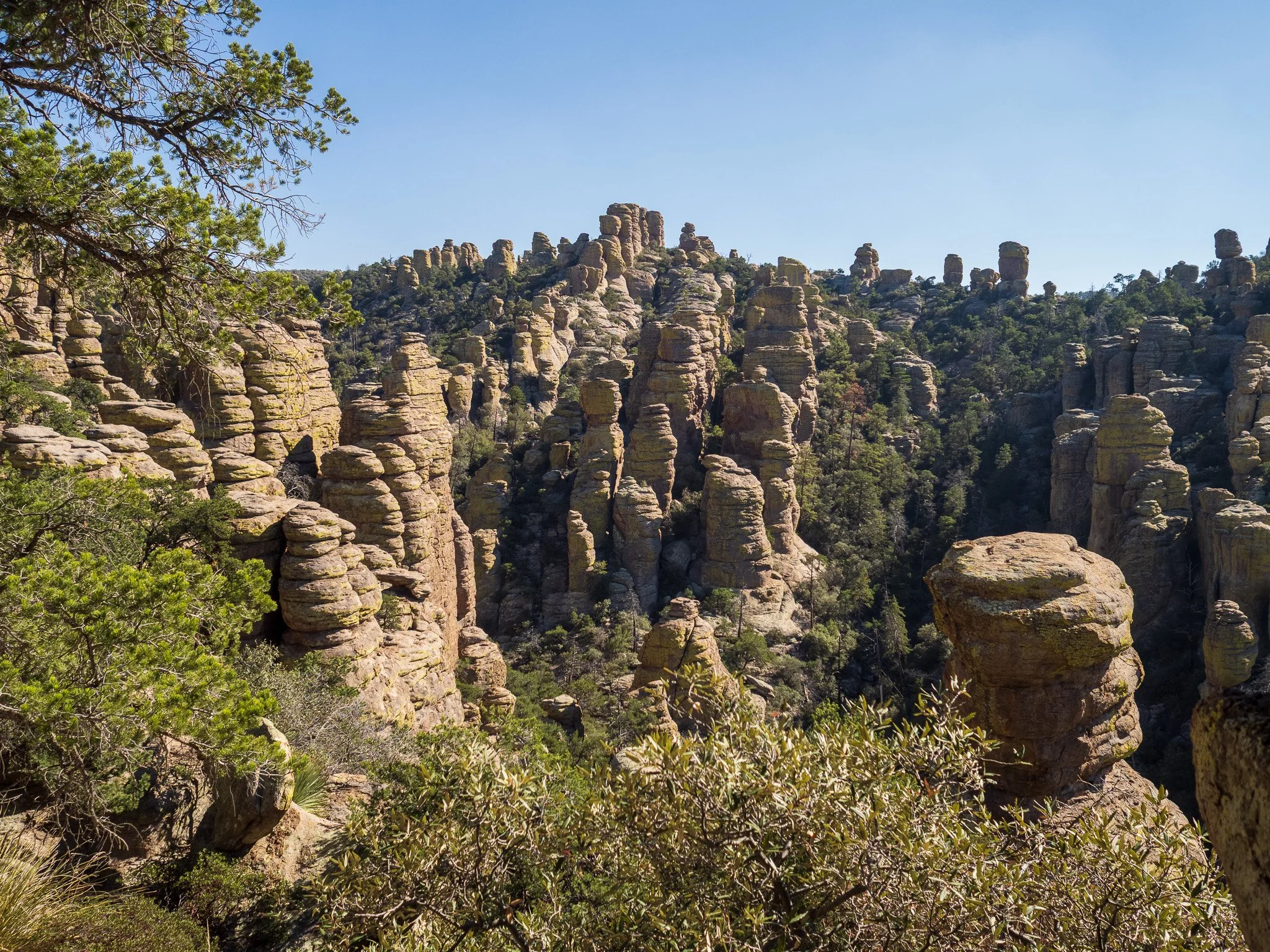
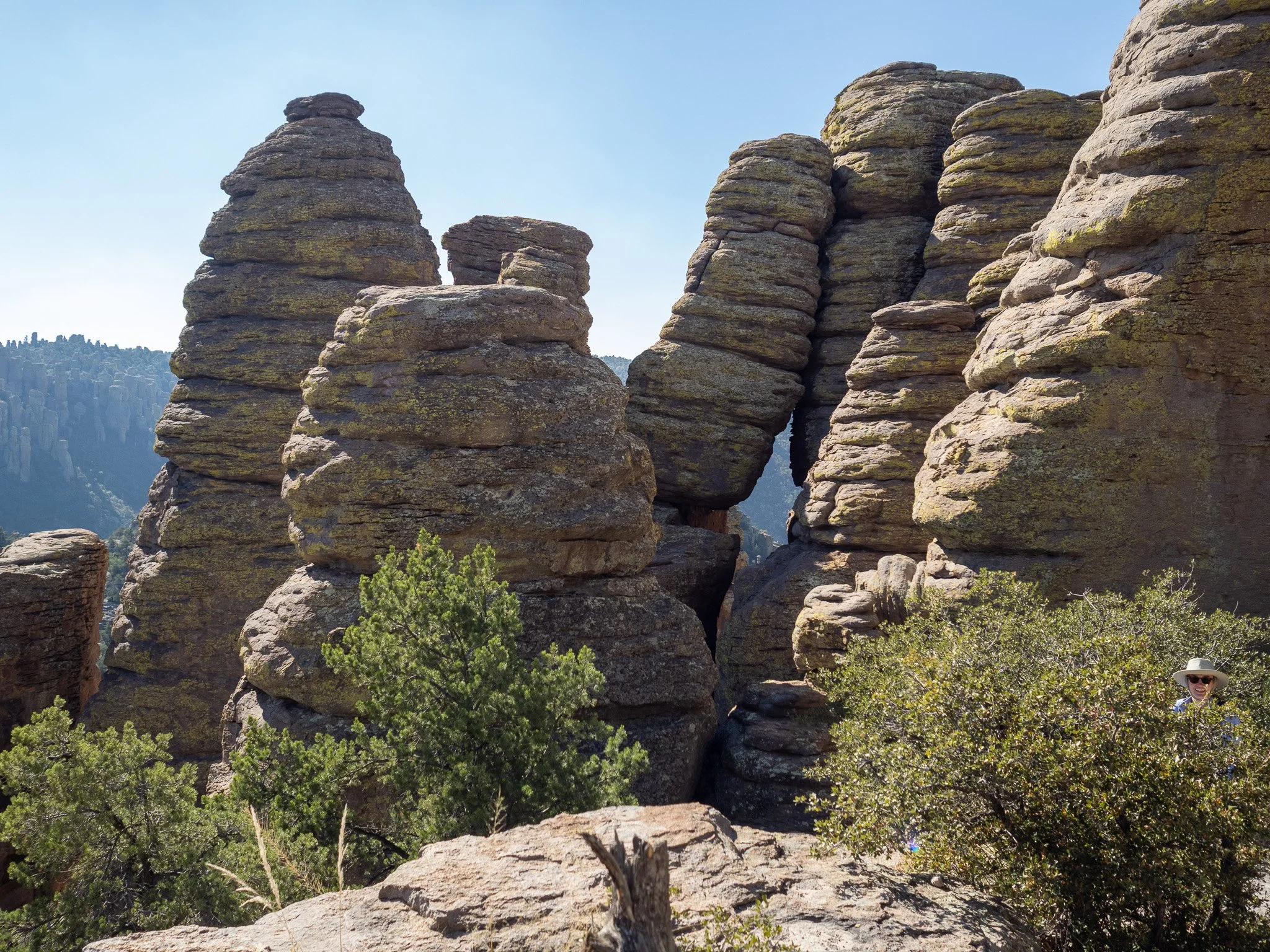
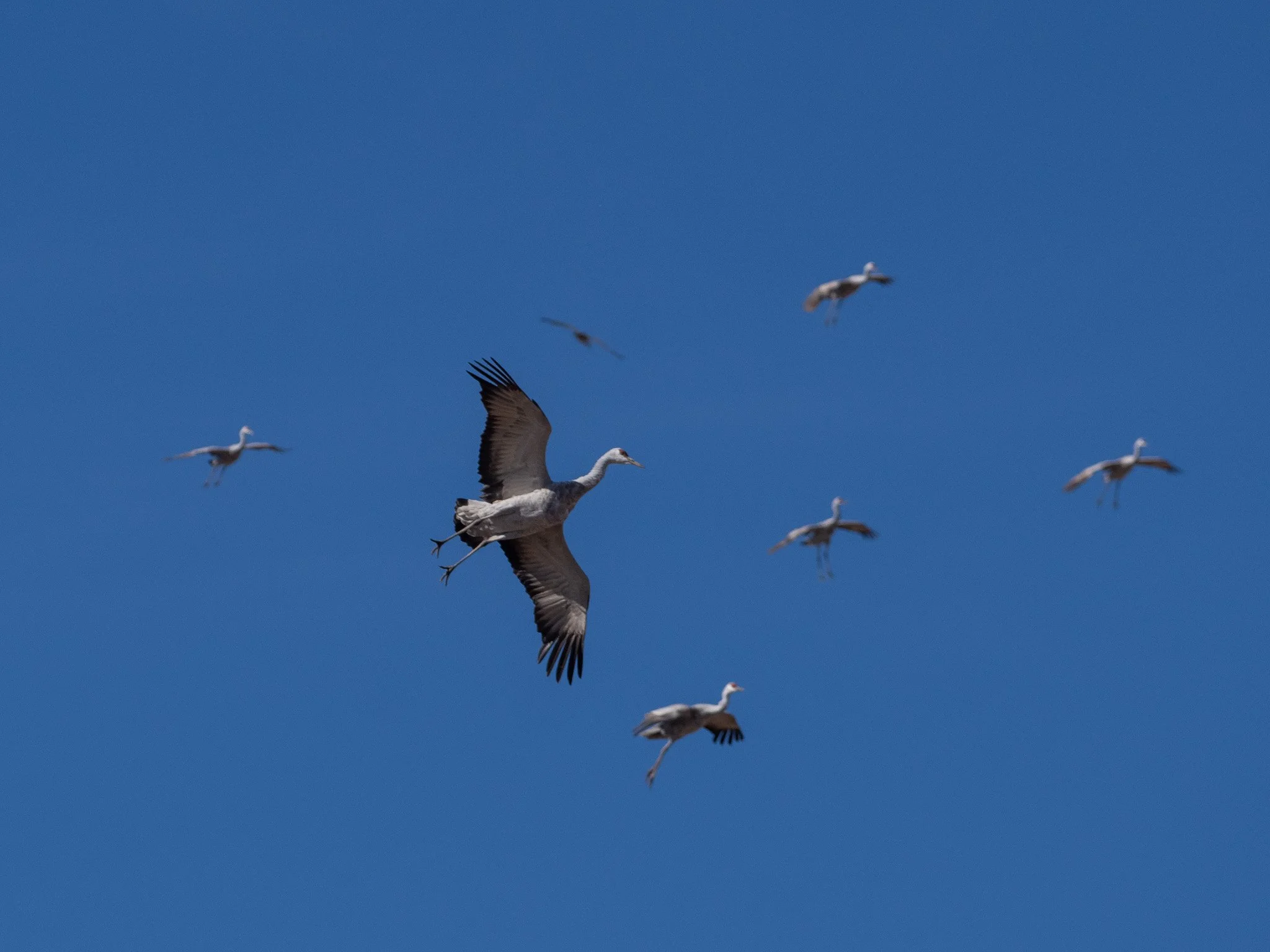
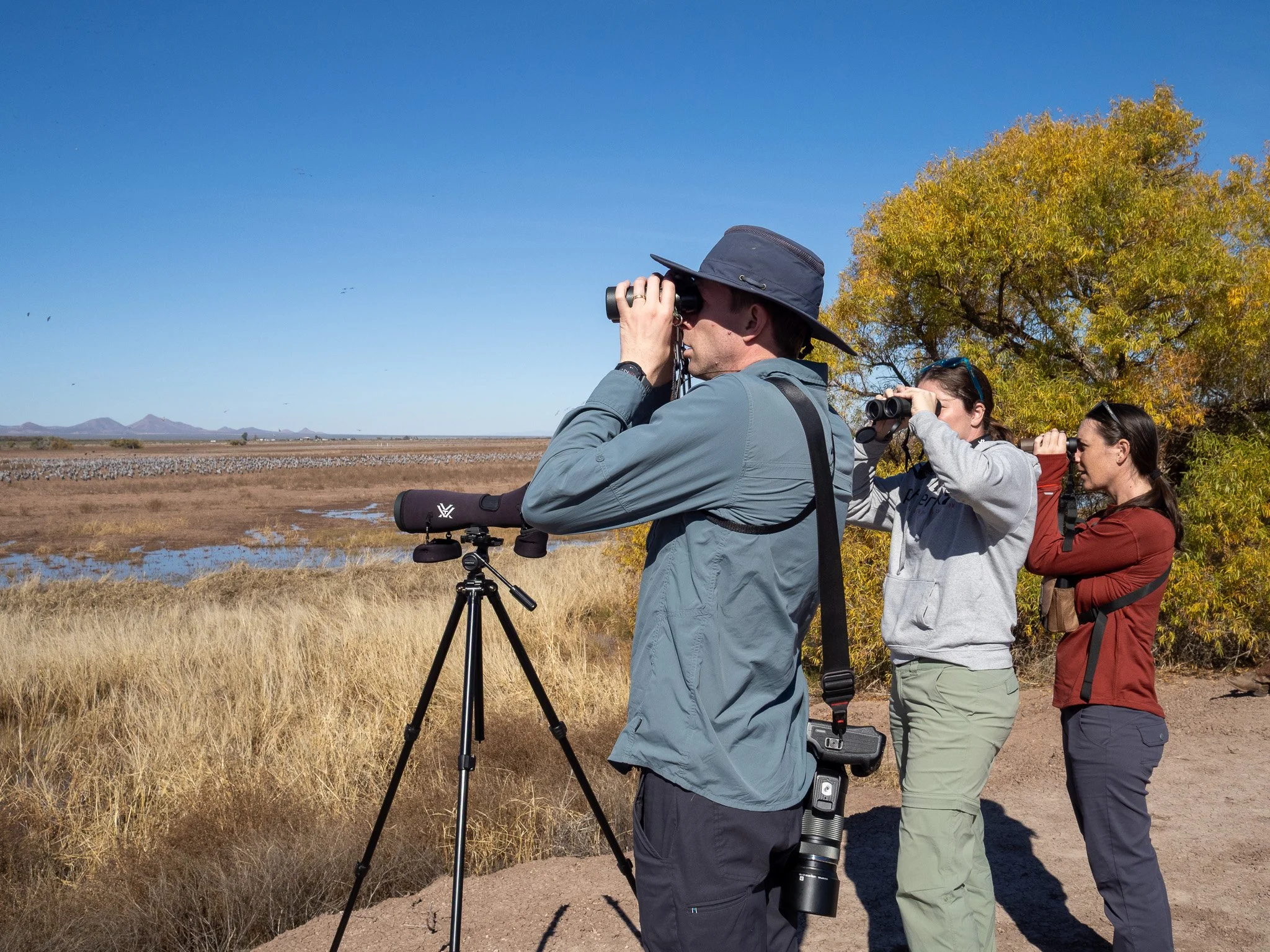
From our ‘home base’ at the Rhumb-Line vineyard outside of Wilcox, we got out to see some of the other bird highlights this time of year in the Sulphur Springs Valley. We cruised dirt roads for raptors, unsuccessfully searched a few spots for Bendire’s Thrasher, and visited Whitewater Draw and the Wilcox Ponds to see waterfowl and some Arizona Sandhill Cranes. The Sandhill Cranes were trickling out of the sky in growing numbers as they gathered at their roost at Whitewater Draw. While not as scenic as the Portal side, the Sulphur Spring Valley side of the Chiricahuas is also worth a visit!