Costa Rica 2026 (2/5): Rancho Naturalista and Volcan Turrialba
Rancho Naturalista is one of the premier birding lodges in Costa Rica and probably all of Central America. It is located in the mountains of Turrialba in the Cartago province East of San Jose. We arrived in time for lunch on the patio directly in front of their great feeder setup. Our room also opened onto the upstairs deck where we got a great view of the feeders and into the trees and the valley.
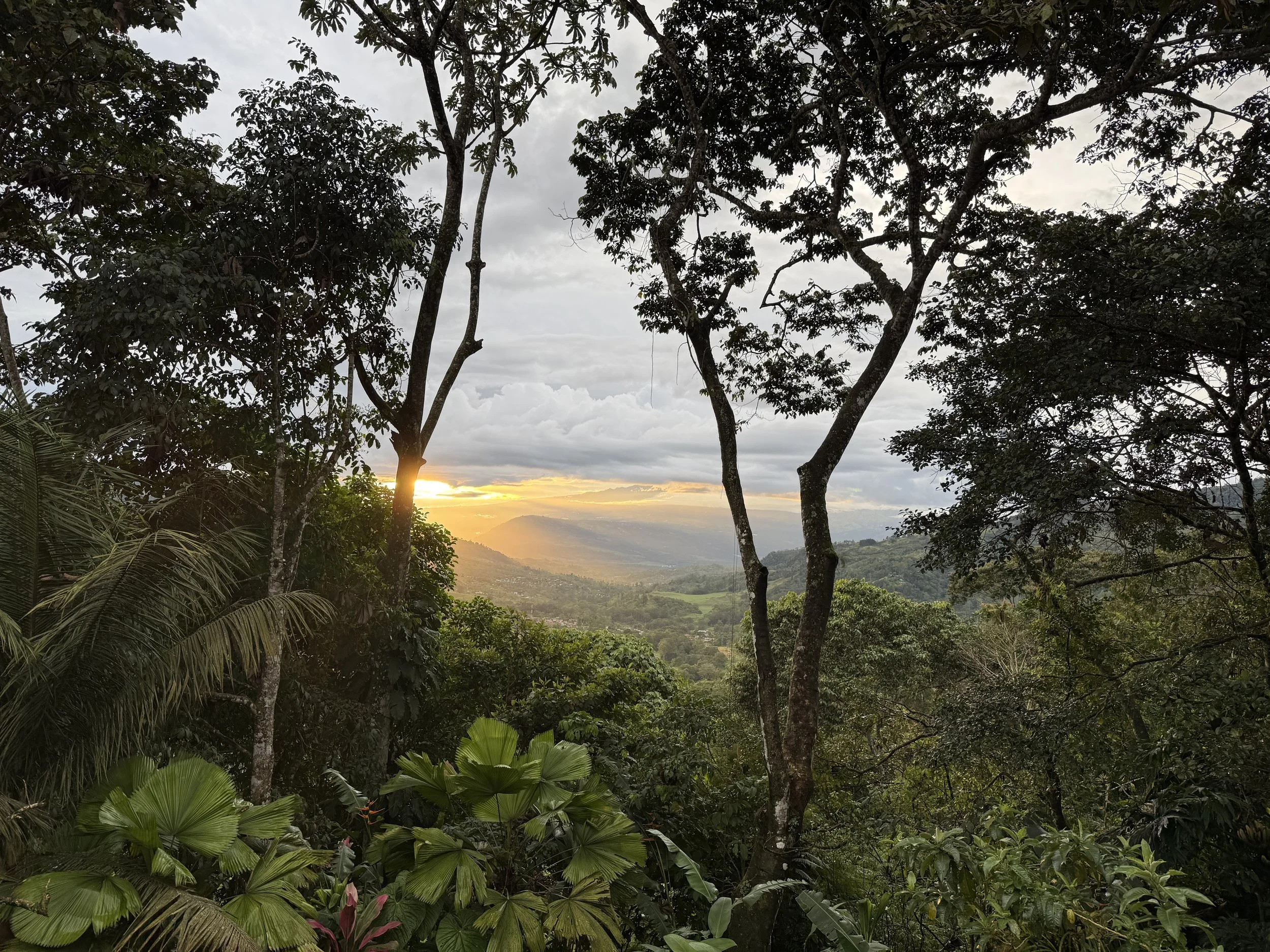
The view from the deck at Rancho Naturalista looking out into the valley at sunset
We did some walking around the property but we spent most of our evening watching the feeders and birding right around the lodge. We were seeing a ton of new birds for us - particularly hummingbirds we were trying to identify.
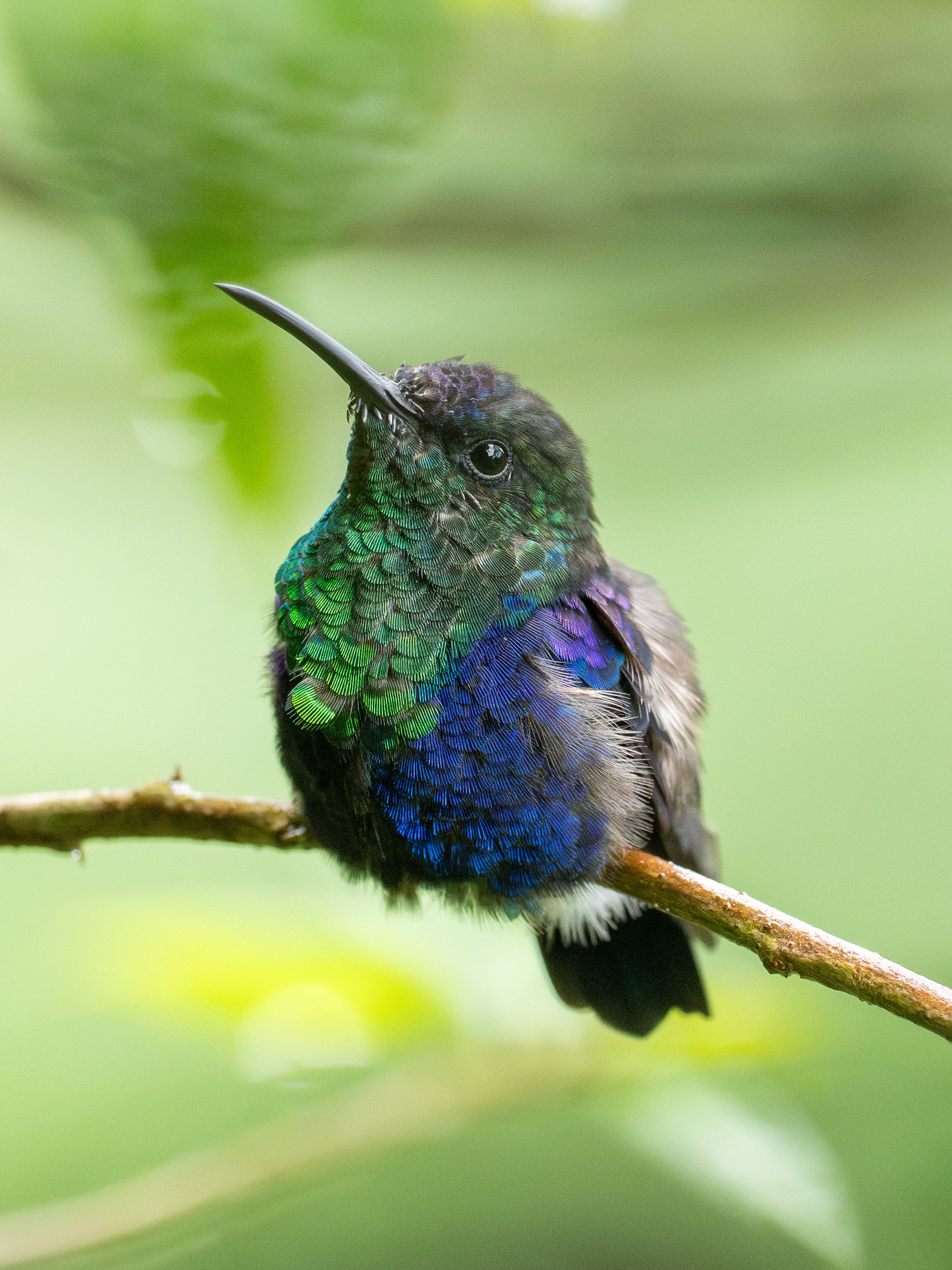
This hummingbird is a Crowned Woodnyph - a beautiful explosion of iridescent emerald and violet
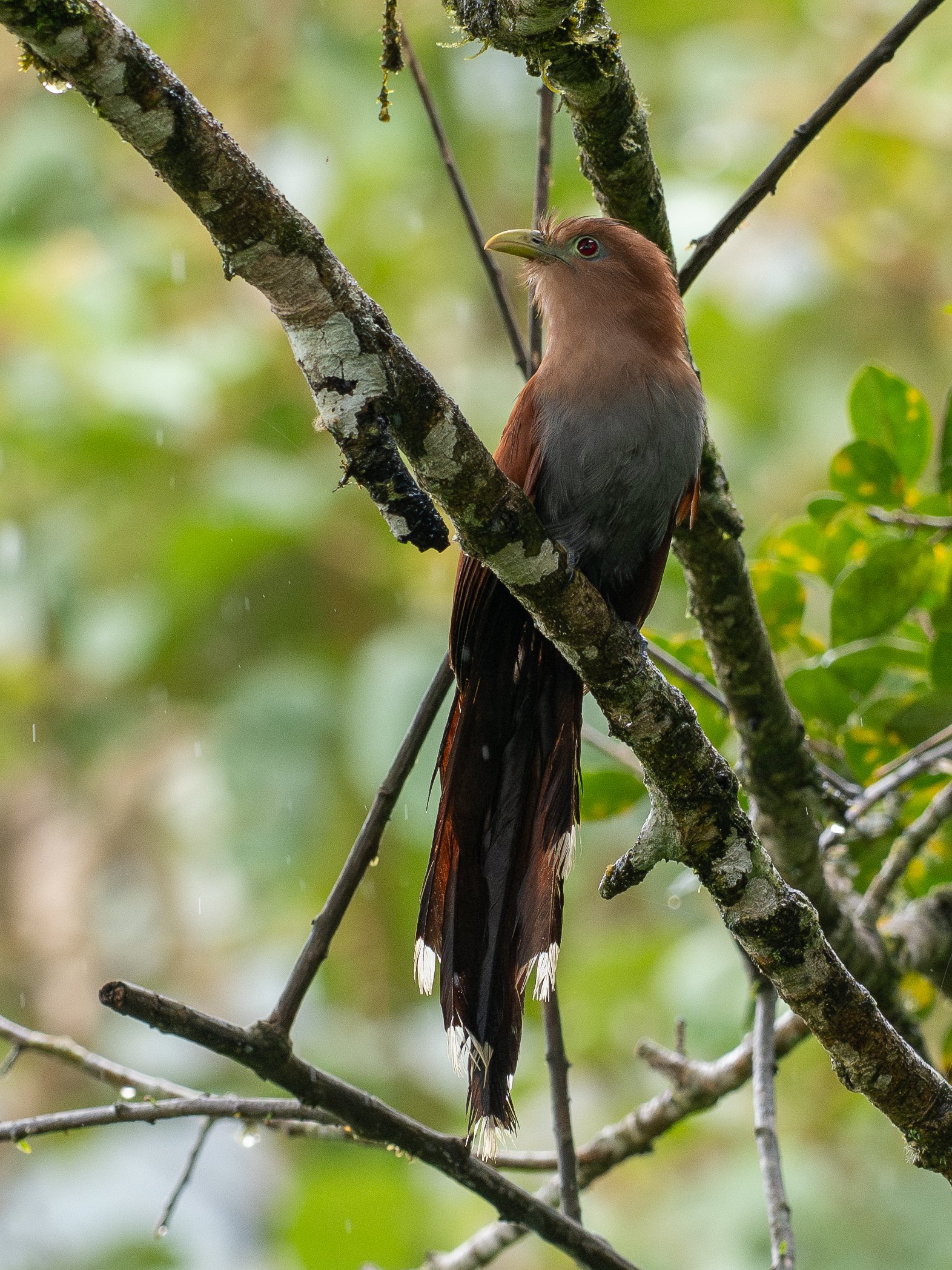
It wasn’t all hummingbirds though. A particular standout was this Common Squirrel-Cuckoo who came into the trees above the feeders where we got great looks. After dinner we met up with Teylor Redondo, a young guide who would be showing us around the next two days. We made plans to bird the property the next morning, and he also kindly set us straight on a few of our hummingbird misidentifications.
We met Teylor a little before 6 a.m. and walked the grounds right around the lodge before breakfast. We had over 60 species of birds already when we sat down for a bite to eat. Now properly fueled up we followed Teylor out onto the trail system proper into the forest.
One of the unexpected highlights of our morning was seeing a Thicket Antpitta. We had never seen an antpitta of any sort so it wasn’t on our radar as particularly interesting but Teylor had noted a few times that a call we were hearing pretty often was coming from the Thicket Antpitta: a resonant rising whistle: ooo whoo whoo WHOO WHOO WHOOP! Later we learned that antpittas are quite difficult to see but luckily for us, Teylor had a system worked out where he offered the antpitta some worms at a particular spot on the trail. Within a minute or so of laying out the worms and playing some antpitta calls, a small borb of a bird popped out onto the trail singing its song: ooo whooo whooo WHOOOP!
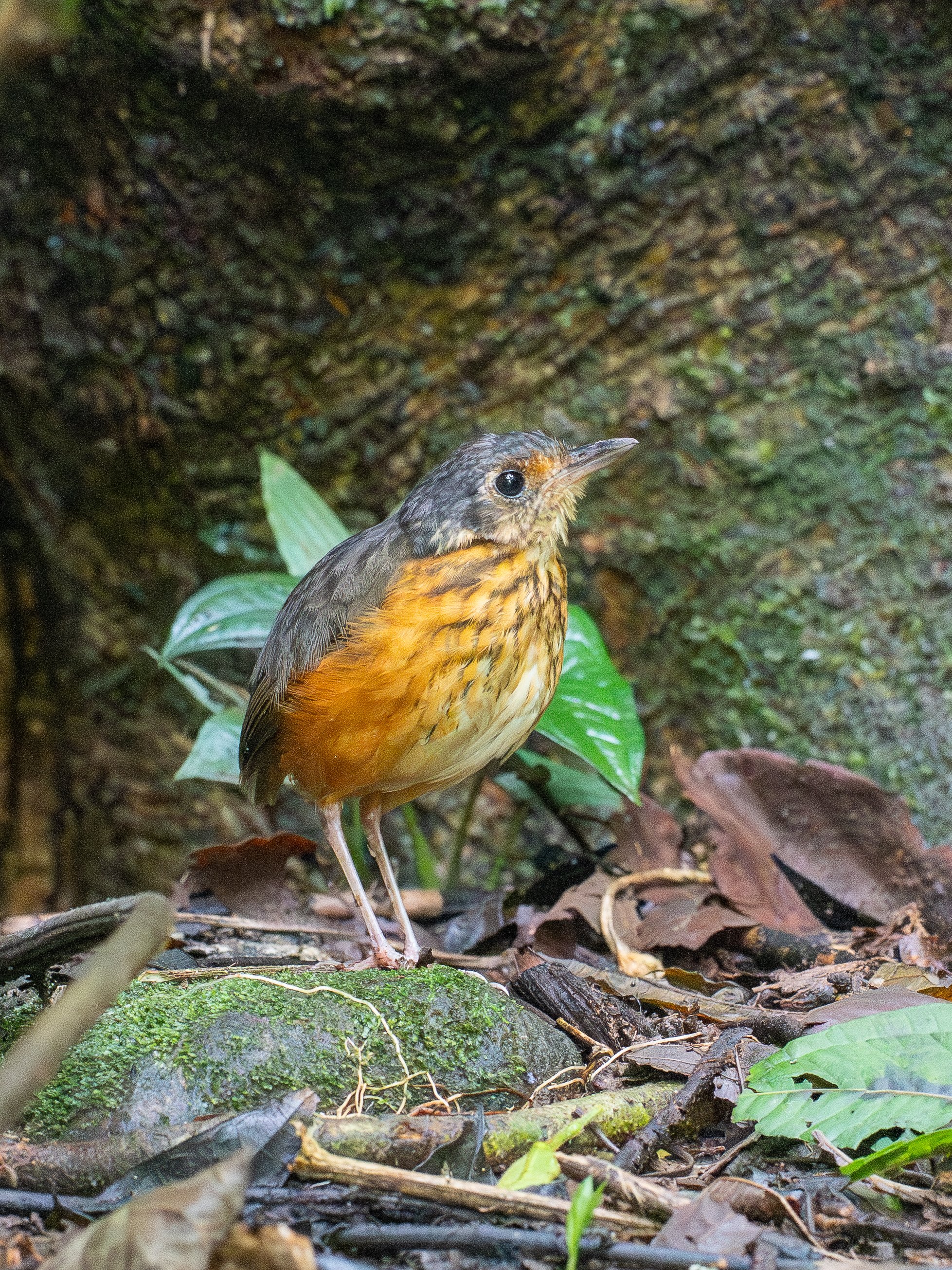
The Thicket Antipitta: very cute!
Later we made our way to “the pasture” where there was some forest edge habitat, some open space and longer sight lines. This area was very active - we saw a variety of tanager species, flycatchers, and more!
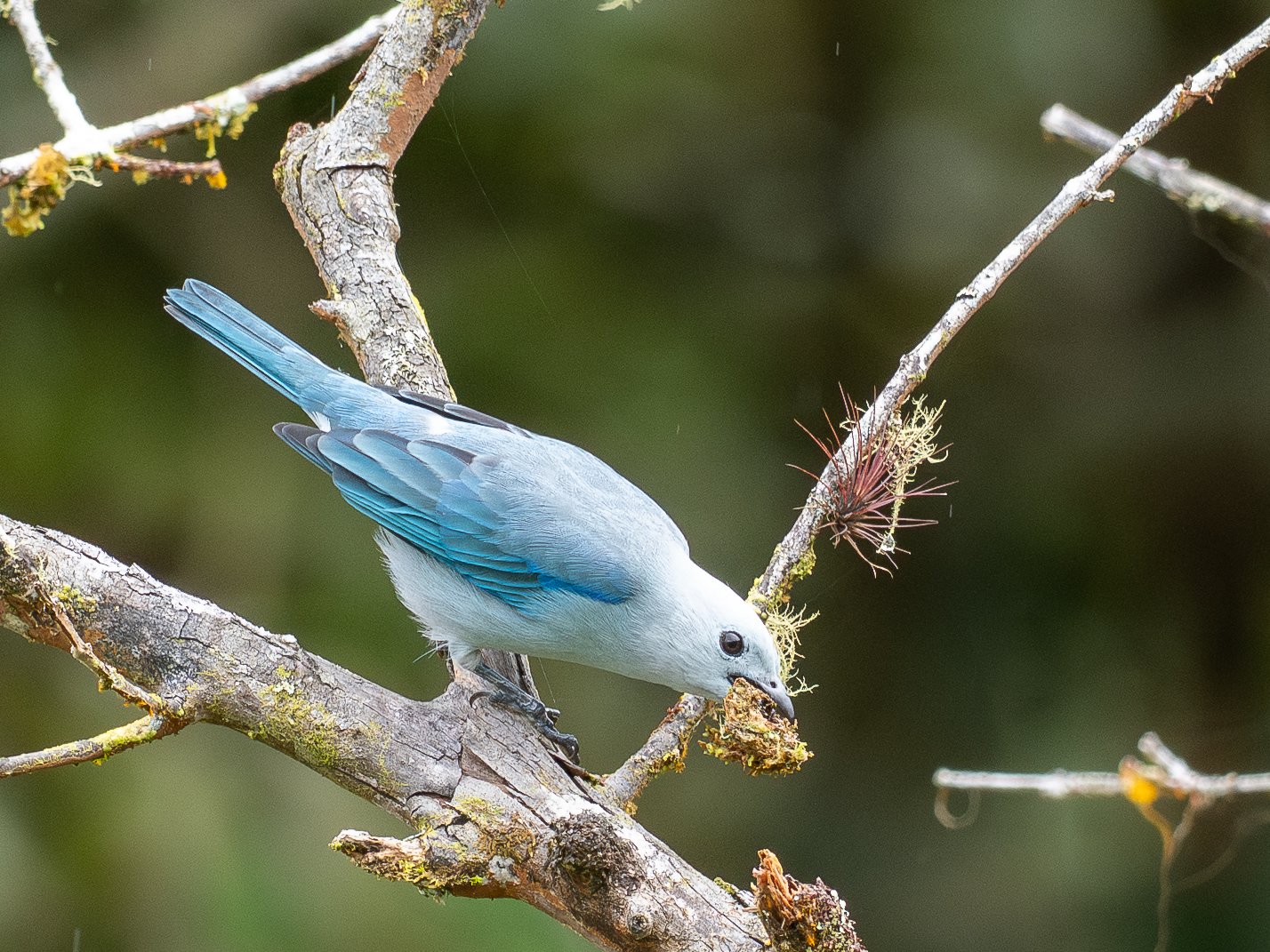
Blue-Gray Tanager: one of the more common and widespread tanager species
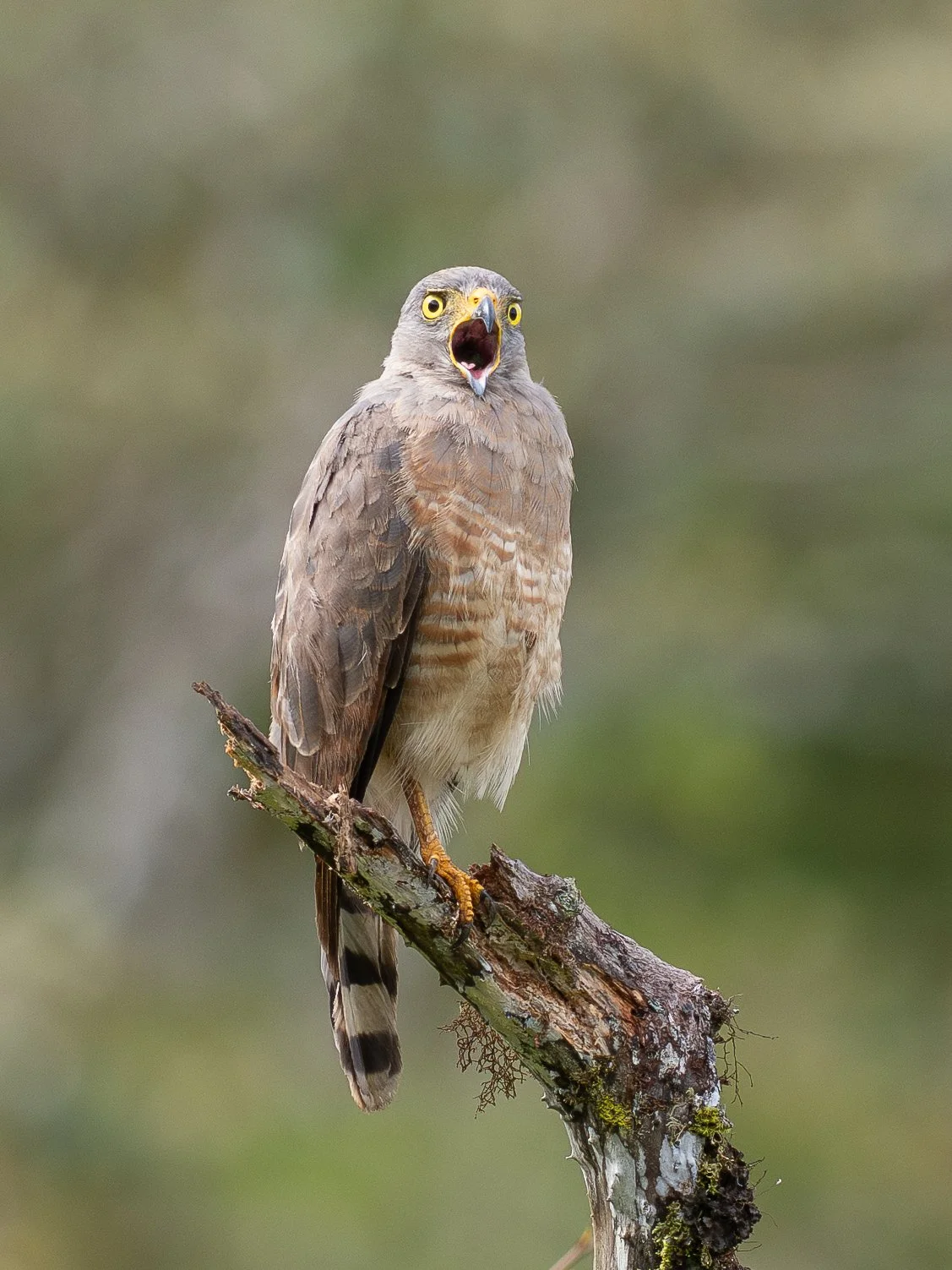
We also encountered a squealing Roadside Hawk in the open pasture area
The pasture was a good place to be when rain started coming down pretty hard: there is a raised gazebo with a roof that allowed us to stay dry and keep birding in the rain!
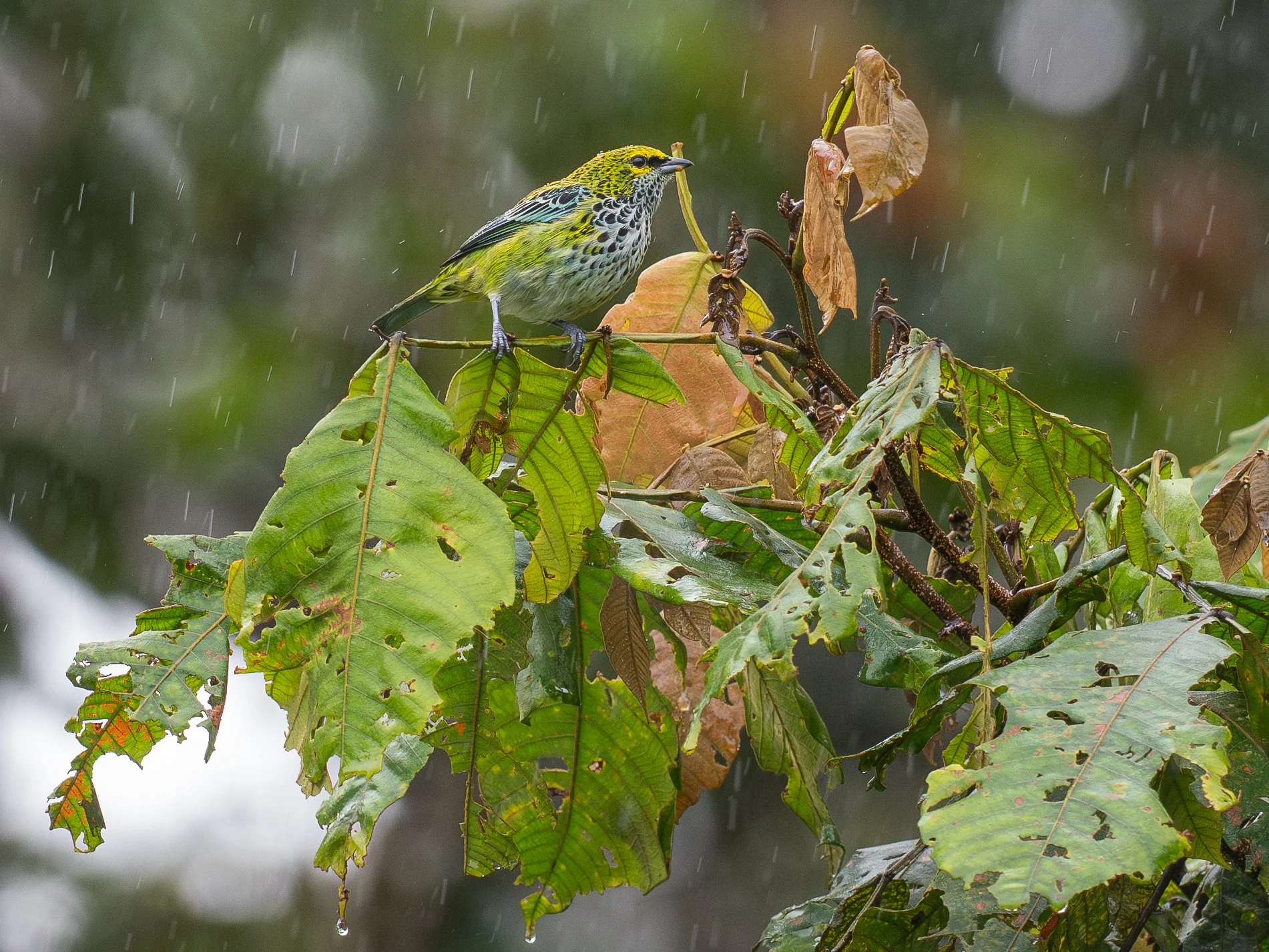
This amazing Speckled Tanager was one of the birds we observed during the rainstorm
After the storm broke we made our way back to Rancho for lunch. Teylor was encouraged by the weather and we made plans to head down to a nearby lake, Laguna Angostura. But first we would try for one of the most spectacular birds anywhere, the Sunbittern. The storm had swelled the streams and rivers so we were not sure if the Sunbittern would still be in some of its normal spots or if it had to leave for higher ground.
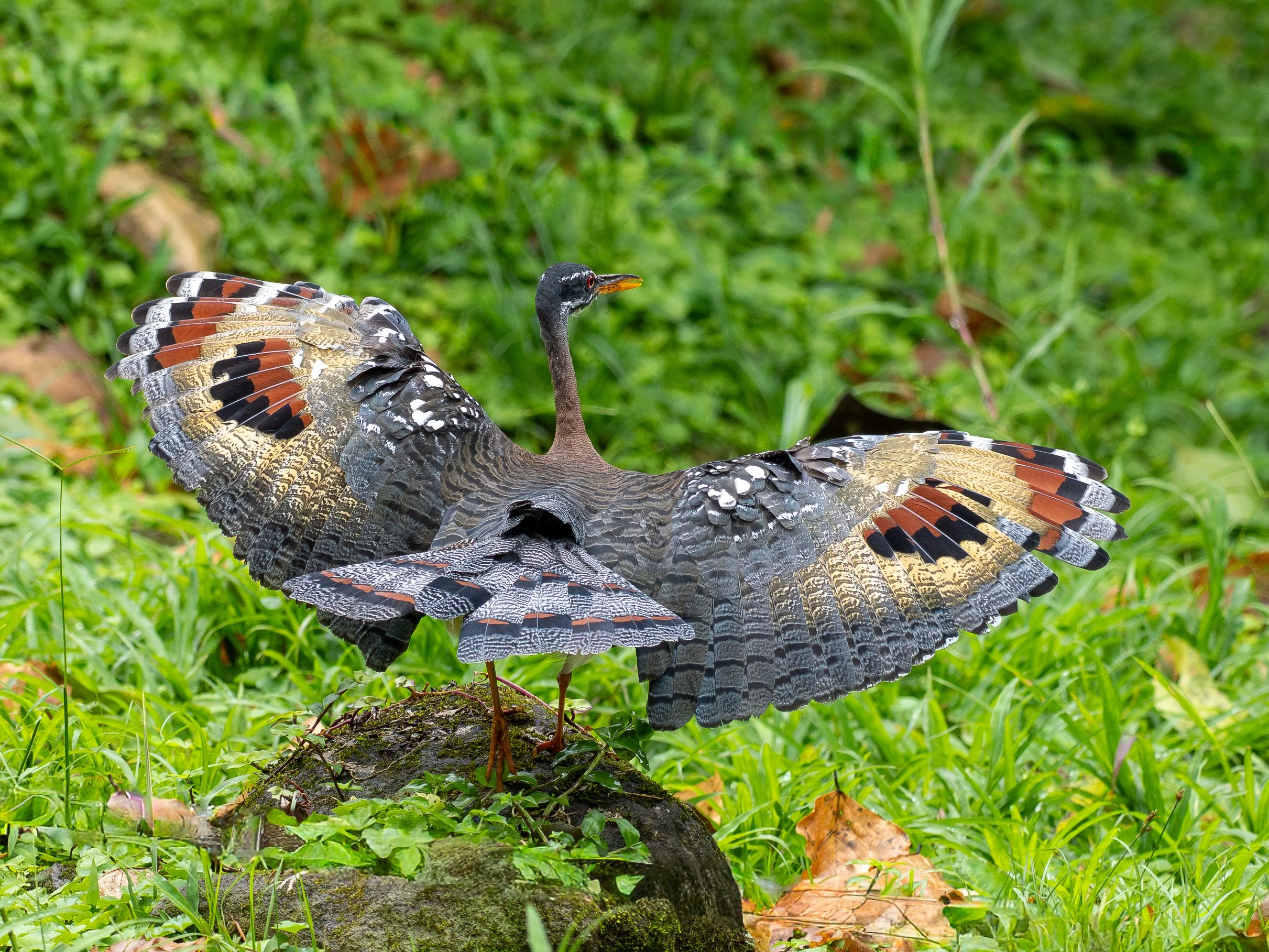
Luck was on our side as the Sunbittern was present in a field right next to the first river we checked. Not only was it present, it was also doing its full blown display! Wow! We saw another 60-some species of birds at the Laguna Angostura in a fun afternoon, but the Sunbittern was the stand-out bird. Another fun highlight was that Teylor scored his lifer Purple Martin perched on a wire with a group of Gray-breasted Martins in a field on our drive out from the Laguna.
The next day we got up super early to do some more birding with Teylor at higher elevations on the flanks of Volcan Turrialba, one of the largest and most active volcanoes in Costa Rica. The summit is over 10,000 feet high, and the volcano was active as recently as 2017. Many of the endemic and near-endemic bird species in Costa Rica live in the ‘highlands’, the higher elevation central valley and volcanic spine that runs down the center of the country, so we were looking forward to seeing some of those birds up here.
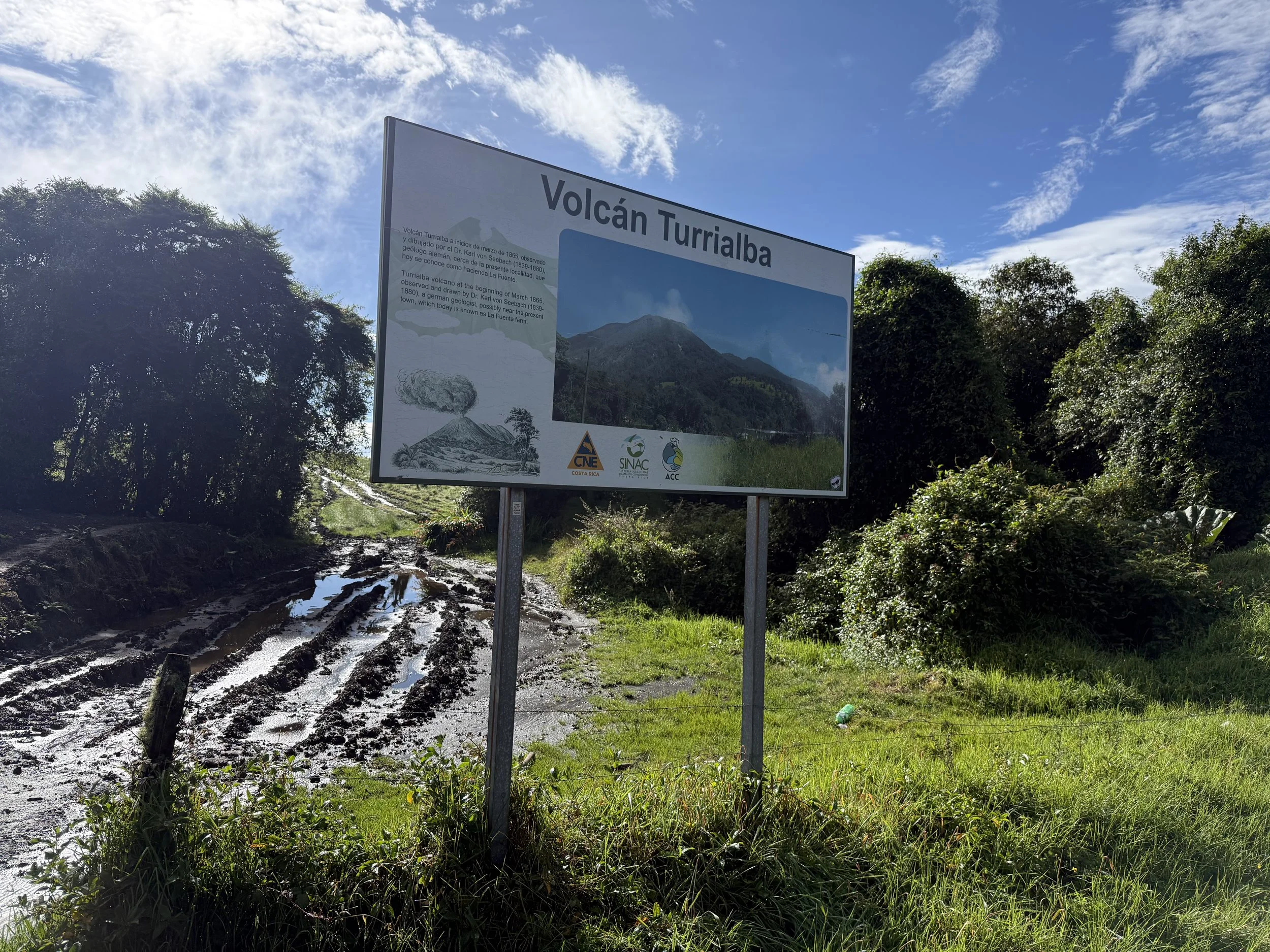
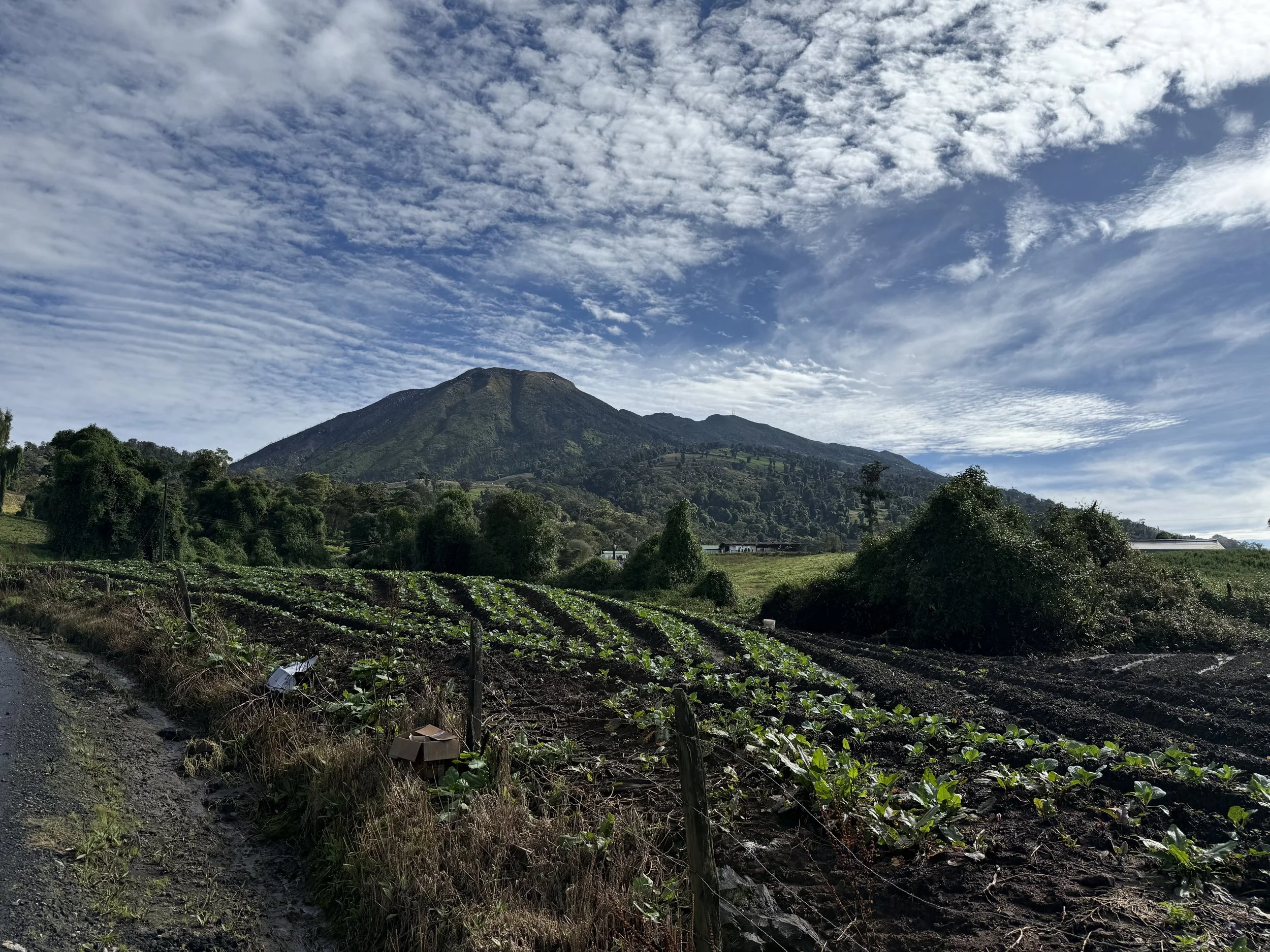
When we got to our first stops, it was still raining and we were basically in the cloud. We were birding from underneath our umbrellas! We were seeing a lot of birds but it was not really possible to do any photography. One of our favorite birds was a group of Prong-billed Barbets, who were cackling a chorus of goofy laughter in the morning mist: “ha ha ha ha ha ha ha!” Teylor also put in a lot of effort to get our eyes onto two similar finch species that are near-endemic to Costa Rica and not easy to see: Slaty Finch and Peg-billed Finch. They were very active, flitting around in the bushes behind the sign for the volcano. Between the tough light and the soupy two-track, I didn’t get any good photos of those guys but we did get decent looks through Teylor’s scope.
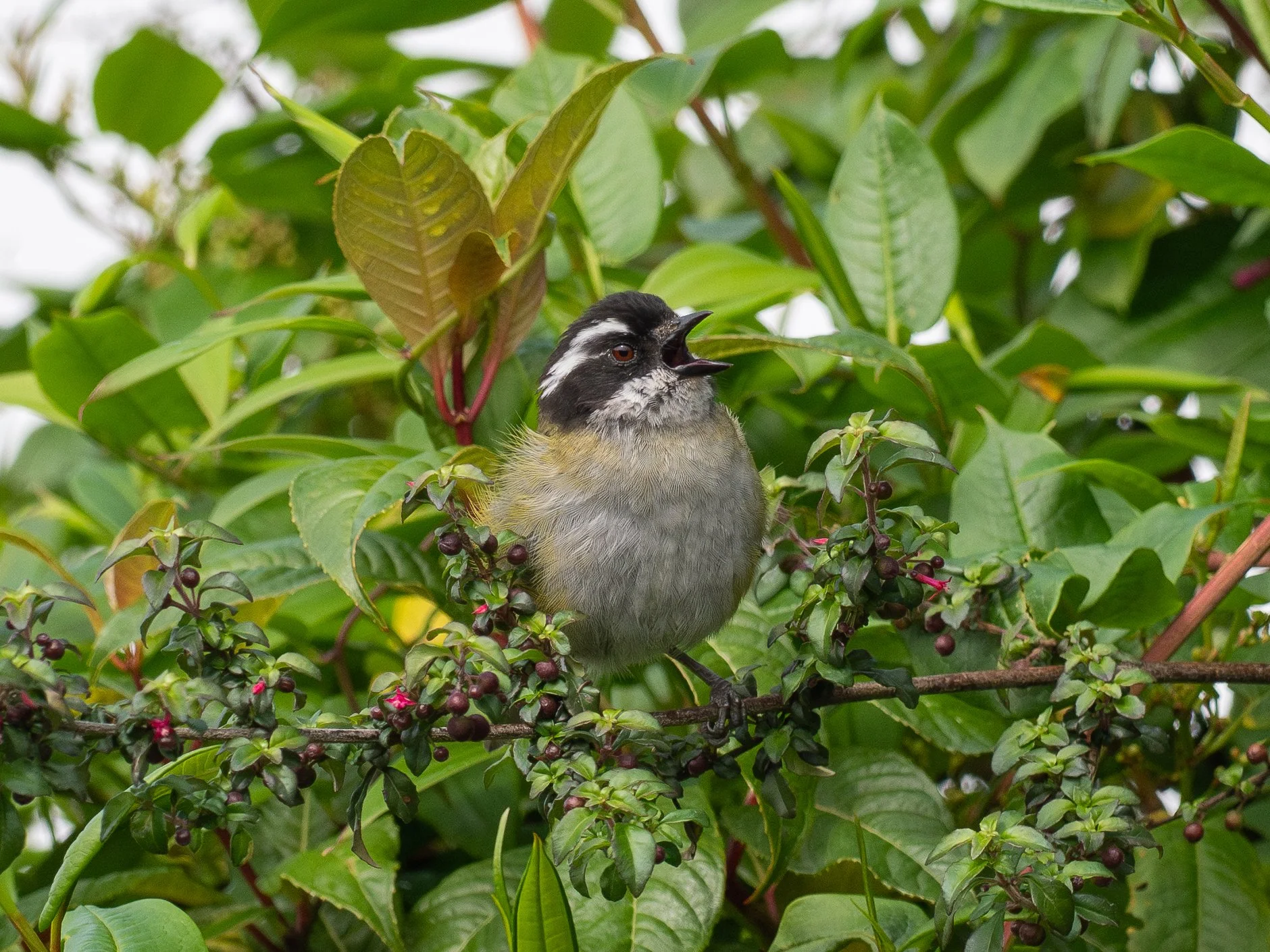
Sooty-capped Chlorospingus is one of the higher elevation, range-restricted birds we saw well once the weather cleared up
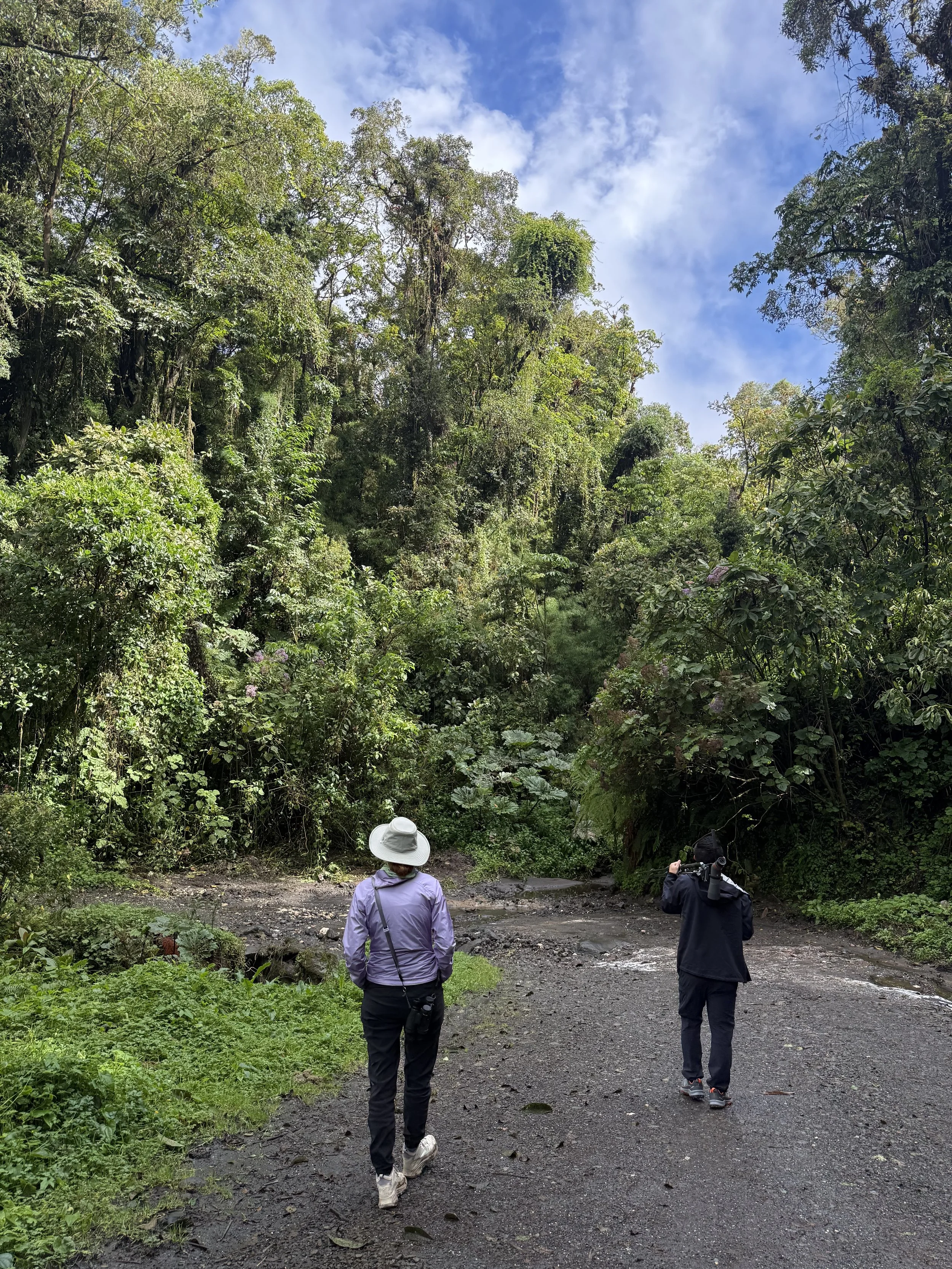
Emilee and Teylor walking the road in the high montane forest on Volcan Turrialba
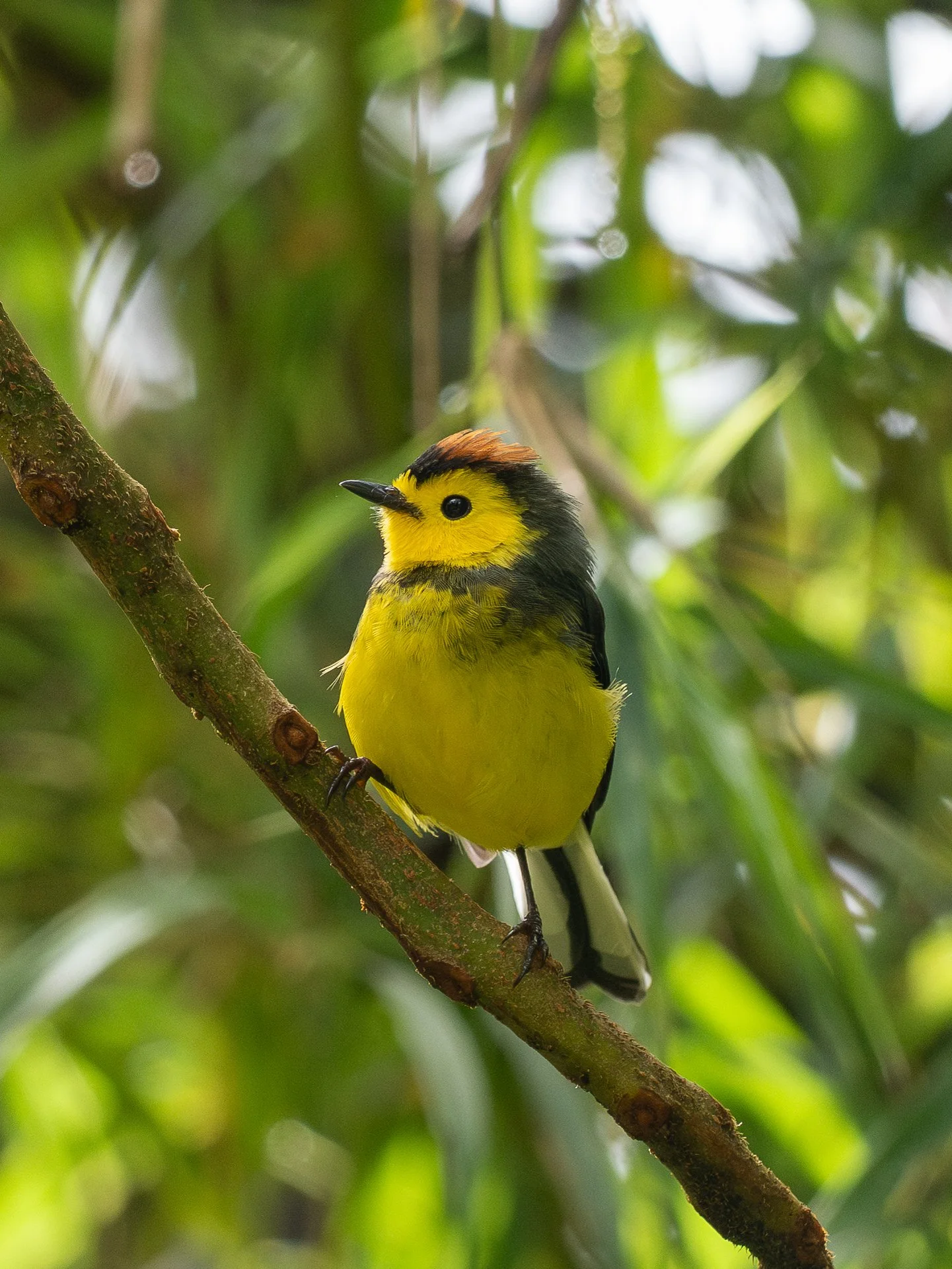
The Collared Redstart has a similar distribution limited mostly to Costa Rica and we were happy to see quite a few of these handsome little birds
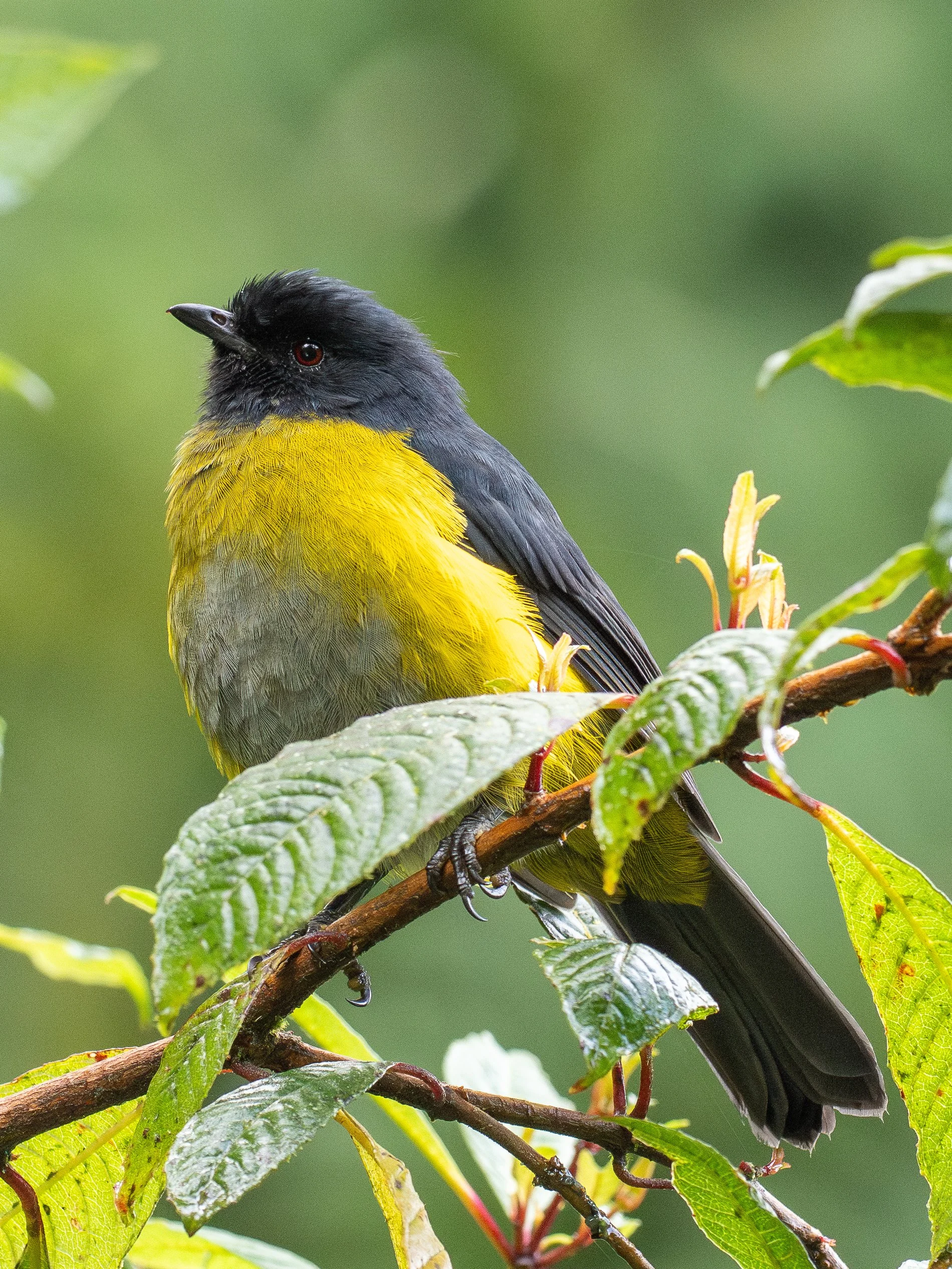
Black-and-Yellow Silky Flycatcher was another highlight. These guys are related to the Phainopepla, our Southwestern ‘silky flycatcher’ and have similar berry eating habits.
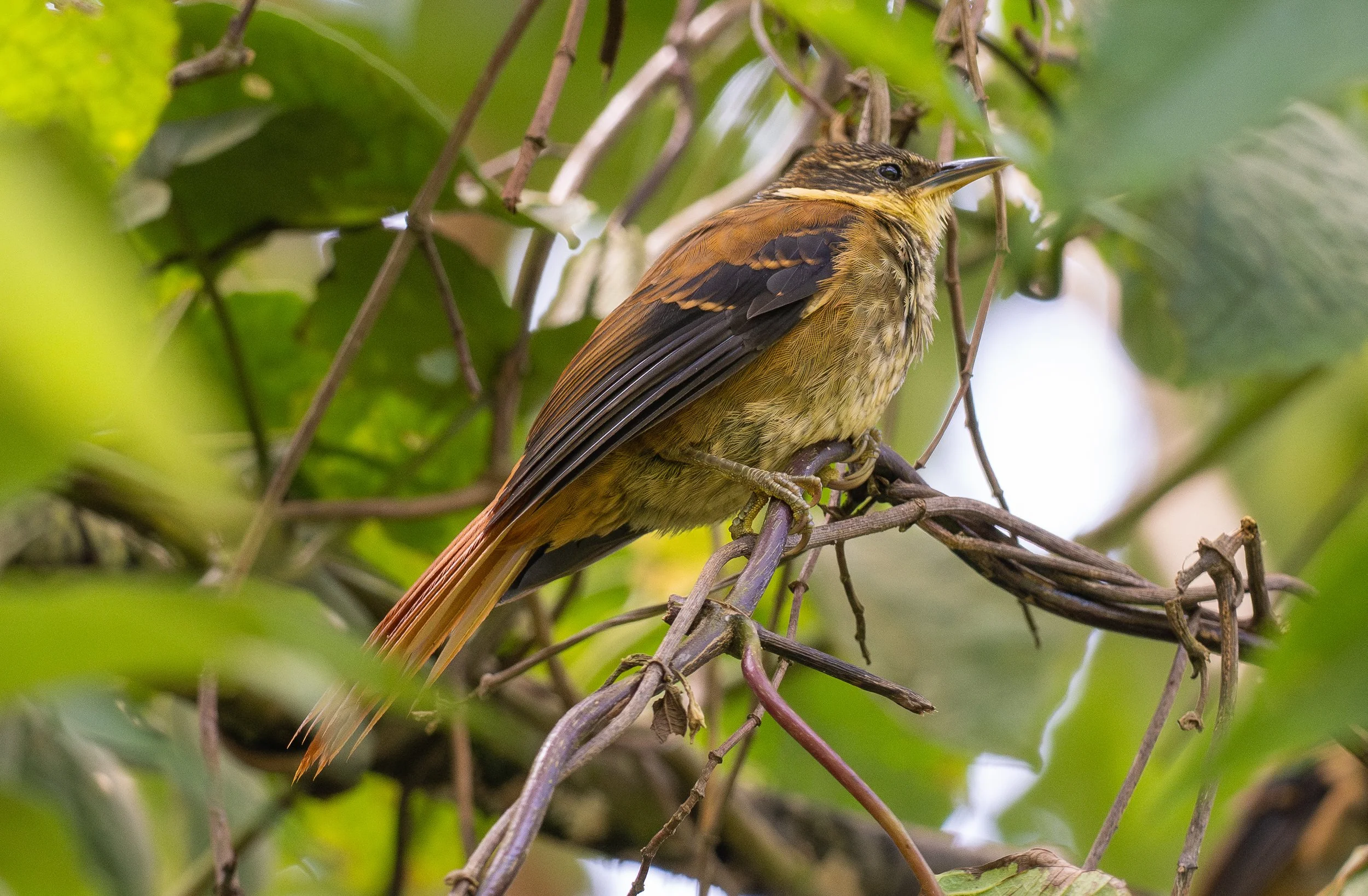
Another good bird we encountered was this Buffy Tuftedcheek, described as having a spotty distribution throughout its limited range
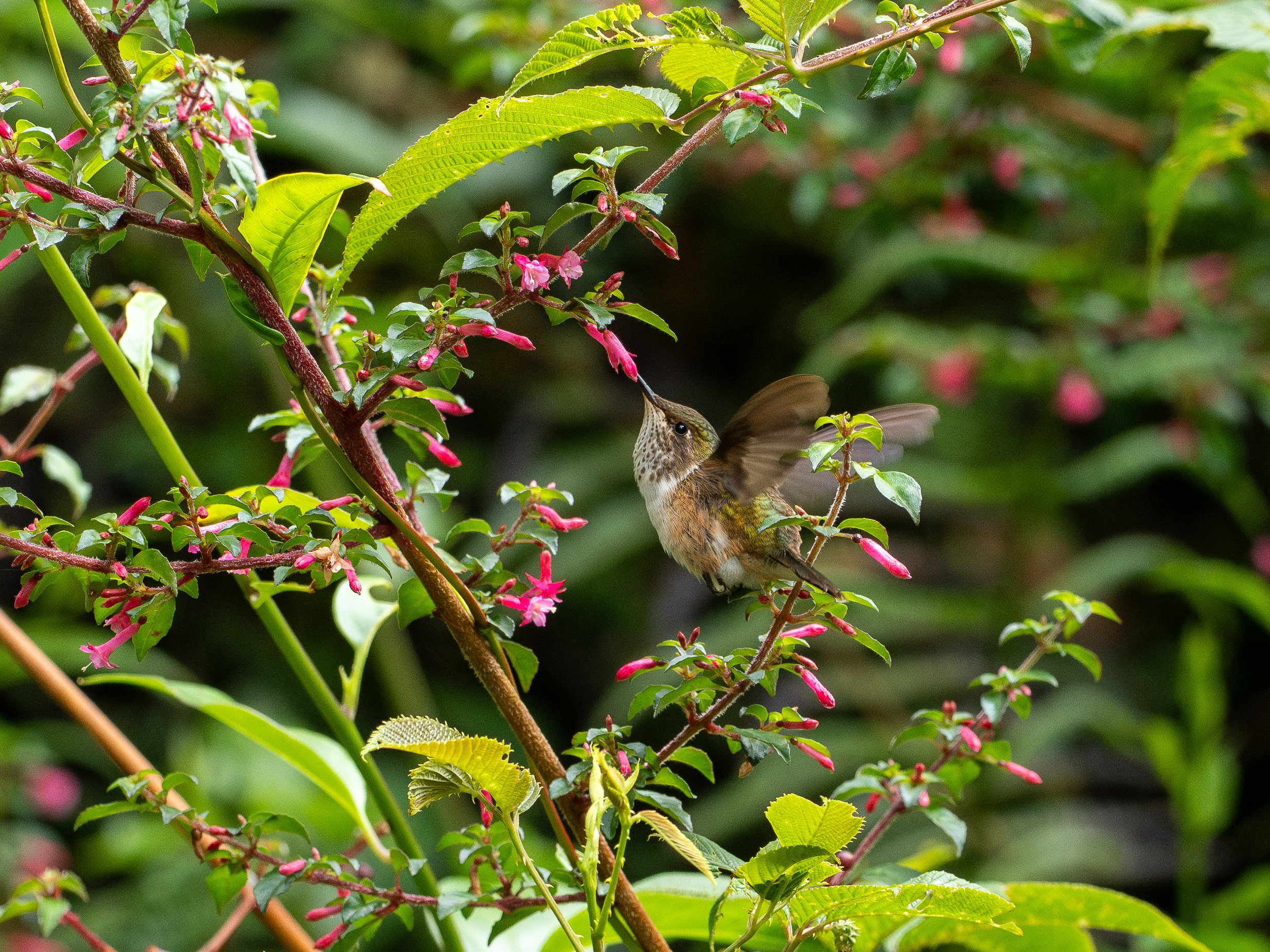
We also found some high elevation hummingbirds, like this female Volcano Hummingbird, a very small hummer!
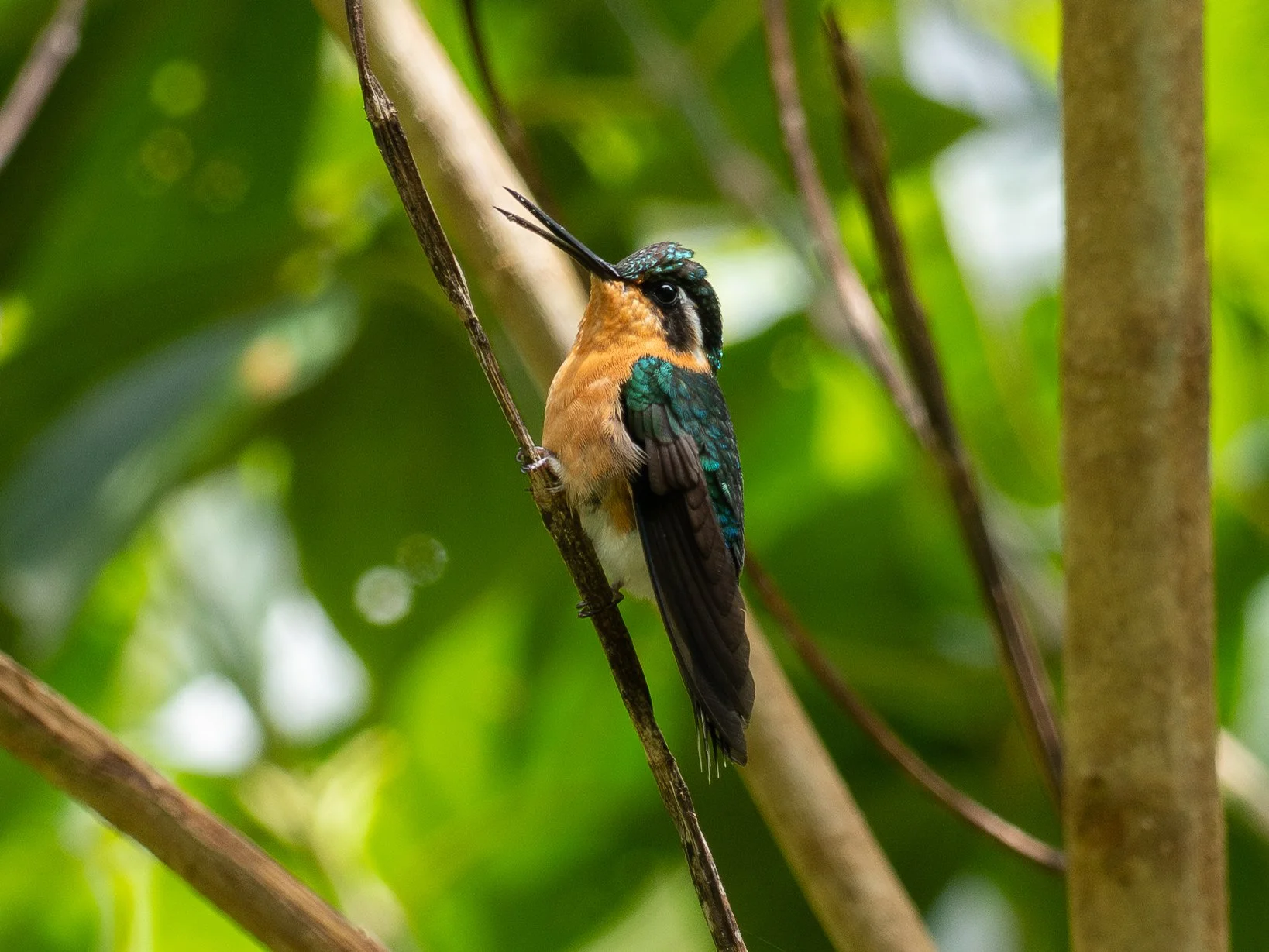
Female Purple-throated Mountain-Gem was another favorite. I was a little surprised to learn that despite the white ear stripe, this species is not particularly closely related to the White-eared Hummingbird we’ve seen in Arizona. Maybe a bad assumption on my part!
After we finished our loop along the flanks of Volcan Turrialba we returned to Rancho. We saw a ton of bird species in our two days of birding with Teylor - probably some of our biggest single species days anywhere, and a lot of new birds for us! We enjoyed Teylor’s pace and fun attitude through some pretty long days!
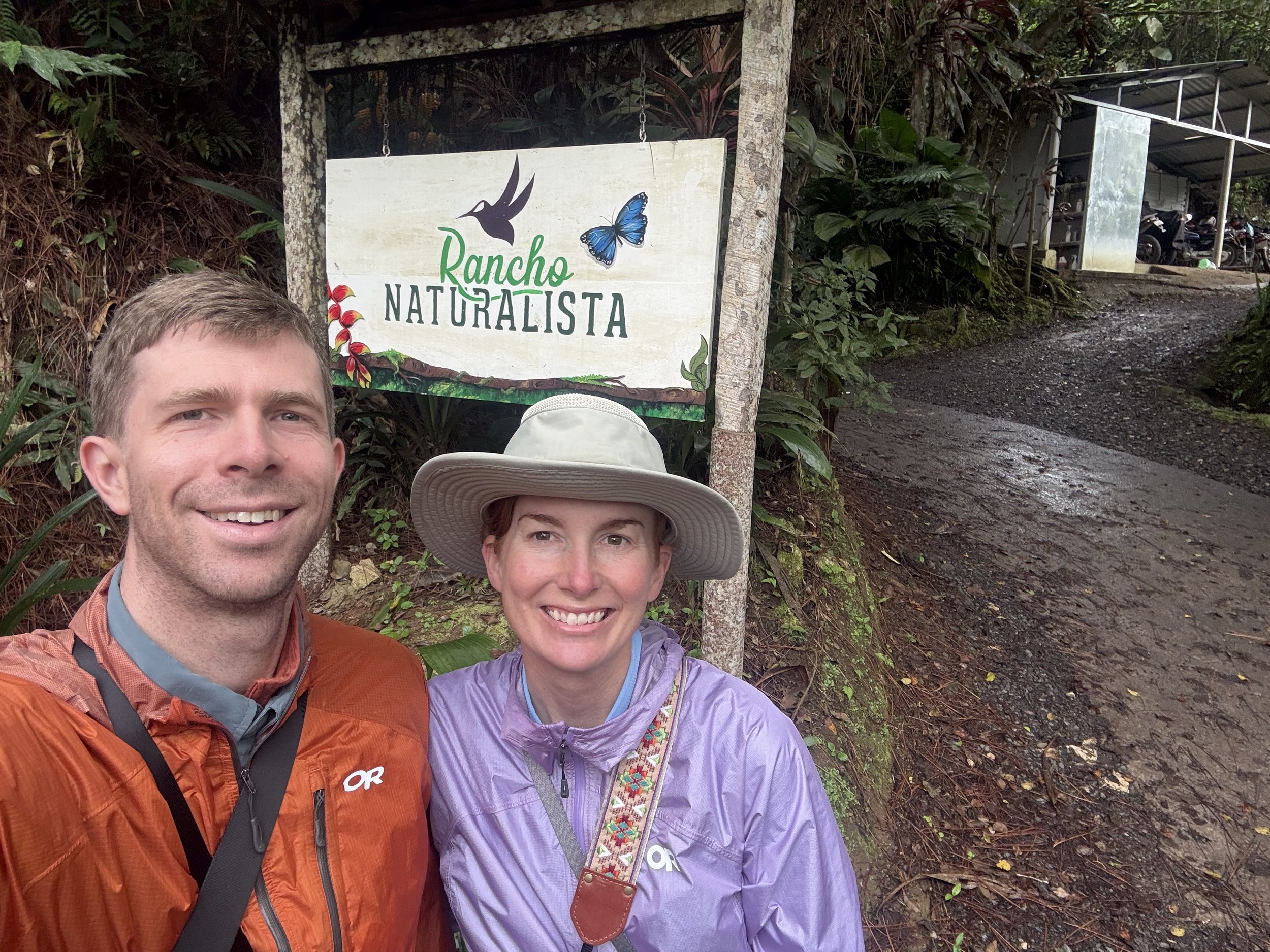
Pura Vida Rancho Naturalista!
