Costa Rica 2026 (3/5): Tranki Gardens
Going into our last day at Rancho, we talked with Teylor about our itinerary. One big target for us was to see a tiny and unique hummingbird called the Snowcap. The males are “the color of red wine” with a snow-white cap on their head. Teylor encouraged us to spend our morning in the highlands, because we could visit a nearby property, Tranki Gardens, in the afternoon where we would almost certainly see the Snowcap.
Tranki Gardens is run by the property owner David (pronounced in Spanish “dah-VEED”), who together with his family have put an enormous amount of work into their gardens for the birds and butterflies. David is a tremendously gracious host. When we arrived, our new friend Susan who was also staying at Rancho had arrived a bit before us, so functionally we joined her tour of the property. She had already seen the male Snowcap first thing, so we visited some of the other feeding stations, the first was for the White-throated Crake - a small rail.
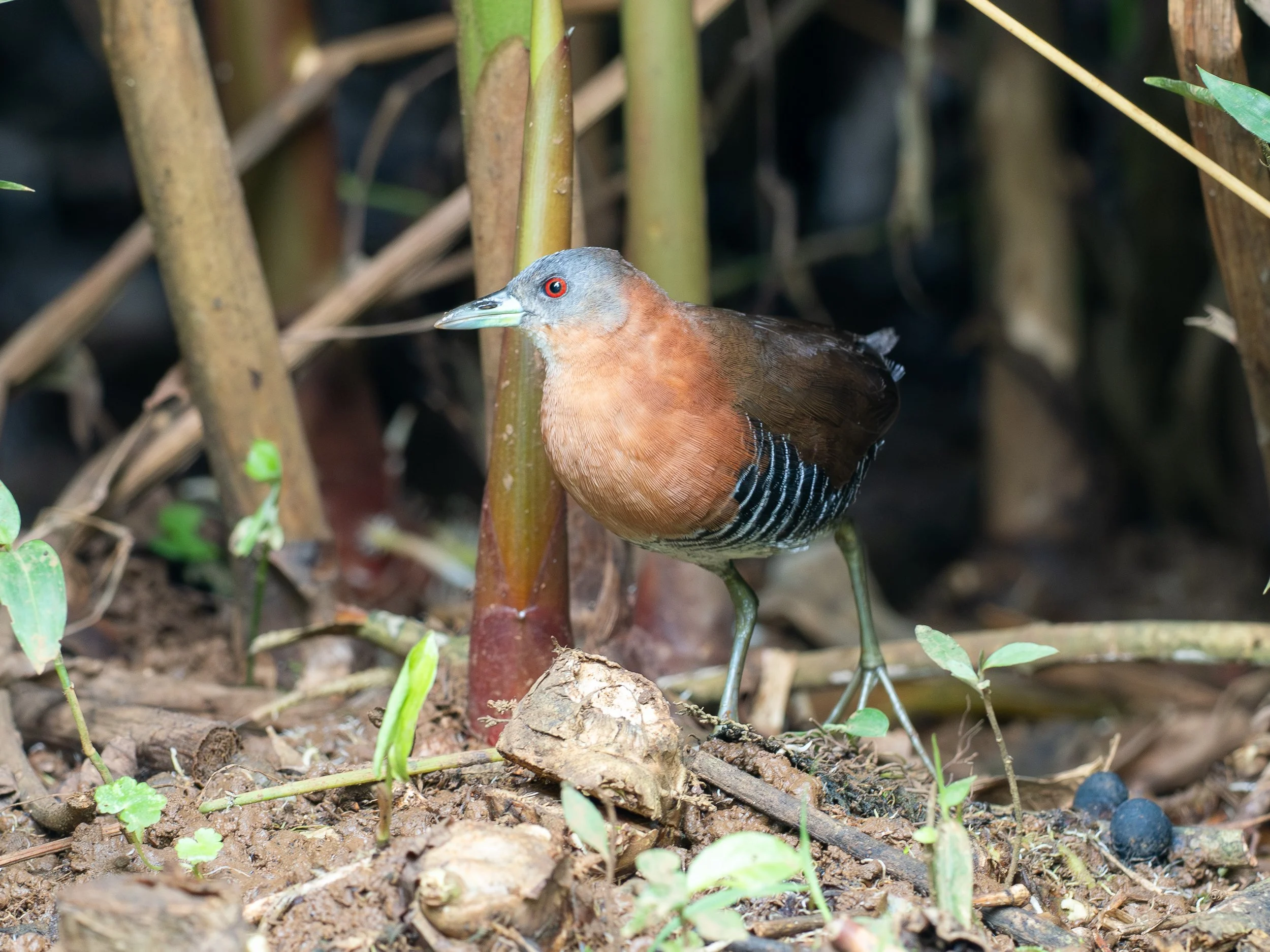
Typically a marsh bird that is very hard to see, David had habituated them to dip out of the reeds for some worms. We all sat in the blind and he put the worms out and said, “Come out Crake!” After a minute or so, the crake scurried out to grab a worm or two. I was surprised how colorful they are!
After a good hang in the crake blind, we made our way up to David’s house where he had an amazing hummingbird, fruit and seed feeder setup. We sat down on some stools on the porch and had some of the best looks at a whole bunch of different tropical birds. Birds were coming in from all directions - it was almost overwhelming!
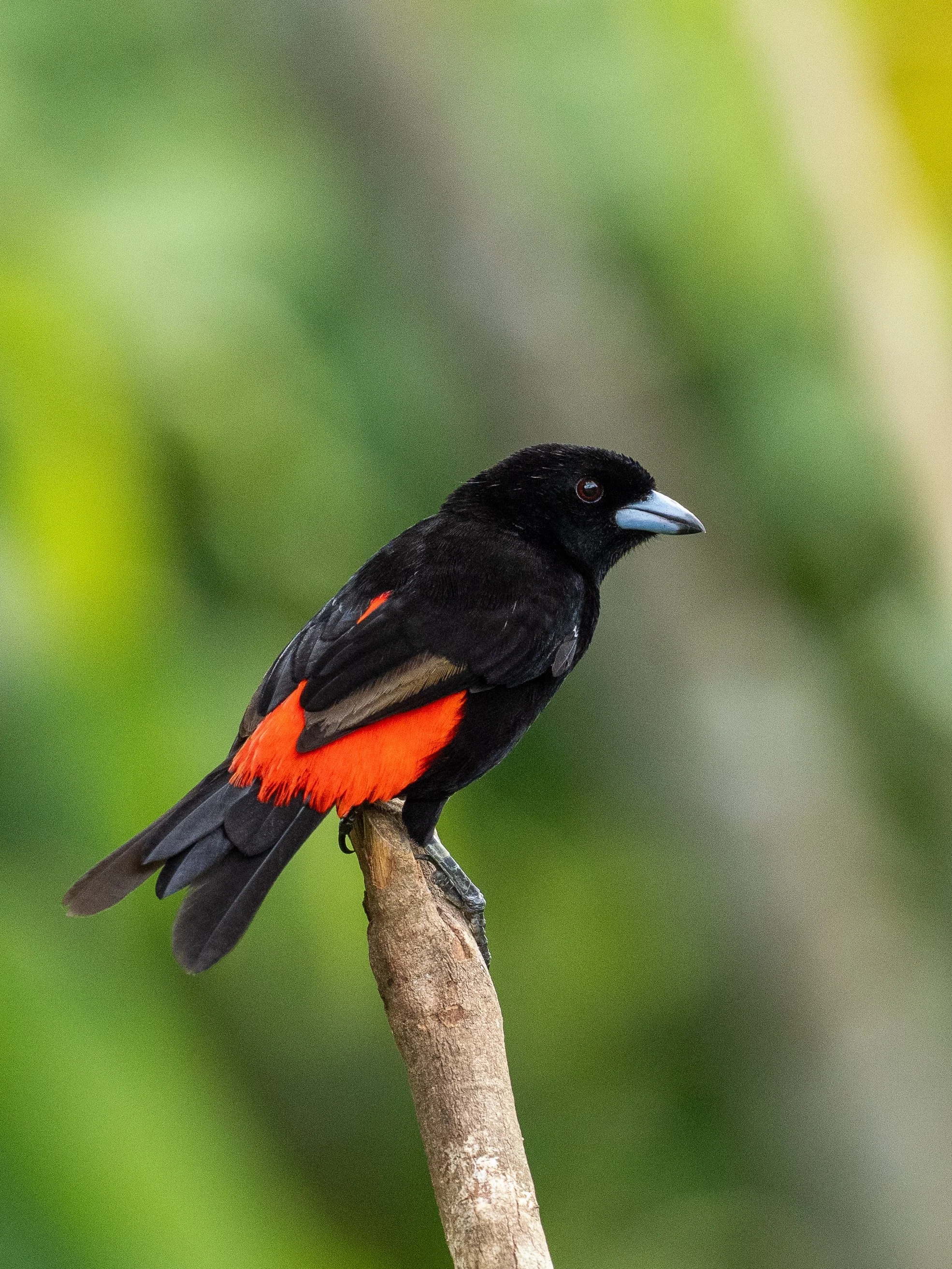
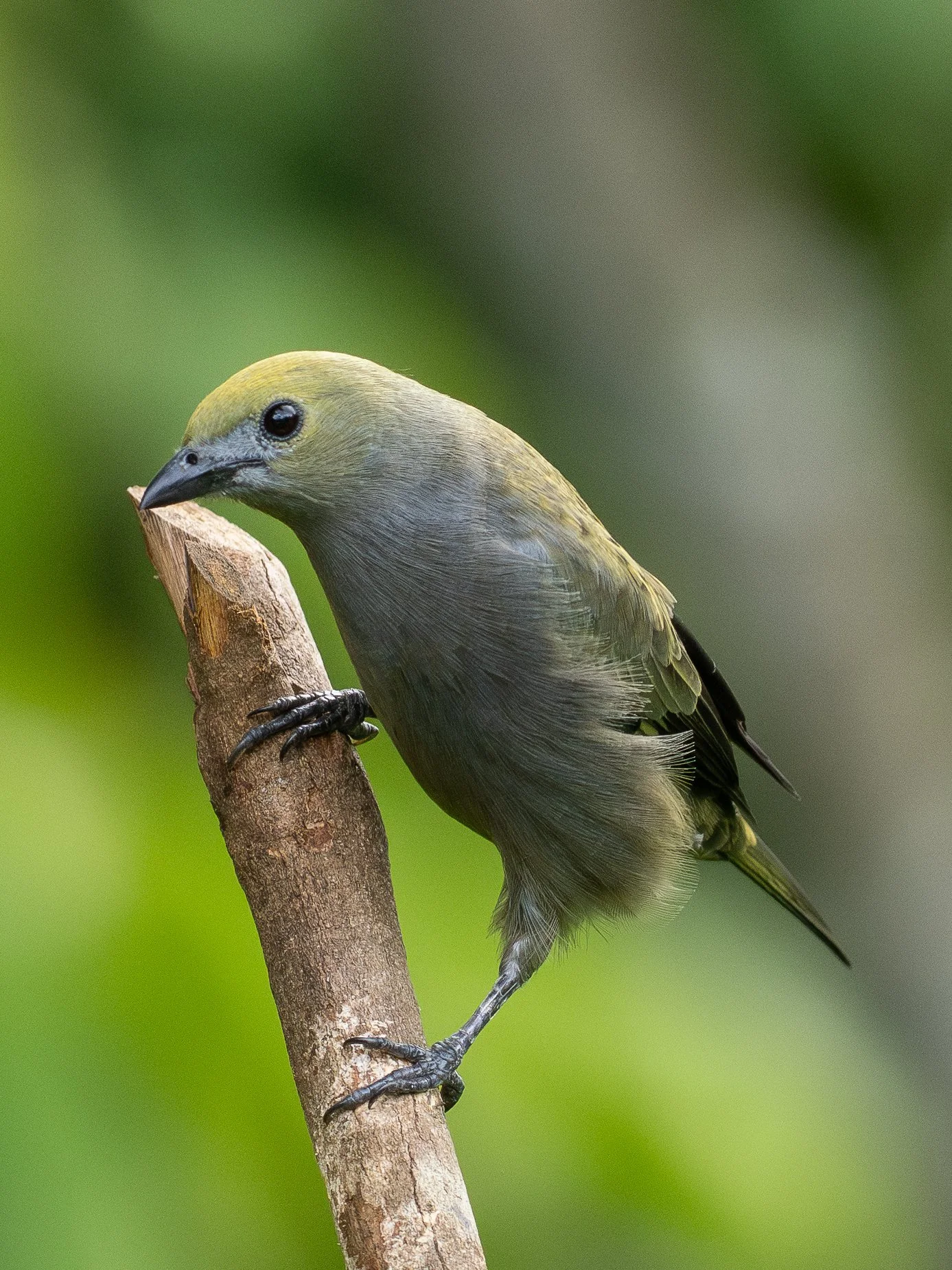
Here is a male Scarlet-rumped Tanager on the left and a Palm Tanager on the right. When I was studying for the trip, Palm Tanager seemed a little less spectacular than most of the other tanager species but it really grew on me throughout the trip.
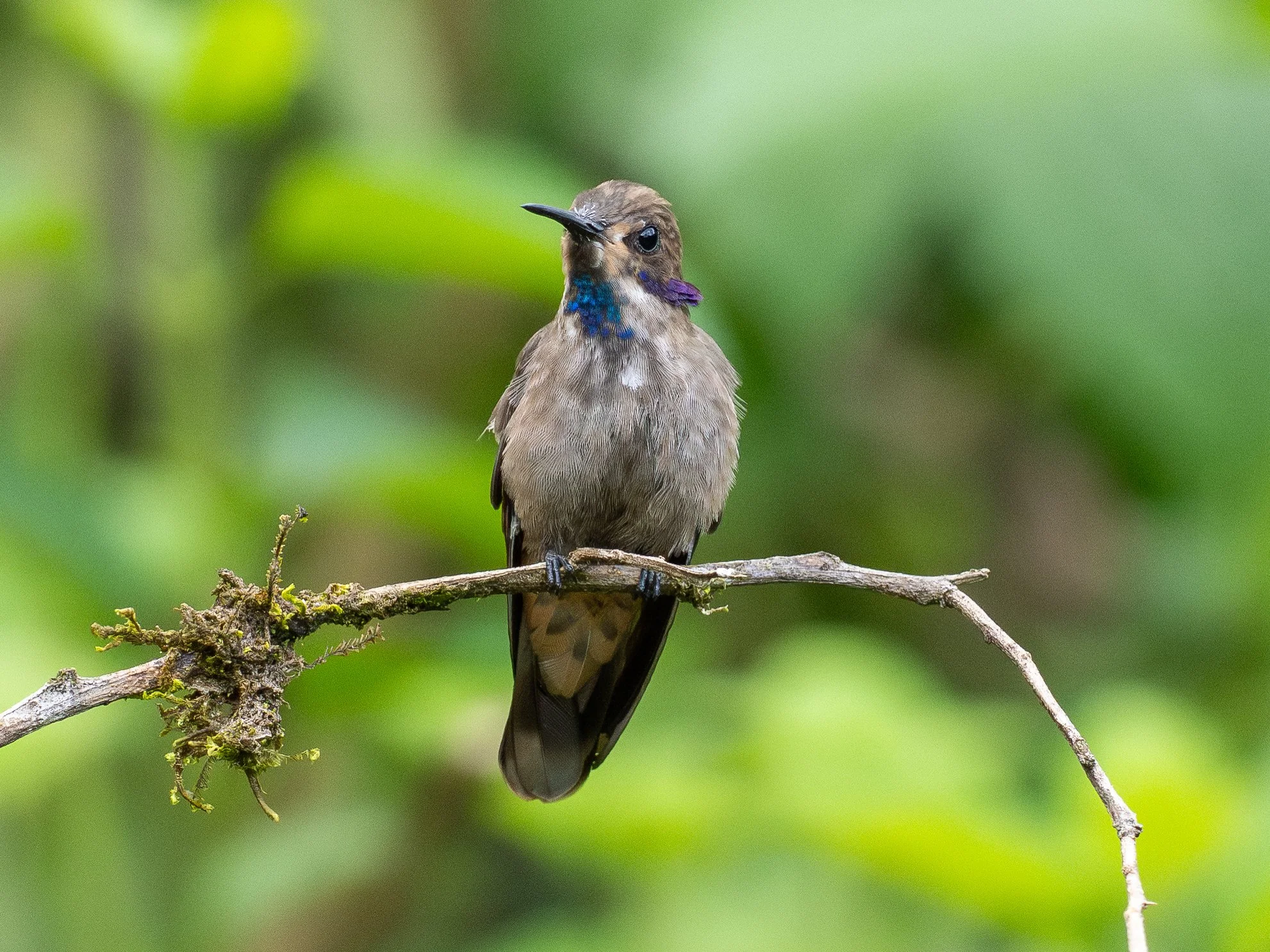
We saw an unfamiliar hummingbird perched in the garden near the feeders: the Brown Violetear! This is the first violetear species we have seen. Teylor later asked us - “did you see it flaring its purple ear flaps out?” while gesturing with his hands like elephant ears. We weren’t sure until we reviewed my photos and saw that it did! Amazing! What a combo between the violet ears and the sapphire gorget!
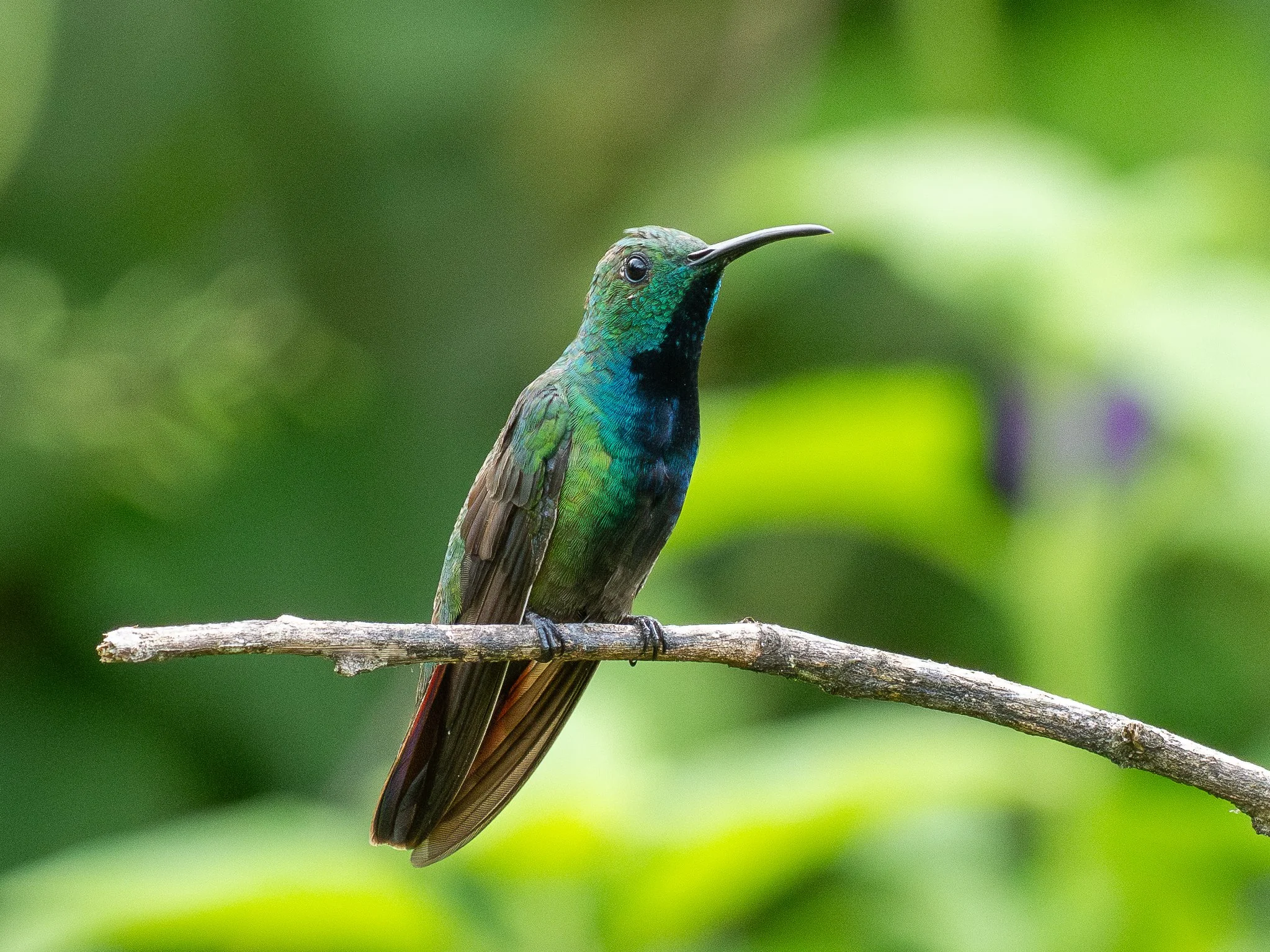
Another unique and colorful hummingbird we got great looks at was Green-breasted Mango.
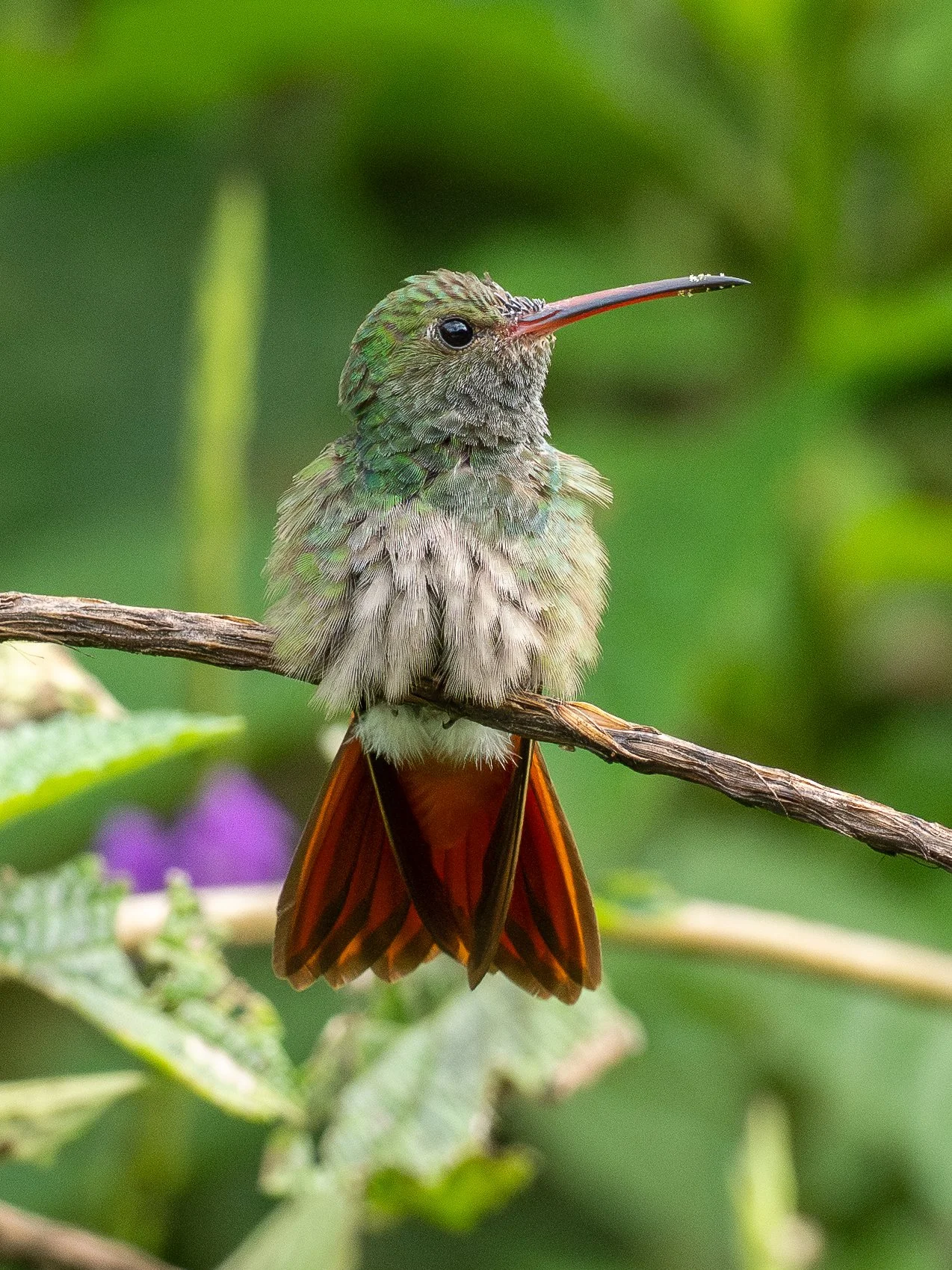
One more for good measure: the well-named Rufous-tailed Hummingbird.
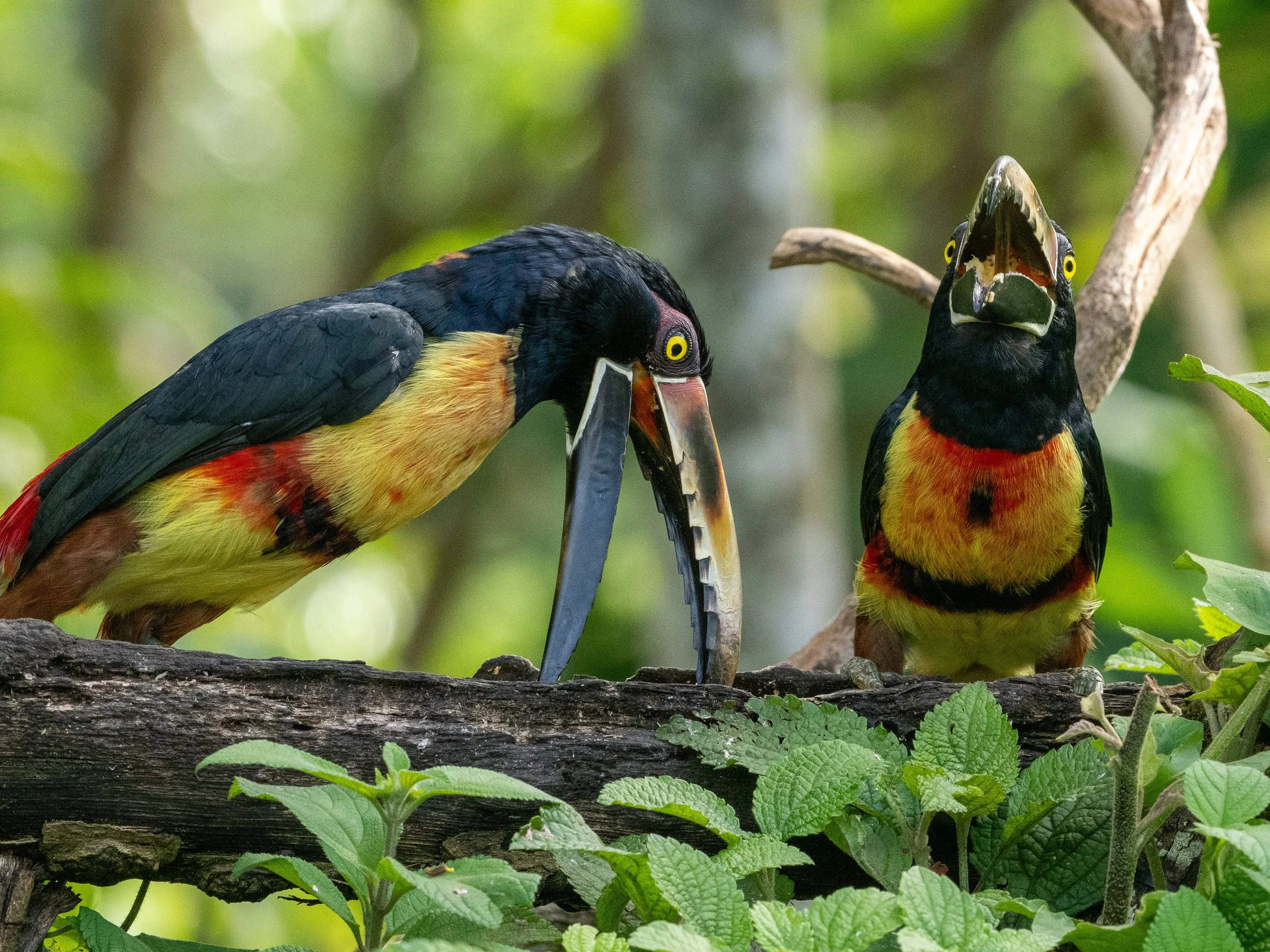
A troop of about 10 Collared Aracaris came into the feeders at one point and ran everyone else off! We remembered Isaias, our guide in Belize, telling us that these birds are real scoundrels and as opportunists, will eat the eggs and young of many other bird species, so it was probably a good call for them to clear out!
As we were wrapping up, we let David know we wanted to make one more pass by the verbena bushes (an ornamental hedge where a lot of small hummingbirds feed on the little purple flowers) to look for the Snowcap. We were in luck - a tiny, red-wine colored hummingbird was methodically moving through the line of flowers. The Snowcap!
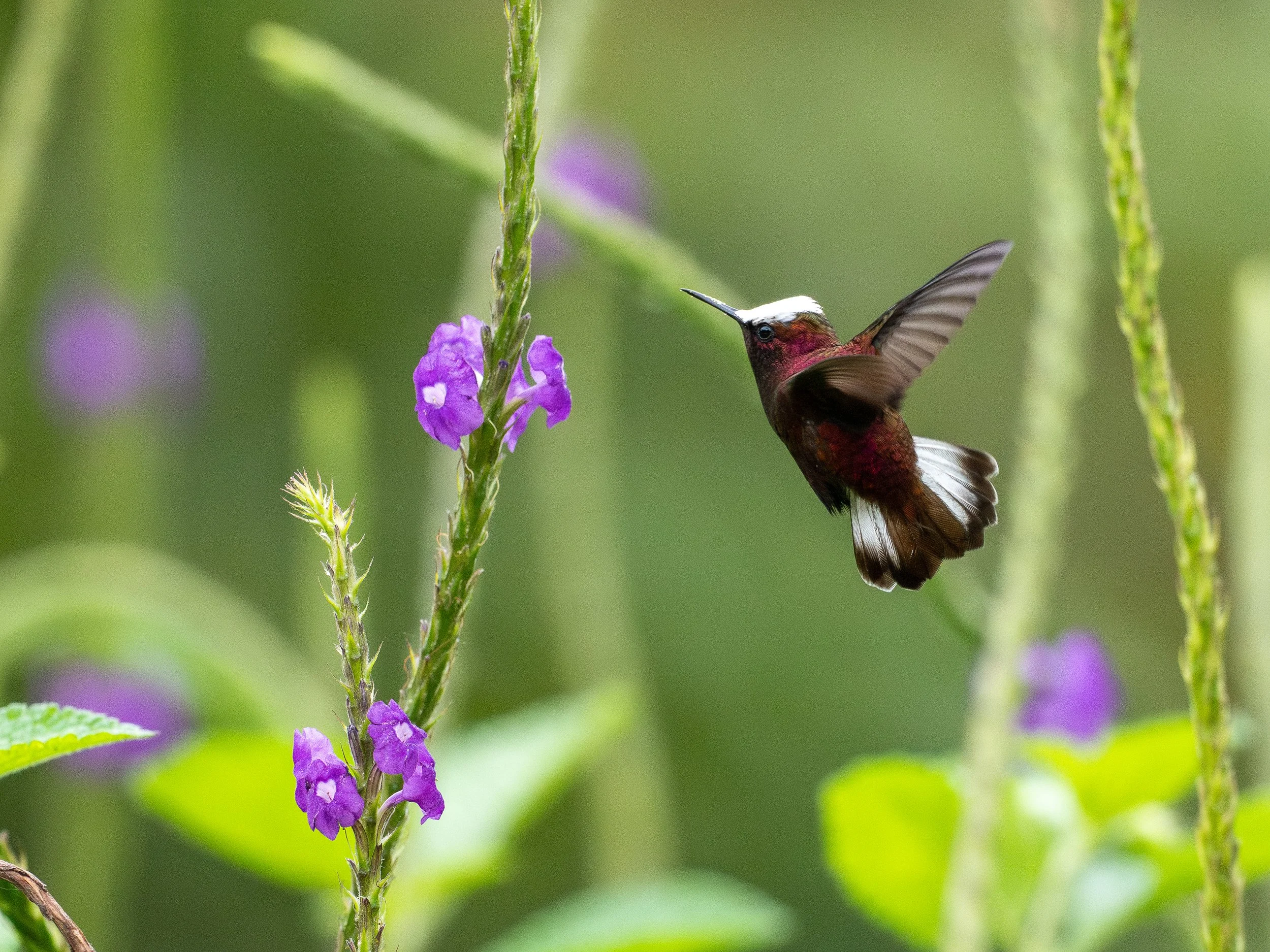
Pretty quickly I figured out that to take a picture, I would need to set up a few flowers ahead in line and snap a few shots as this tiny bird briefly probed each flower for nectar.
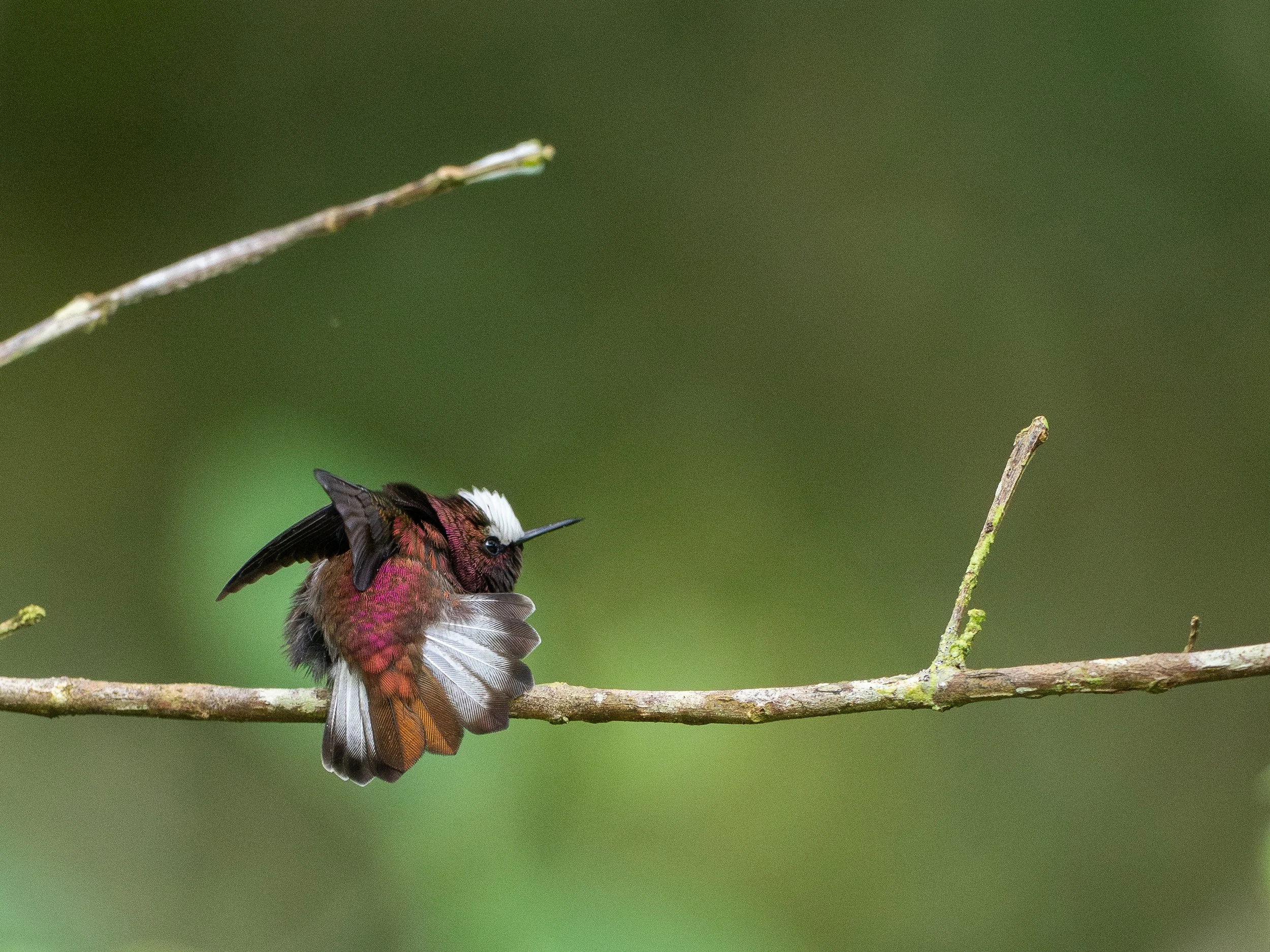
Eventually the Snowcap perched and I got this shot of him stretching out and getting comfortable. I was ecstatic!
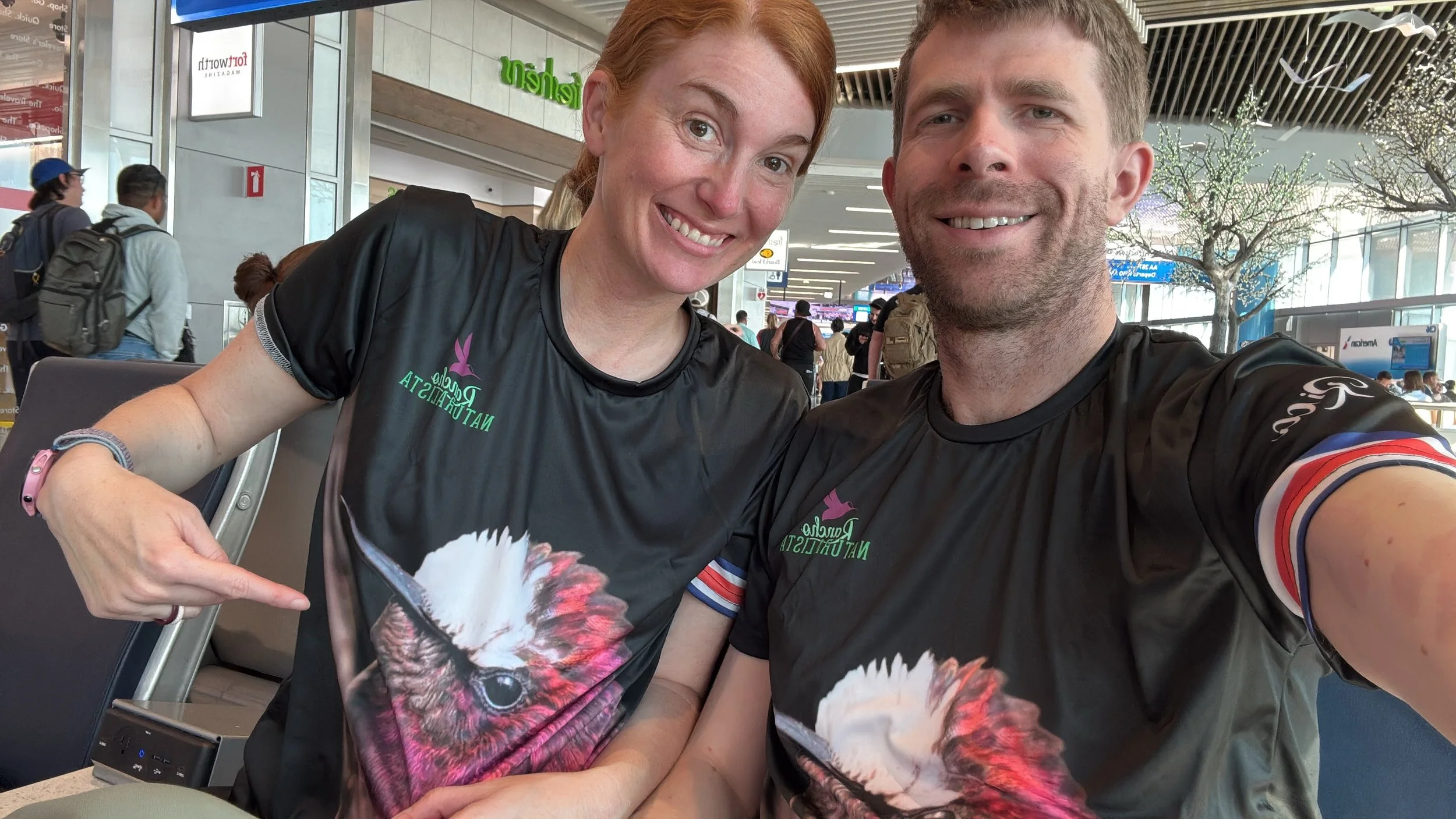
Safe to say we were fans of the Snowcap - we even picked up some ‘Snowcap merch’ back at Rancho. We wore our Snowcap shirts on the trip home!
