Costa Rica 2026 (5/5): Tarcoles River and Carara National Park
Our last stop on our trip was Tarcoles in the Pacific Lowlands on the coast West of San Jose. In my trip-planning, this stood out as a great place to see Scarlet Macaws. The Tarcoles area is best known for the Crocodile Bridge on the Tarcoles River, where big American Crocodiles lounge on the sandbars beneath the bridge. We didn’t have to wait long to see the Macaws. We got in to the Tarcoles Birding Hotel mid-afternoon and we posted up in their observation tower where the raucous calls of the Scarlet Macaw were ringing out.
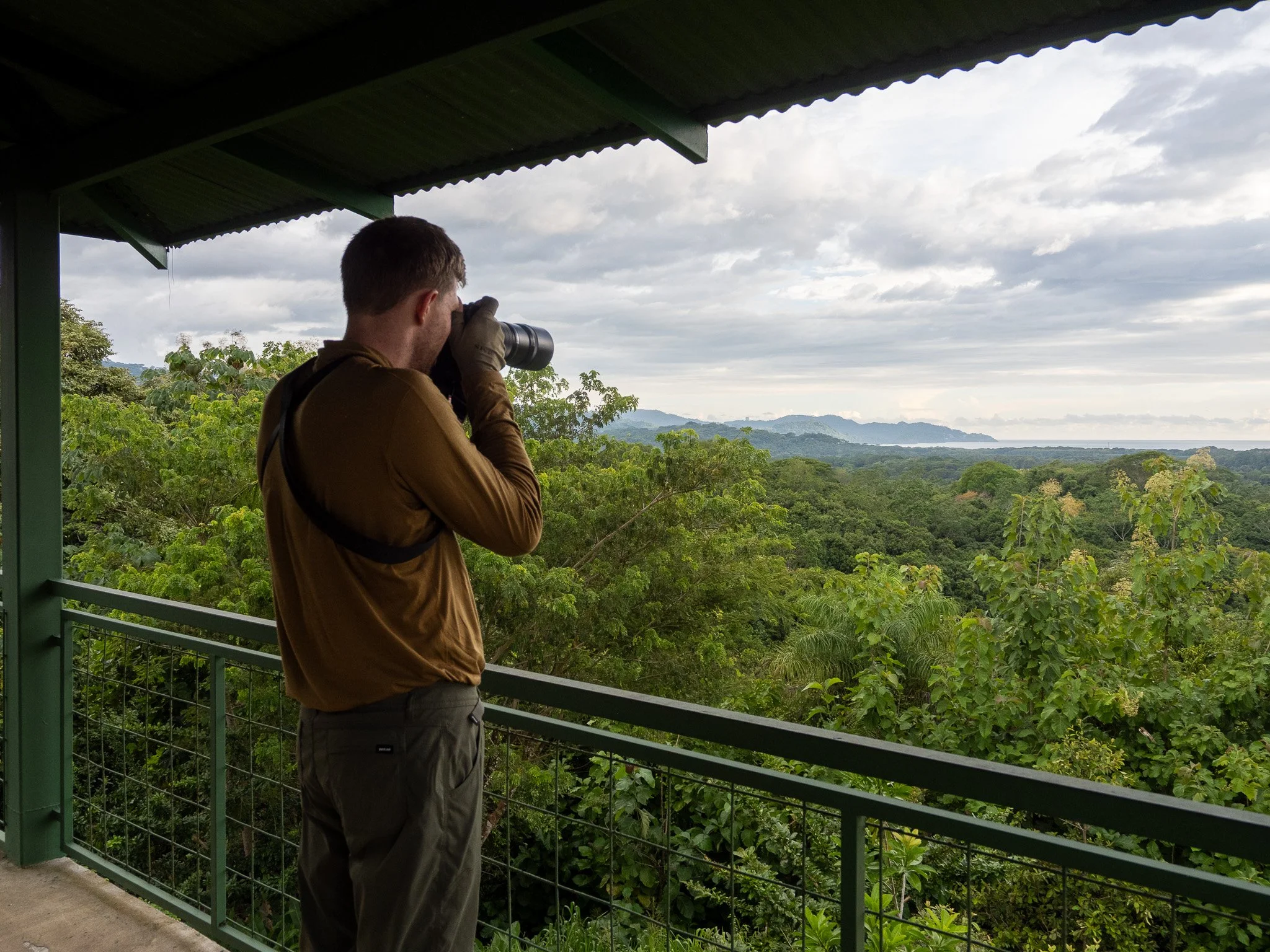
The view and the birding were both excellent from the observation tower at the Tarcoles Birding Hotel
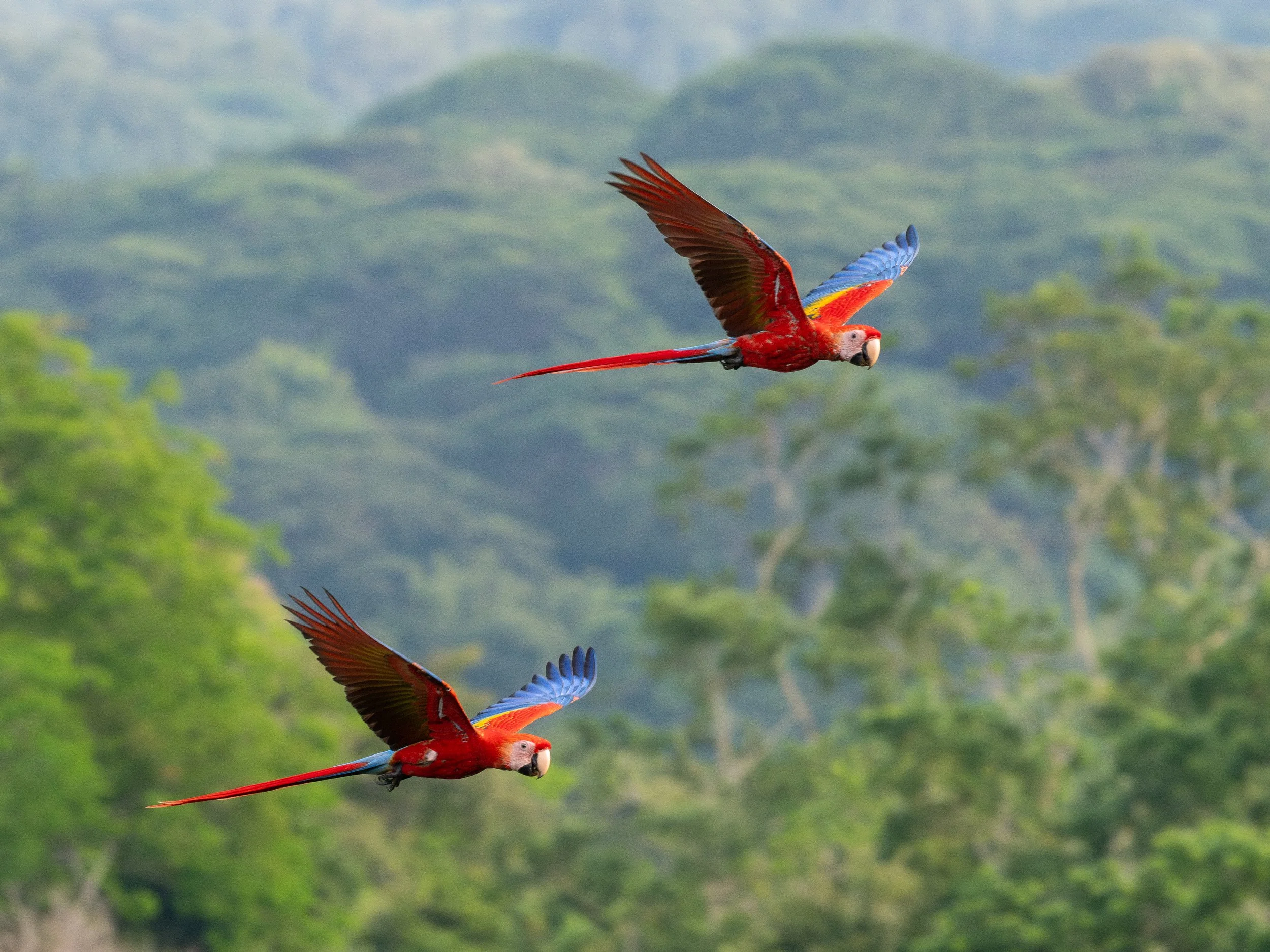
We watched as small groups of Scarlet Macaws, and other parrots flew down towards the coast throughout the evening. Later we would learn they roost in the mangrove forest overnight!
We booked ourselves a 6 a.m. birding cruise on the Tarcoles River after chatting with the hotel operator about the various boat tour companies. The company we went with was Jungle Crocodile Safari. We were looking forward to getting up close and personal with the crocodiles, but also hoping to see a lot of birds including some mangrove specialists. One factor in going with this company was that they advertised a walking owl tour as a possible add-on so we asked if we could do that as well, which they said they could accommodate! One of the perks of going somewhere in the off-season: you get some last-minute optionality!
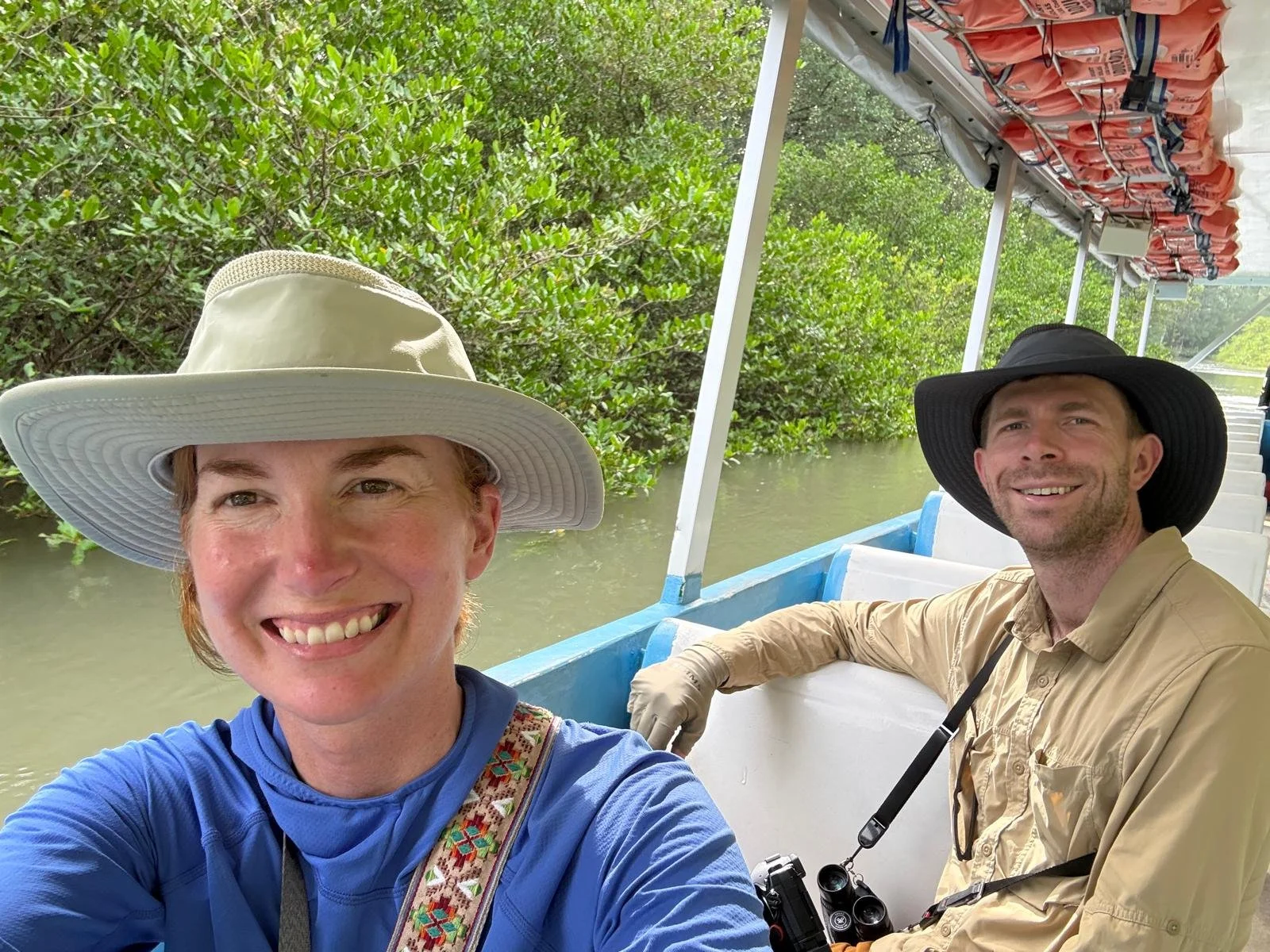
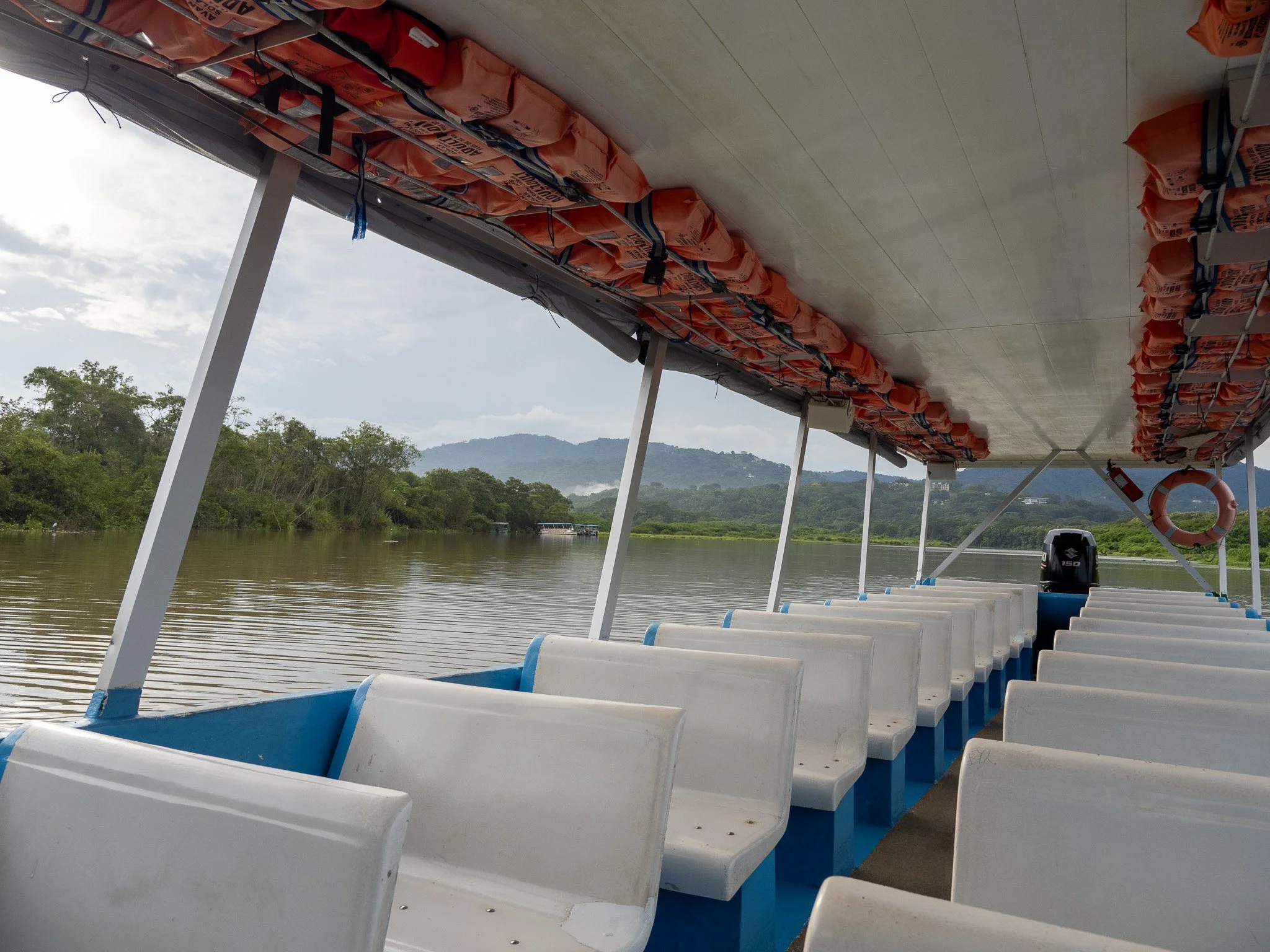
We got to the Jungle Crocodile Safari HQ at about 5:45 and met Juan Carlos, who would be our guide and captain. One thing was for sure - we weren’t going to need a bigger boat! They run several crocodile viewing boat tours throughout the day - I guess the 6:00 a.m. bird tour is a tougher sell.
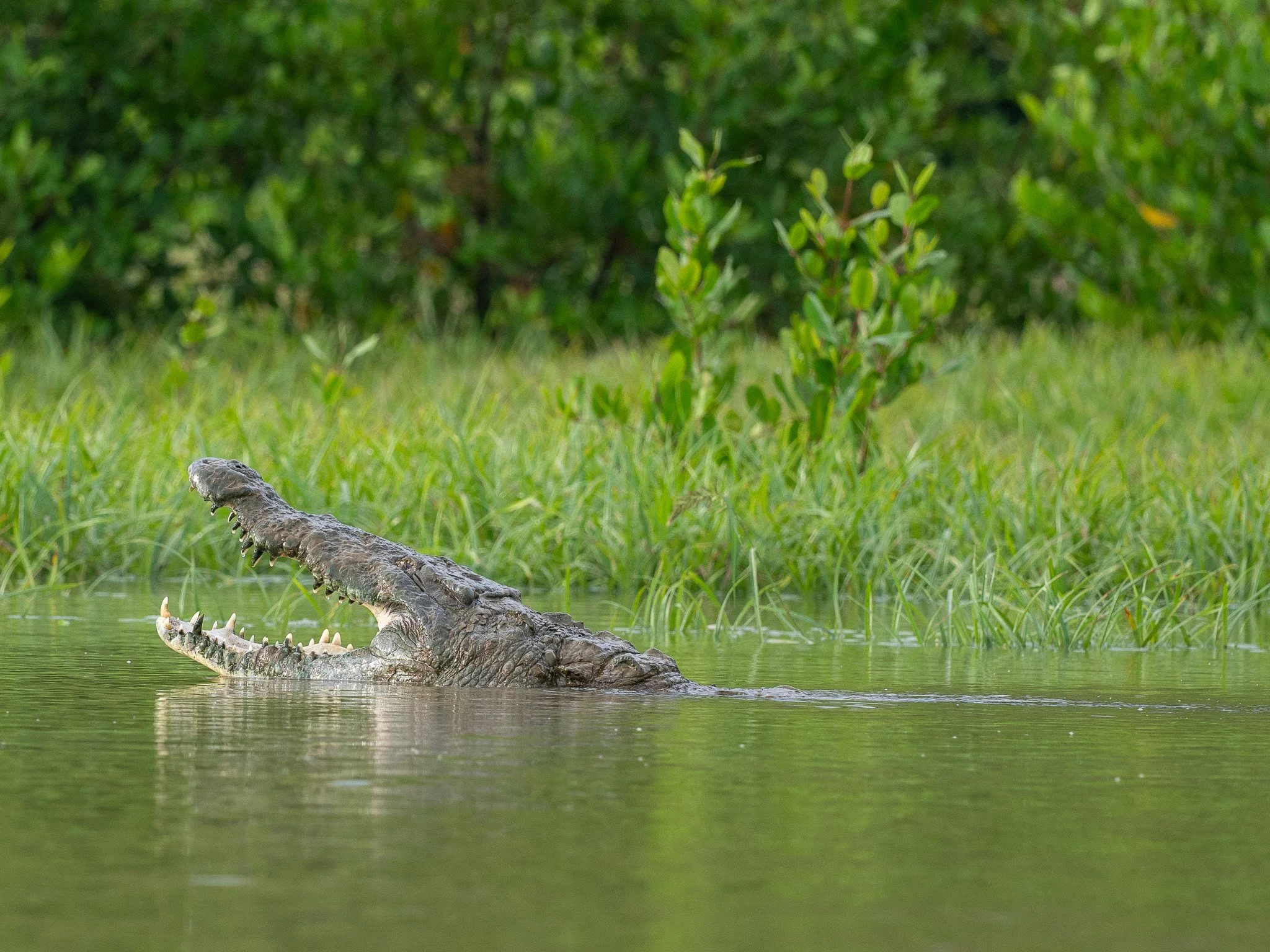
We saw a bunch of crocodiles from the boat. Juan Carlos told us that the males are territorial so you get a feel for who likes to hang out where, and they are named. One particularly combative croc is Mike Tyson, another is Osama bin Laden because he is hard to find. Several more were named after Latin American political figures like Fidel Castro and Nicolas Maduro. This particular croc was one of the biggest we saw at over 5 meters long (16ish feet)! I was glad I was in the big boat! Even moreso when our friend Catherine told me that a few years ago, somebody got eaten by a crocodile right here in the Tarcoles!
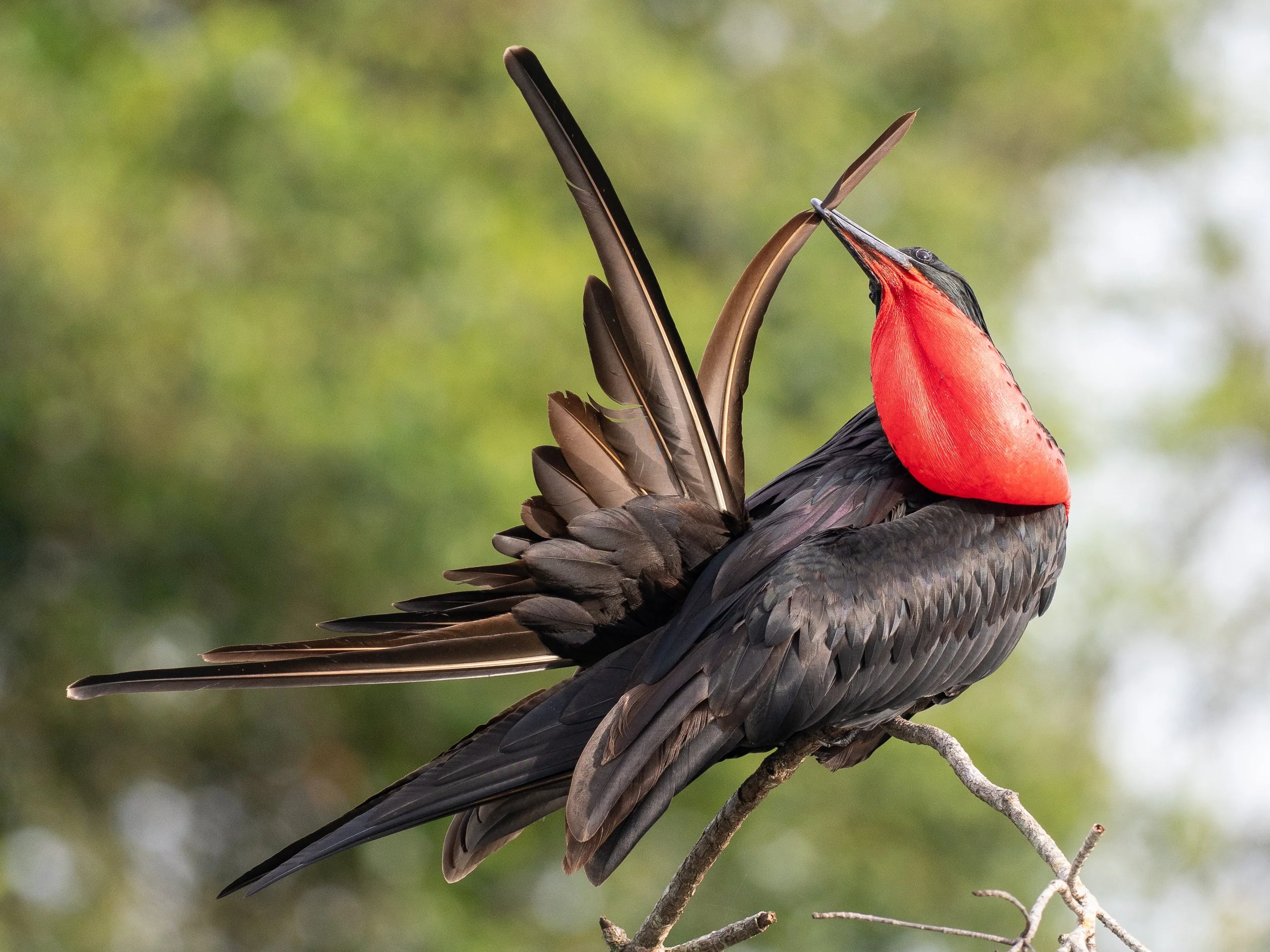
One of the early highlights of our boat ride was passing a large group of roosting Magnificent Frigatebirds. I had only ever seen them soaring overhead so it was a treat to see them so close. This particular bird is a male with the big red air sack. He was actively preening his tail feathers as we drifted past. This is probably my favorite photo of the whole trip!
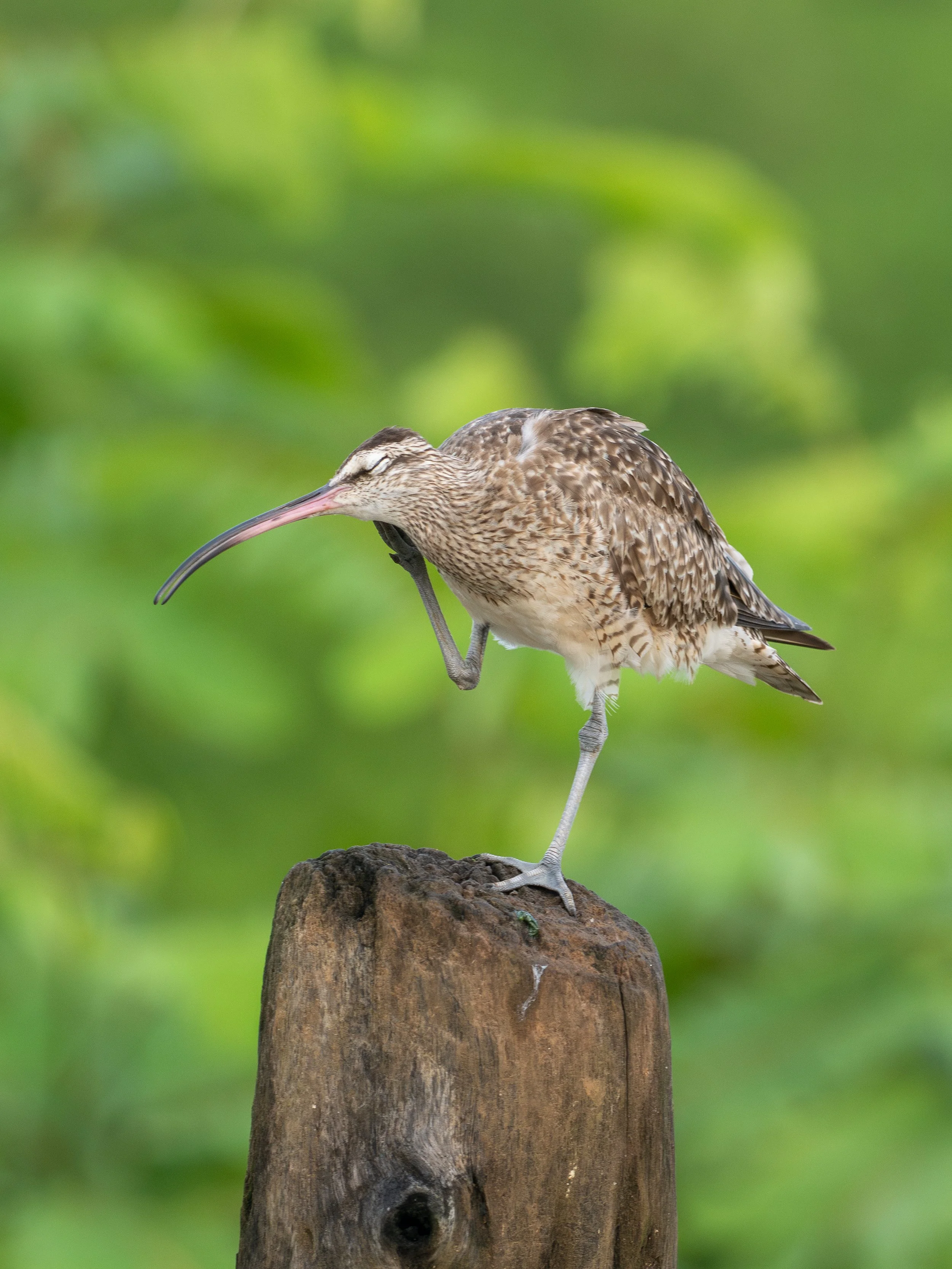
We were in the river at about high tide so a lot of the shorebirds, herons, and egrets were up on posts or even in the trees! This Hudsonian Whimbrel was not too bothered as we cruised by.
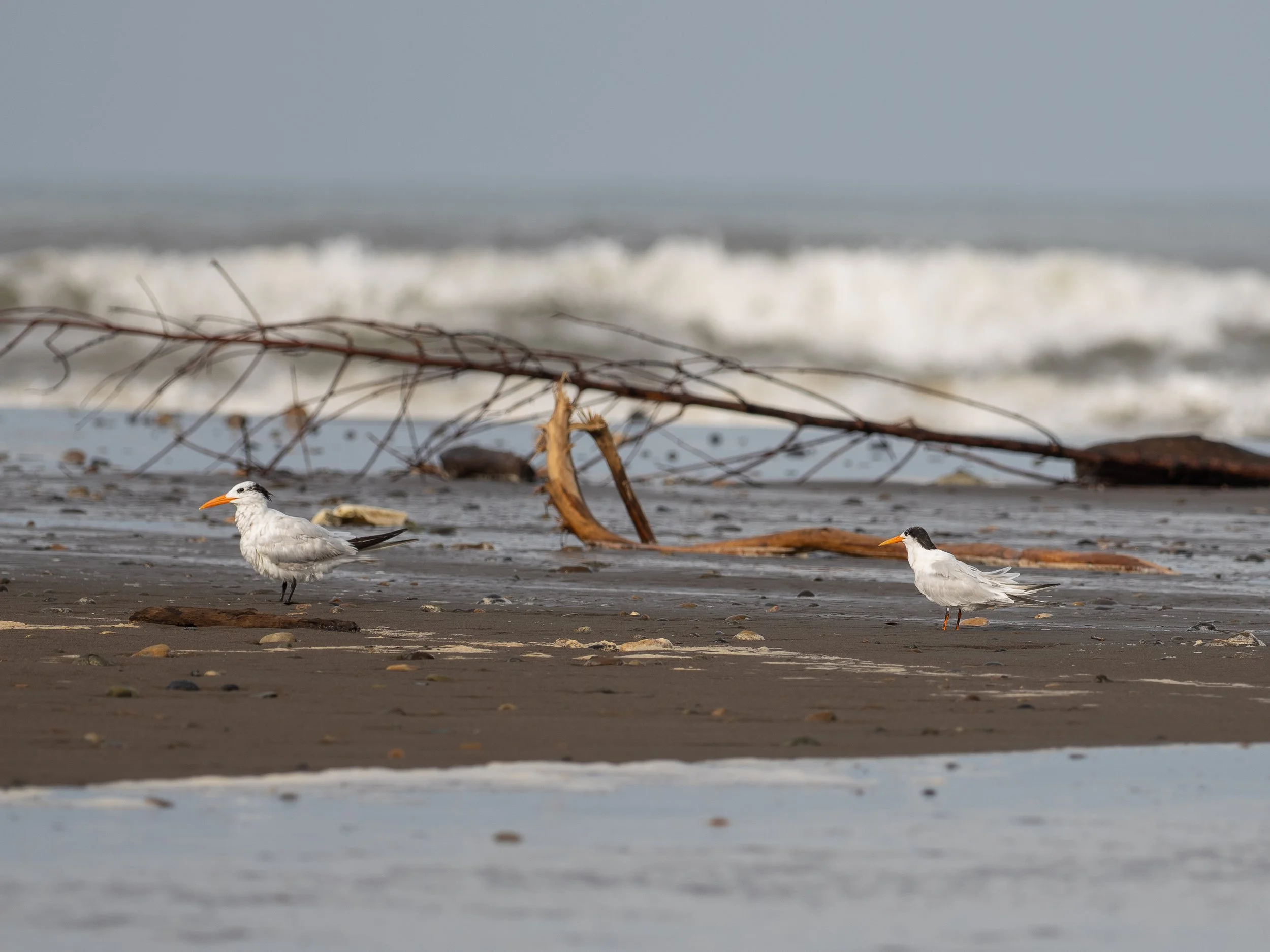
We travelled downriver towards the beach area where we found some ocean birds like these terns. We were impressed with Juan Carlos’s birding chops as he picked out the Elegant Tern on the right from a group of about 20 slightly larger Royal Terns, one of which is on the left here for comparison.
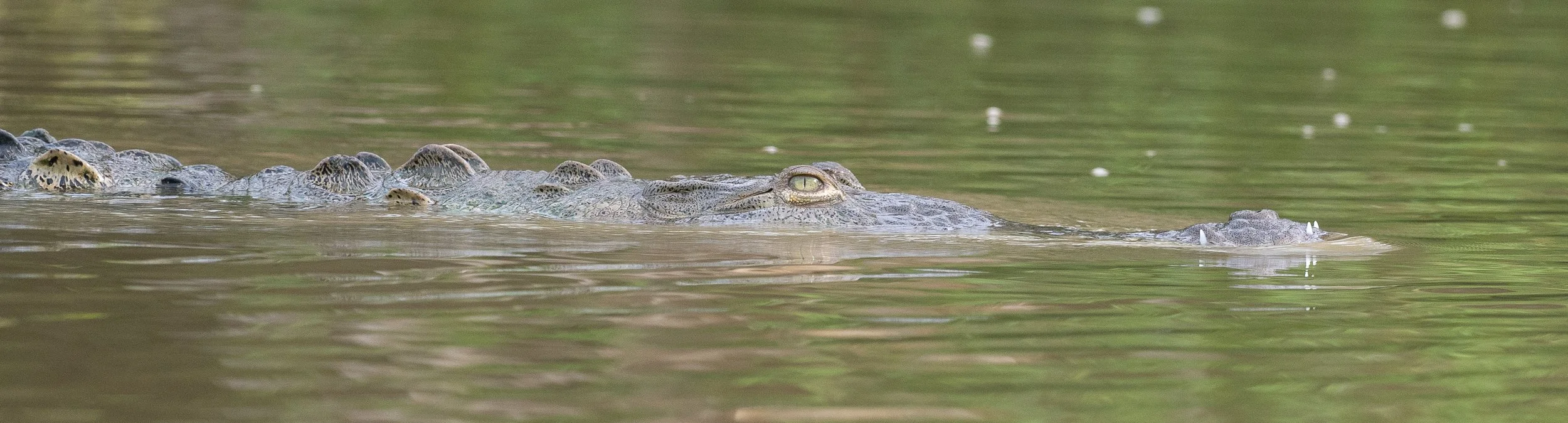
We were still seeing lots of crocodiles as we navigated the river channel. This one has a narrower snout, indicative of being a female croc.
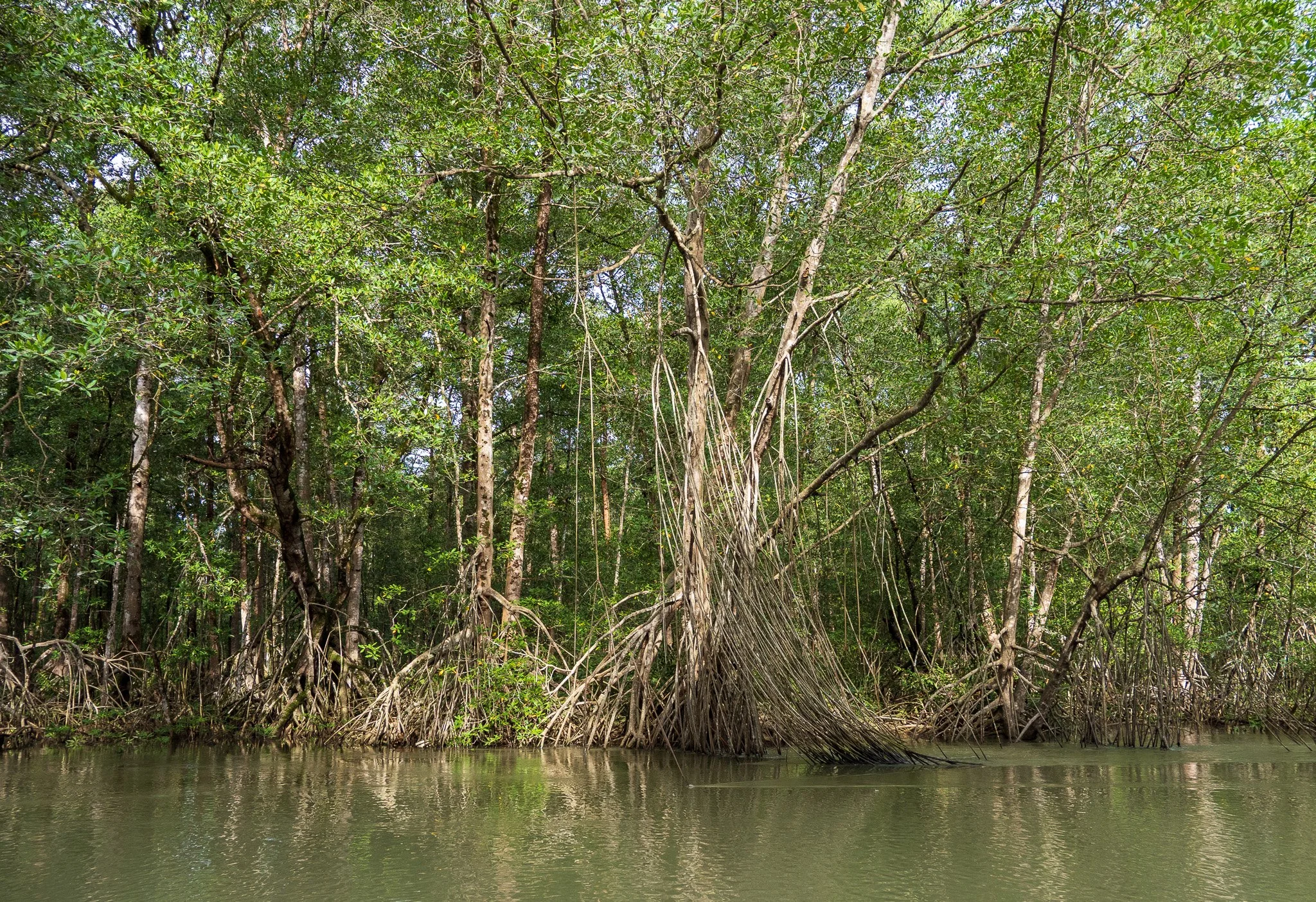
Next we cruised down a long channel through the mangrove forest. Juan Carlos described the various species of mangroves that were present, and we were hearing some of the specialist mangrove species like Mangrove Vireo. We got a quick look at Mangrove Hummingbird, one of our main targets, but I was not able to get a photo.
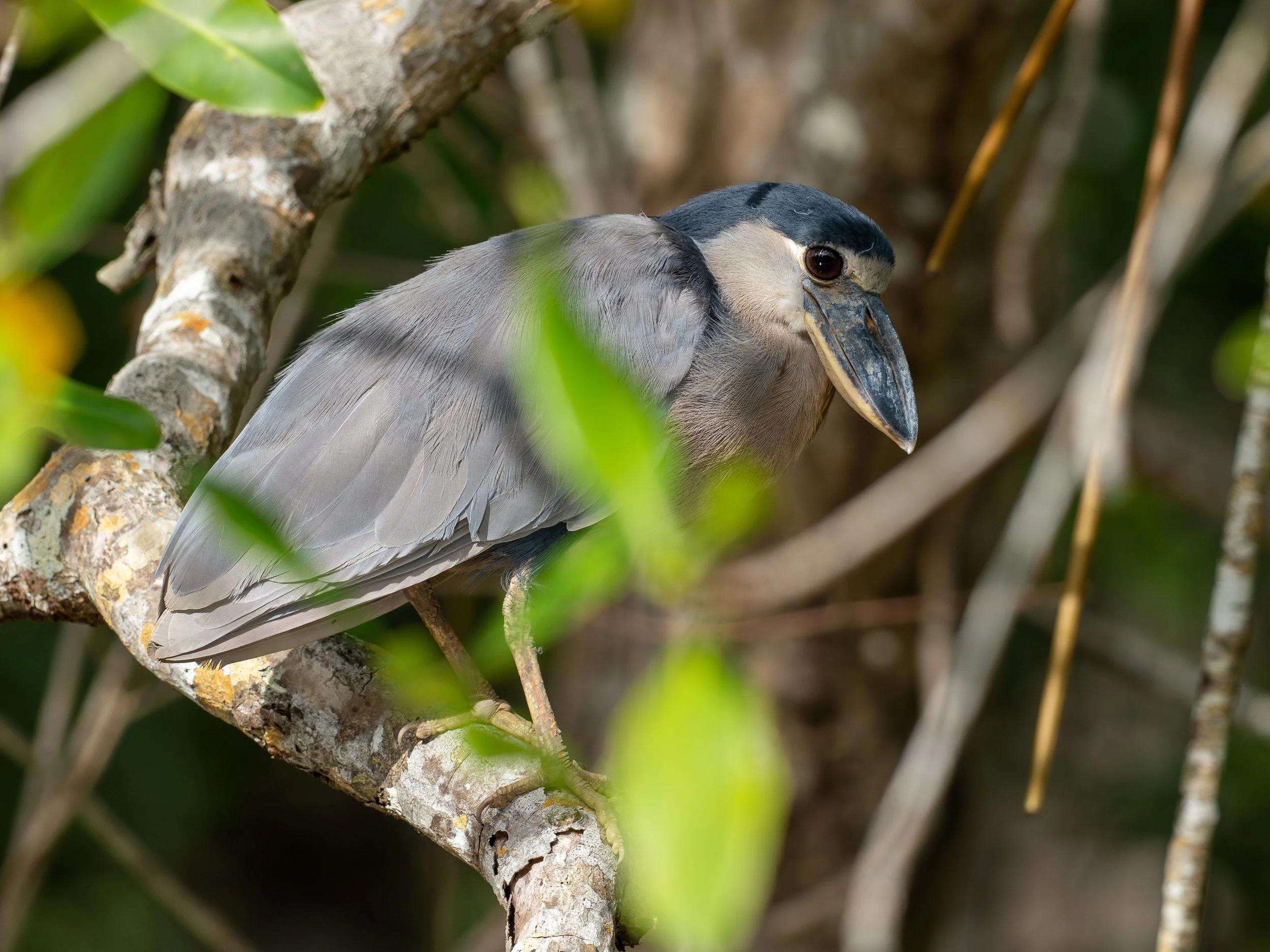
We found a good number of Boat-billed Herons roosting in the mangroves. These funky birds are mostly nocturnal so it was cool to see them so well in the daytime.
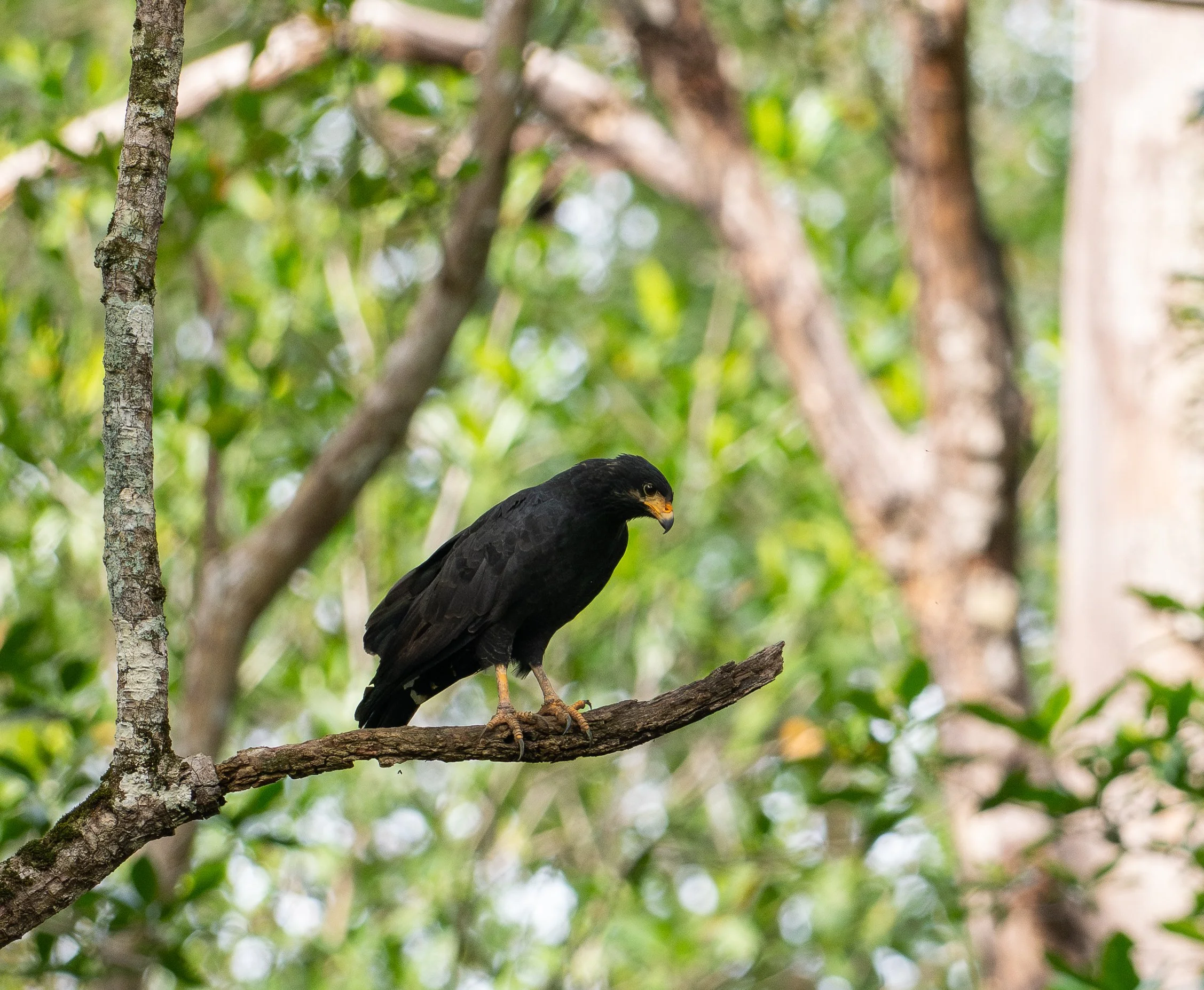
We spied this Common Black Hawk in the mangrove forest. I read on their “Birds of the World” page that the Common Black Hawks in the mangrove forests eat almost exclusively crabs!
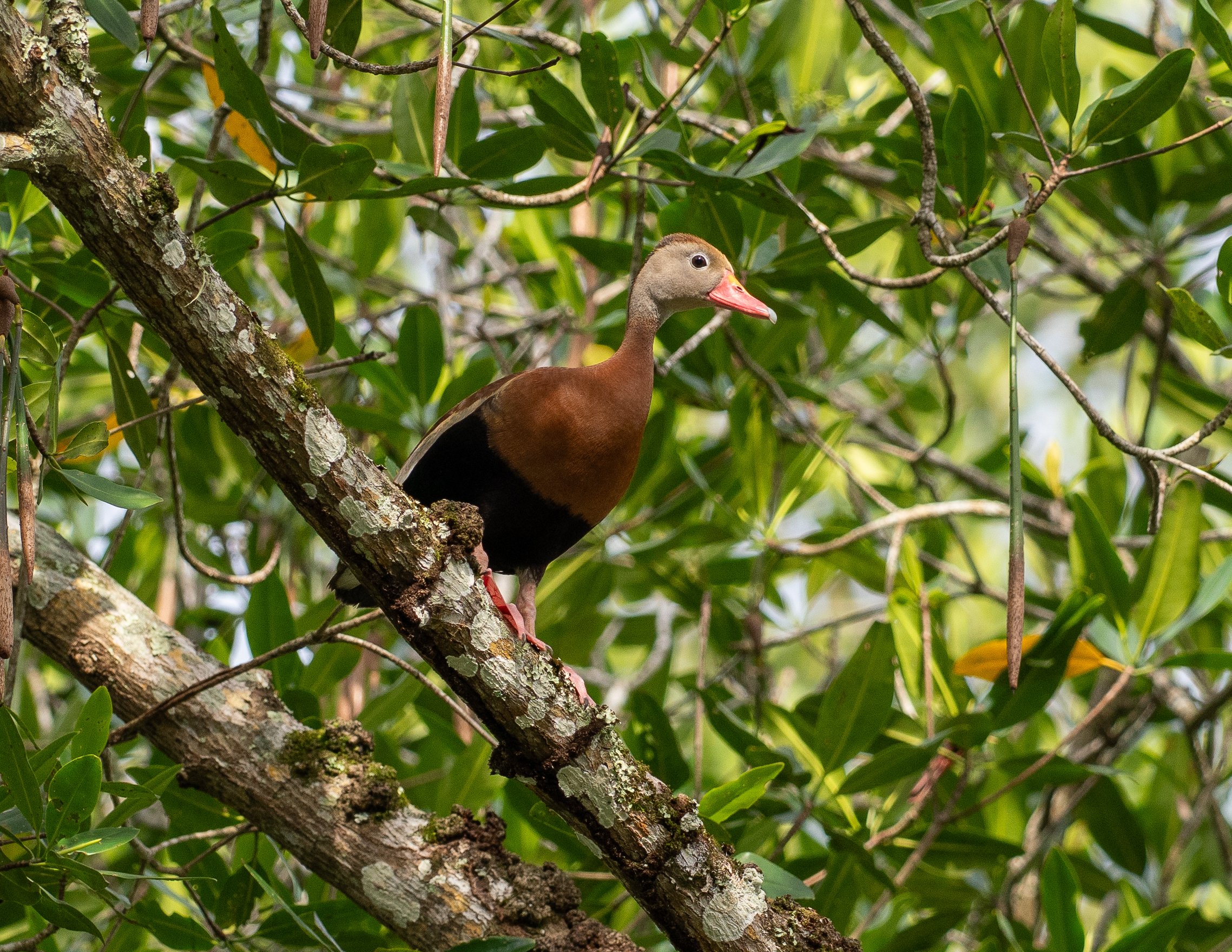
We also found some handsome Black-bellied Whistling Ducks in the mangrove trees.
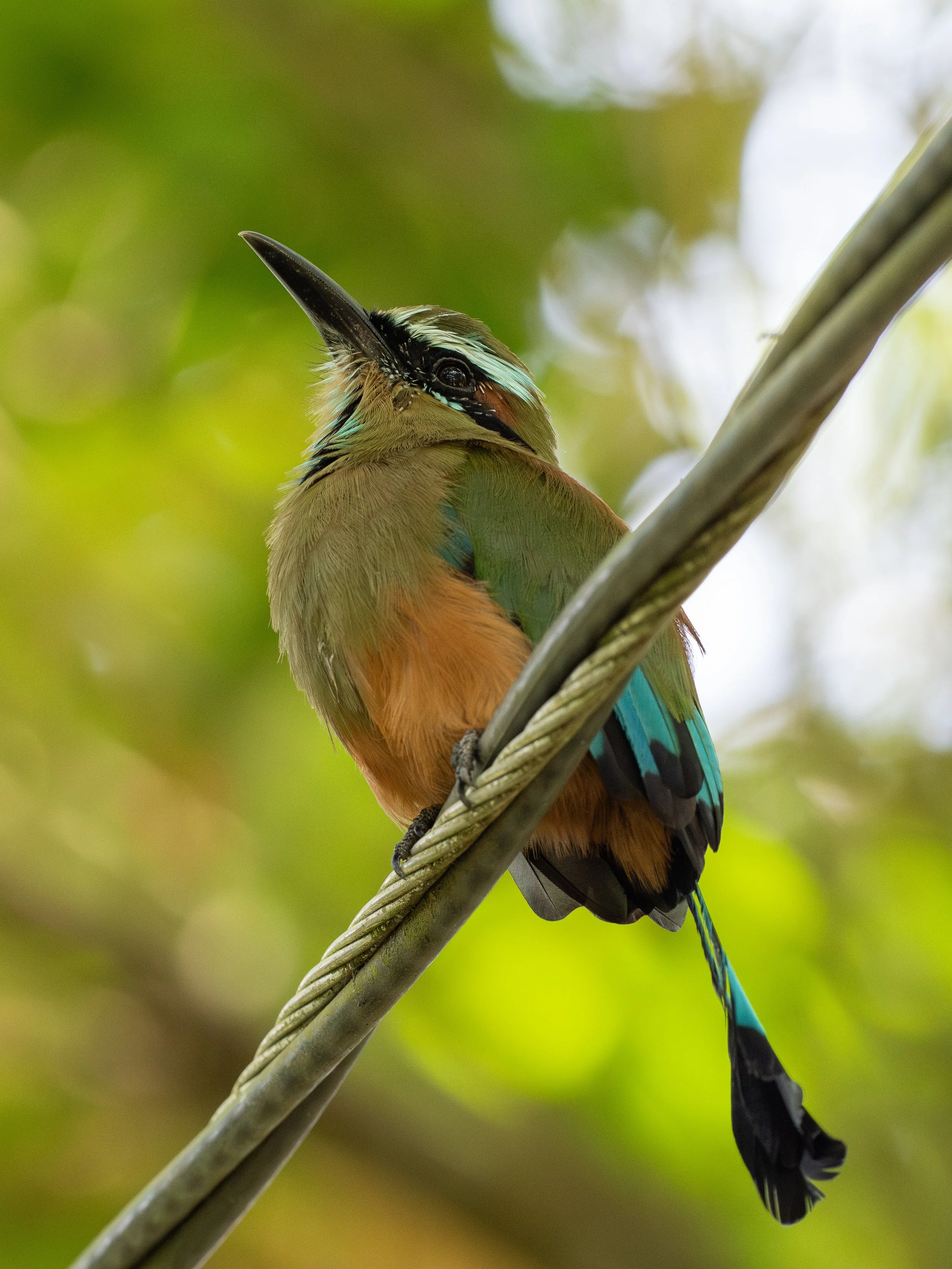
We saw a ton of birds on the boat tour, but the birding wasn’t done. When we got back to the Jungle Crocodile Safari HQ, we found this spectacular Turqoise-browed Motmot perched on a wire. Believe it or not, the racket-tipped tail feathers are still growing in on this bird and can be much longer.
To our surprise (and delight), our owl guide Santiago (“Shago”) was waiting for us back at the HQ too. Because of the possibility of afternoon storms, Shago suggested we get right to it and start looking for the owls. “Had we seen any of the four local owl species before?” Shago wanted to know. We had seen Ferruginous Pygmy-Owl in Belize, but none of the other three. When Shago said he would start looking for the pygmy owl right there in the parking lot where we were talking, I thought he was pulling my leg! But sure enough, he got his scope on one right above us in the canopy!
Shago told us that he checks on several groups of roosting owls in the area every day to keep tabs on them. We saw the other three (new to us) owl species in about a half hour! First a Spectacled Owl, then a Pacific Screech-Owl and finally a pair of Black-and-White Owls. It is always a treat to see any owl so it was a home run to see so many different kinds (and so easily!) We never would have stumbled across these birds on our own.
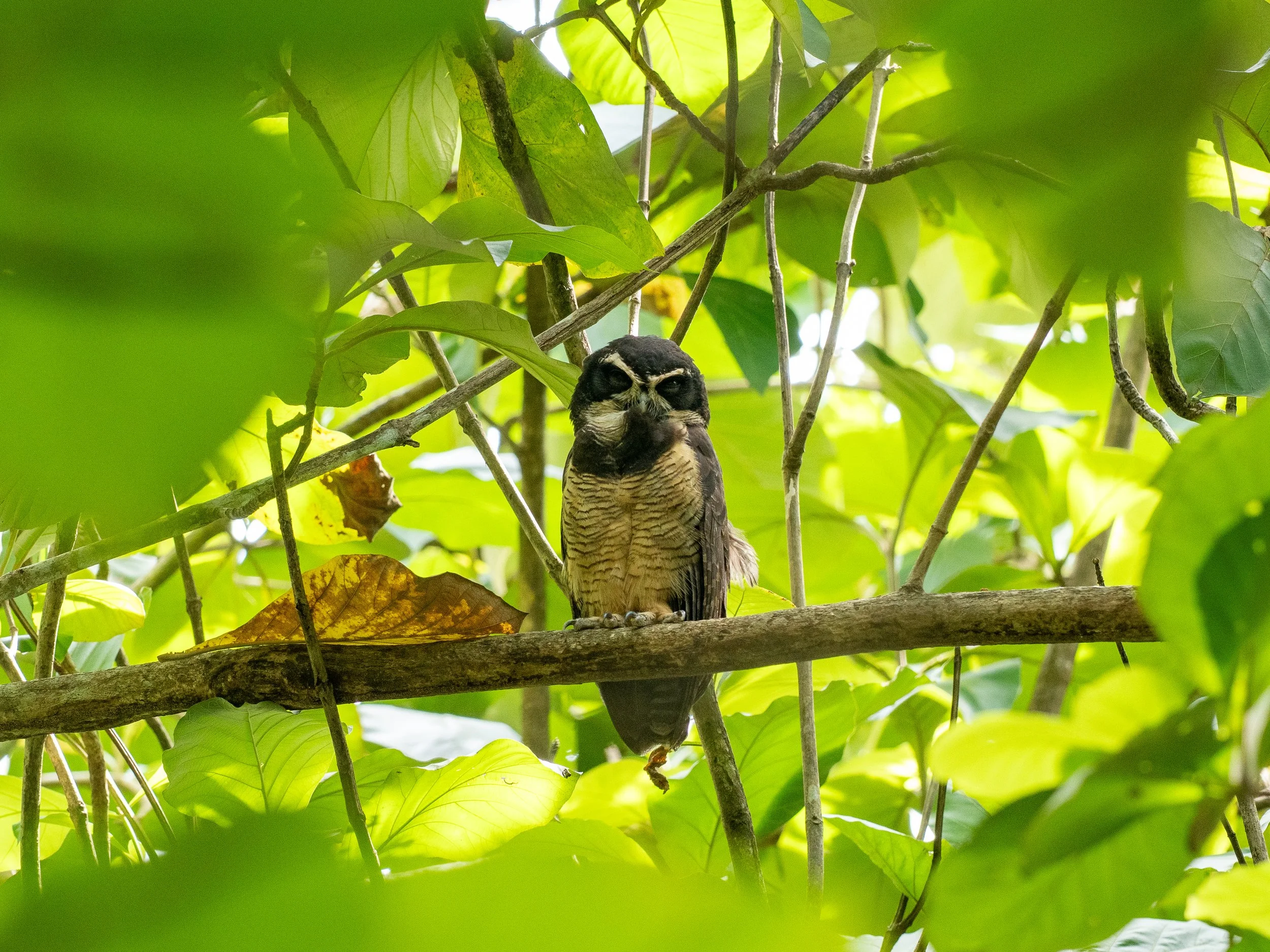
The Spectacled Owl! We had to hike a short distance in the forest to see this one.
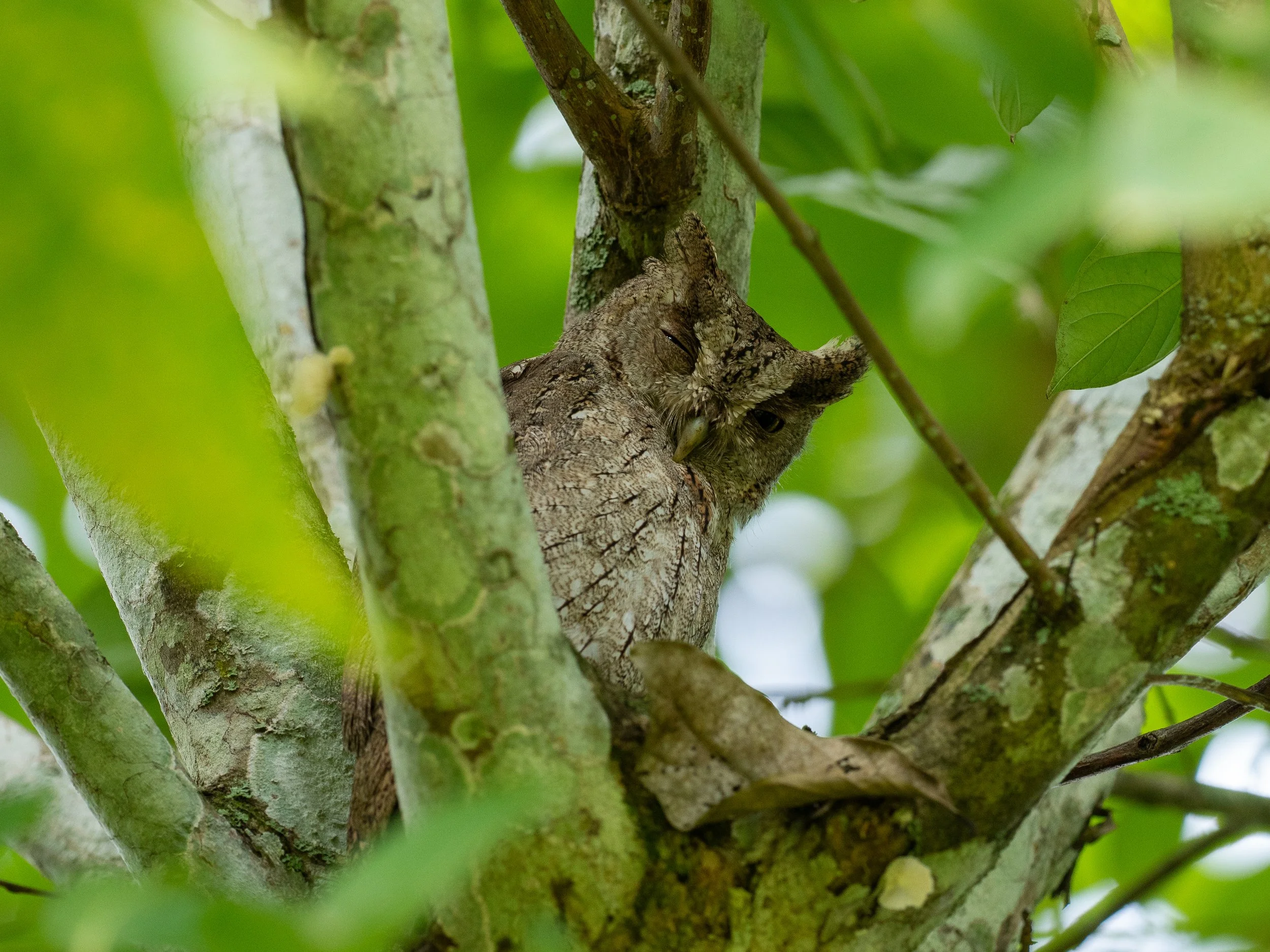
Shago was having some fun with us when he located this Pacific Screech-Owl. When we arrived at the roost, he checked the ground first to see if there were any new pellets or droppings and then said the owl is here and asked if we could find it. It is so camouflaged we didn’t see it right in front of us and were looking too deep in the trees!
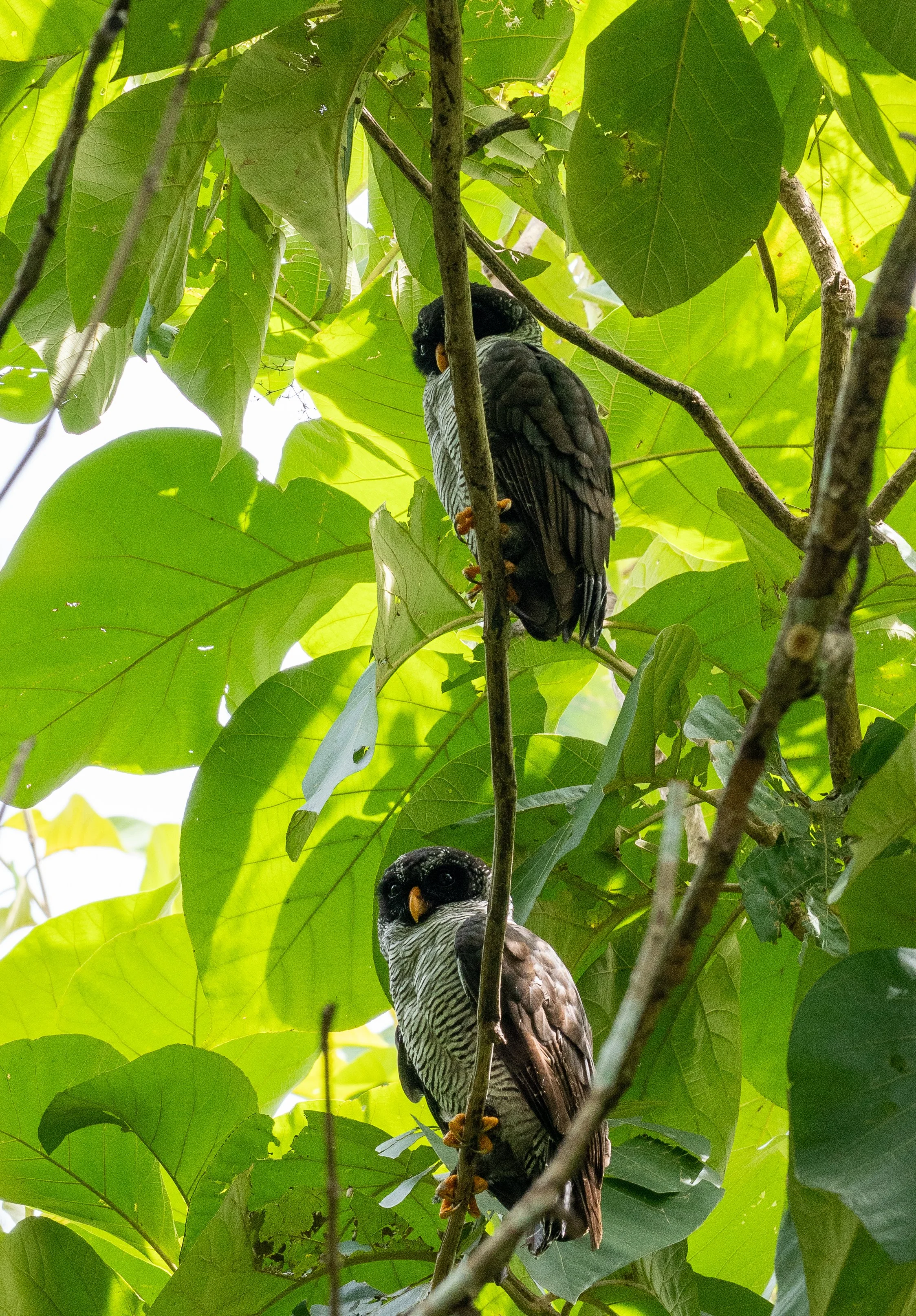
This pair of Black-and-White Owls were large enough that we redeemed ourselves and spotted them in the canopy (once Shago put us in the right spot!). By about 11 a.m. we were done for the day!
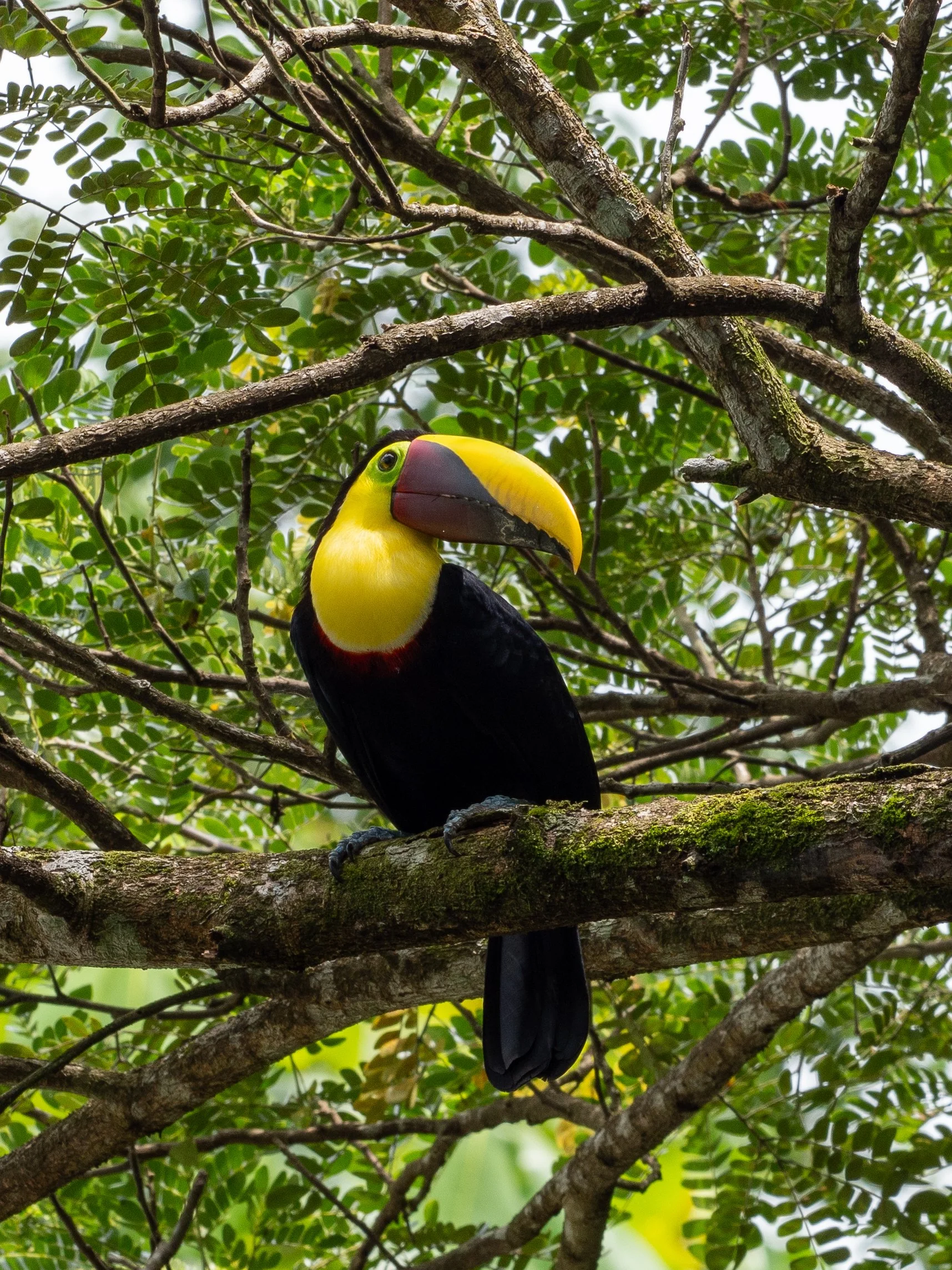
As we were getting ready to leave Jungle Crocodile Safari HQ, we noticed some commotion in the trees: a Yellow-throated Toucan! This is the best look we’ve had at any toucan species. Way cool!
We exchanged numbers with Shago and he organized for us to bird the next morning in the Carara National Park with one of his friends and fellow bird guide, Pablo. With a good plan in place, we had a relaxed rest of the day, eating some seafood in the beach town of Jaco, taking a nap and eating some pizza at the lodge next door.
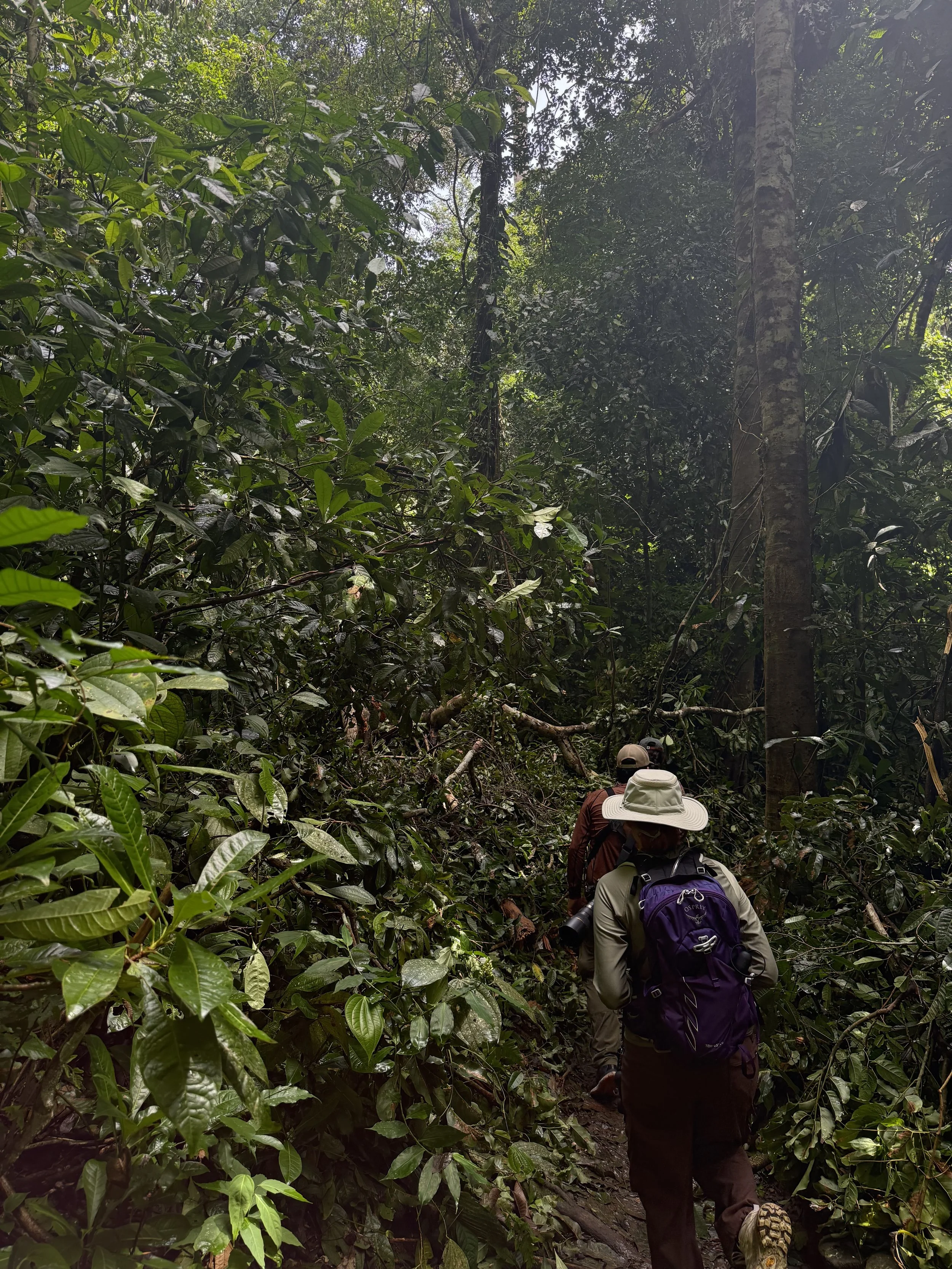
We met Pablo at the park entrance for its 8 a.m. rainy-season opening (in the dry season they open at 7). Very late by tropical birding standards which seemed like a minor tragedy, but the vegetation is so thick in the park, even with the later start it was dark as anything in there! I am not sure we would have been able to see anything if we had started any earlier. Pablo also brought his girlfriend Mary to be another set of eyes which was good because we needed all the eyes we could get! Pablo and Mary were excellent whistlers and mimickers - anything we heard they would call back to in the same way!
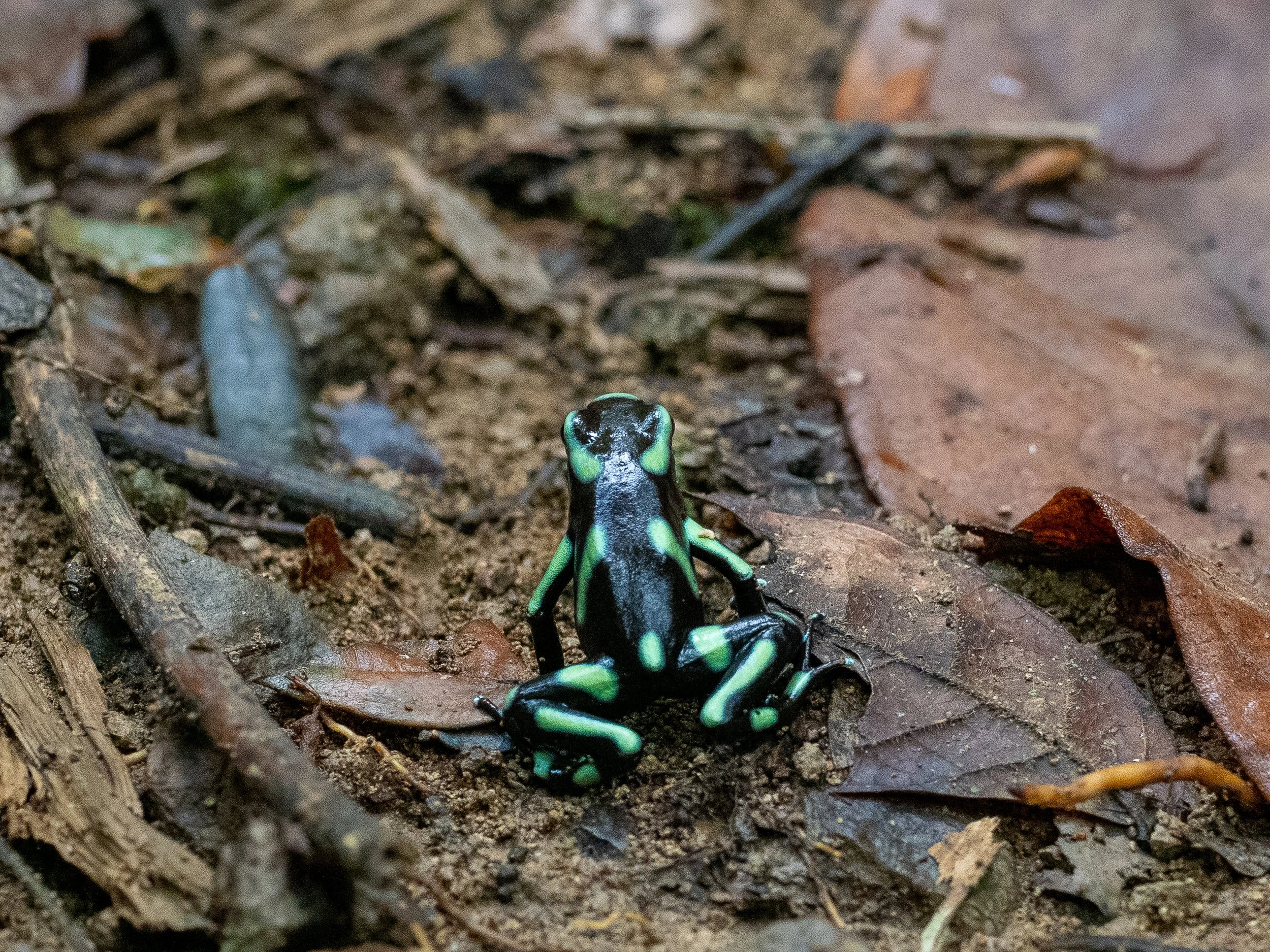
Carara is known for its Green-and-Black Poison Dart Frogs. They were everywhere!
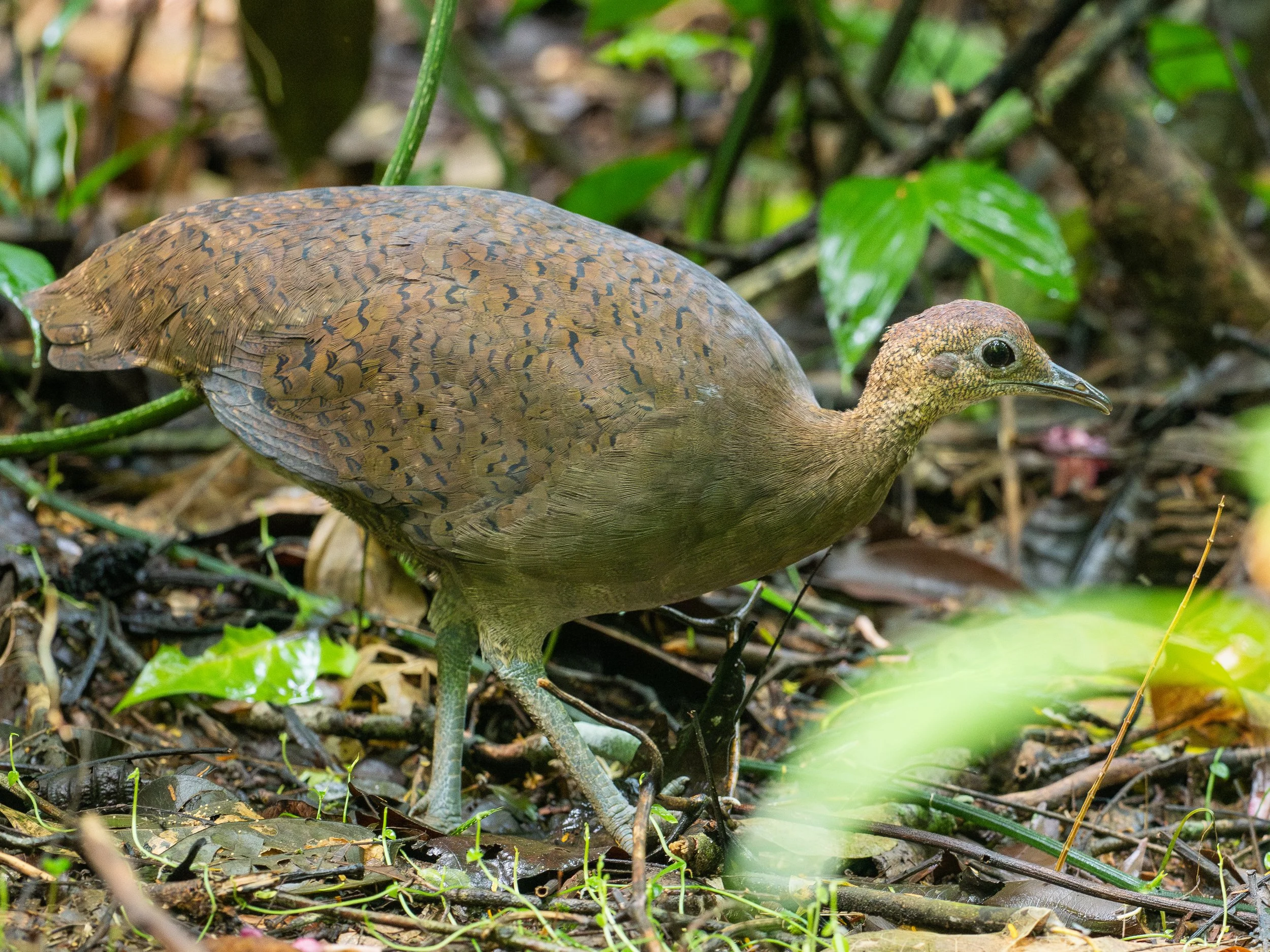
We were birding hard - walking slowly, scanning the forest floor, the understory and up in the canopy. We had success in finding some deep forest birds, like this Great Tinamou.
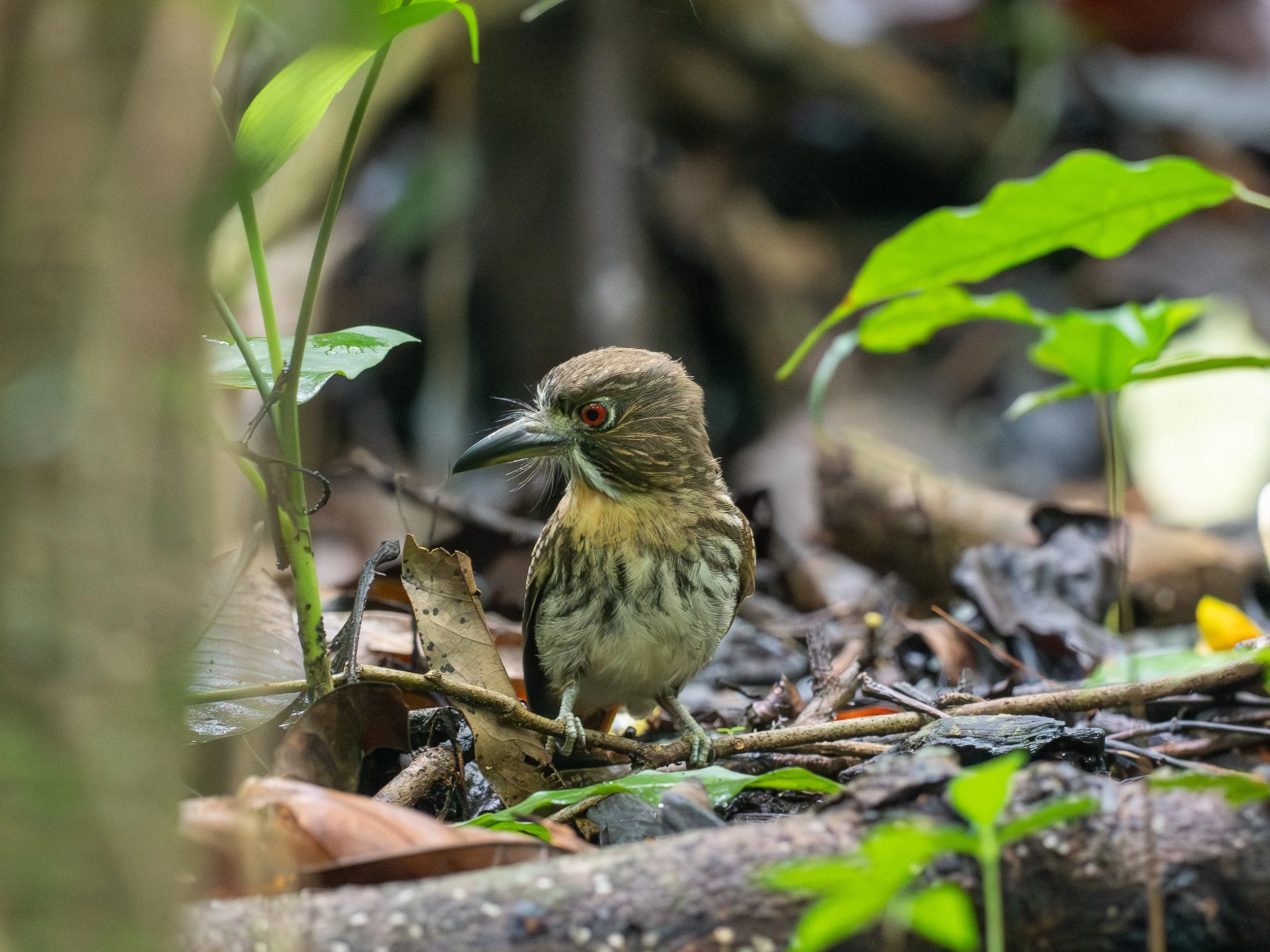
We also came across this White-whiskered Puffbird foraging in the leaf litter not too far off the trail.
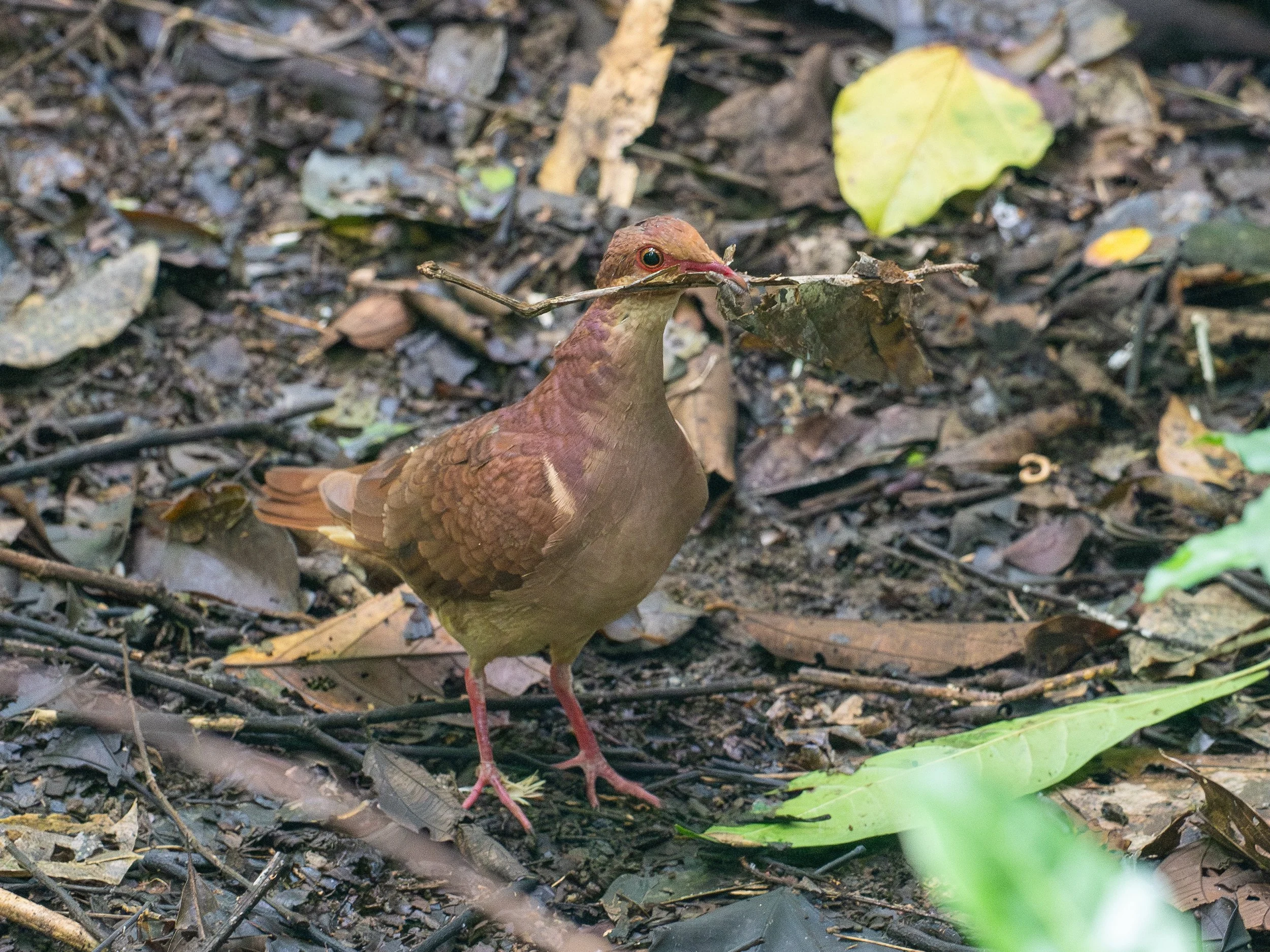
It was a real treat to watch this Ruddy Quail-Dove gathering nesting material from the forest floor and drop it off in the nest with the female. Usually these birds are very hard to see so we lucked out that they chose to build their nest where we could get a good look.
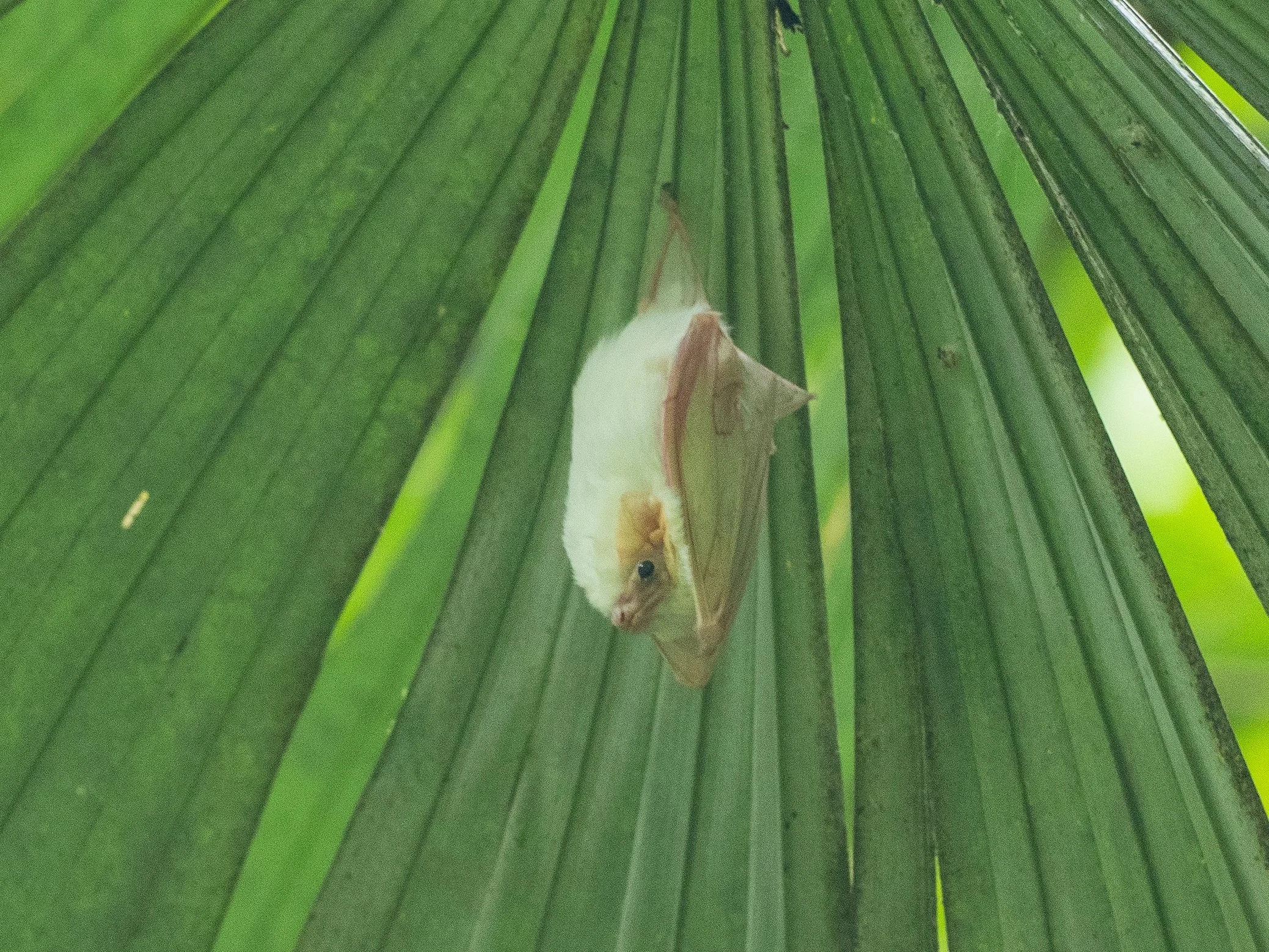
Pablo pointed out this Ghost Bat hanging from a palm frond above the trail.
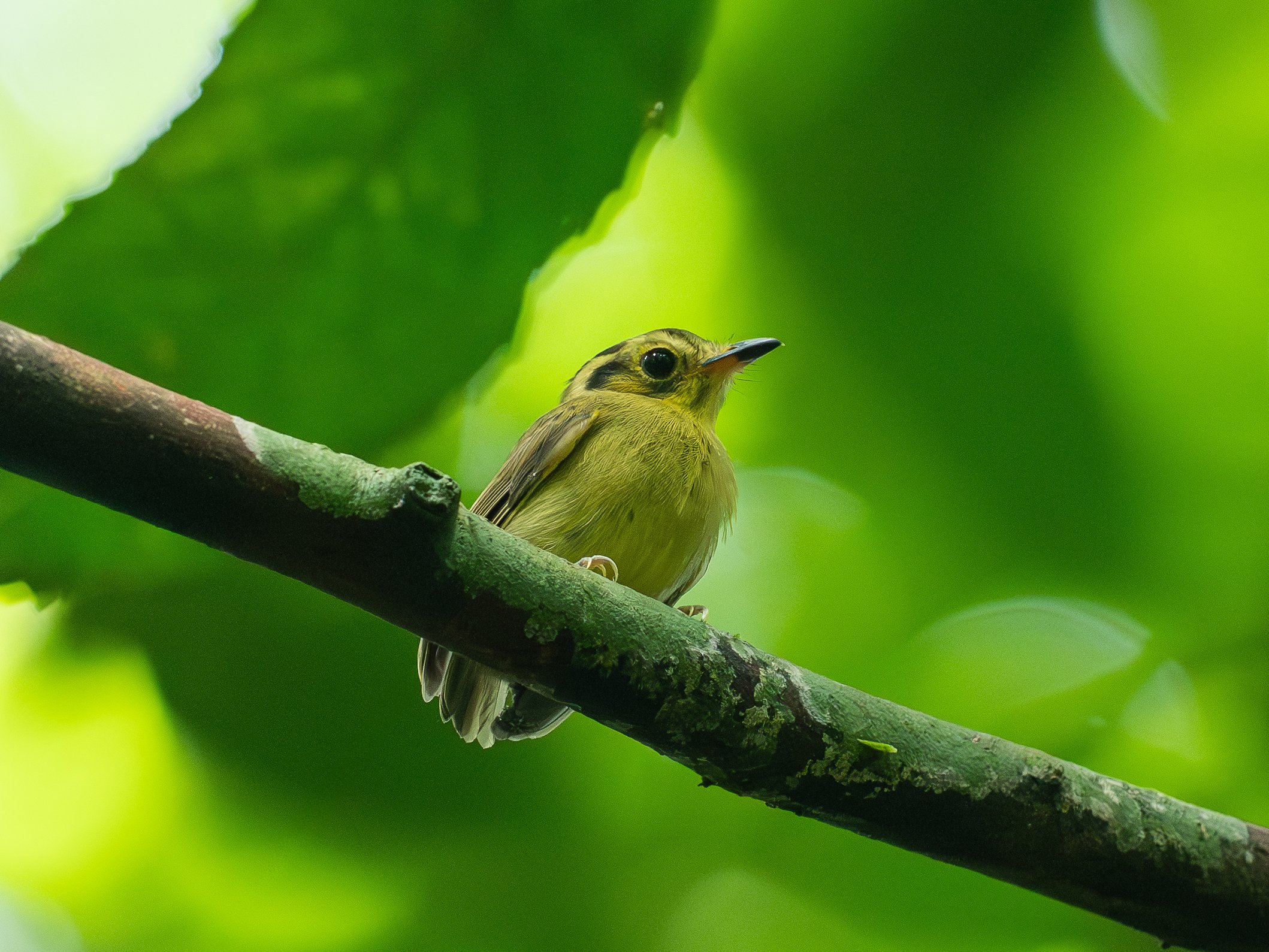
Overall the conditions were pretty difficult for taking photos, particularly of the birds in the trees with very low ambient light and the light mostly coming in from behind the birds. I got lucky with this Golden-crowned Spadebill, a tiny yellow ping-pong ball of a bird who was content to sit very still on a nearby branch with some broad green leaves behind him.
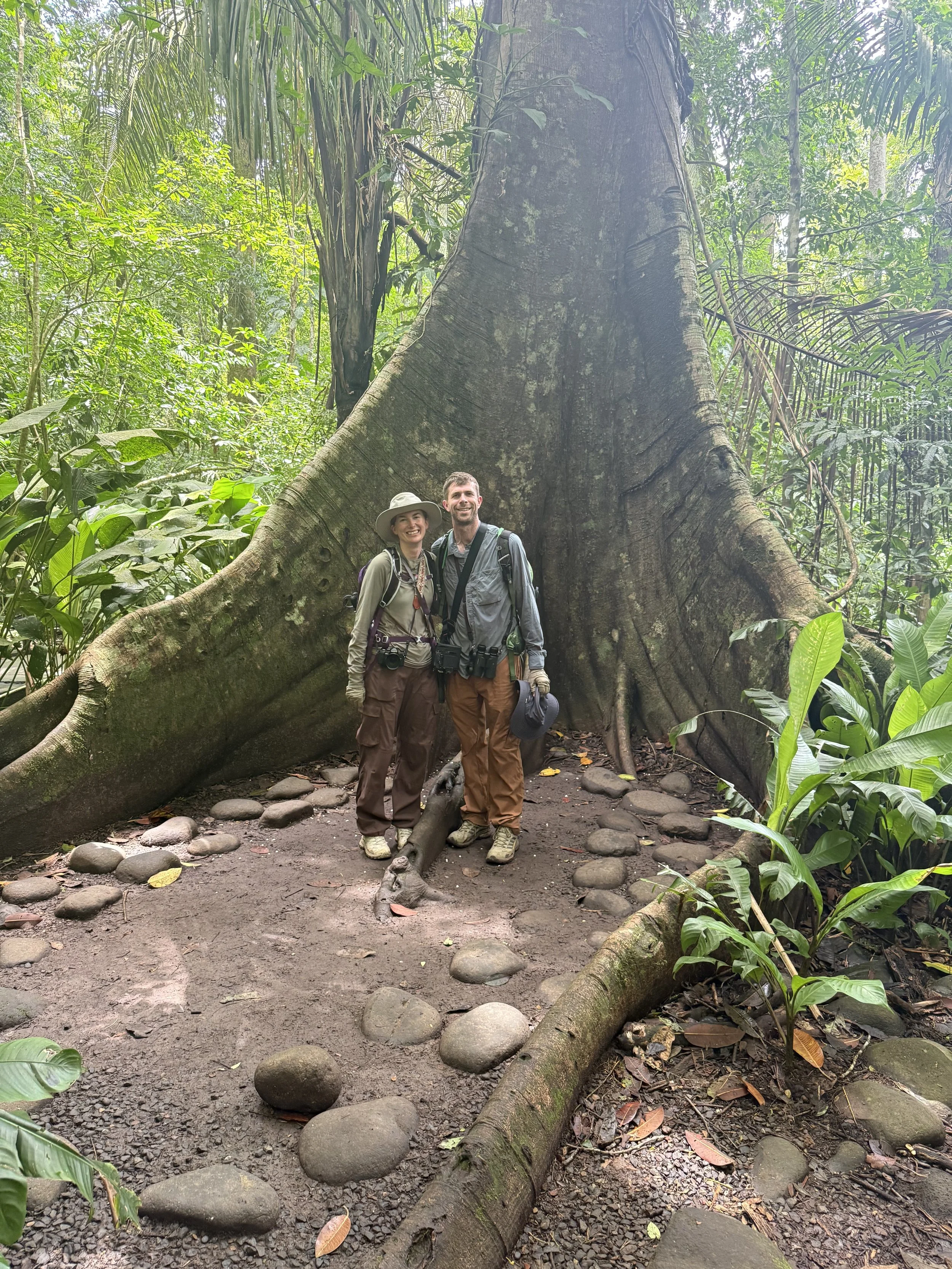
Still smiling after a long morning in the heat and humidity at Carara! The enormous trees in this forest were a highlight in their own right. At one point, we heard a series of wood snapping sounds ahead and Mary signaled she was not going forward on the trail: “no quiero”. Pablo cautiously checked it out while we all stood back. After a minute or two, we heard a short series of escalating cracks and BOOM! Mary waived us forward with a knowing look and we saw a branch the size of a normal tree had fallen from the canopy (thankfully about 15 meters off to the side of the trail).
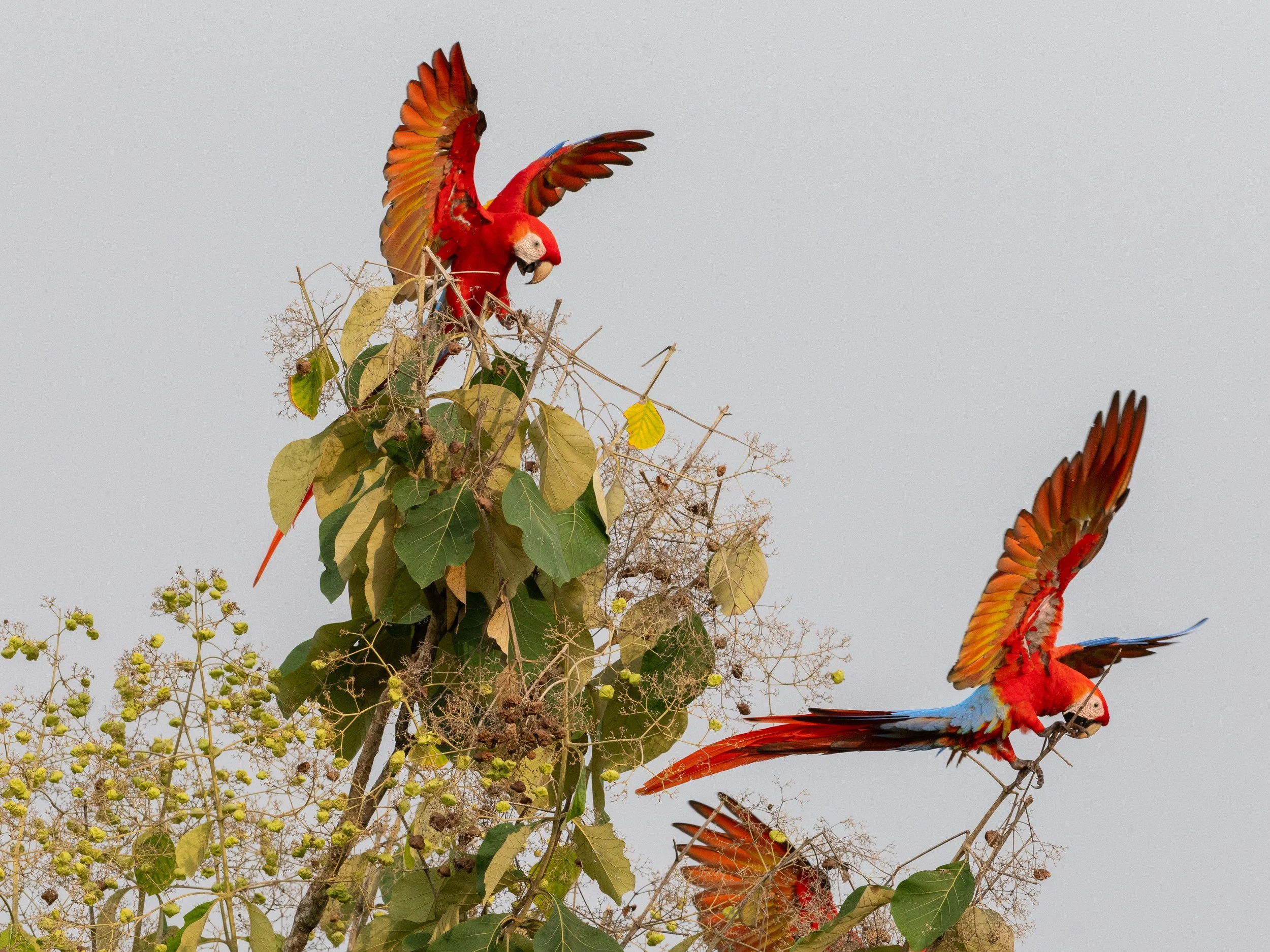
After about four hours, we were shot and thanked Mary and Pablo for taking us through the forest in Carara and getting us on so many birds. We spent the evening back at the observation tower watching the Macaws and reflecting on a great trip! The next morning we did a little bit of birding on the road by our hotel and then got to the airport before the traffic got going in San Jose.
All told, we saw 321 species of birds, about half of which were life birds for us. We got lucky in that everything went pretty smoothly (even the driving!) and we had some great guides to show us the ropes. Pura Vida!
