Costa Rica 2026 (4/5): Bosque de Paz and Catarata del Toro
After an intense few days at Rancho, we had something of a respite planned at Bosque de Paz (“the forest of peace”). It is a private reserve in the highlands of Costa Rica bridging the gap between two large protected areas: Parque Nacional Volcan Poaz and Parque Nacional Juan Castro Blanco. We knew their resident bird guide would be out of town and were content to bird on our own for a few days and enjoy a slower pace. On our way there, we stopped at a large waterfall nearby: the Catarata del Toro (“the waterfall of the bull”)
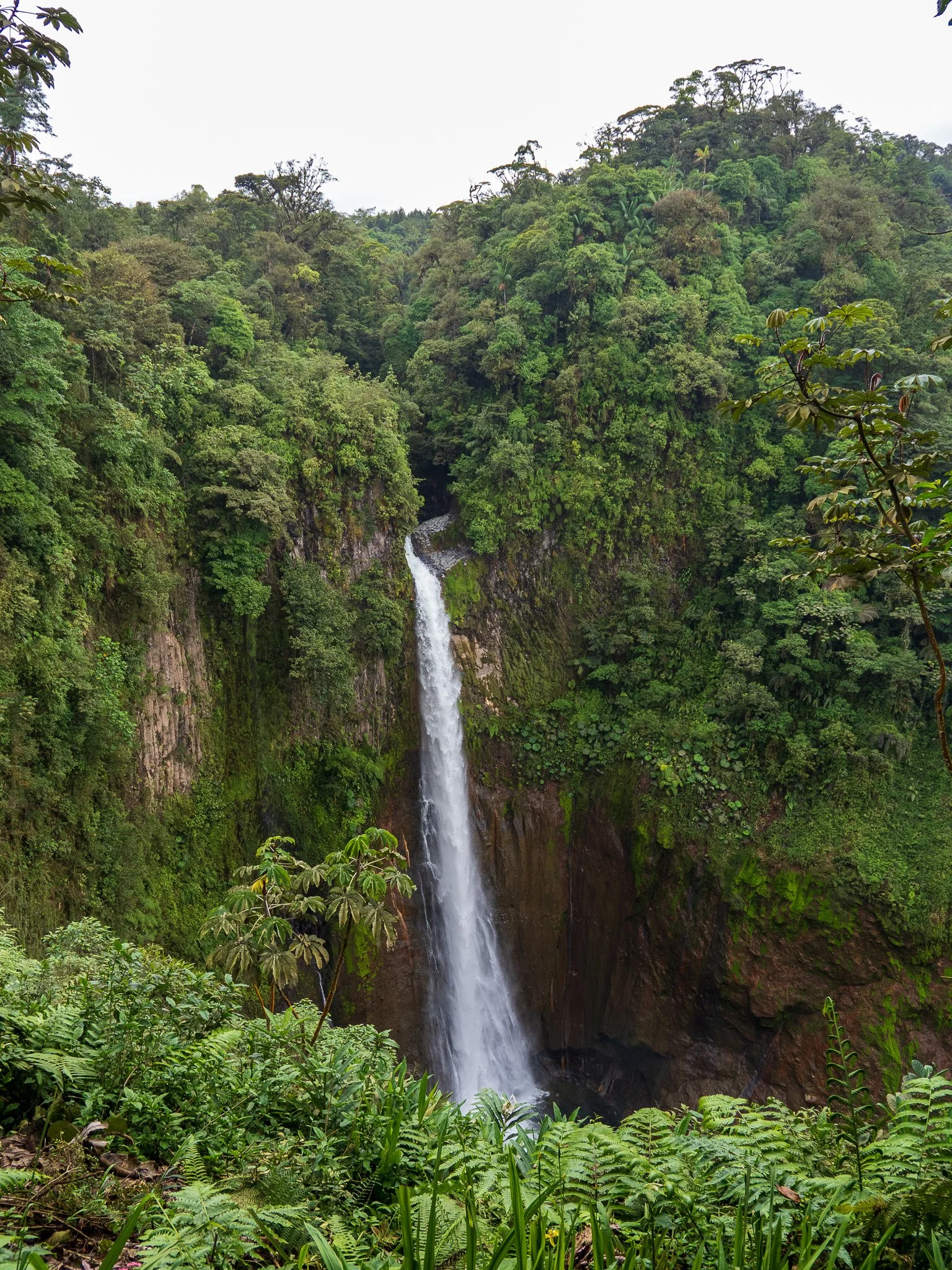
This Catarata del Toro is enormous! 80m tall!
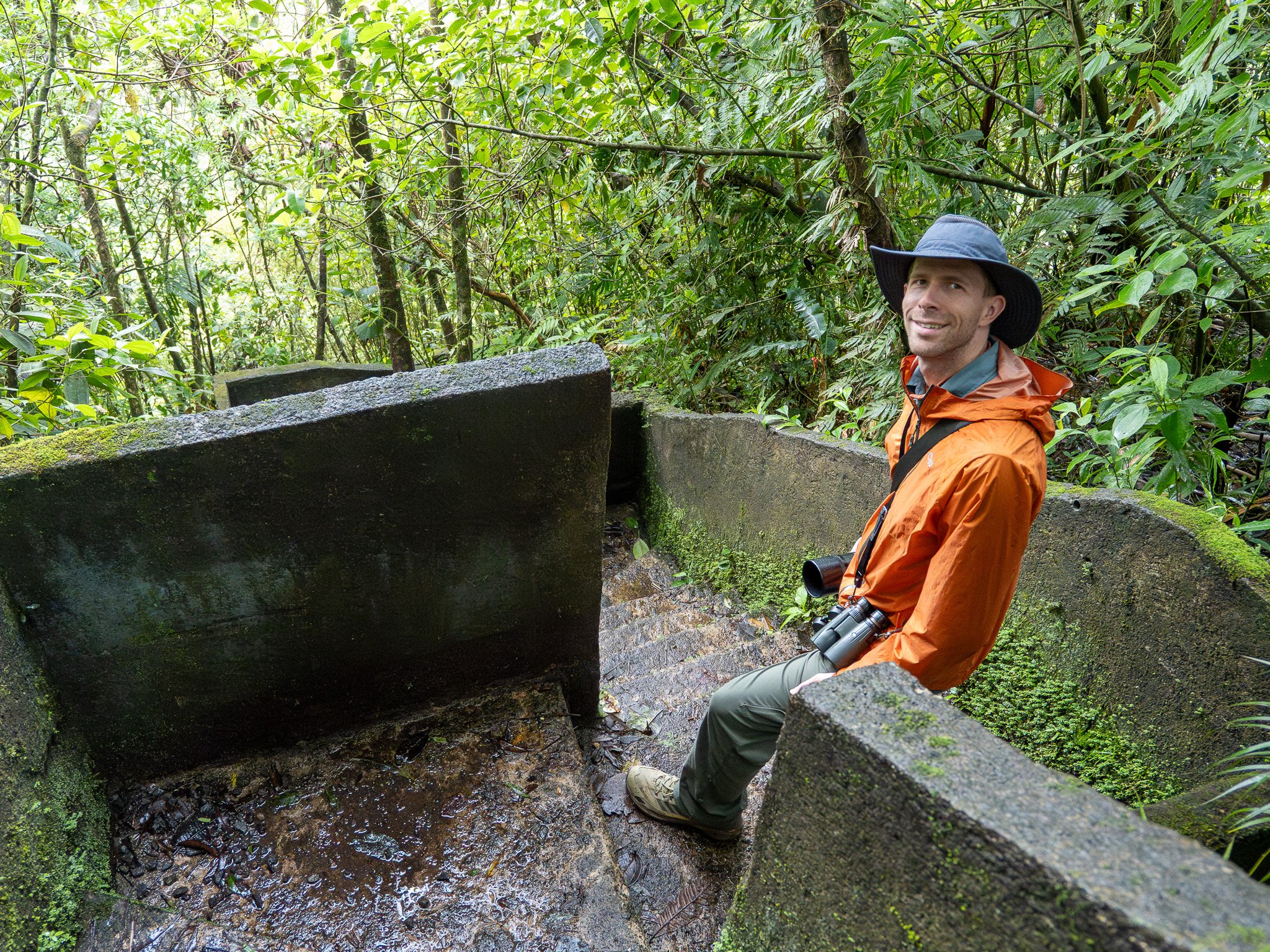
This staircase leads down to the bottom from the rim to the right of where we took the previous picture. We descended a few flights of stairs without much change in perspective before stopping and taking stock. “What are we doing?!" We’re going to have to climb back out of here!!” And we turned back from there!
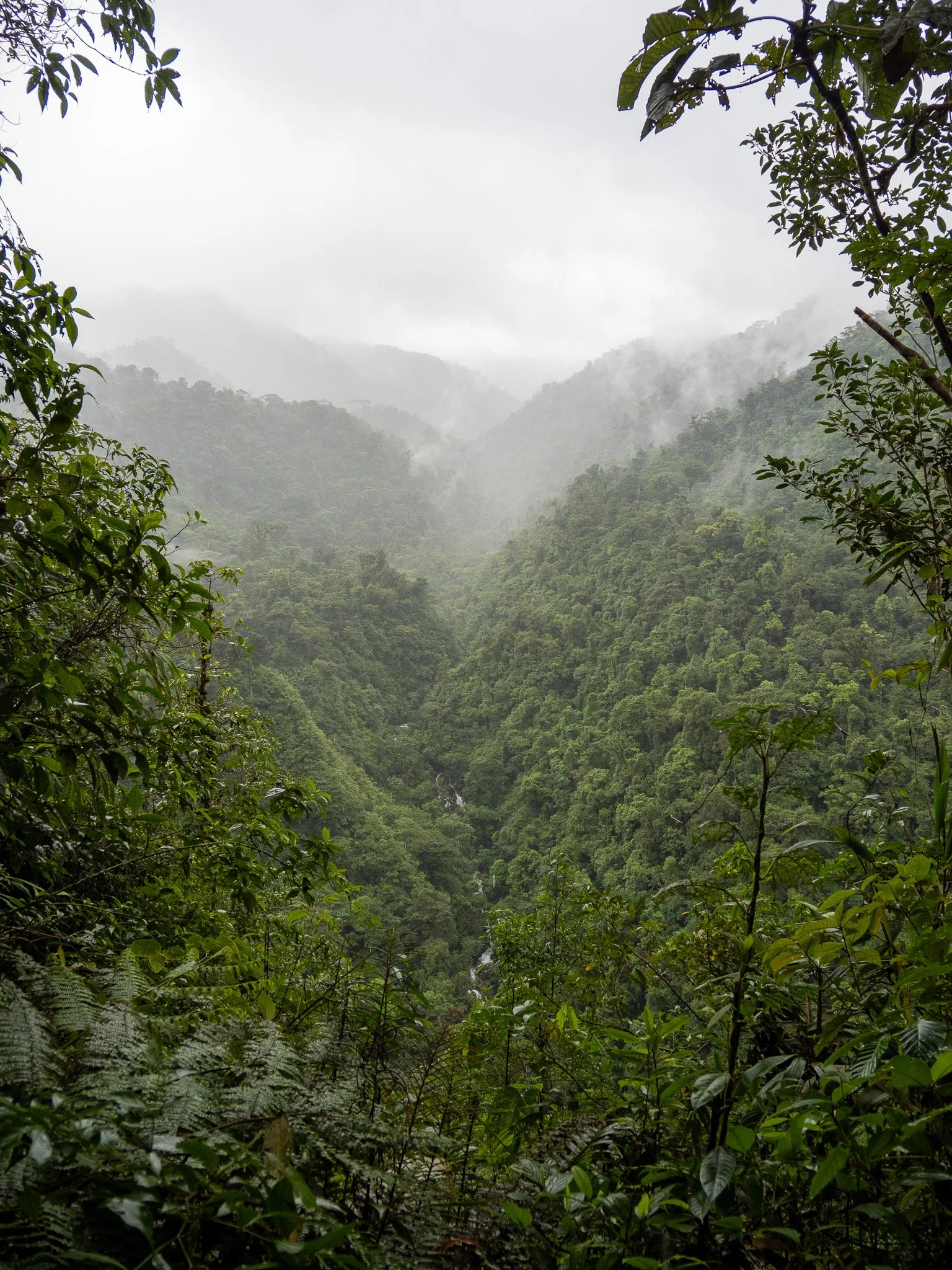
That ended up being a good decision as this cloud rolled in and it began dumping rain about 10 minutes after we got back to the rim. They don’t call it the cloud forest up here for nothing!
We hung out at the headquarters building where we watched their feeders and saw some really amazing hummingbirds.
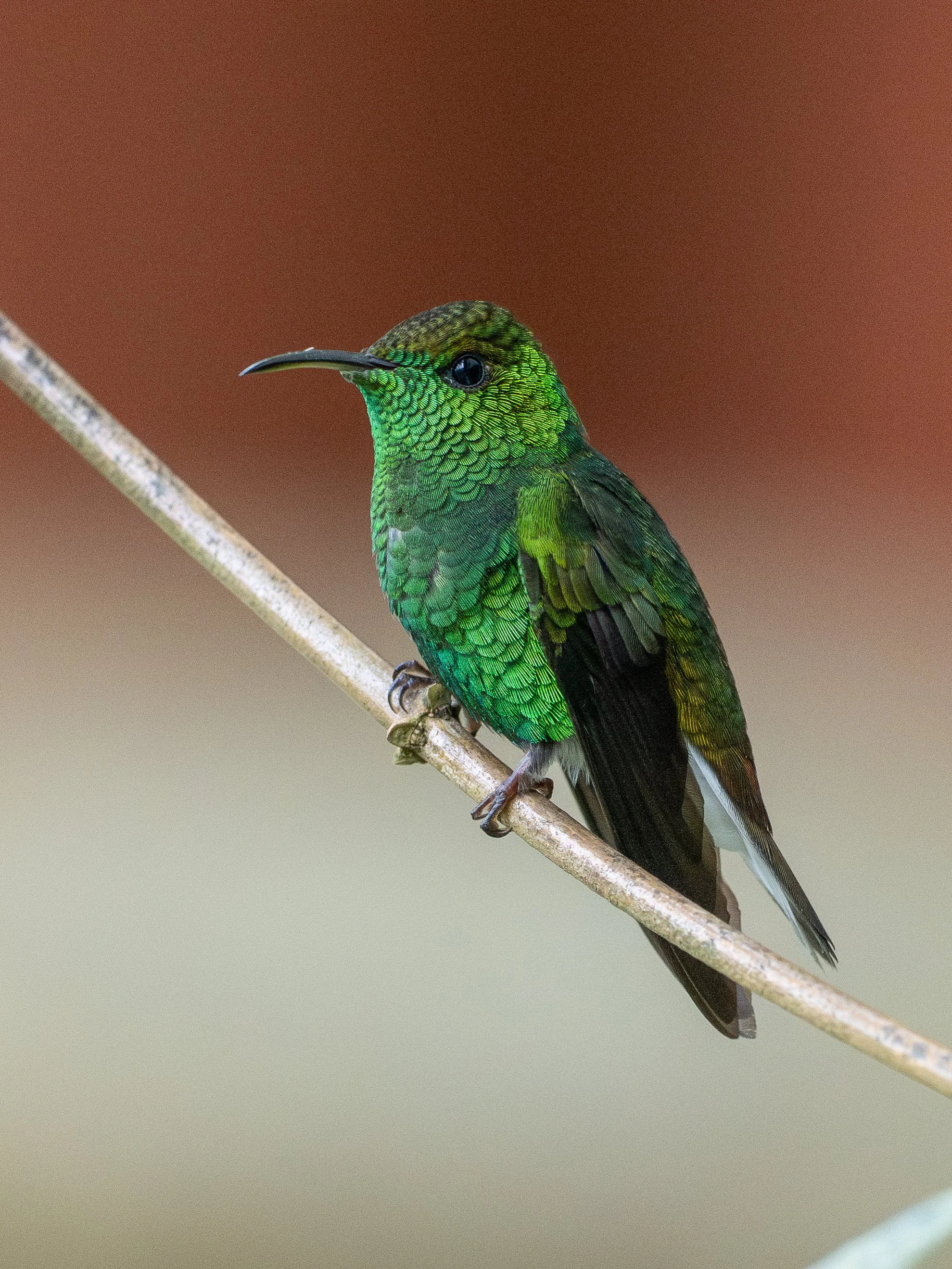
This dazzling jewel is appropriately called a Coppery-headed Emerald.
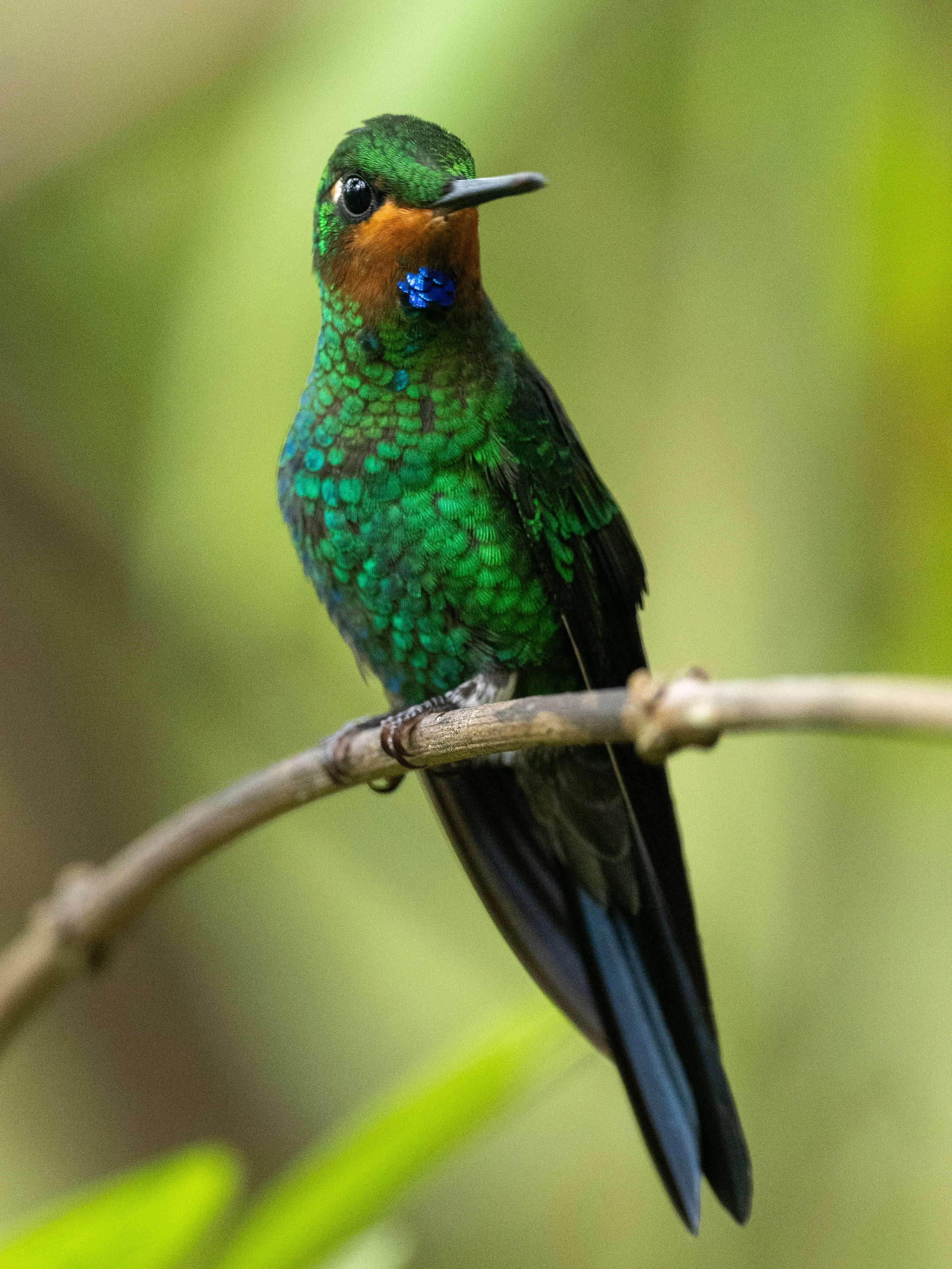
I was entirely confused by this buff-throated hummingbird. Turns out, this a juvenile Green-crowned Brilliant. The adults do not have the buffy throats which is why it took me a long time to figure out which species I was looking at here!
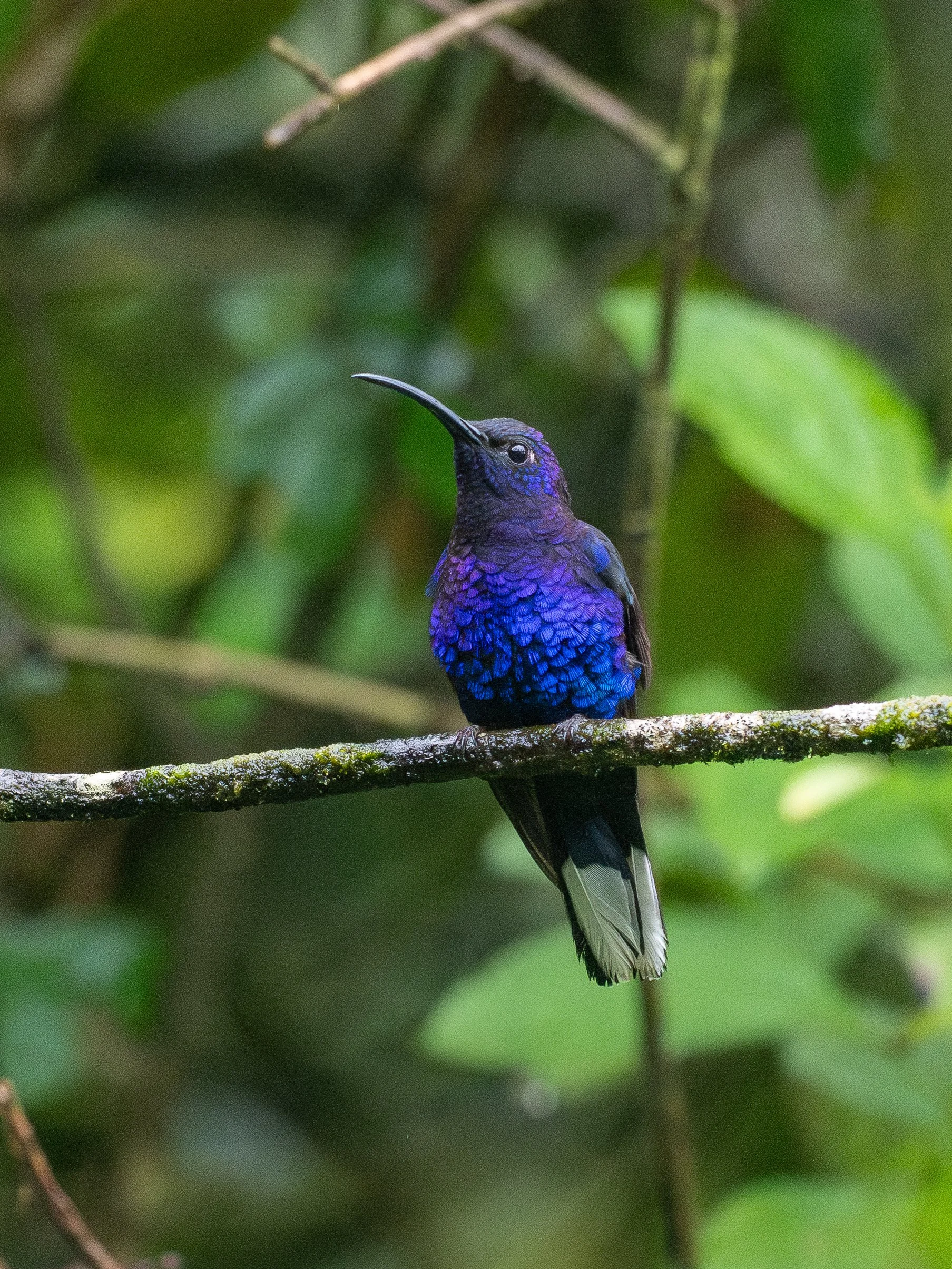
The Violet Sabrewing is the largest hummingbird in Costa Rica - a whopping 15 cm long, and absolutely spectacular. Almost unbelievably, they were abundant at Bosque de Paz and at the waterfall.
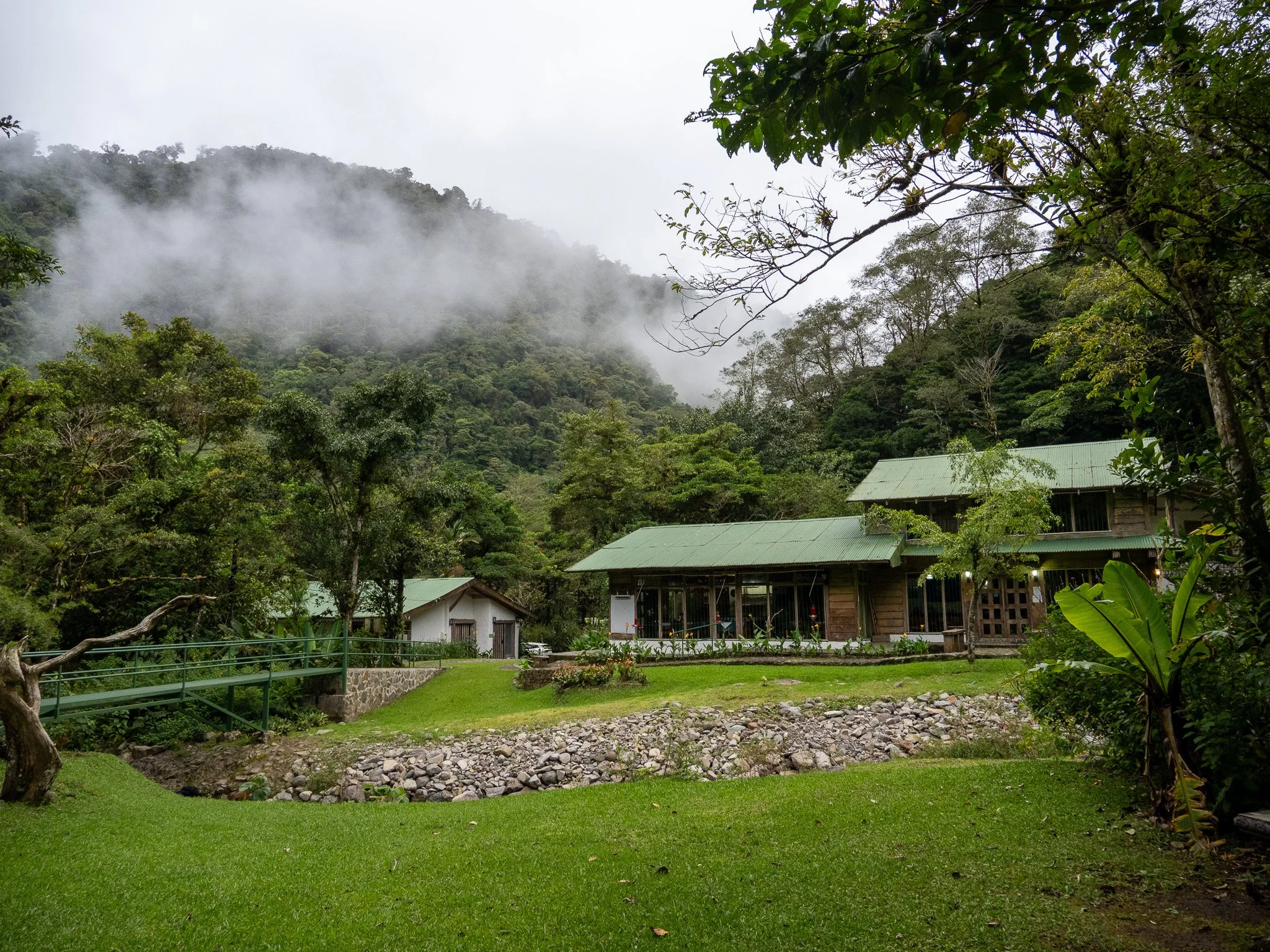
Bosque de Paz is owned and managed by an exceptionally charming gentleman, a retired international lawyer named Frederico. We learned that we were the last guests of the season and that he and his wife would be closing the lodge for two months to visit family in Europe. He chatted with us at every meal, which was a delight in itself. The food was really good and Emilee was even eating the fruit that was served for dessert. Our first night, Frederico invited us to feel at home, but to be back at the lodge prior to sunset each evening. That seemed like good advice given our remote location!
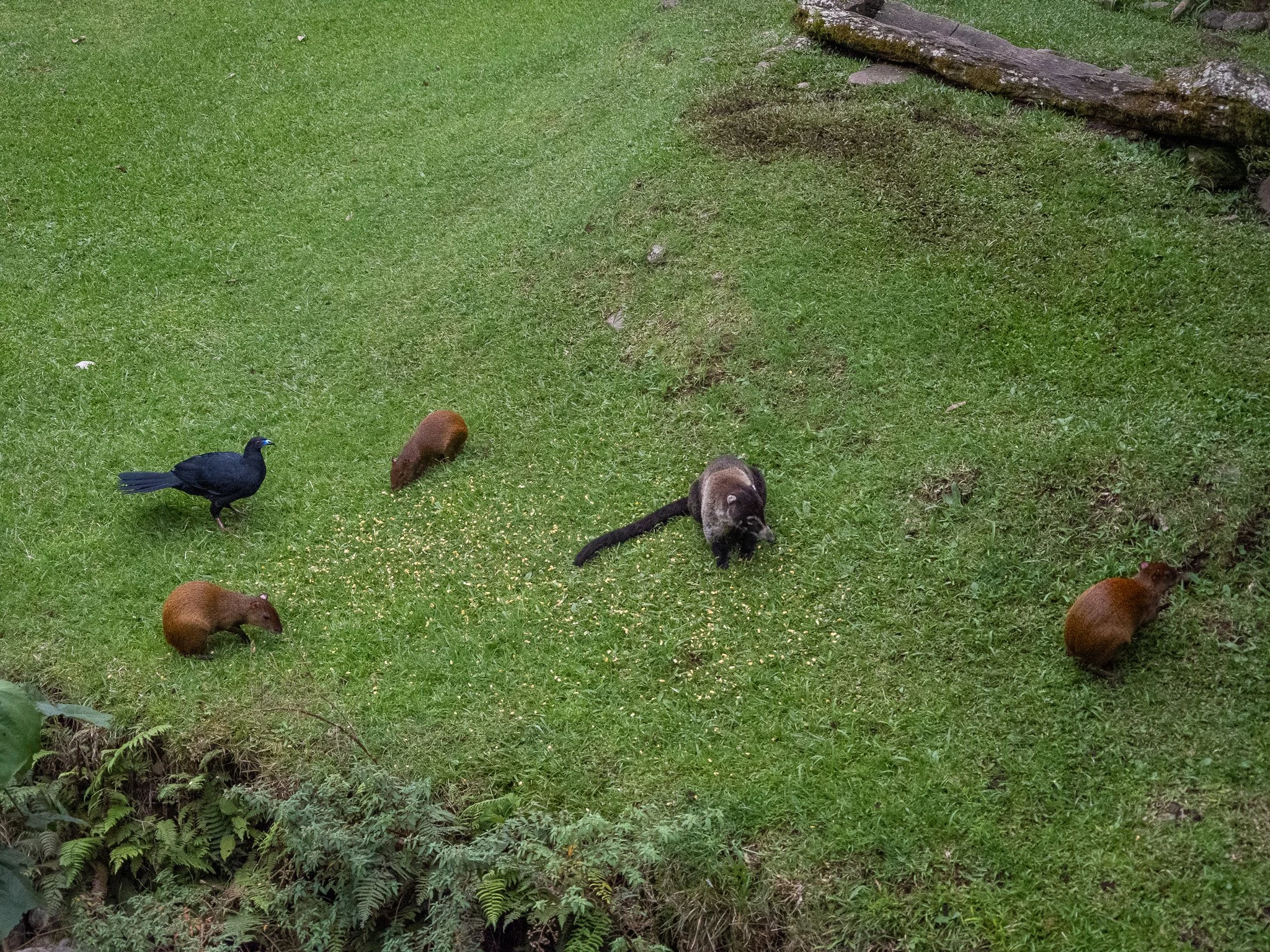
On the hillside opposite the river Christopher, the operator of the lodge, spread cracked corn that brought in a variety of critters. Here you have a Black Guan feeding with Agoutis and a Coatimundi.
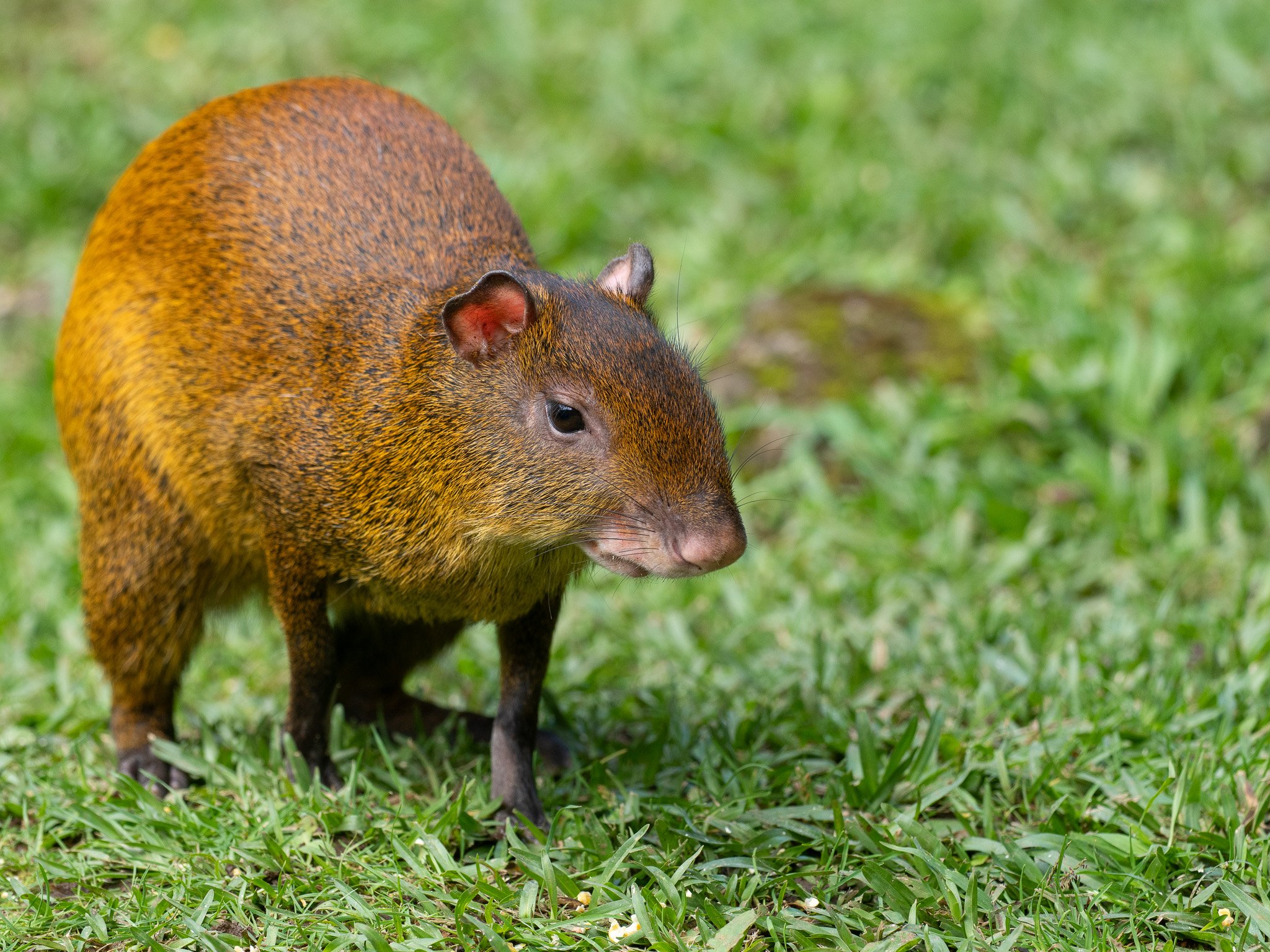
The Central American Agouti is a rabbit-like rodent that comes to feeders. They are pretty cute! Our first night, Frederico and Christopher shined a light out from the dining room onto the slope and illuminated a few Lowland Pacas, a similar, stripier Central American mammal that is nocturnal. They reported they have generally been declining but continue to live at Bosque de Paz in good numbers.
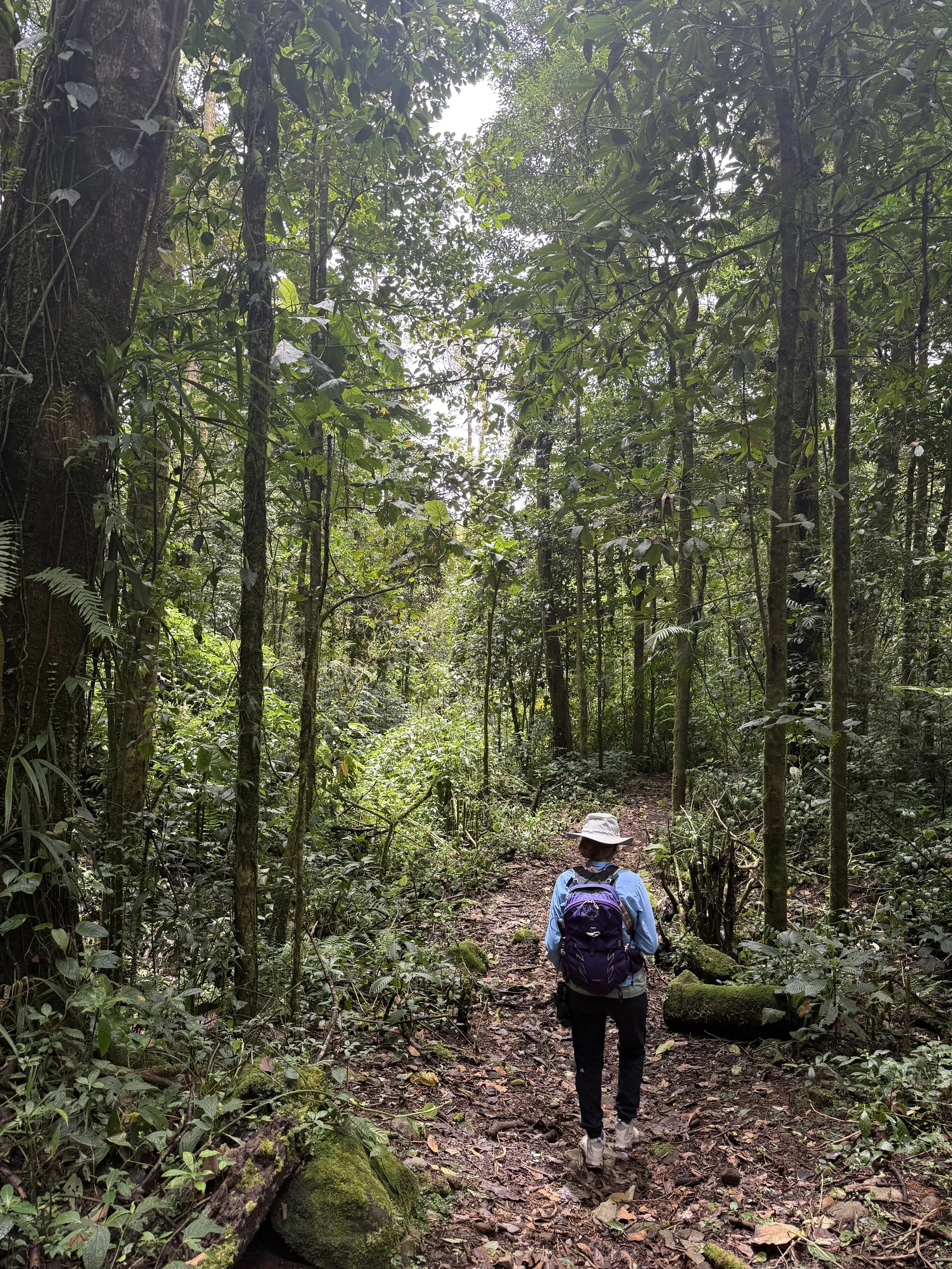
We also had an exciting mammal encounter on the trails in the reserve. It was early in the morning and we were walking near a river (of which there are several on the grounds) which drowned out most sounds, when we rounded a turn and came face to face with a large, blocky-headed dark weasel (about the size of our dog Violet, who weighs a little over 20 pounds). We all froze in surprise! After a few seconds, it leapt into the undergrowth off the trail and disappeared. We had no idea what it was and chatted with Frederico and Christopher about it. It was the Tolomuco! Or Tayra in English, a tropical omnivorous weasel-relative. I did not get a photo - during our encounter I was trying to figure out whether or not I was on the Tolomuco menu!
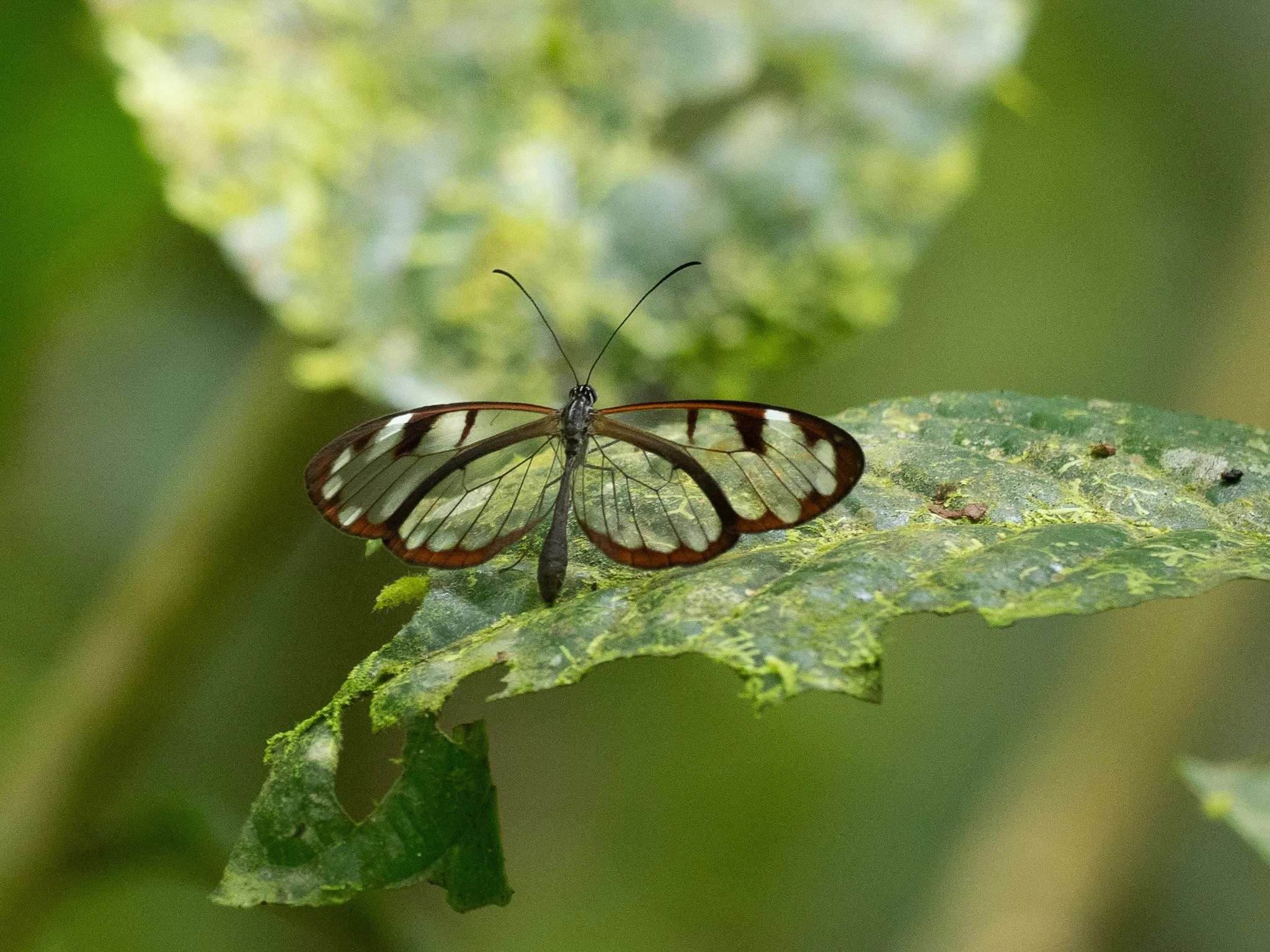
We saw lots of interesting critters on the trails in the forest, like this clearwing butterfly.
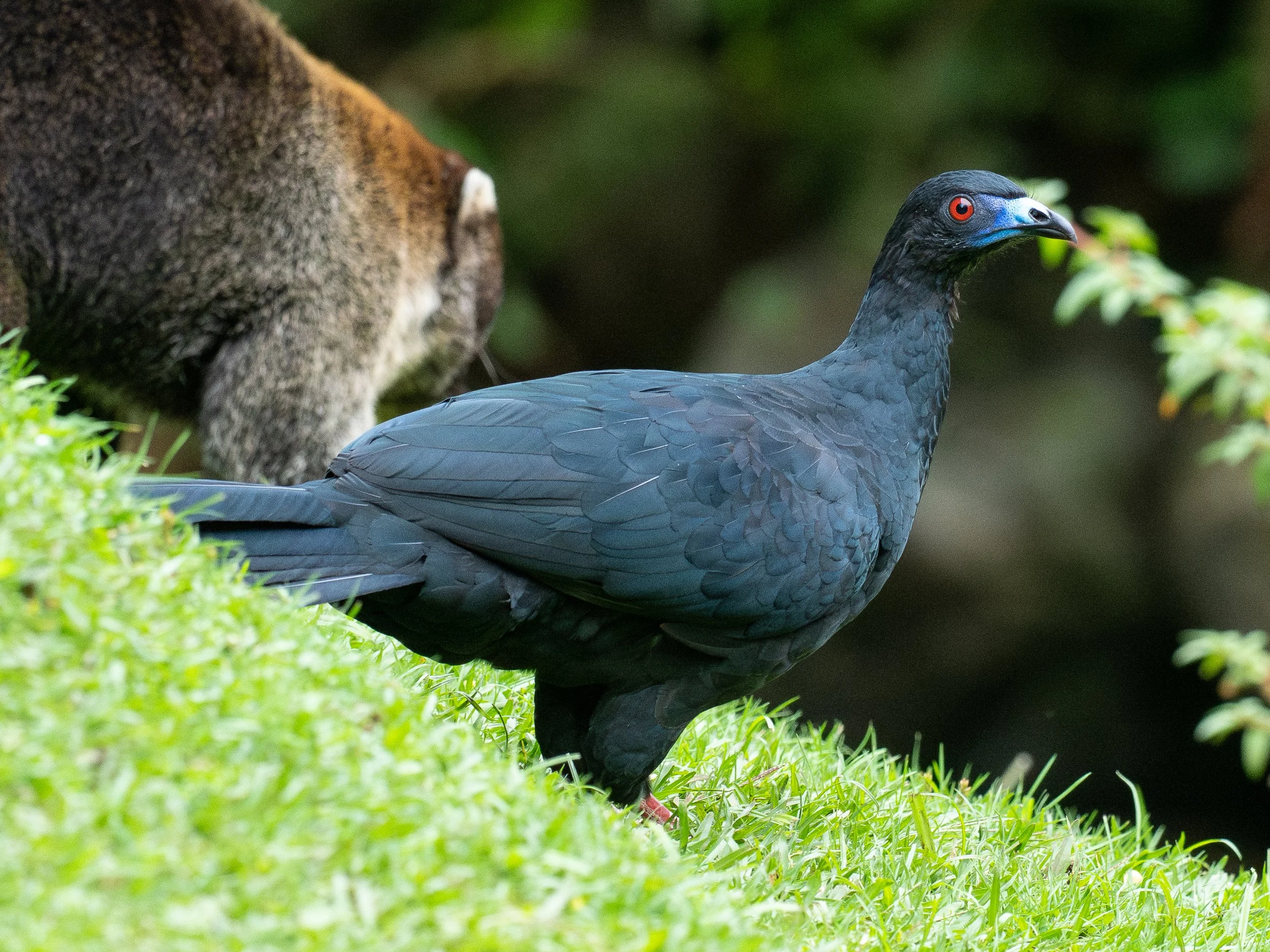
In my scouting for the trip, it was noted that Bosque de Paz was a great place to see the Black Guan. I can vouch for that! It seemed to be on a routine, showing up each day at around 4 p.m. to eat a little corn on the hillside.
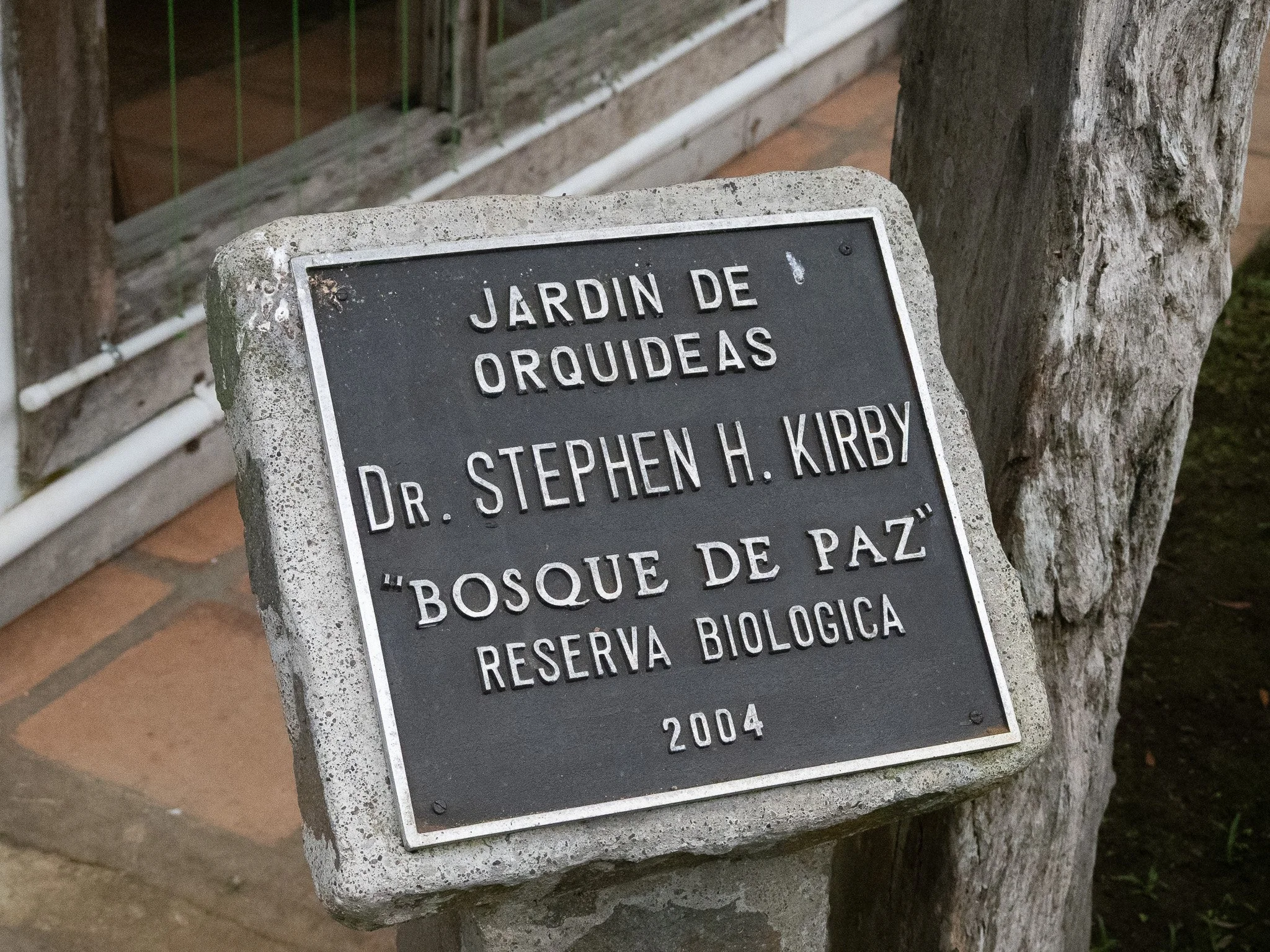
Bosque de Paz is known for its collection of orchids collected in the reserve. They have catalogued over 300 species of orchids - including four species that have not been found outside of the reserve!
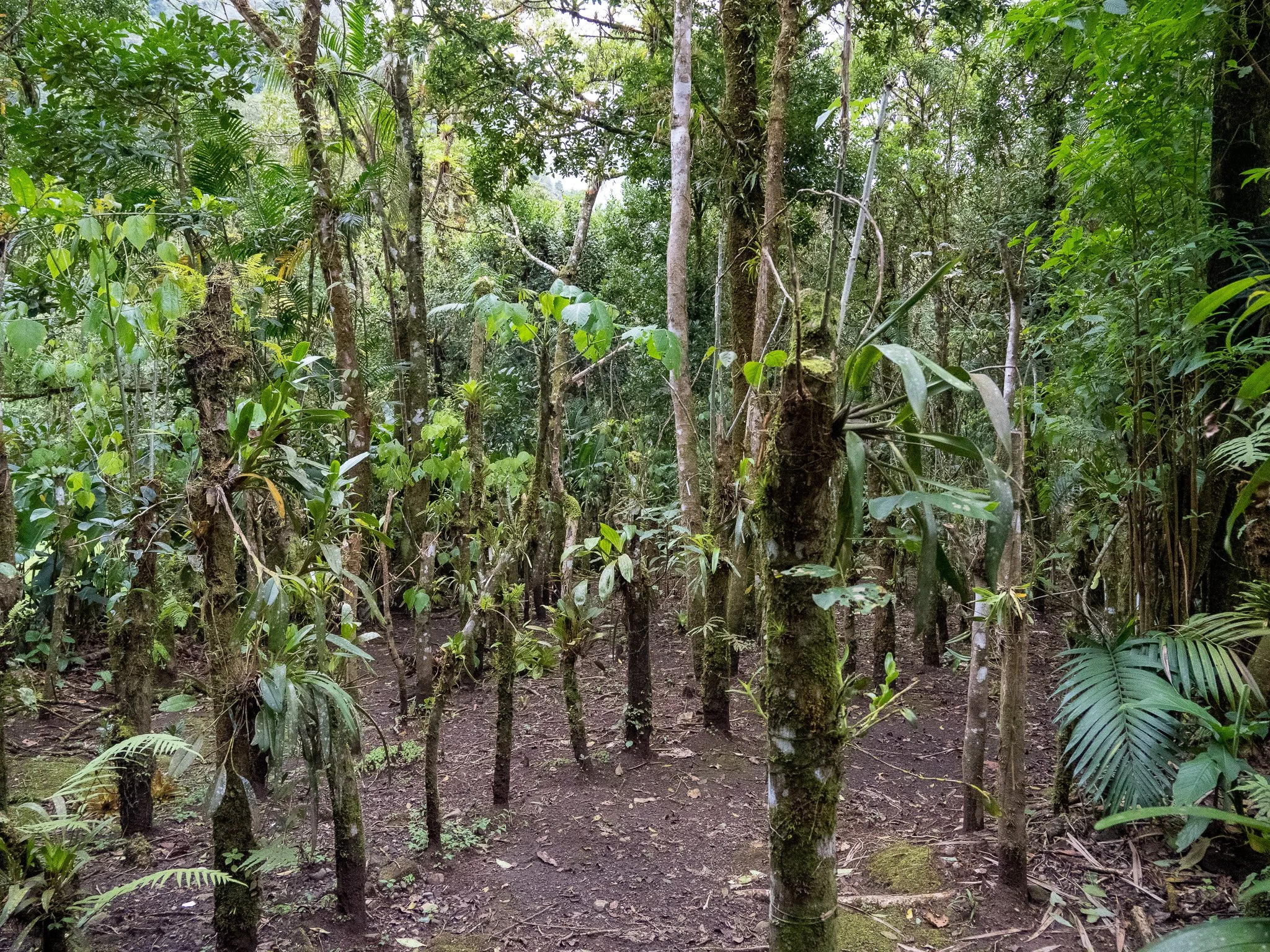
This is what the orchid garden looks like. Different orchids have been transplanted to these stakes for display in one place. Because they grow throughout the canopy, a visitor would never see most of these flower species.
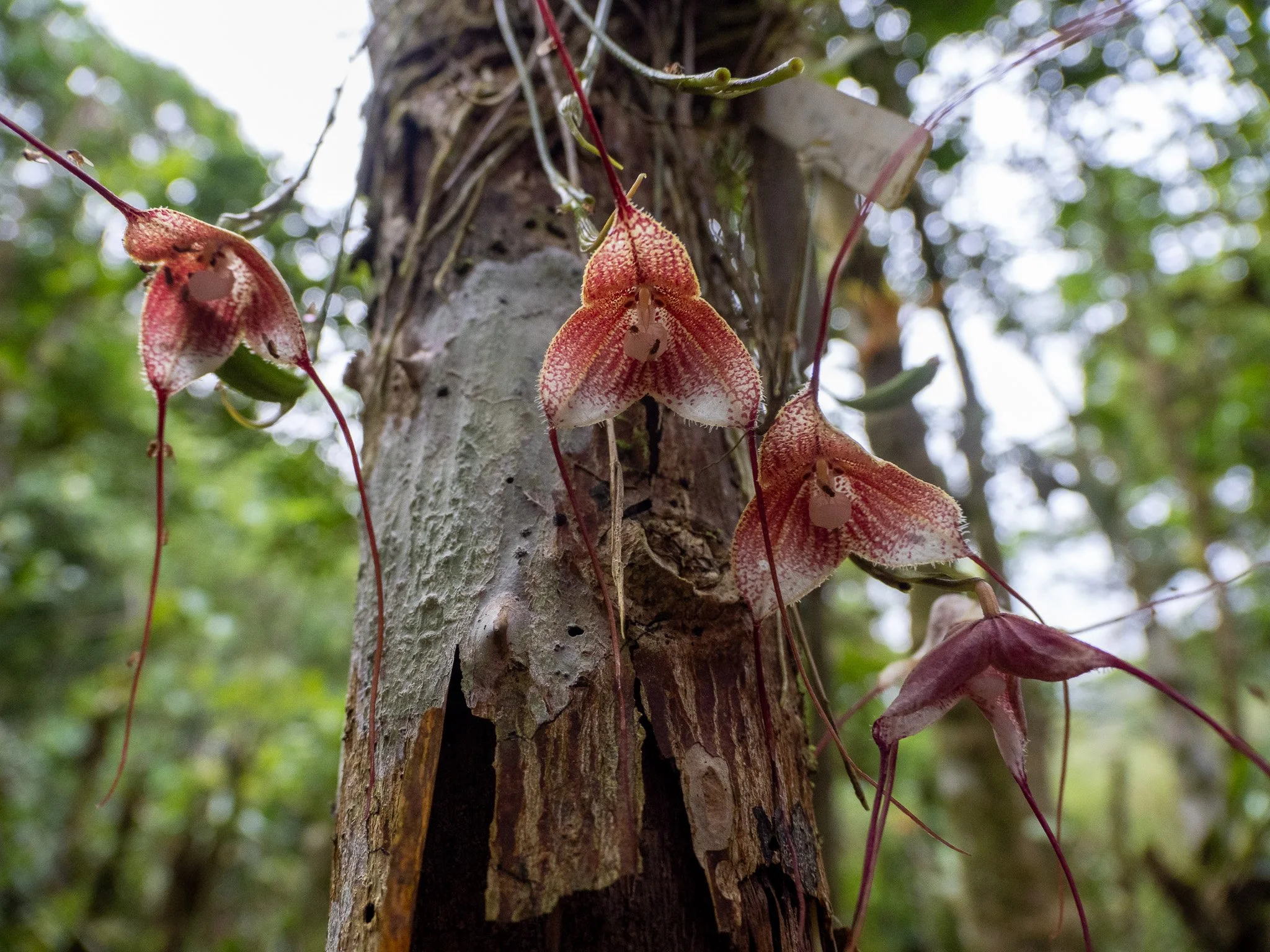
Most of the orchid species were not blooming during our visit, but a few were. This was one of the more visually impressive flowers.
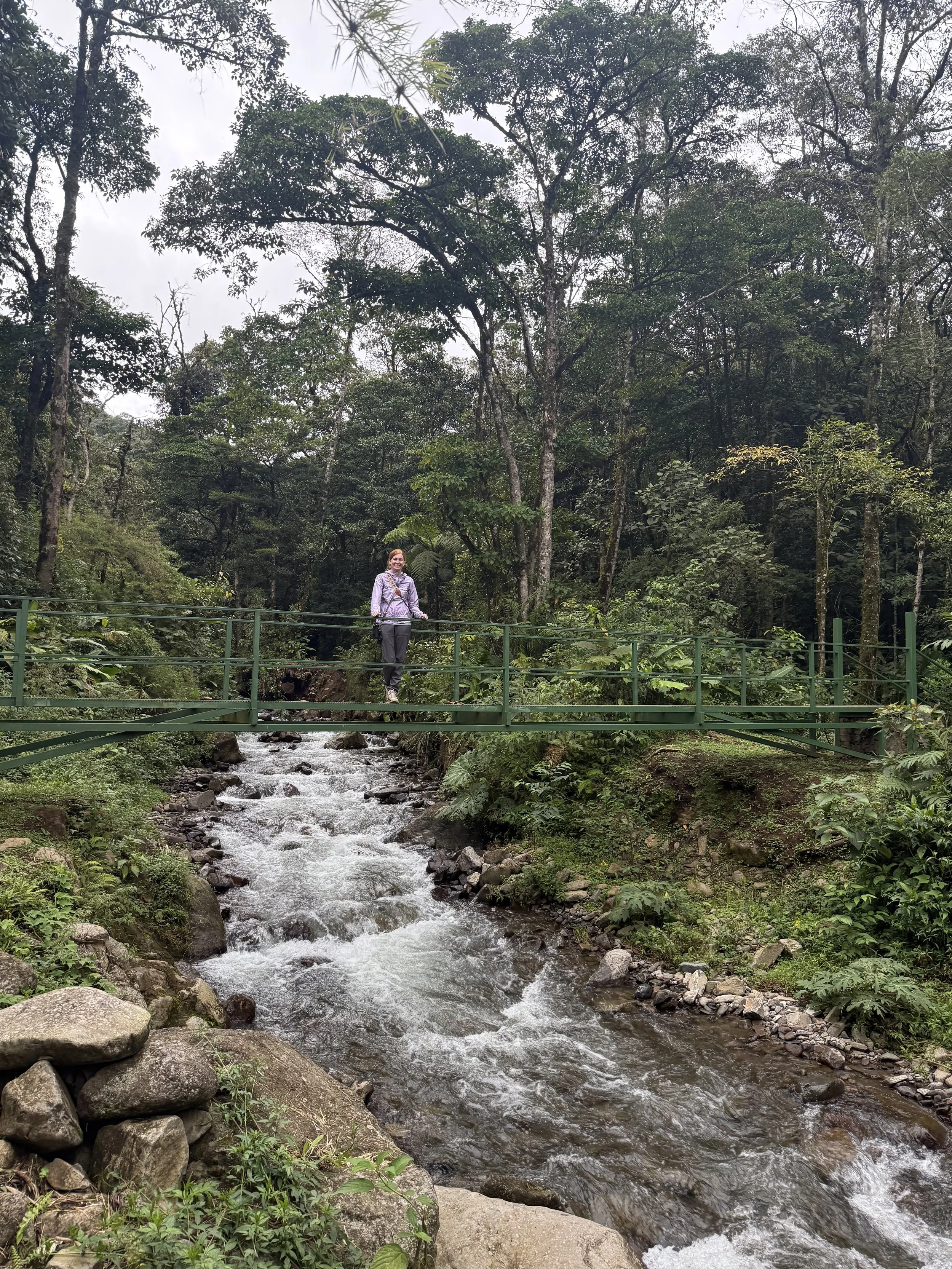
We really enjoyed our days of walking the trails at Bosque de Paz. It was serene and otherworldly to be in this big ancient forest - a good change of pace!
