Colorado Rosy-Finches
Summer is the time to get up in the mountains in the Four Corners. This year with our extremely meager snowpack the snow melted out much earlier than usual! The Sharkstooth Trail is one of my favorite local high-elevation hikes, taking you up the West side of the La Platas through some nice forests and meadows and up to Sharkstooth Pass at around 12,000 feet. The La Platas are our closest mountain range - the trailhead is about an hour and a half from my house in Cortez to the West.
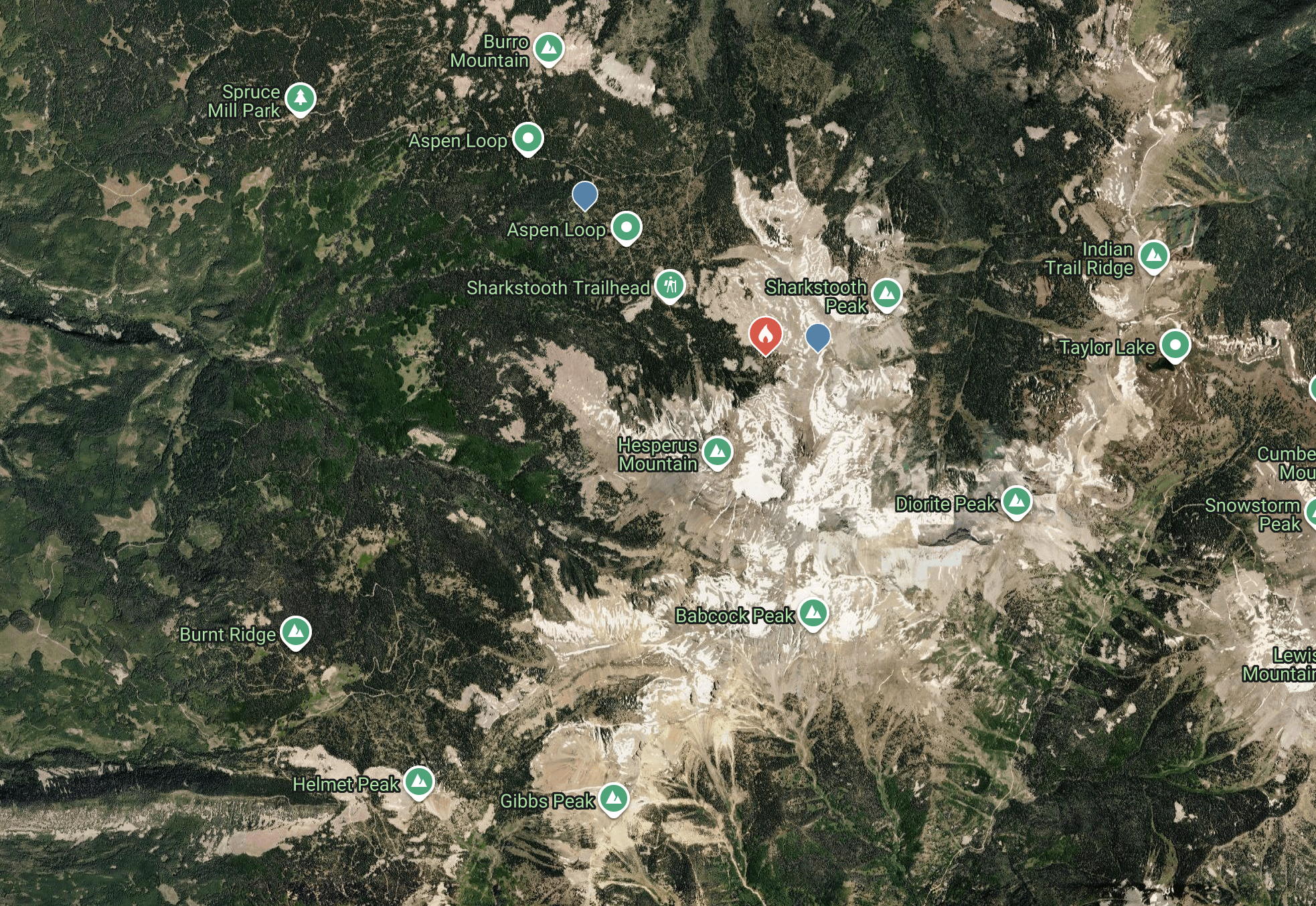
This is a screenshot from my ebird Trip Report - the blue and red dots are the locations from my checklists. We like to hike a section before the actual trailhead through some ponds and wet forest on the Aspen Loop trail that is mostly flat and usually has a lot of bird activity, then the actual Sharkstooth Trail and up to higher elevations in the ‘alpine zone’ above treeline.
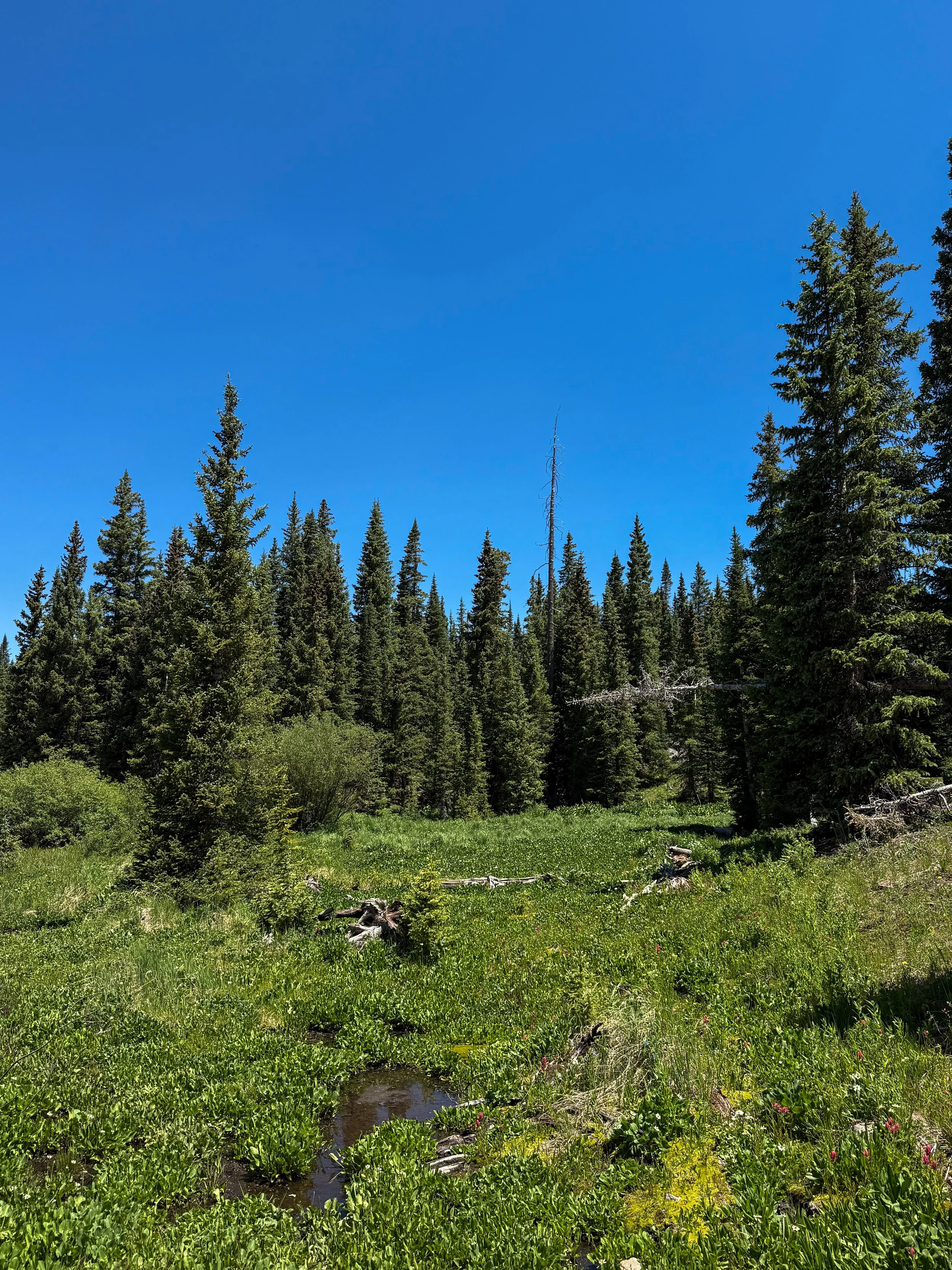
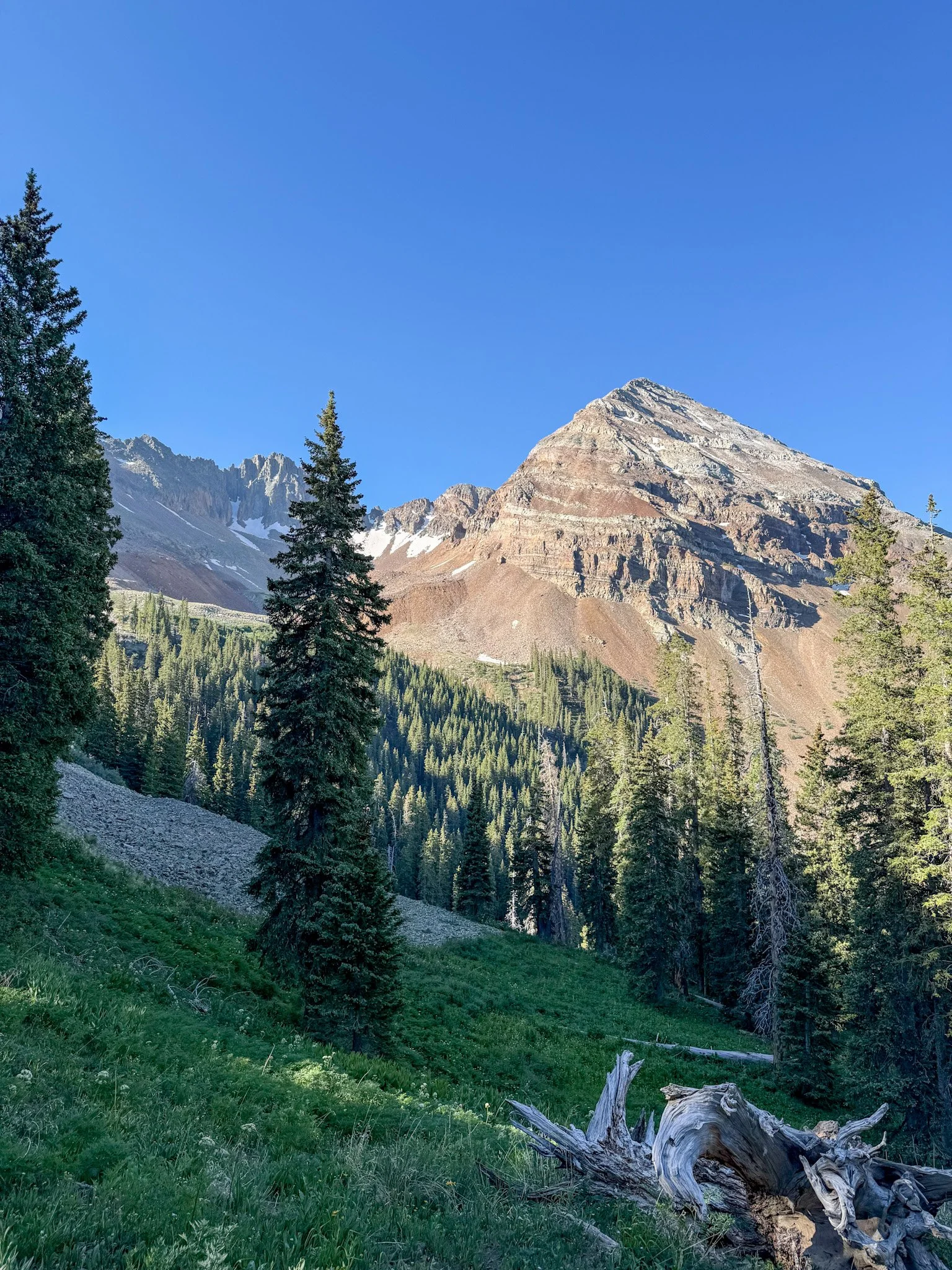
On the left here is a picture of the ‘wet meadow’ environment along the first portion of the trail, and then also from the forested slope along the Sharkstooth Trail. This peak on the right is Hesperus Mountain, the highest peak in the La Platas at 13,237 feet. Hesperus Mountain is one of the Navajo Sacred Mountains - this one called Dibé Nitsaa (“Big Sheep Mountain”). There are four Sacred Mountains which roughly stake out the boundaries of the traditional Navajo homeland.
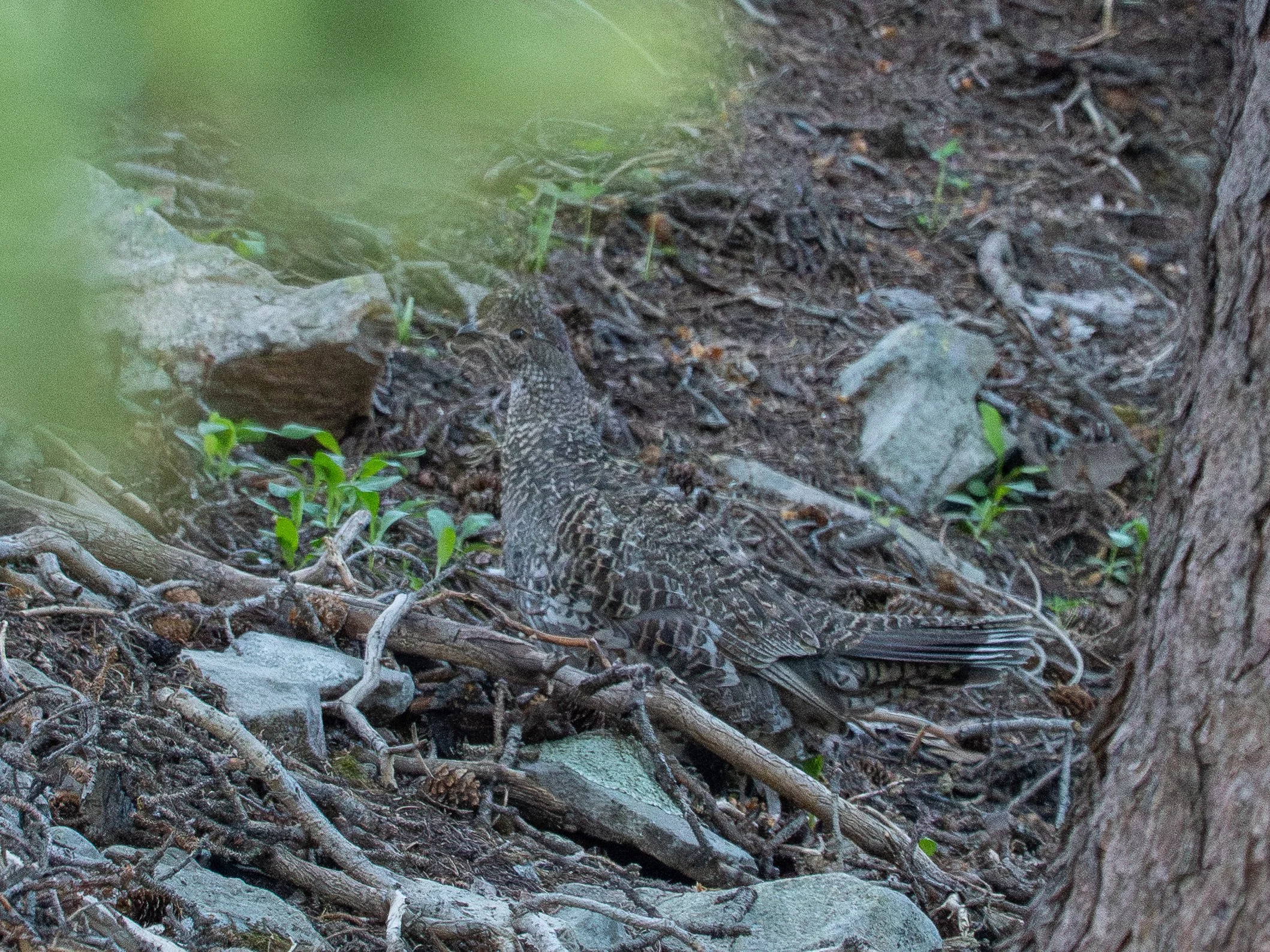
I had some luck in finding this Dusky Grouse in the forest - it came flying into where I was standing! This picture shows how well its feathers camouflage against the forest floor
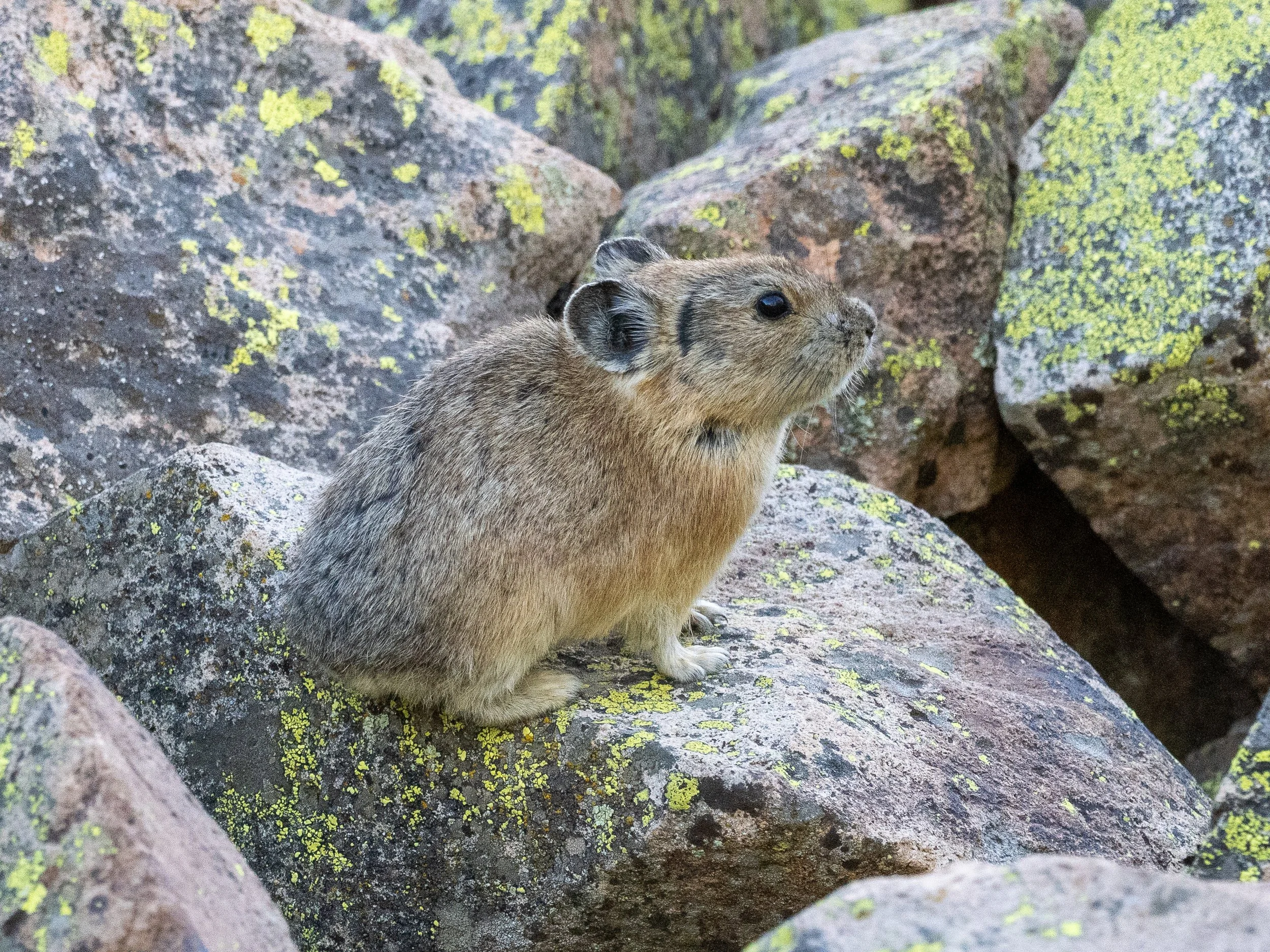
One of the great things about this hike is that you go through several talus slopes which are home to pika, very cute rabbit-like mammals who live in higher elevation environments. They make an adorable “meep” alarm call.
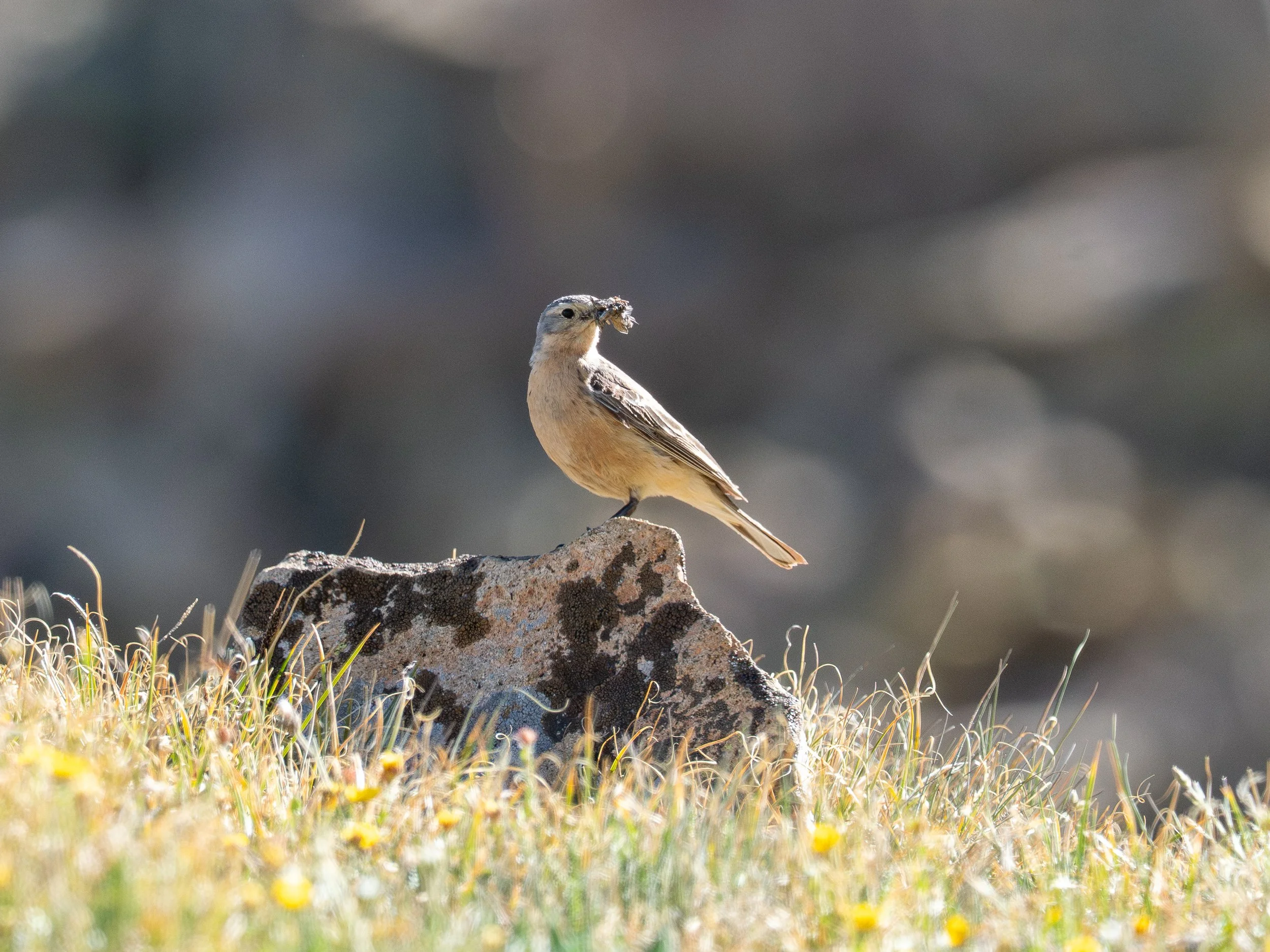
Another high elevation breeding bird I encountered was the American Pipit. This one was carrying food across the alpine tundra - probably to young birds nearby!
One of the prizes of reaching the alpine zone in Colorado is that you enter the breeding territory of the Brown-capped Rosy-Finch. These birds are hard to see because they don’t venture down to lower elevations much, if ever. Their Birds of the World account states they are the highest elevation breeding bird in the lower 48, “usually nesting on cliffs overlooking glaciers and snowfields on the highest peaks.”
Consequently, there are less than 15,000 reports ever in eBird of this species (compared to over 350,000 for Cassin’s Finch, another montane Western finch).
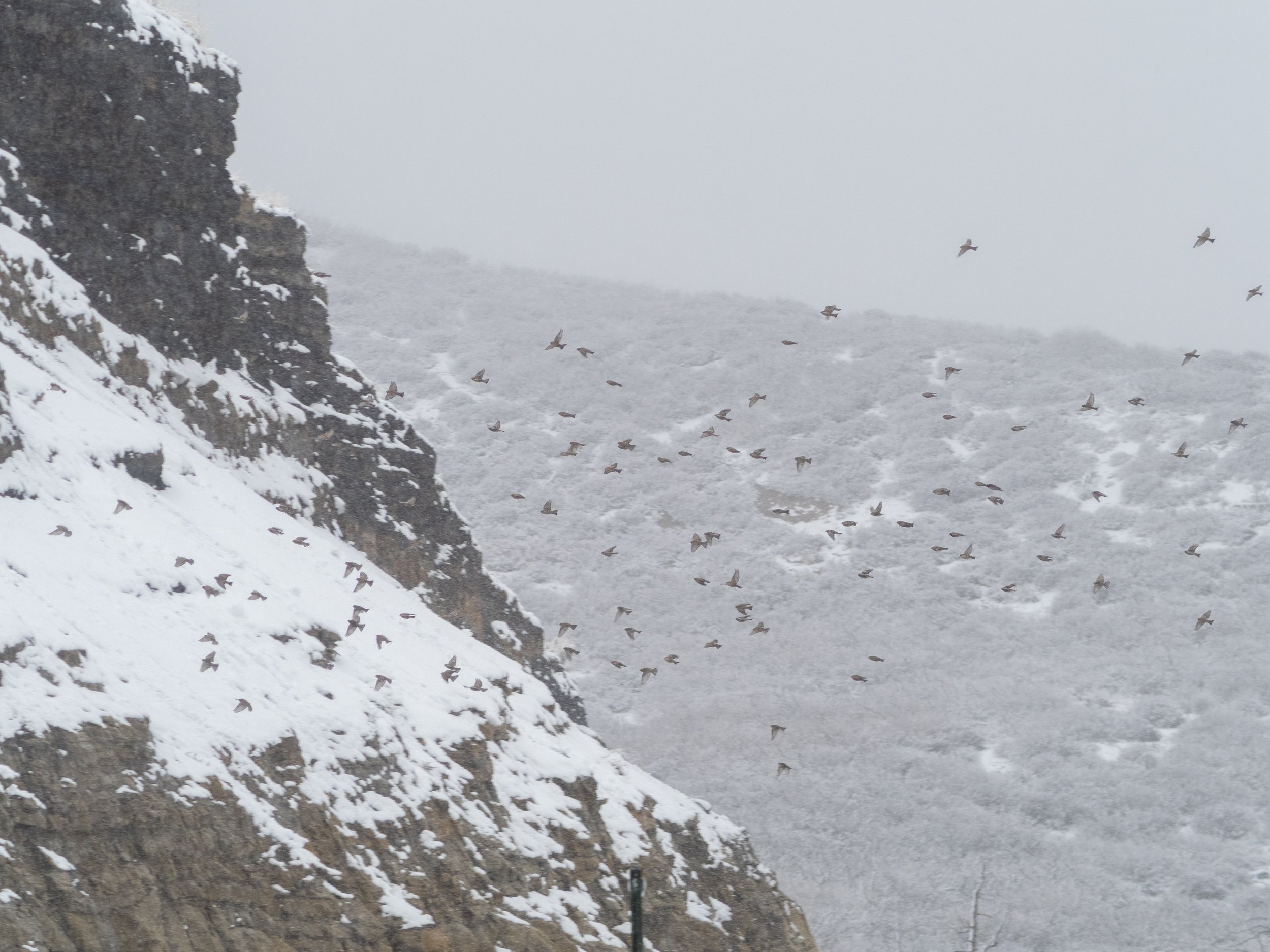
This winter (November 2025) a mixed flock of all three North American Rosy-Finch species was found here in Montezuma County along the park road in Mesa Verde National Park (Black Rosy-Finches and Gray-crowned Rosy-Finches in addition to the local breeding Brown-capped Rosy-Finches). These other species breed in Utah / the Tetons, and all the way up into Alaska but migrate to the Southern Rockies in winter. These winter encounters are also fun, but it is not easy viewing either. This flock was found in a snowstorm hanging around a road cut in the cliff face, and they stuck around for about a week. It was windy and cold! I came to see them a few times with Emilee and also once with my friend Glenn. The flock would fly around and disappear into the sky or around the corner whenever cars passed by on the park road. When things settled down they would fly back onto the cliff face, into the nearby trees, or onto the shoulder of the road to feed on rabbitbrush and other shrubs growing along the road.
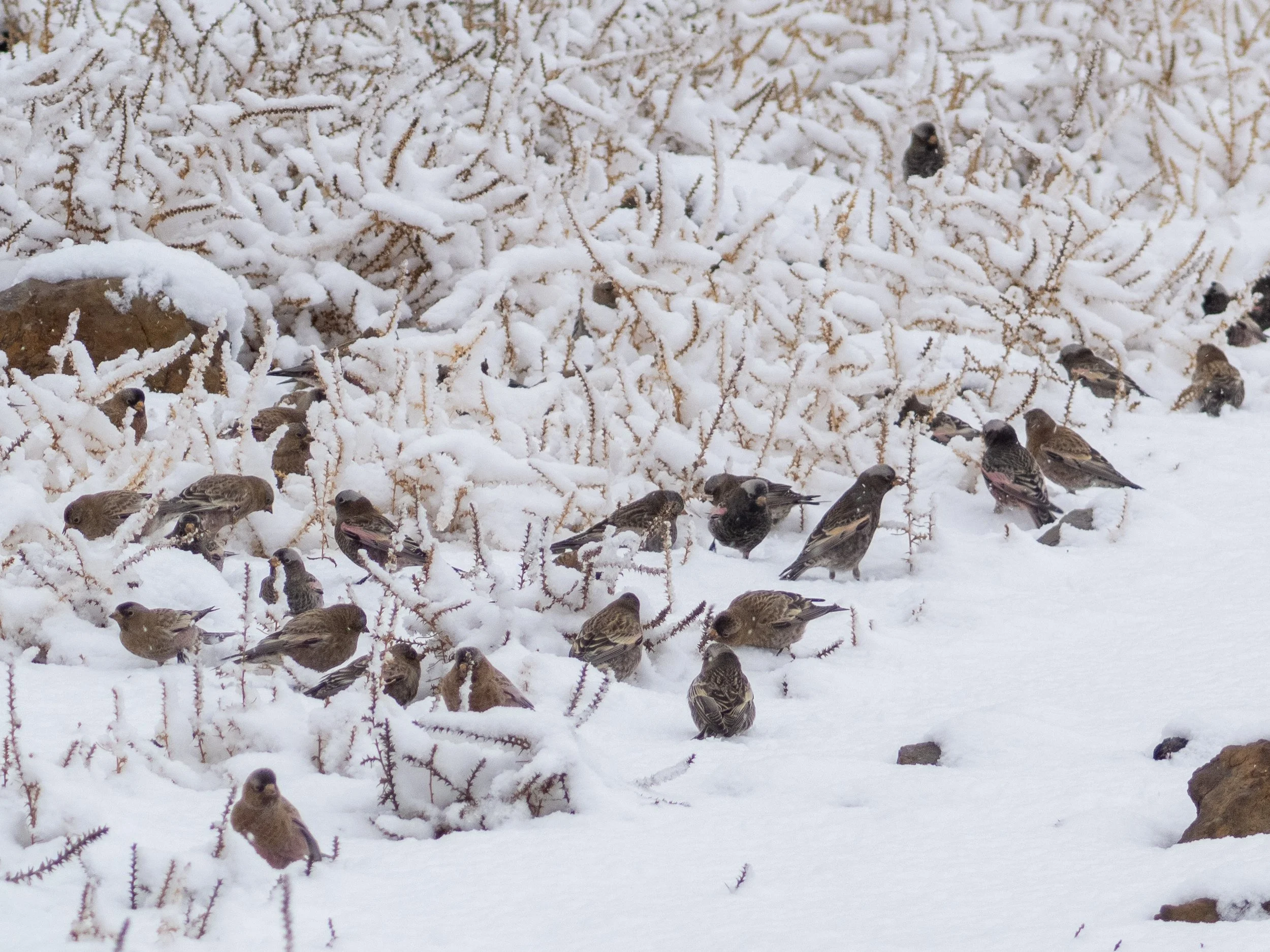
Here is a better look at a small subset of the flock - the darker birds are Black Rosy-Finches mixed in with the Brown-capped Rosy-Finches. Eventually, the snow piled up high enough that the seeds these birds were eating were covered up and the flock moved on. I would guess the park road is somewhere around 8,000 feet elevation through here.
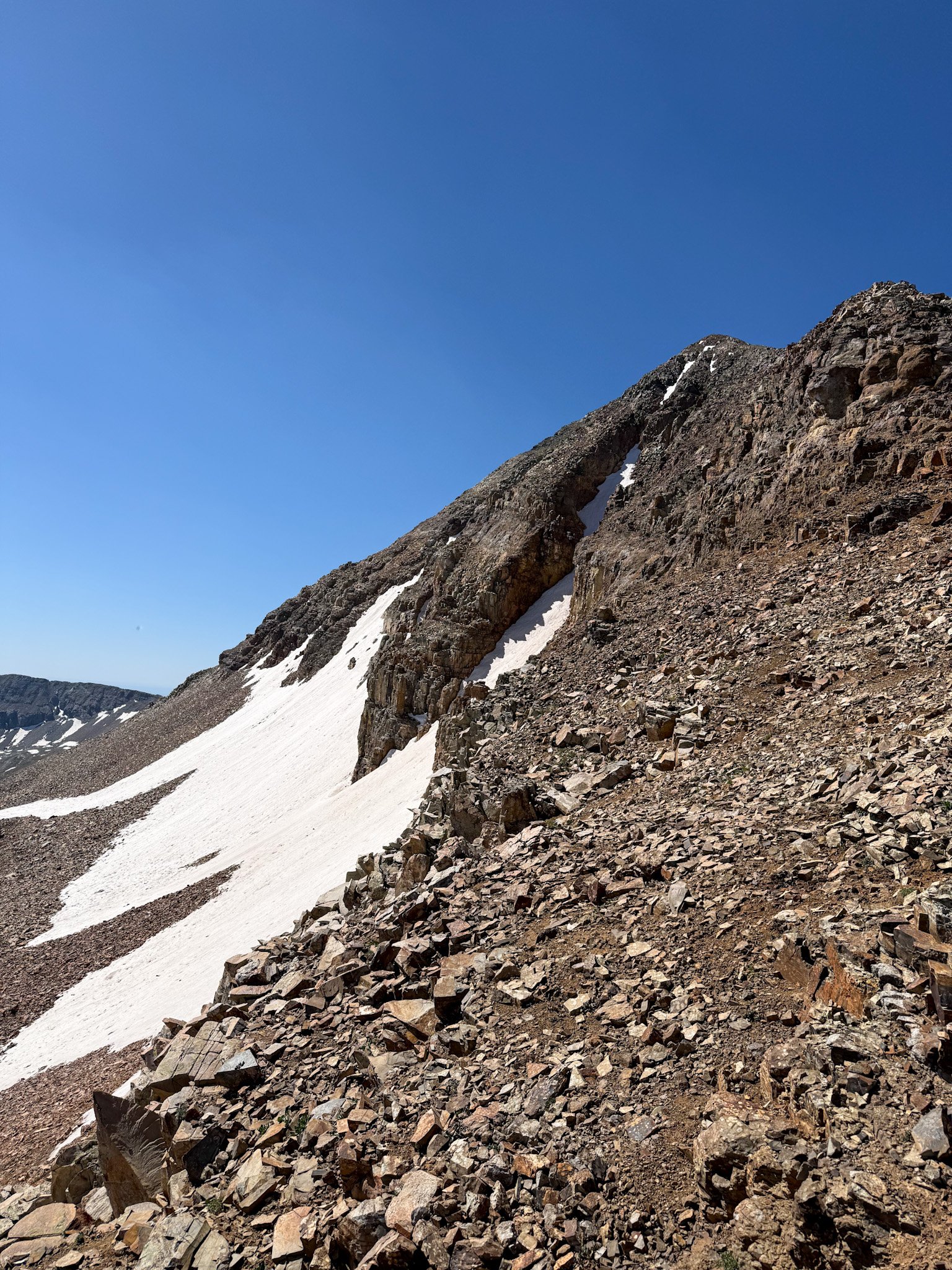
This is the North slope of Centennial Peak at around 12,500 feet elevation where I encountered several groups of Brown-capped Rosy-Finches. These are some extremely hardy birds! I first noticed them on the snowfield but later encountered several more groups in the rocks and on the cliffs. With a high in the mid-80s in Cortez, it was very sunny but still chilly up here through the morning- especially when the wind got going! It was 38 degrees when I left my car back at the trailhead at around 7 a.m.
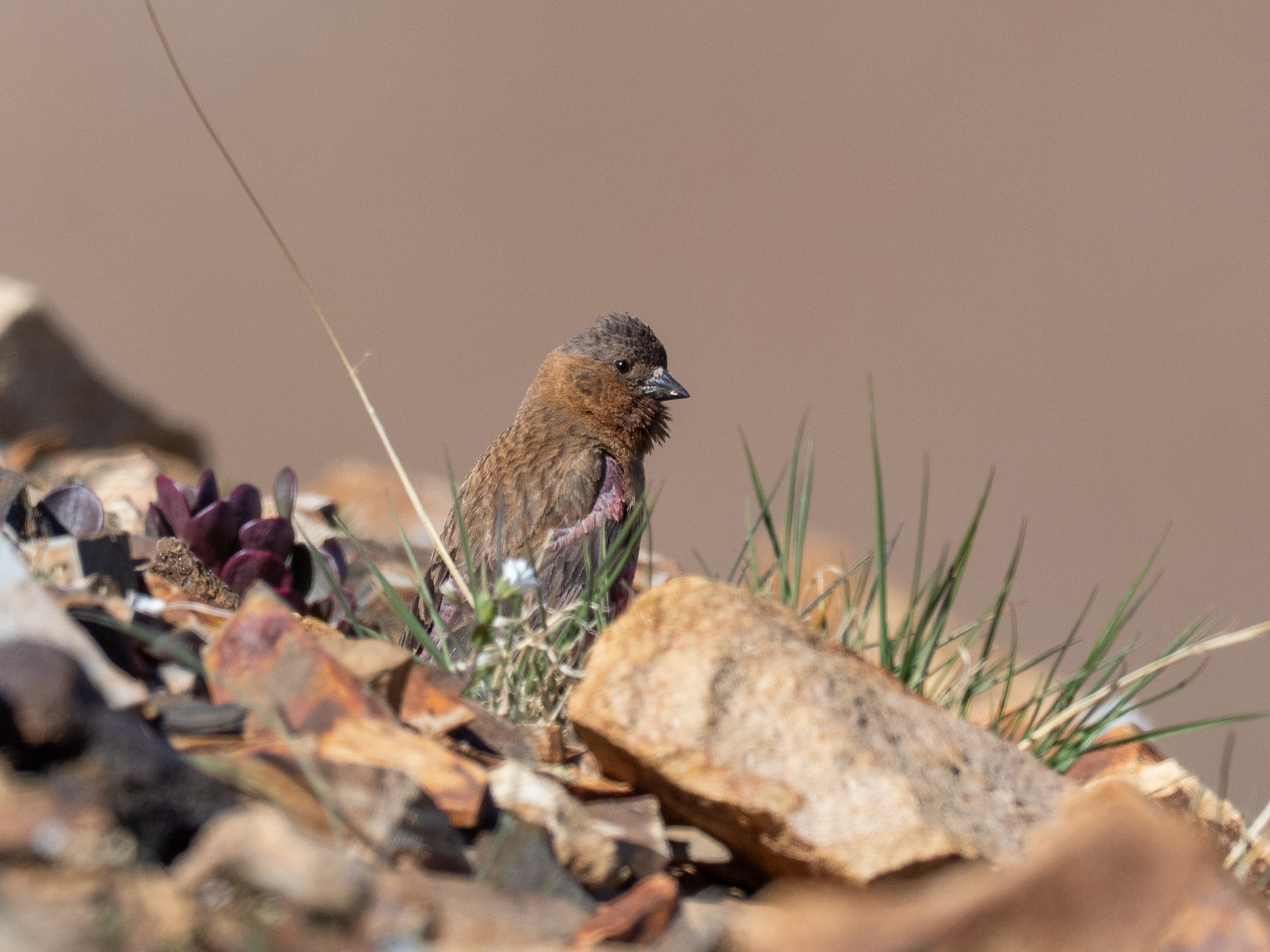
This bird was working his way though the rocks on the slope near the trail.
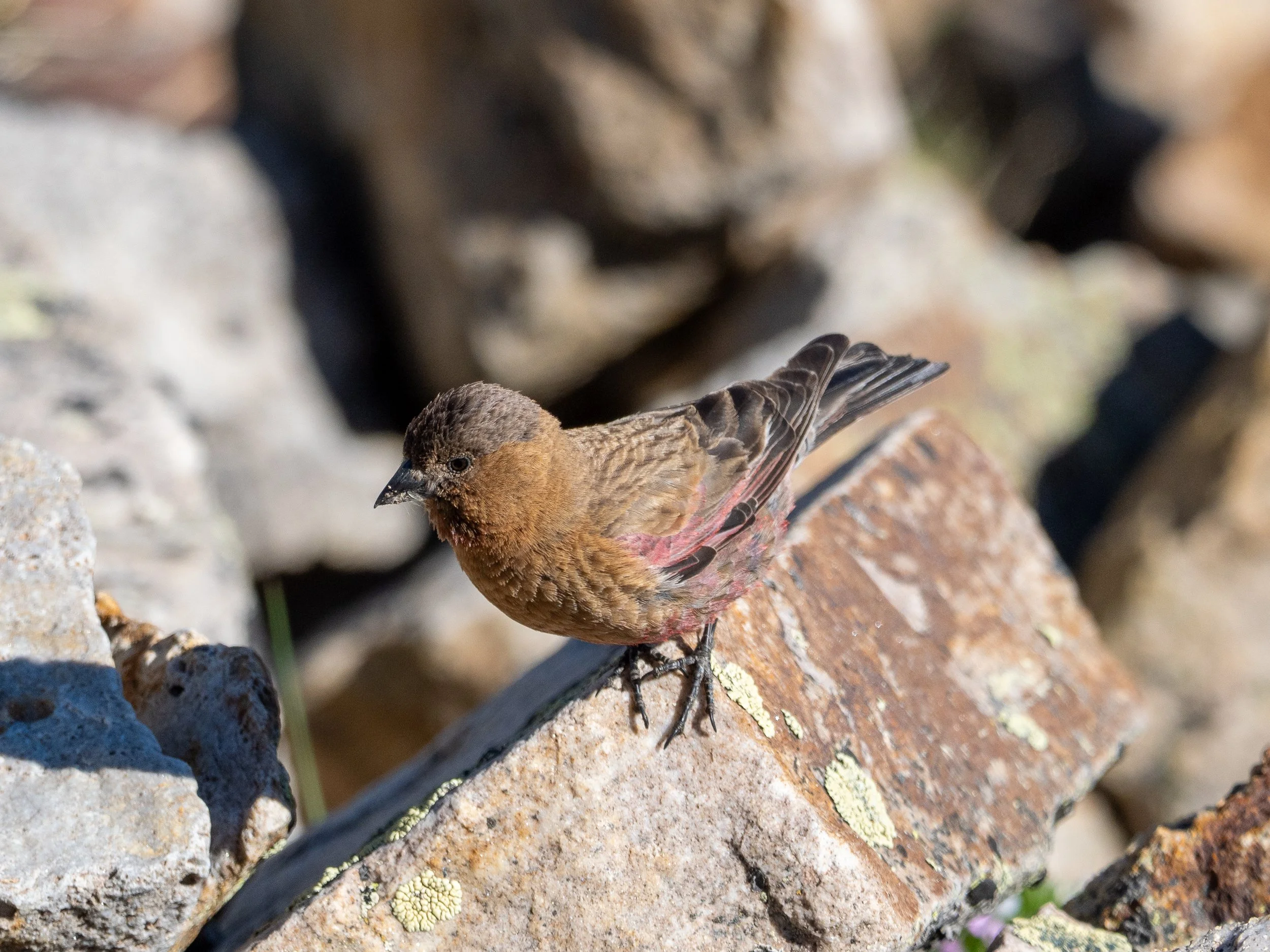
The rosy highlights on these birds are spectacular!
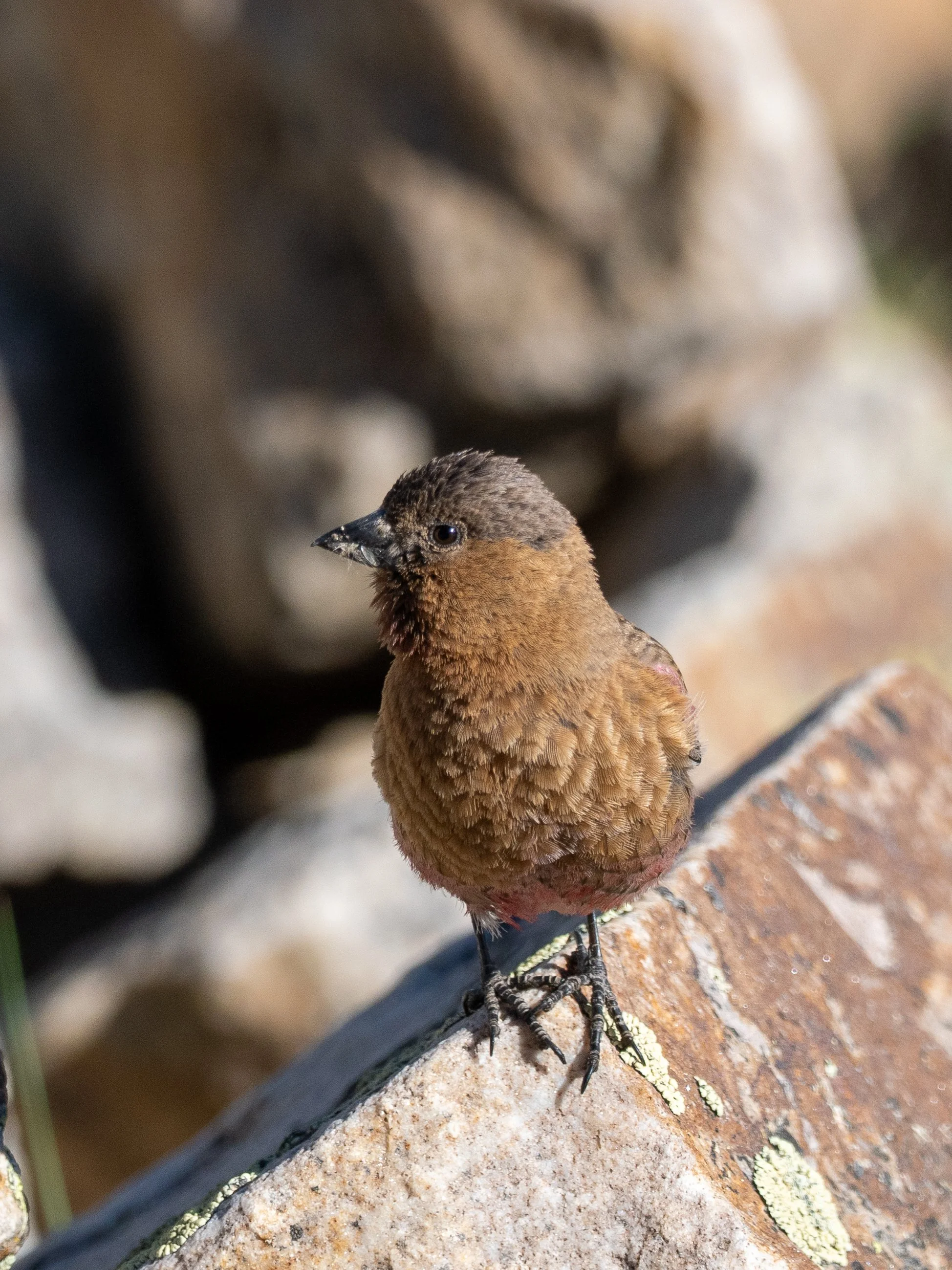
Portrait of a Brown-capped Rosy-Finch. These birds don’t encounter that many people or other threats up here so they are pretty bold.
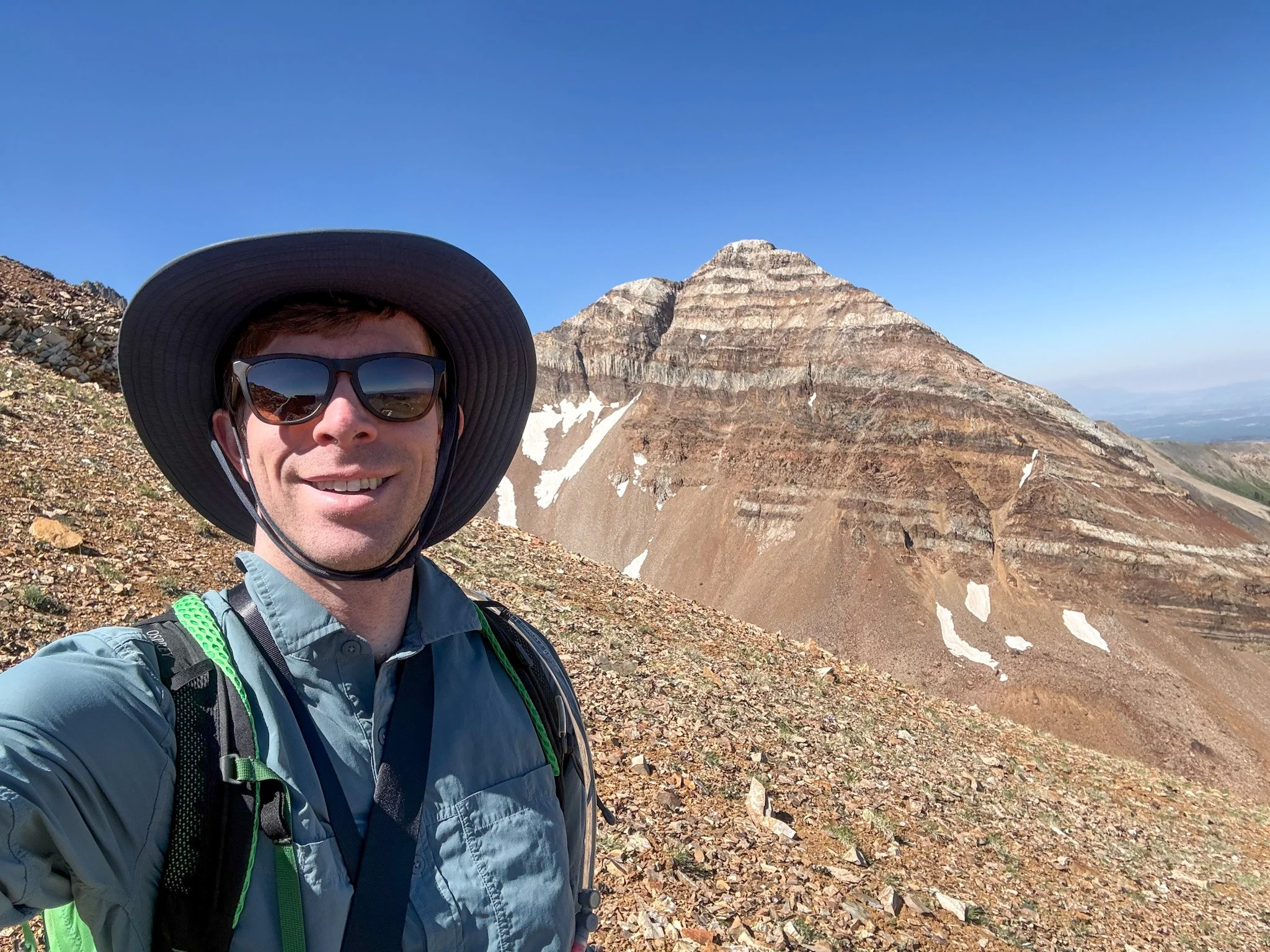
I took a selfie at my high point about halfway up Centennial Peak with Hesperus Mountain in the background. I was hoping to run into some White-tailed Ptarmigans in the tundra so I spent more time in there rather than climbing the final rock ridge to the summit of Centennial Peak.
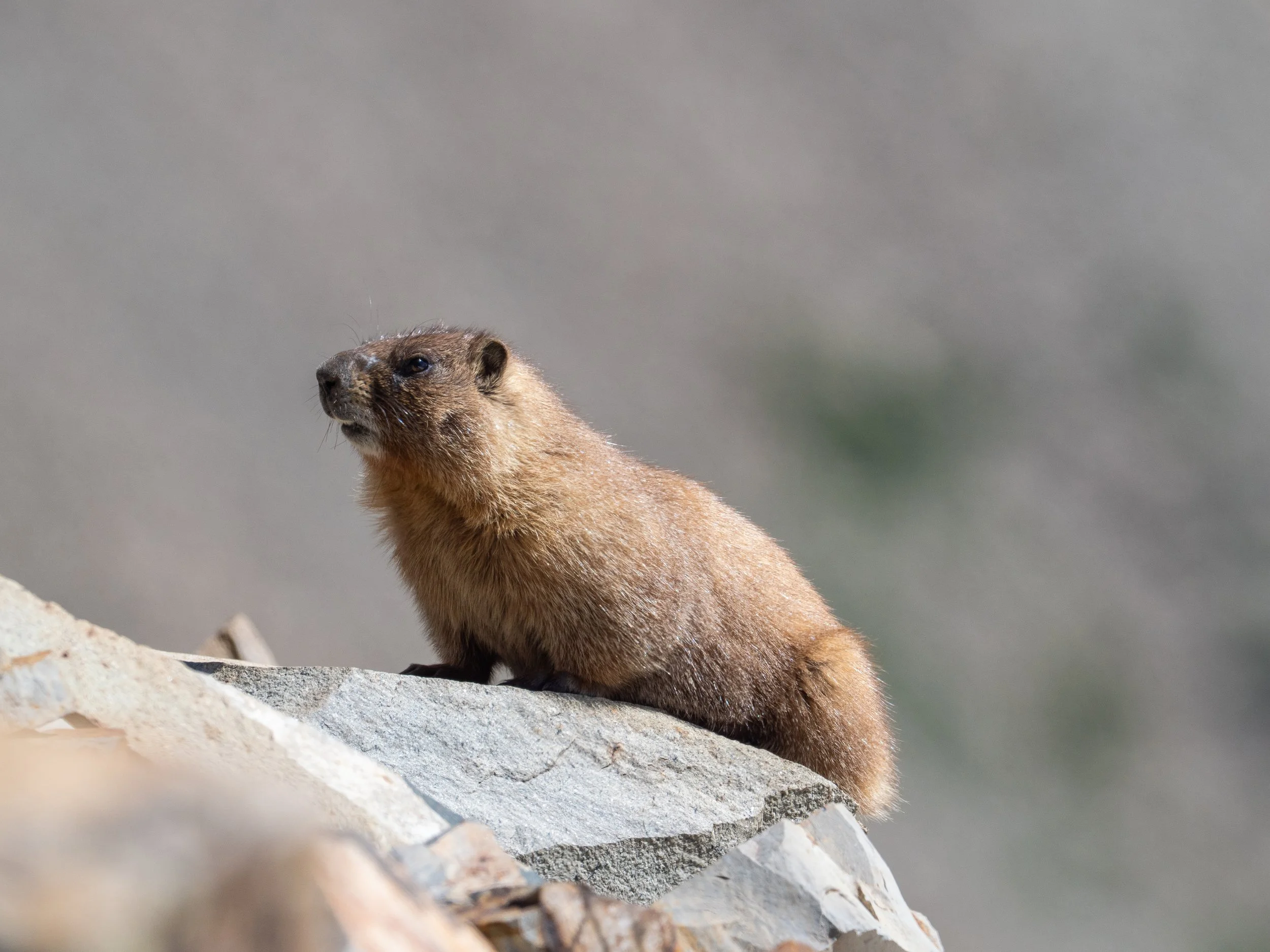
Yellow-bellied Marmot is another animal you encounter up in the alpine zone! From here I hiked back out to my car and beelined it to a family barbecue in Durango. I hope to make it back out here to the Sharkstooth Pass area at least once more this summer in my pursuit of the White-tailed Ptarmigan. The Bear Creek basin to the East of Sharkstooth Pass is North-facing and holds more snow than the West side, so I am hoping that in this dry year that will be a good area for them! Of course I look forward to seeing the Rosy-Finches again too.
