MDW 2026: Bosque del Apache and more
Bosque del Apache National Wildlife Refuge: certainly a crown jewel of New Mexico birding, and arguably even for the entire United States! It was the destination of my first birding trip ever in November 2019, and many more since! Primarily designated to protect wintering Sandhill Cranes and waterfowl, the refuge is a network of over 50,000 acres of managed ponds, fields, and riparian forests that are supposed to mimic the natural mix of habitats that existed here when the Rio Grande was a wild, unpredictable river and before it was dammed and turned into the big irrigation ditch it is today. In the summer it is an important stronghold for the southwestern Willow Flycatcher and other breeding wildlife. It flanks the Rio Grande south of Socorro in central New Mexico.
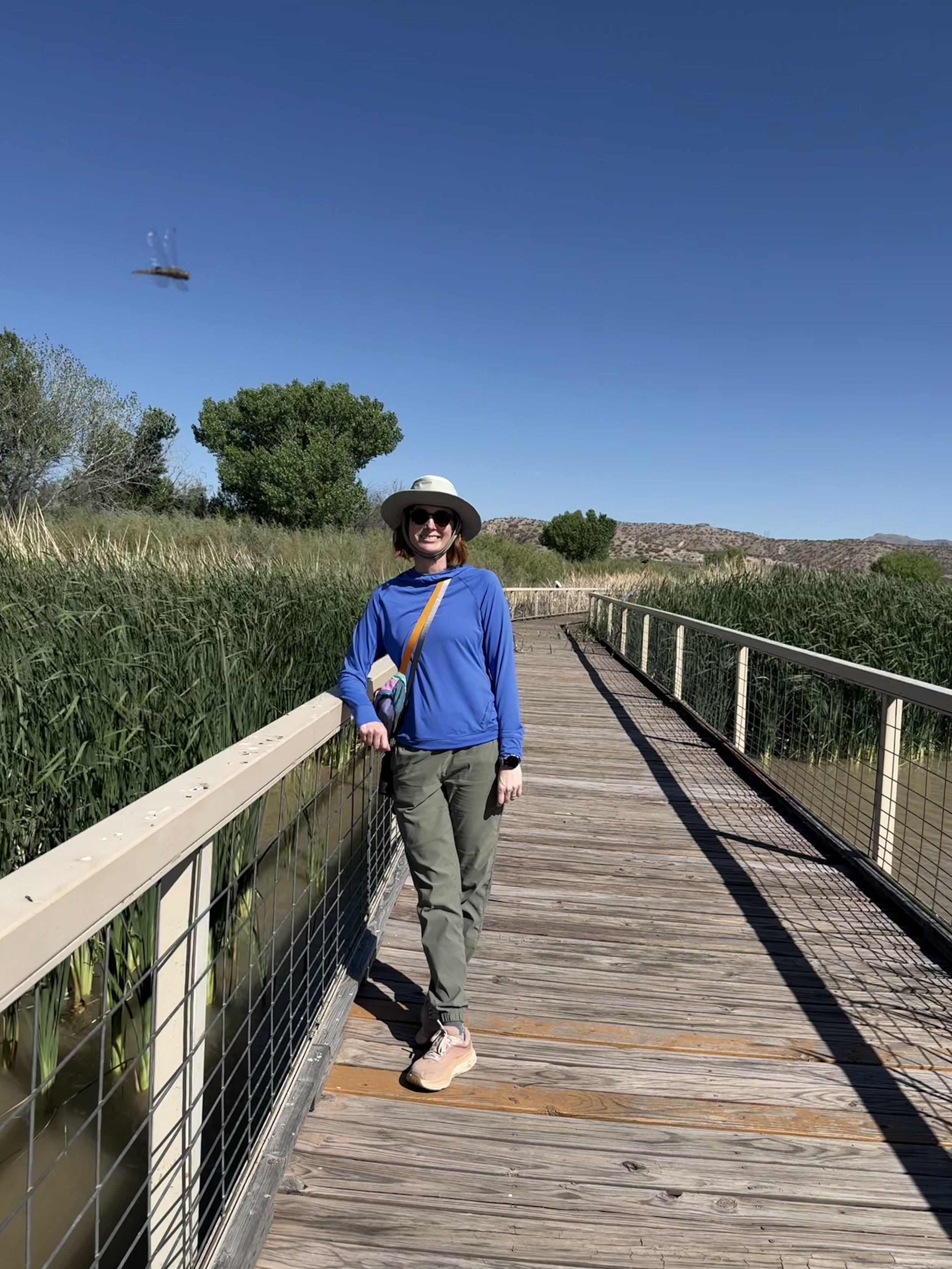
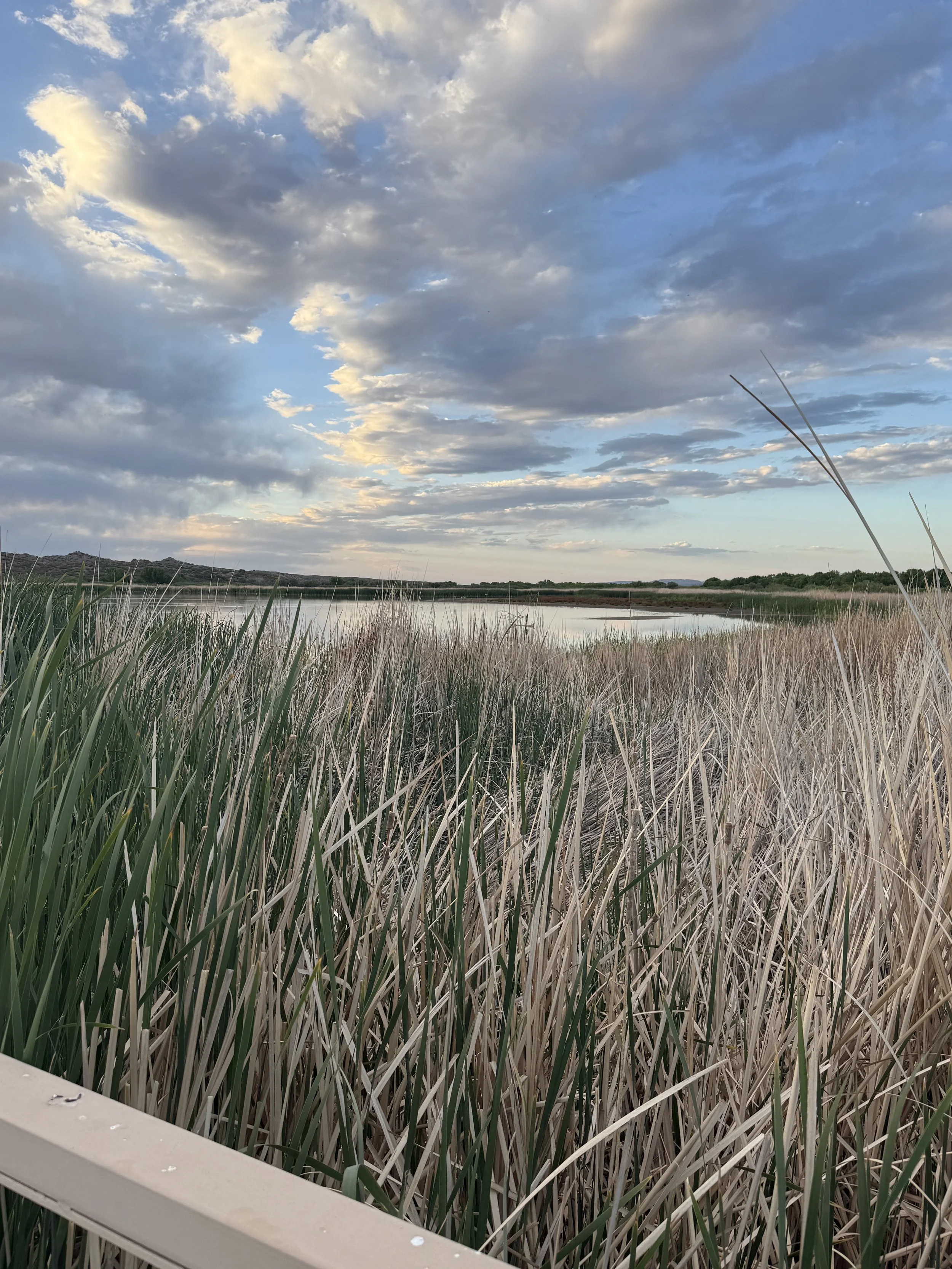
This year, there was less water on the refuge than we have seen in years past - not a surprise as the Rio Grande has already run dry through Albuquerque this year. The Marsh Boardwalk was the biggest body of water we came across as all of the larger ponds were basically dry.
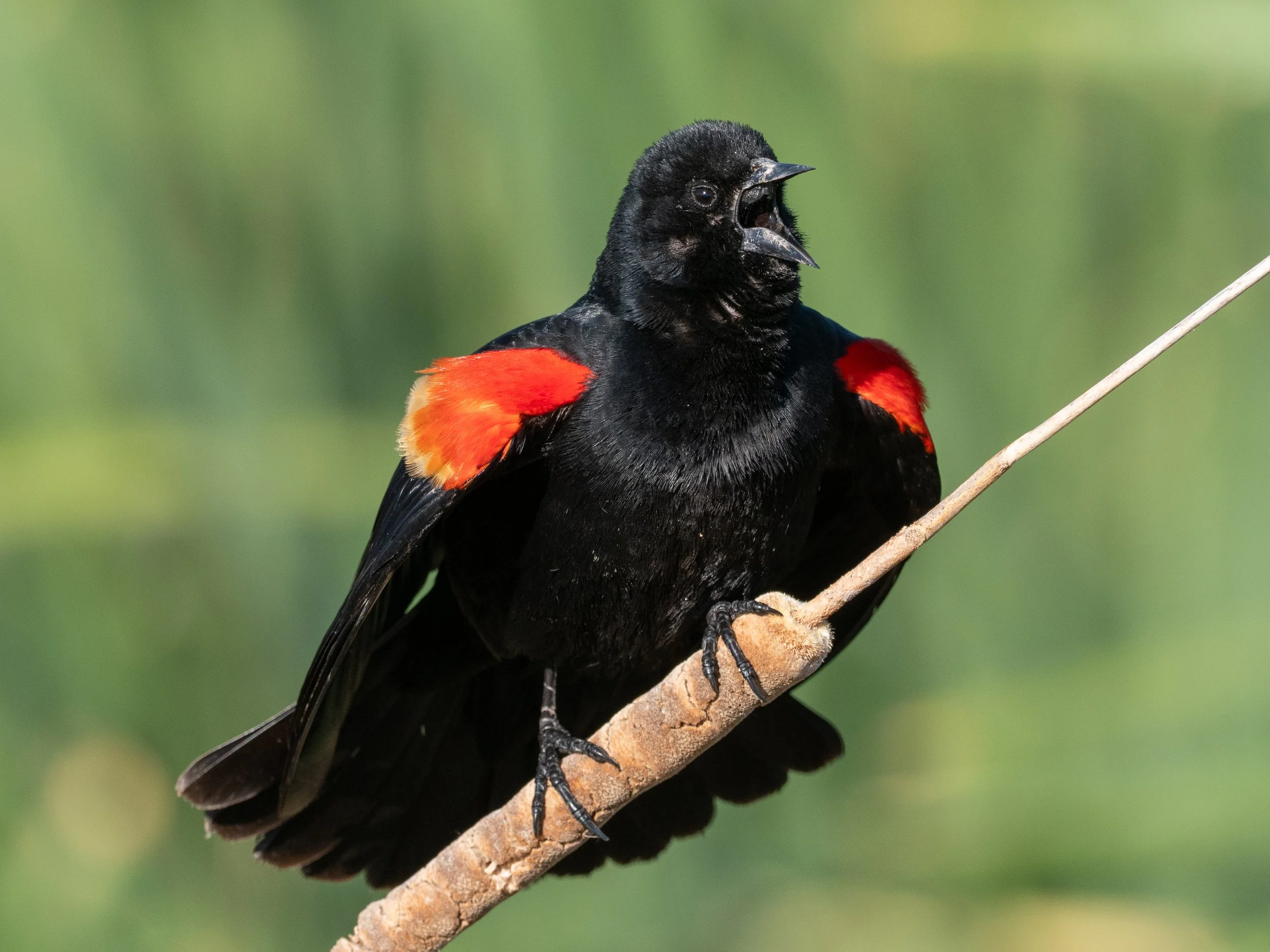
You know you’ve found some wetlands when you see this guy: the Red-winged Blackbird! This one was bold displaying just a few feet off the boardwalk!
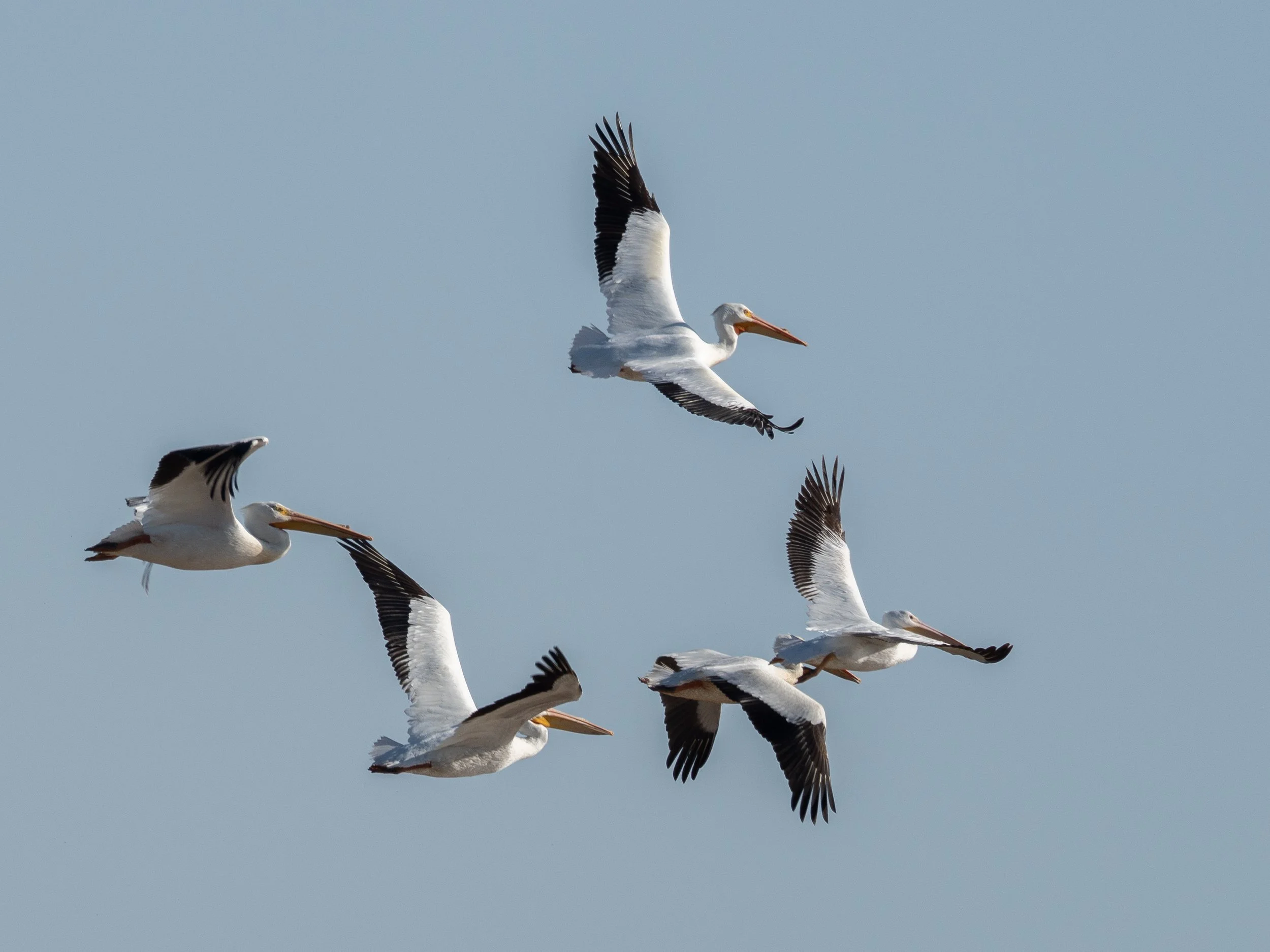
We were also treated to this group of American White Pelicans at the Marsh Boardwalk early one morning. Magnificent!
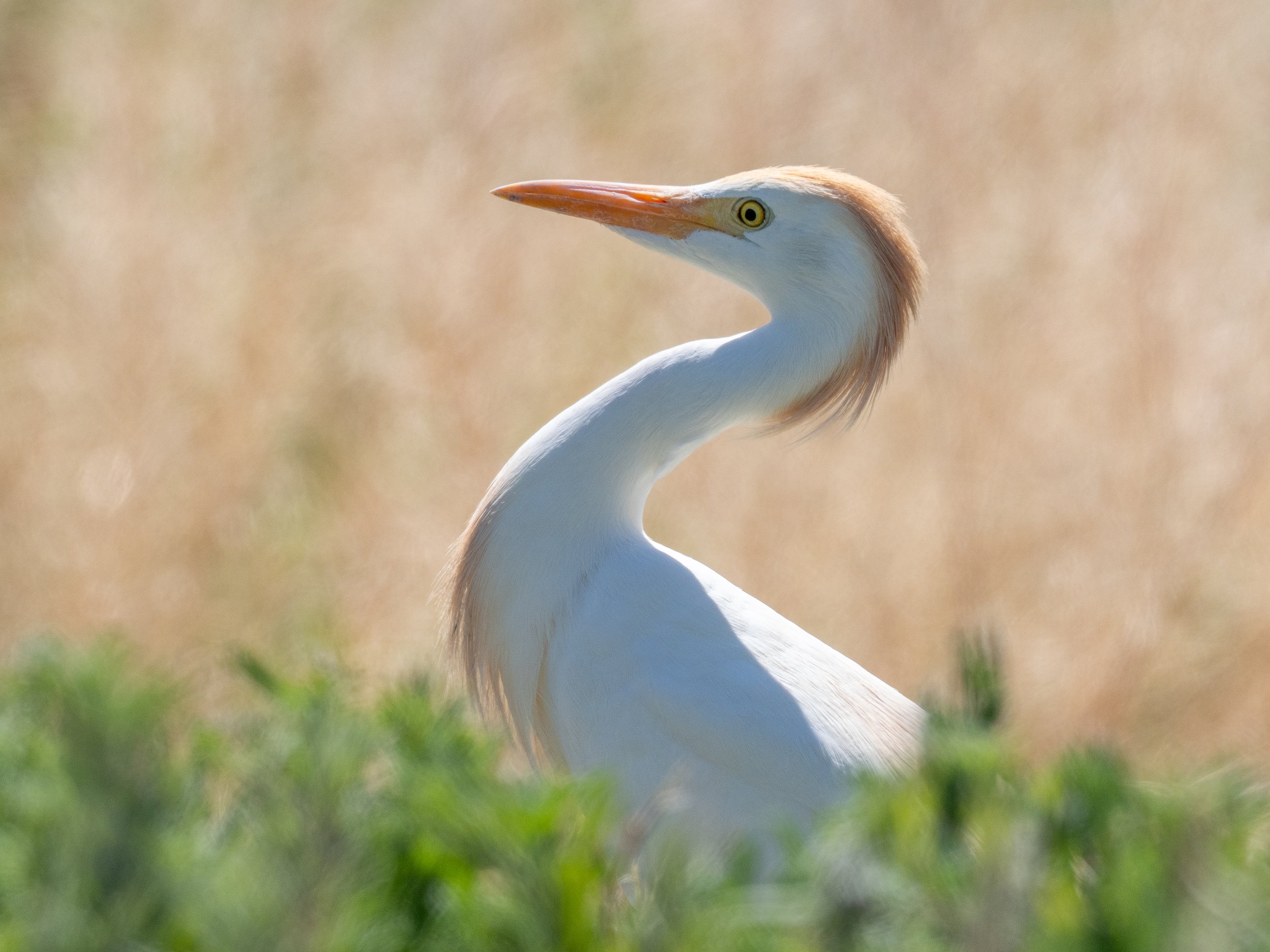
My friend Kurt Hillman captured a great portrait of a Western Cattle Egret earlier this year, so when this one was strutting its stuff around the refuge, I was inspired to do the same. These funky egrets scream CREAMSICLE to me in their breeding plumage with their orange accents.
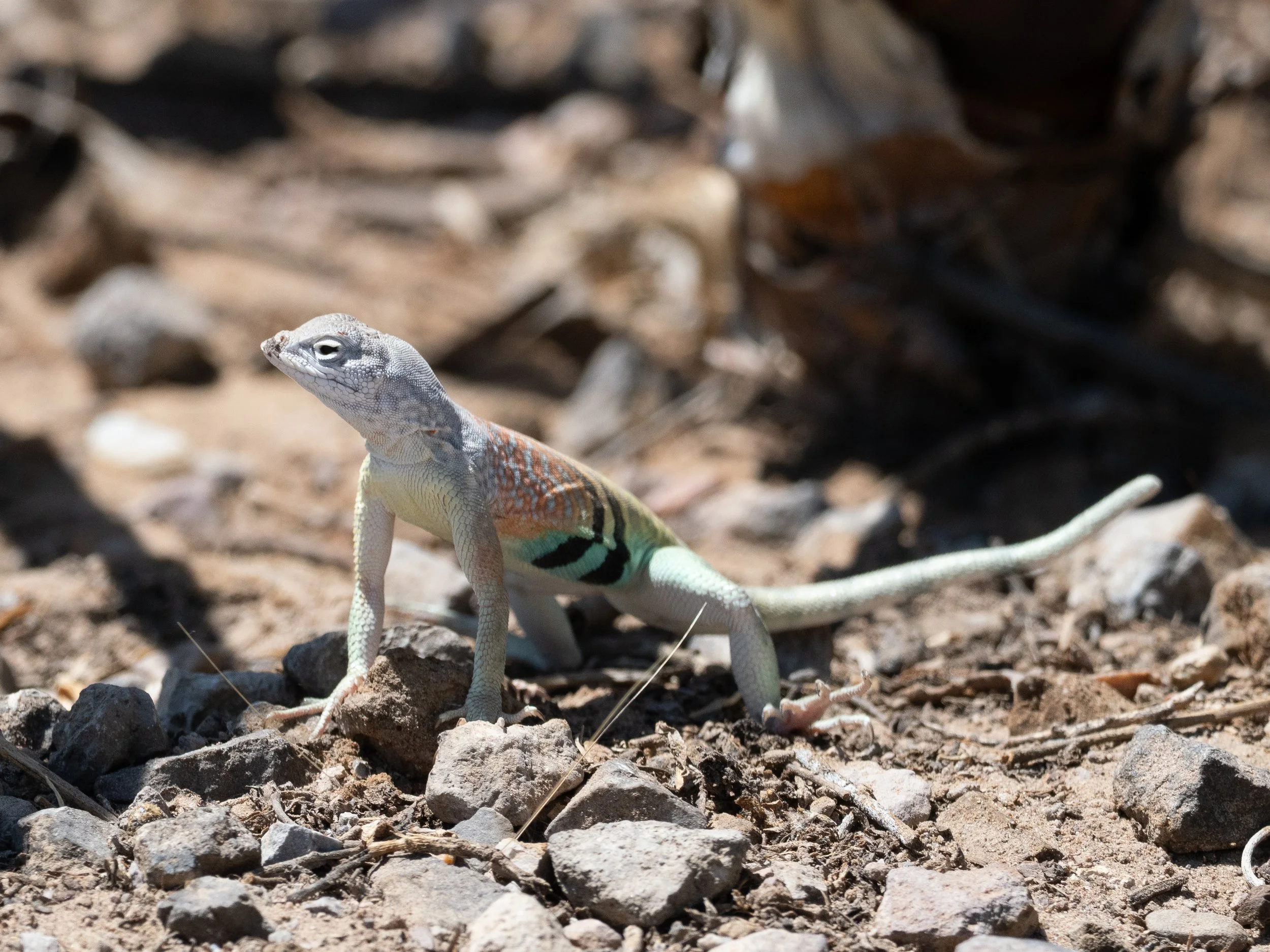
We encountered a pair of these crazy looking lizards near the Visitor Center: Greater Earless Lizards! I couldn’t remember seeing these before so I looked them up - they are the only species in their genus Cophosaurus. The black bars on the sides of this guy and his bright colors indicate this is the male of the pair.
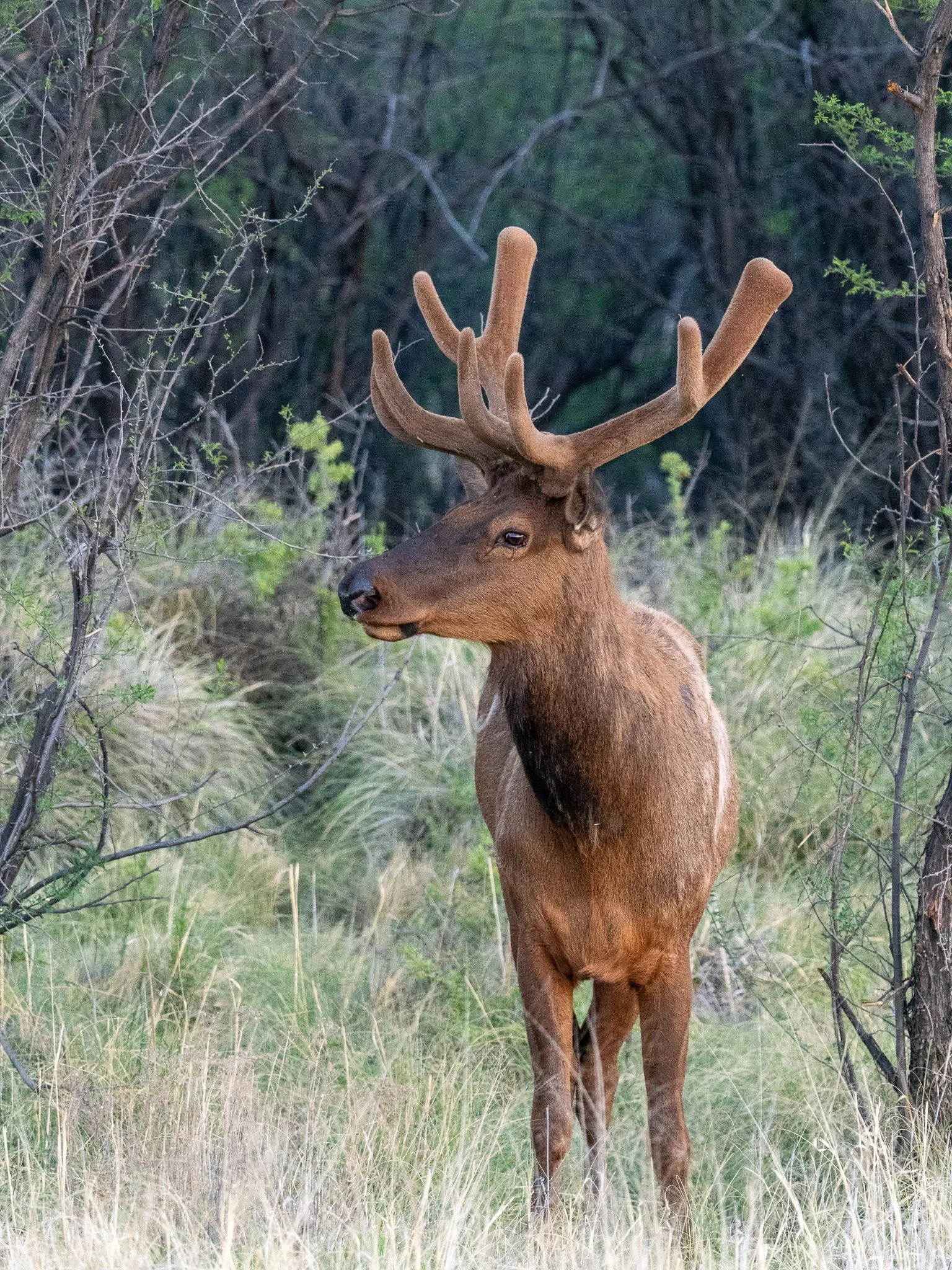
Another animal we were surprised to see on the refuge was elk! We saw five over our three day weekend. In Colorado, the elk are altitudinal migrants who have moved up to cooler forests in the mountains this time of year. This was the best look we got - Emilee our elk expert thought this guy was looking healthy and happy.
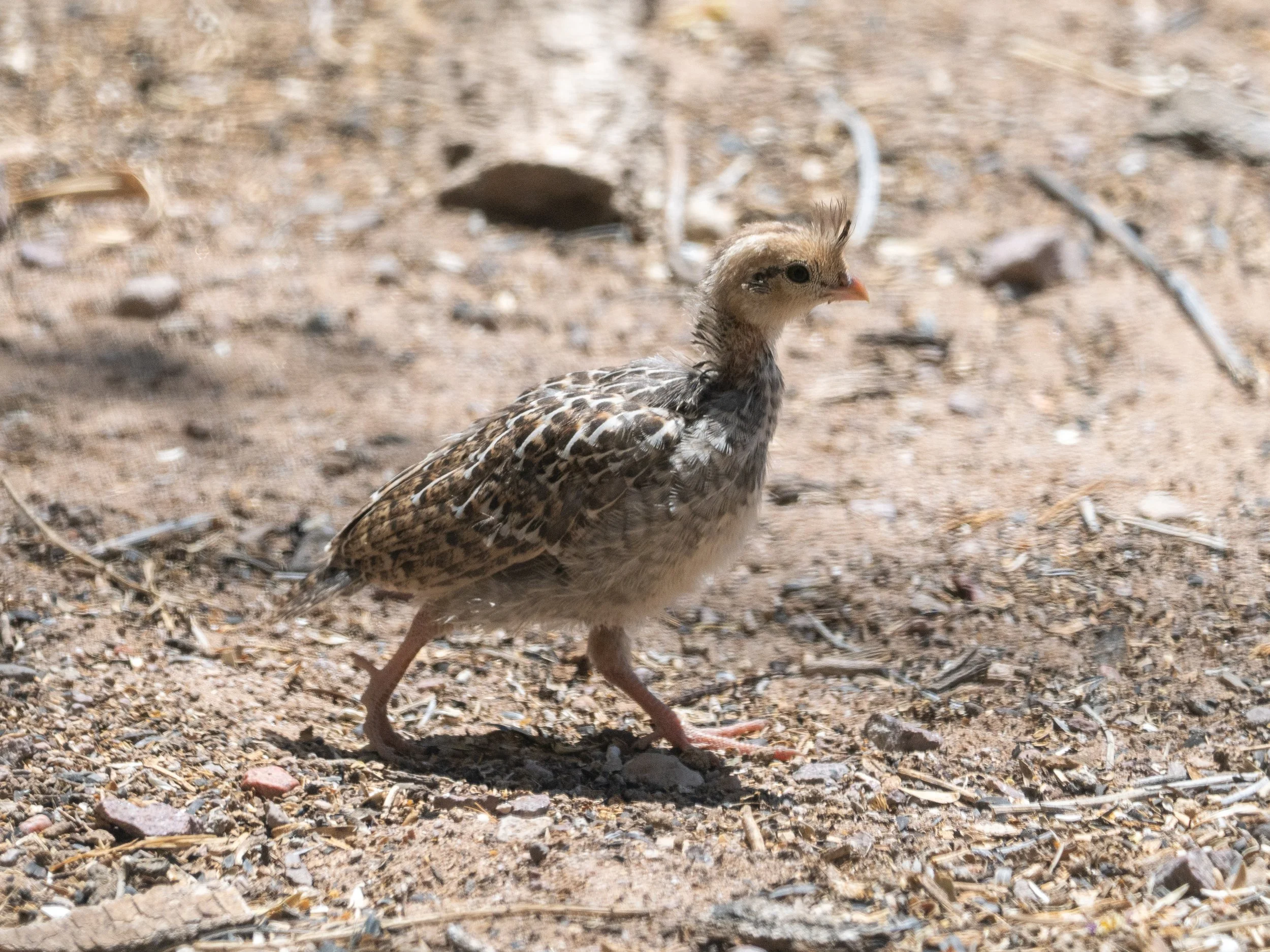
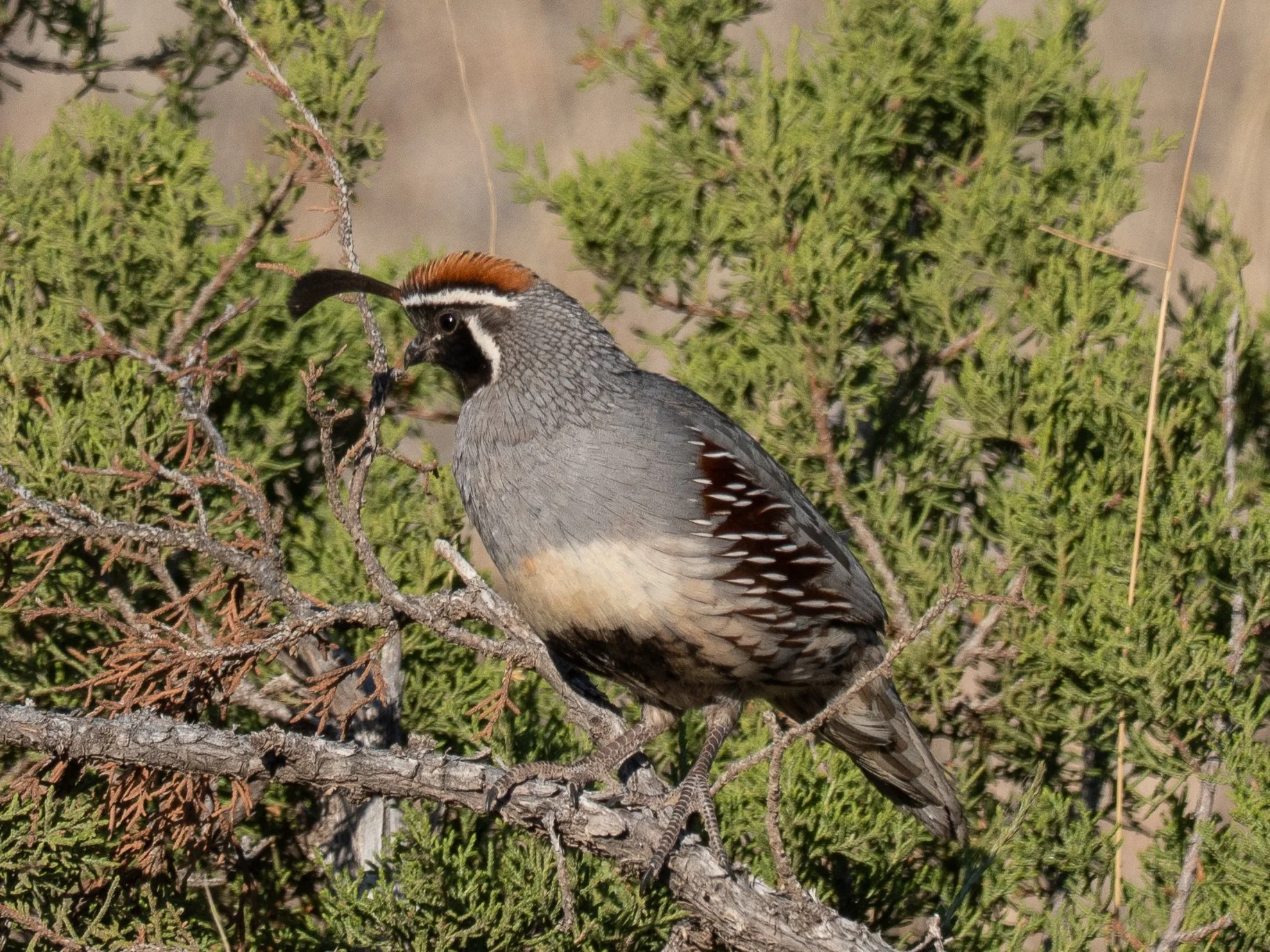
We saw a few young Gambel’s Quail which delighted Emilee. I love the adults - one of the best hairdos on earth!
Another area near Socorro we have enjoyed birding is Water Canyon in the Magdalena Mountains. This range is fairly small and lies west of Socorro. The road into Water Canyon goes through some Chihuahuan grassland before climbing through some different forest types. It has some cool rock features too - reminds me a bit of Cave Creek Canyon down in Portal, AZ. In Water Canyon there is a nature trail out of a campground in the Cibola National Forest we like to hike where some of these different forests come together and usually result in some increased bird diversity.
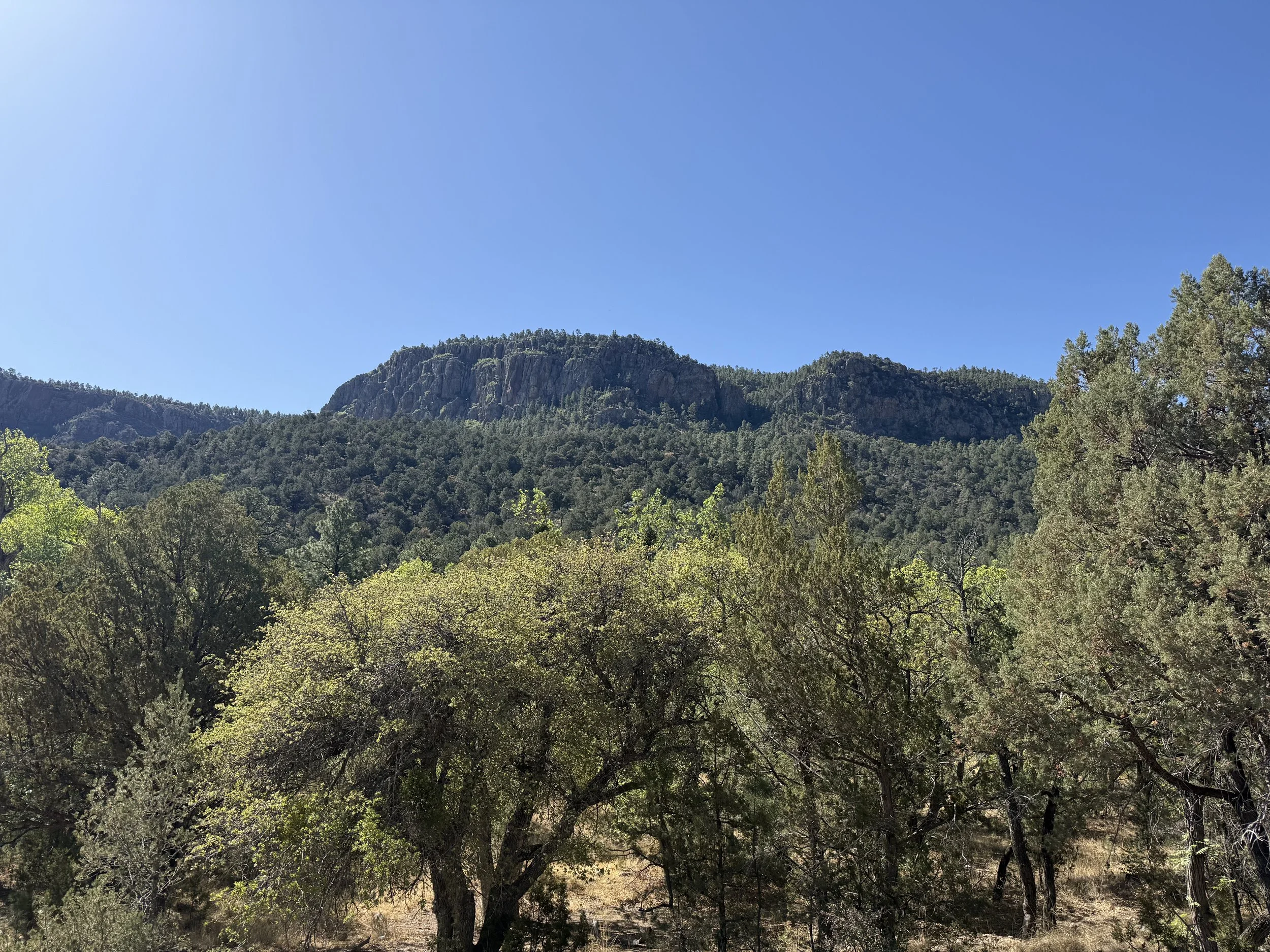
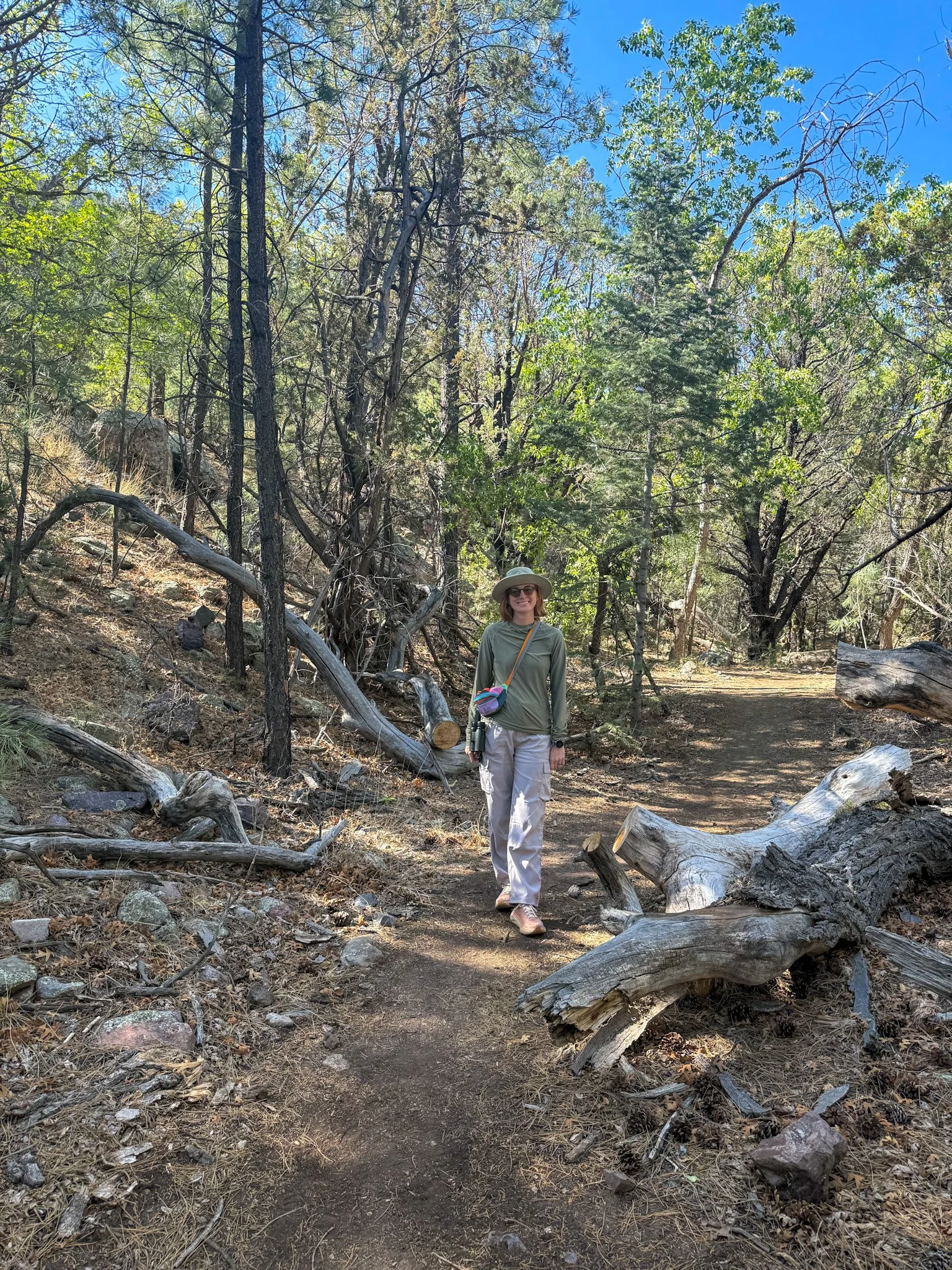
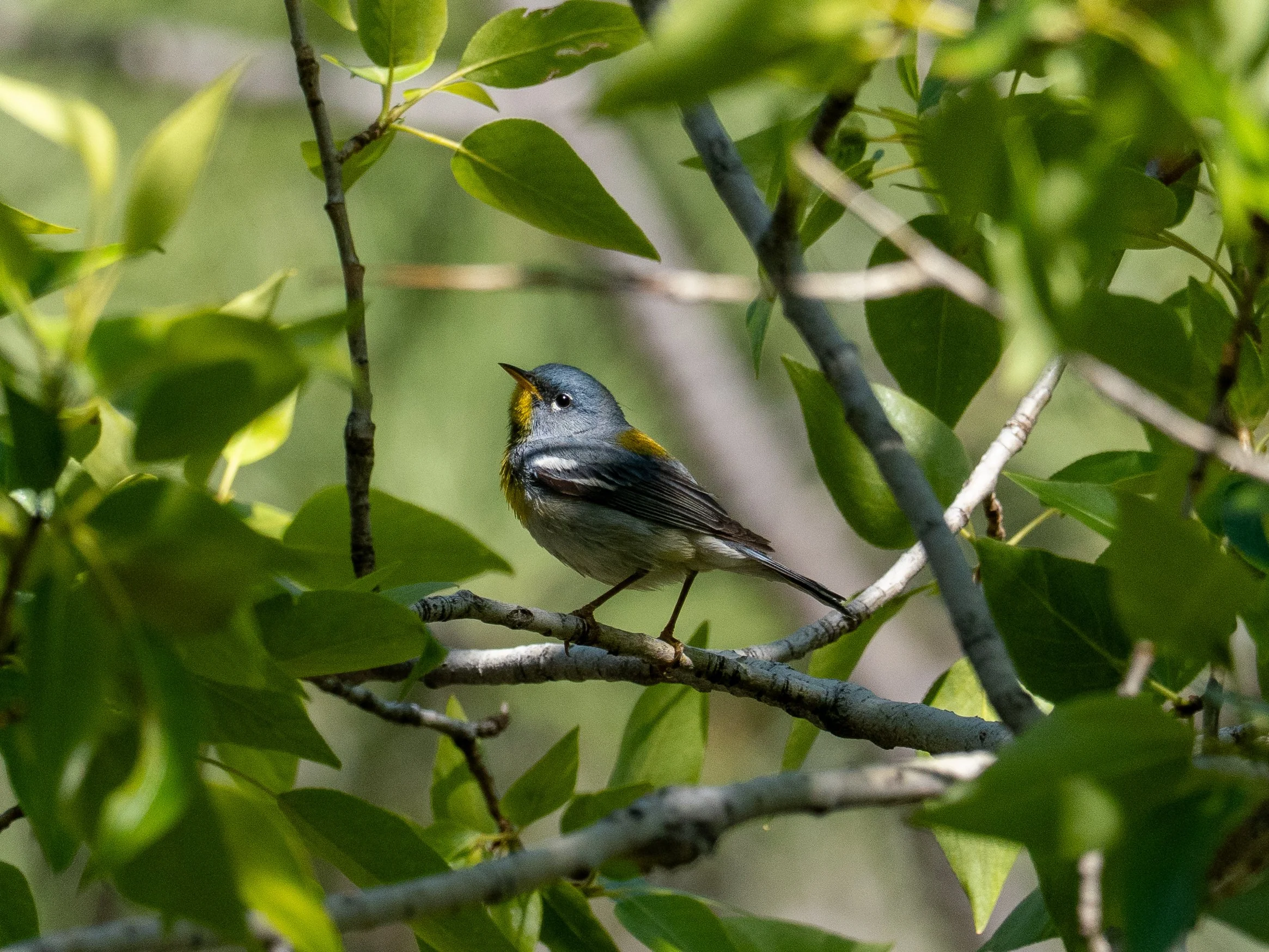
This Sunday, we were already having a fun hike with lots of bird activity when we heard a rising buzzy song - vvvrrrrrrrrzzzzzeeettt! “Northern Parula?” we looked at each other excitedly and opened Merlin to confirm. Merlin also reported Northern Parula! Not a bird we were expecting to find here - this is one of the Eastern Warbler species but probably more common in central New Mexico than at home in the Four Corners. After following the song we did get eyes on the bird - a beautiful little thing! It seemed to stick to the cottonwood trees in this canyon as we watched it move between a few different ones, mostly hidden behind a screen of leaves.
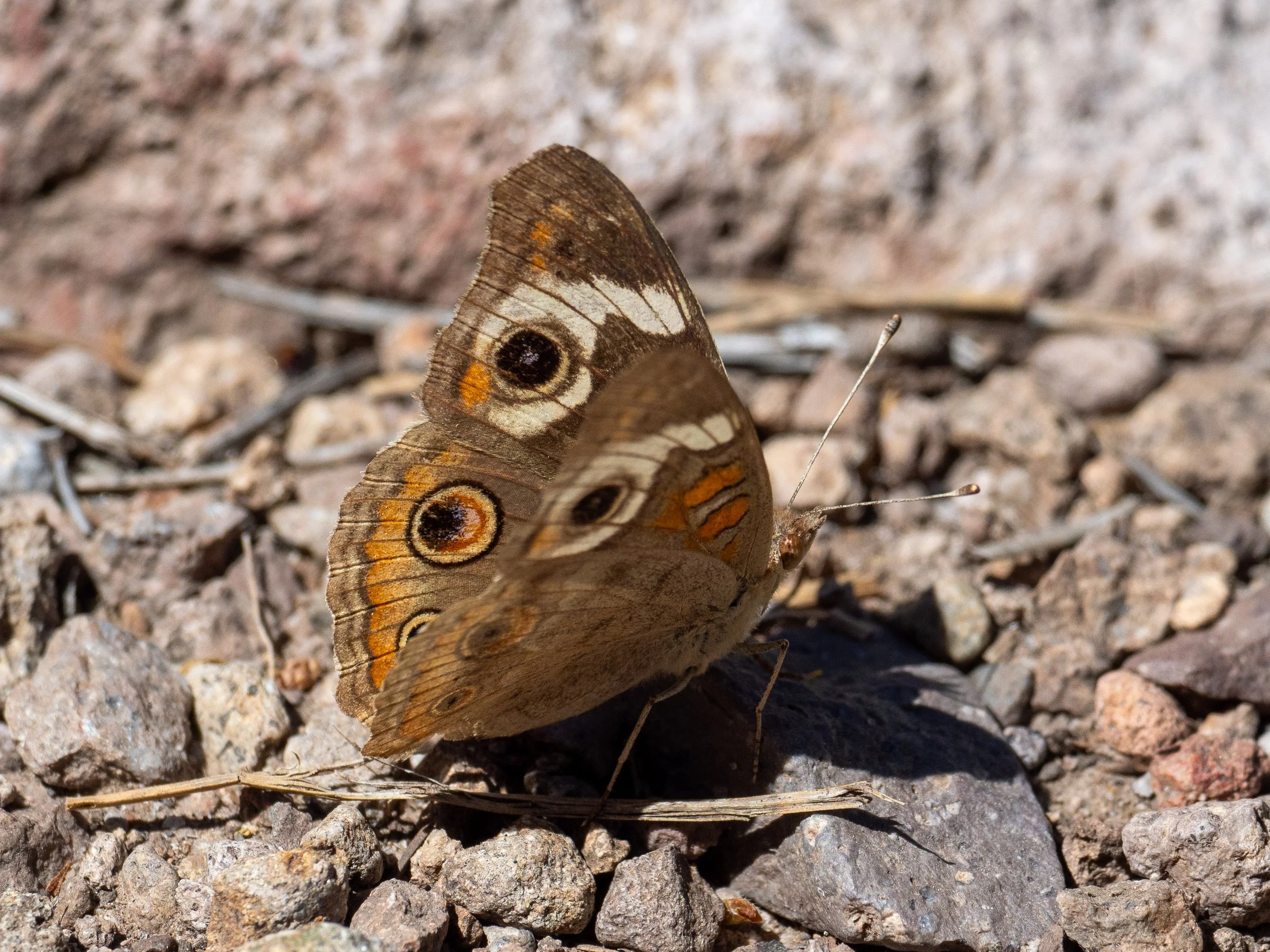
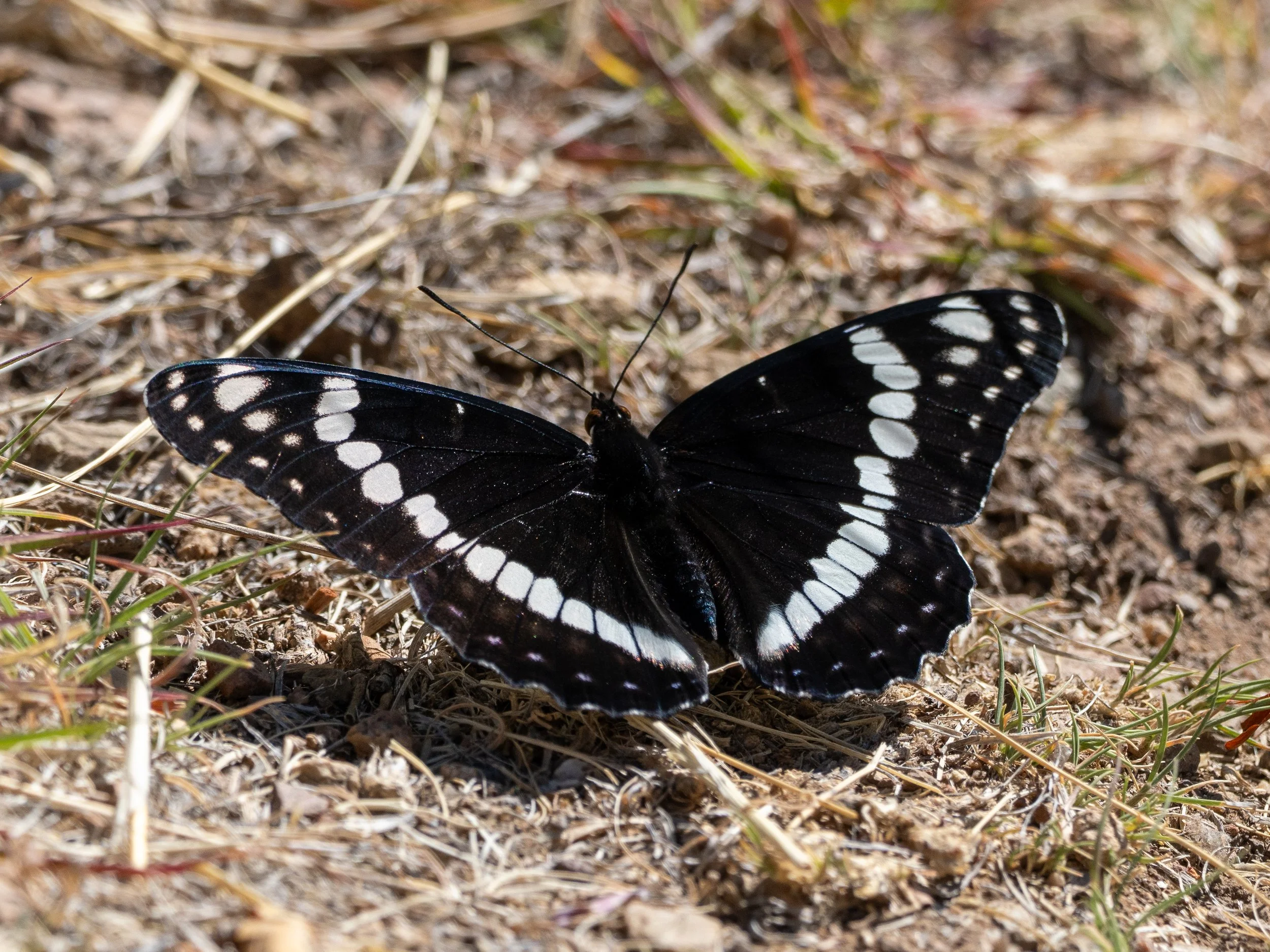
Two of the butterflies we encountered in Water Canyon: Gray Buckeye (L) and Weidemeyer’s Admiral (R)
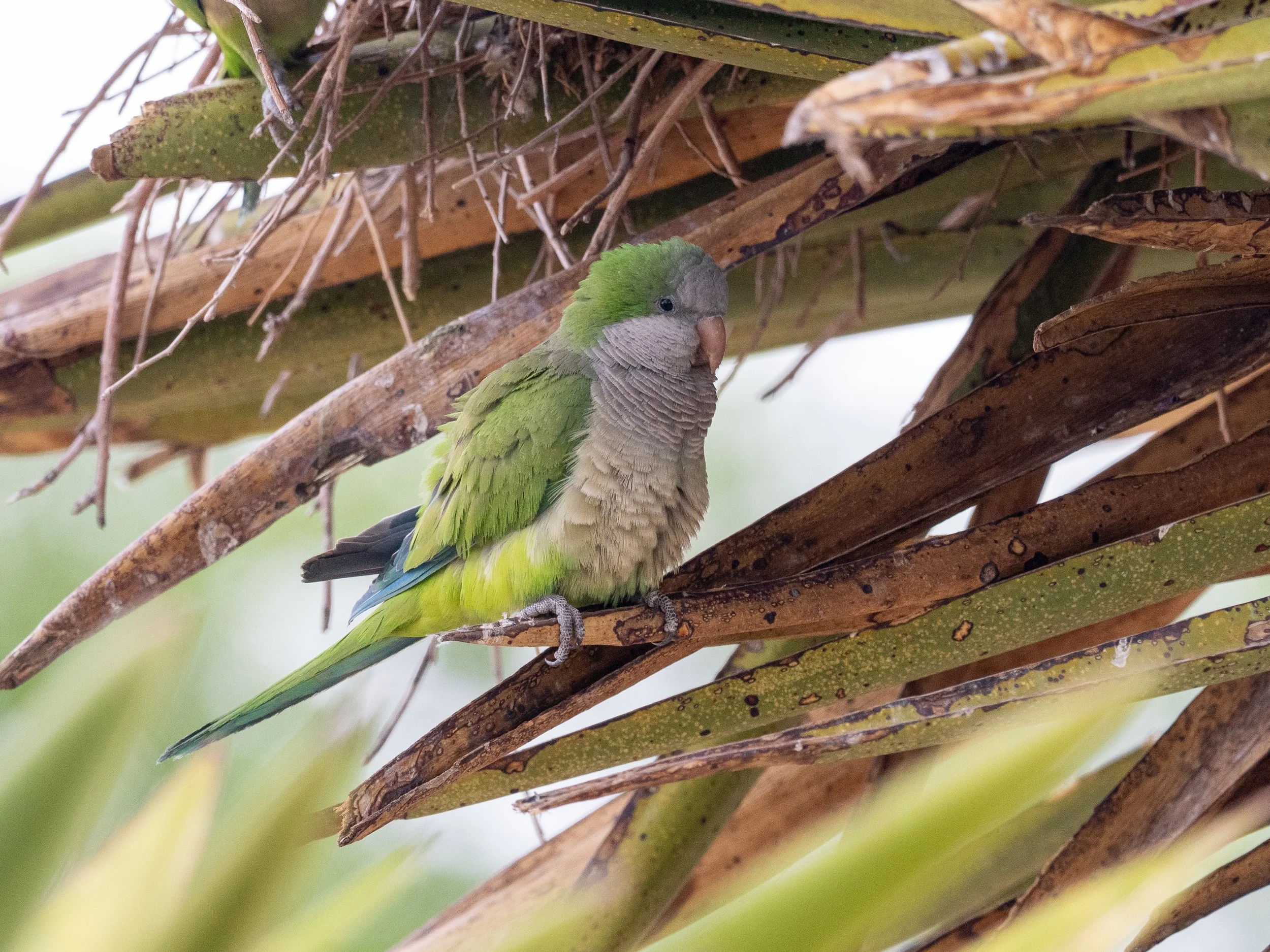
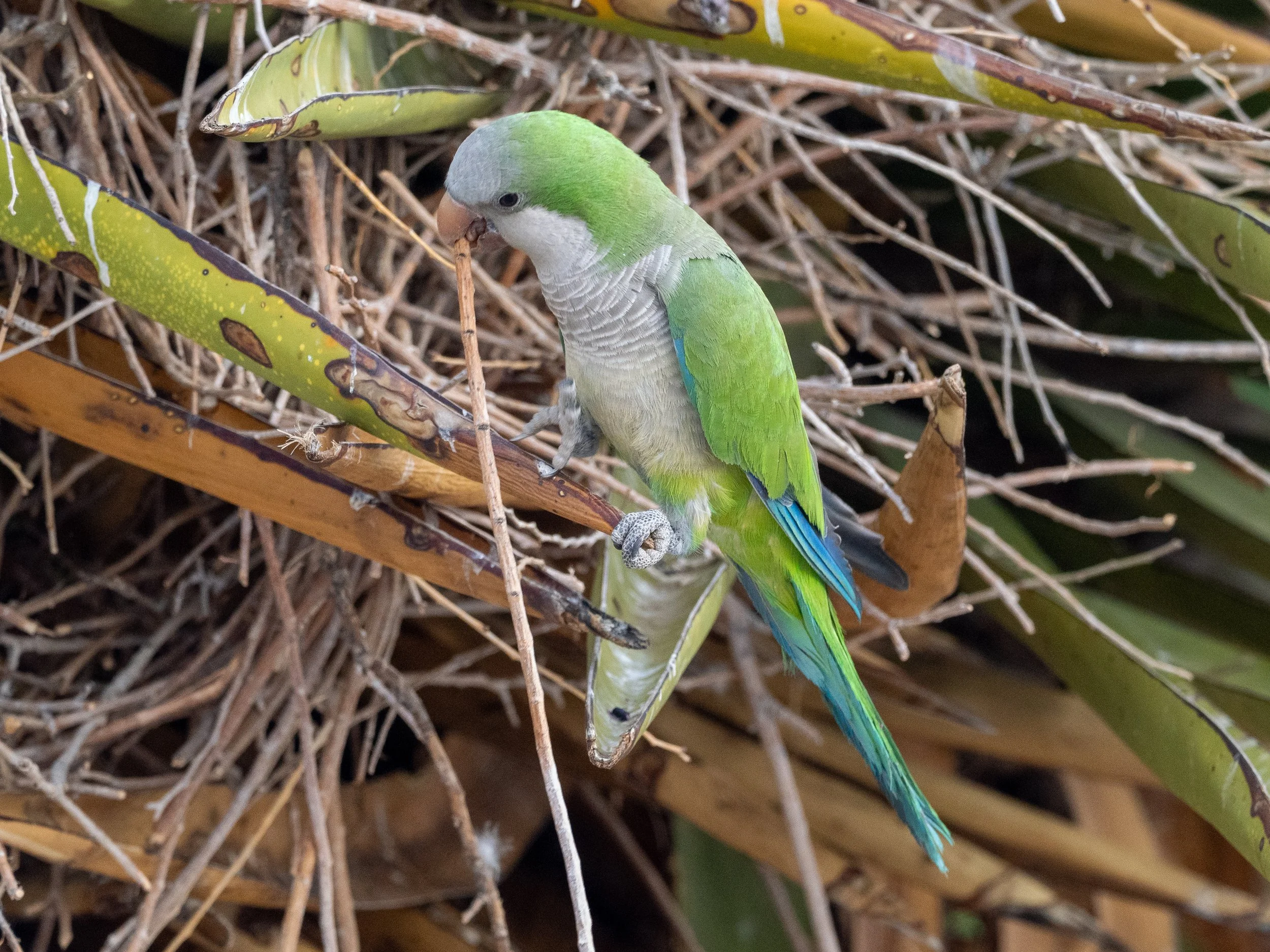
During our first visit to the Socorro Walmart early in the trip a bird flying by the edge of the parking lot caught my eye as we walked towards the entrance. I did not get a great look but something about the shape and the way it was flapping its wings seemed off for a dove or anything that shares that profile. “I swear I just saw a parrot fly by!” I remarked to Emilee. I don’t remember her response exactly but given that is extremely unlikely in the United States I don’t think she was that excited.
During our afternoon siesta the following day I was browsing recent iNaturalist observations on my phone, and to my surprise there were several fairly recent reports of Monk Parakeets near the Walmart! There were several photos of parakeets in the ornamental palms lining the parking lot. When we went down to the Bosque for our evening shift we detoured through the Walmart parking lot and found one palm with some stick nests that looked like parakeet handiwork but no birds.
Although they are from India, there are several established populations in the United States that originate with escaped pets. We have seen one such colony and their massive nests on power poles in the Dallas area. The next morning we stopped by again and this time we found two parakeets at the nest. We observed them from fairly closely from our car and I shot a few photos. At this time, these birds are designated “exotic/ escapee” for this location in eBird, so they are not ‘countable’ for listing but these birds are pretty neat and it was a fun mystery to solve!
Towards the end of our trip, we were on our way home in Albuquerque, eating fajitas, chips and salsa, and sopapillas at Sadie’s, a popular New Mexican spot. I had driven the 90 minutes or so North from Socorro, which is typically a straightforward affair on I-25. This time, though, a big storm was crossing the state and for much of the drive I was wrestling the wind for control of the car and smashing through a steady stream of tumbleweeds blowing across the road from left to right. For the last 30 minutes or so, the storm kicked up so much dust that visibility was limited to about a half mile and the sky was entirely dark: a haboob!
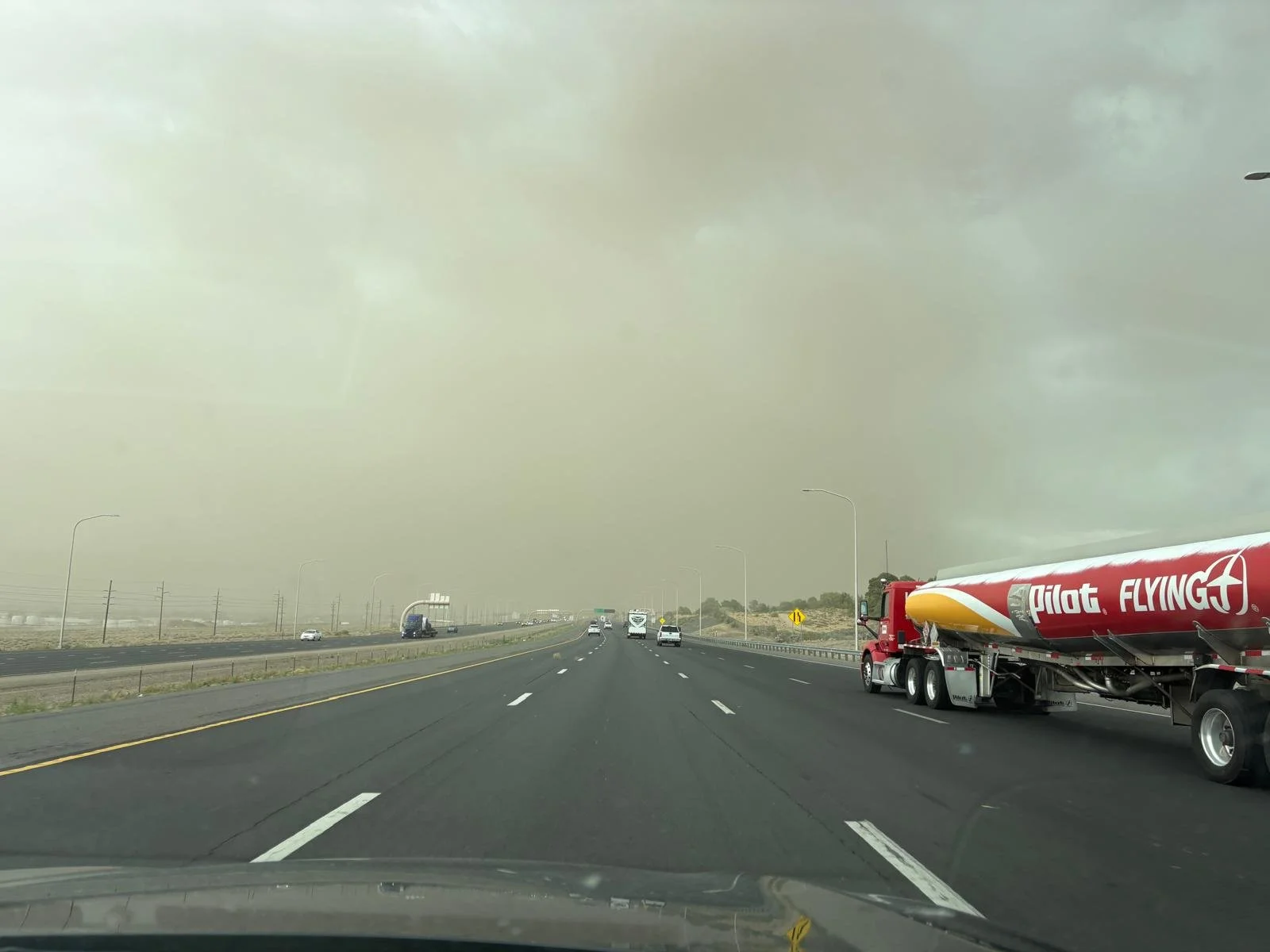
Emilee took this photo as we got into Albuquerque - this was fairly representative of the driving conditions for this part of the drive. We were lucky that visibility never got truly dangerous - later we read that in some areas there were accidents due to limited visibility!
I was mentally fried and enjoying my lunch while the storm continued outside. At one point, I was scrolling absent-mindedly on my phone and saw a post from the ABA Rare Bird Alert: New Mexico’s first state record of Fork-tailed Flycatcher had been seen that morning near Moriarty! I wasn’t sure exactly how far Moriarty was so I punched it in my phone: 45 minutes - pretty close! I shared the news with Emilee: “change of plans, we’re going to Moriarty!” We had seen Fork-tailed Flycatcher on our honeymoon to Belize but never in the United States. These flycatchers have spectacular tail-streamers like a Scissor-tailed Flycatcher and are primarily a Central and South American species with only a record or two from the United States each year.
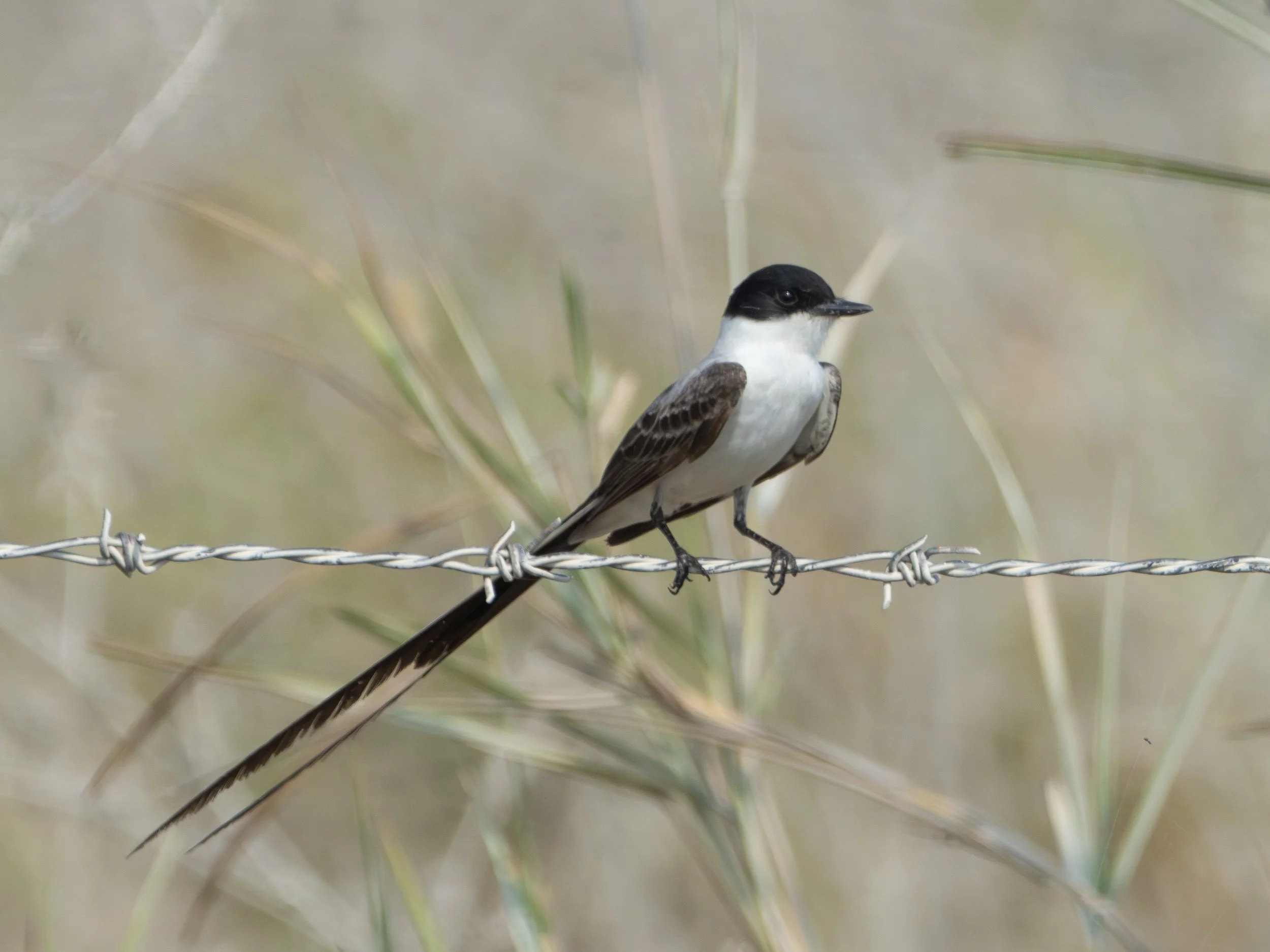
I took this photo of a Fork-tailed Flycatcher in a field in the Cayo District in Belize in 2023.
The storm was still going on outside, but I felt like we needed to roll the dice: Fork-tailed Flycatcher in New Mexico?! Who knows what the weather would be like on the other side of the Sandias! It was not looking good as we drove through sheets of rain through Tijeras and Cedar Crest, but the drive was short enough that we didn’t have time to get second thoughts on the wisdom of our venture. Wouldn’t you know it, as we got into Moriarty the rain stopped and the sky looked clear up ahead. It was looking like we could have a chance to see the bird (if it was still around!). When we got to the pin, it was still pretty breezy but nothing like we had witnessed earlier in the day. We saw one woman walking a tree-line where the bird was first found that morning. We drove along the road looking for perched flycatchers on the fence. It was birdy - there were many Western and Cassin’s Kingbirds in particular which are also flycatchers in the genus Tyrannus. When we got back near the treeline, we saw a few other cars parked on the shoulder of the road, and birders standing with spotting scopes. We joined them - they did not see the bird but this was the area where the Fork-tailed Flycatcher had most recently been seen, about one hour ago. Then the storm blew in and the birds hunkered down. It was a big farm field with long grass - kingbirds were flitting up and flying short distances in the wind before finding shelter again in the grass and out of sight. With the wind blowing, it felt pretty chilly and we weren’t dressed very warmly. We reconfigured the car so that we could both retreat out of the wind and view from the front and back seats on the driver’s side.
After about a half hour, I was away from the crowd a bit, standing there looking through my scope where I could just overhear the conversation from the other birders carried down on the wind. They were looking at something near the end of a big center pivot irrigation rig - I pointed my scope in that direction and saw a little white speck perched in the grass. That must be it! “I see it!” I called to Emilee who bounced out of the car. After we both got a solid look through our scope we ran over towards the other birders to make sure they were on the bird too, and they were. Over the next 40 minutes or so more birders joined us and we lost and re-found the bird several times as it disappeared into the grass and then would reappear for a short flight. I would guess the bird was around 250 yards away so views were not amazing but particularly when the bird was flying, we could see the bird well and make out that its tail streamers were not particularly long - perhaps a female or young male?
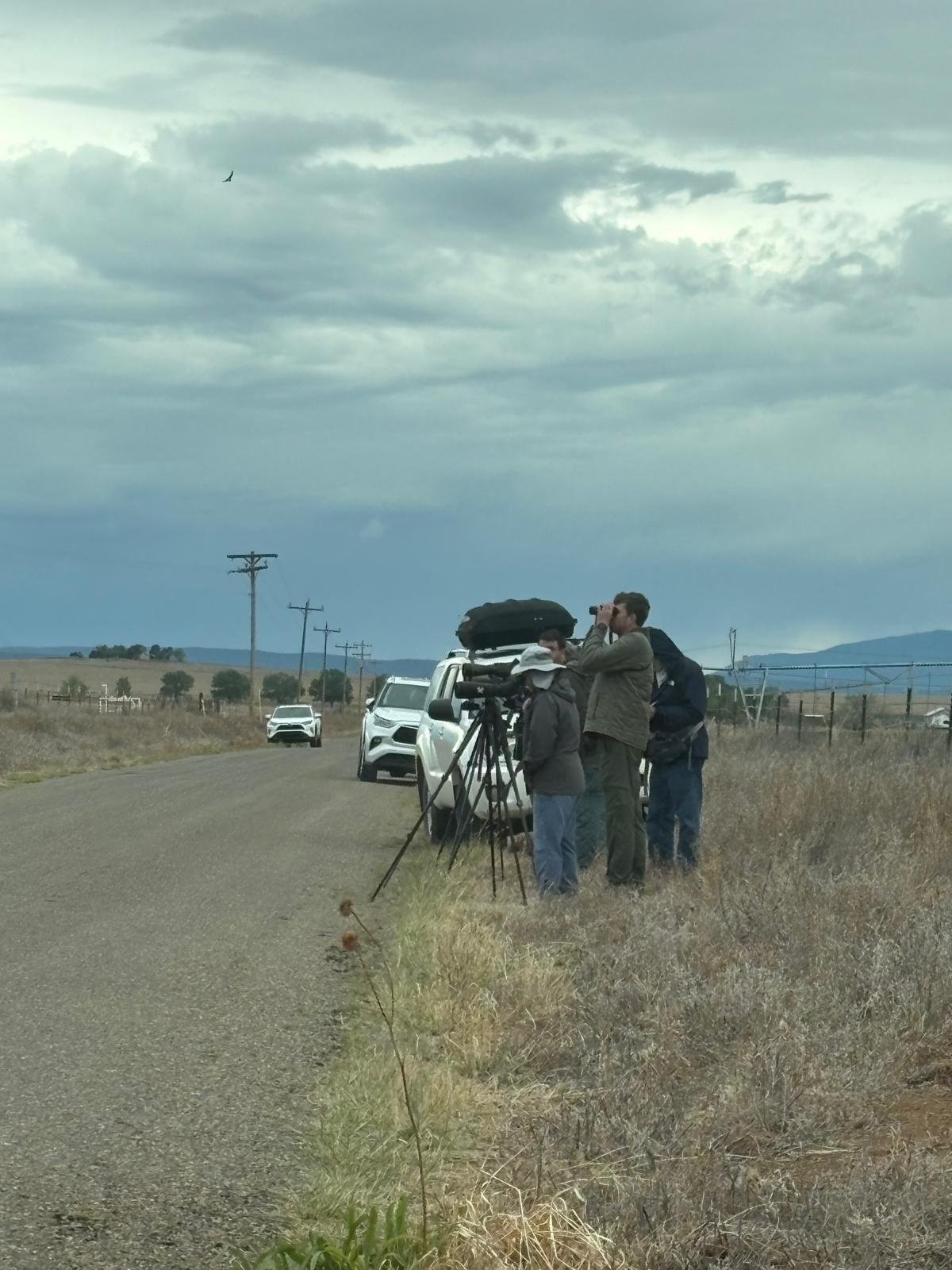
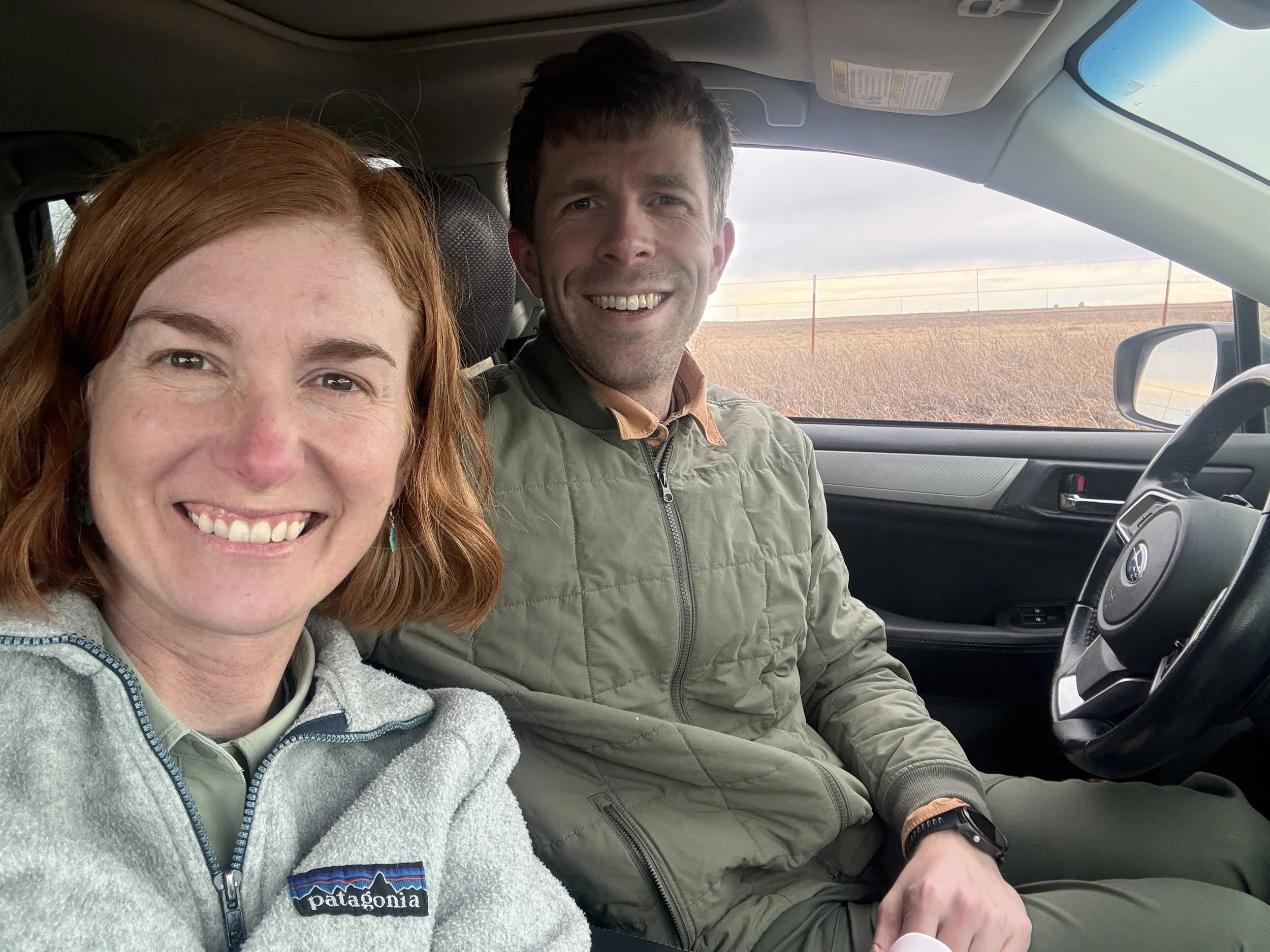
A scene from the stake-out when we were on the bird, and two big smiles after finding the Fork-tailed Flycatcher! A great highlight to punctuate the trip!
