Mesa Verde National Park: the Knife Edge Trail
One of the great things about living in Cortez is having Mesa Verde National Park in our backyard. Primarily designated for its architectural resources, it spans over 50,000 acres of rugged cliffs topped with a large plateau of pinyon-juniper and oak forest. A huge percentage of the mesa has burned in a series of wildfires over the last 50 years, but you can still find remnants and signs of larger pines, particularly on North-facing slopes.
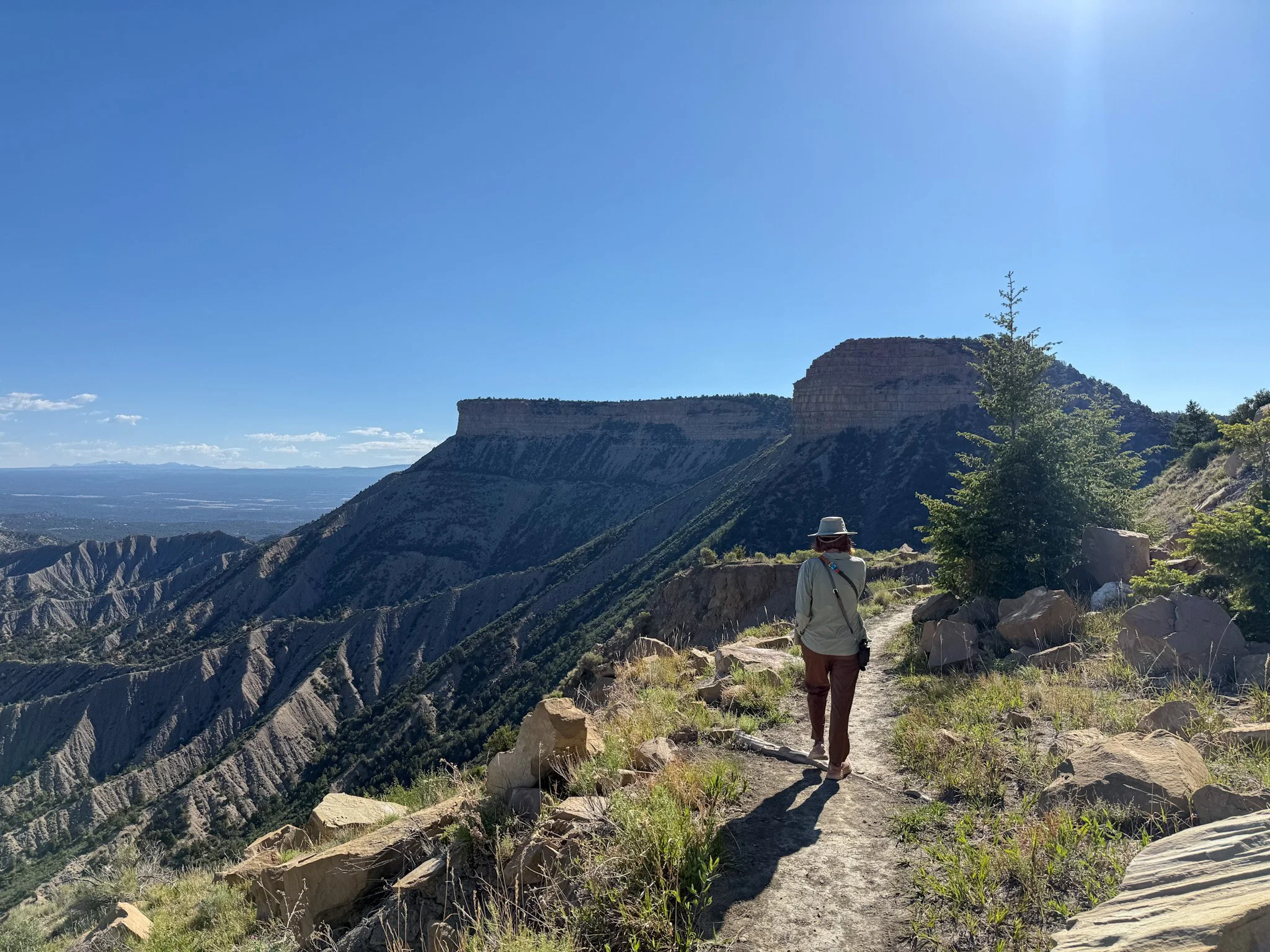
Views from the Knife Edge trail back towards Point Lookout
One of our favorite trails in the park is the Knife Edge trail, which is part of the greater Morefield Campground area not too far into the park. In addition to the campground, there are a number of trails throughout this area. The Knife Edge trail leaves the campground area to the West and wraps around the North aspect of the cliffs on a ‘knife’s edge’ on a pretty flat grade along remnants of the historic road into the park. At just over a mile long one-way, this trail has a mix of habitats, including a remnant large pine forest, in this short distance that makes it a worthwhile outing for one of our precious spring weekend mornings!
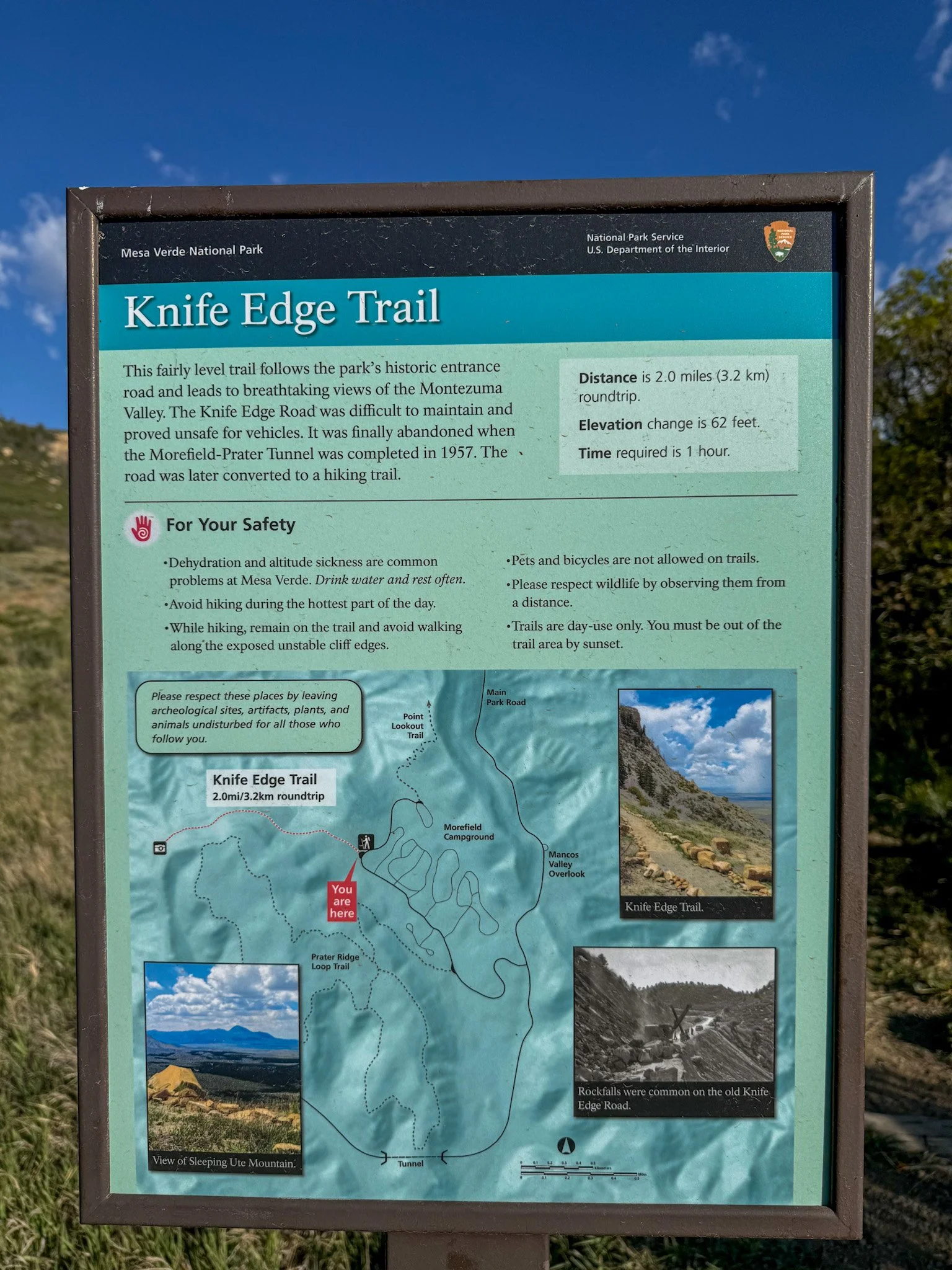
The Knife Edge trail sign at the trailhead gives a good overview of the entire area. The Prater Ridge Loop is also a fun outing - much longer and some elevation gain involved to the top of the mesa. The Point Lookout trail is a little bit of a suffer fest of mostly switchbacks with only a short hike on top.
We had both local species of Towhee - Spotted Towhee and Green-tailed Towhee - singing loudly and often throughout our hike this morning. These large sparrows are bold and often conspicuous. The Green-tailed Towhee was the featured bird this year for our local bird festival just last weekend so it was fun to see them after we did not see them well on the tour we led.
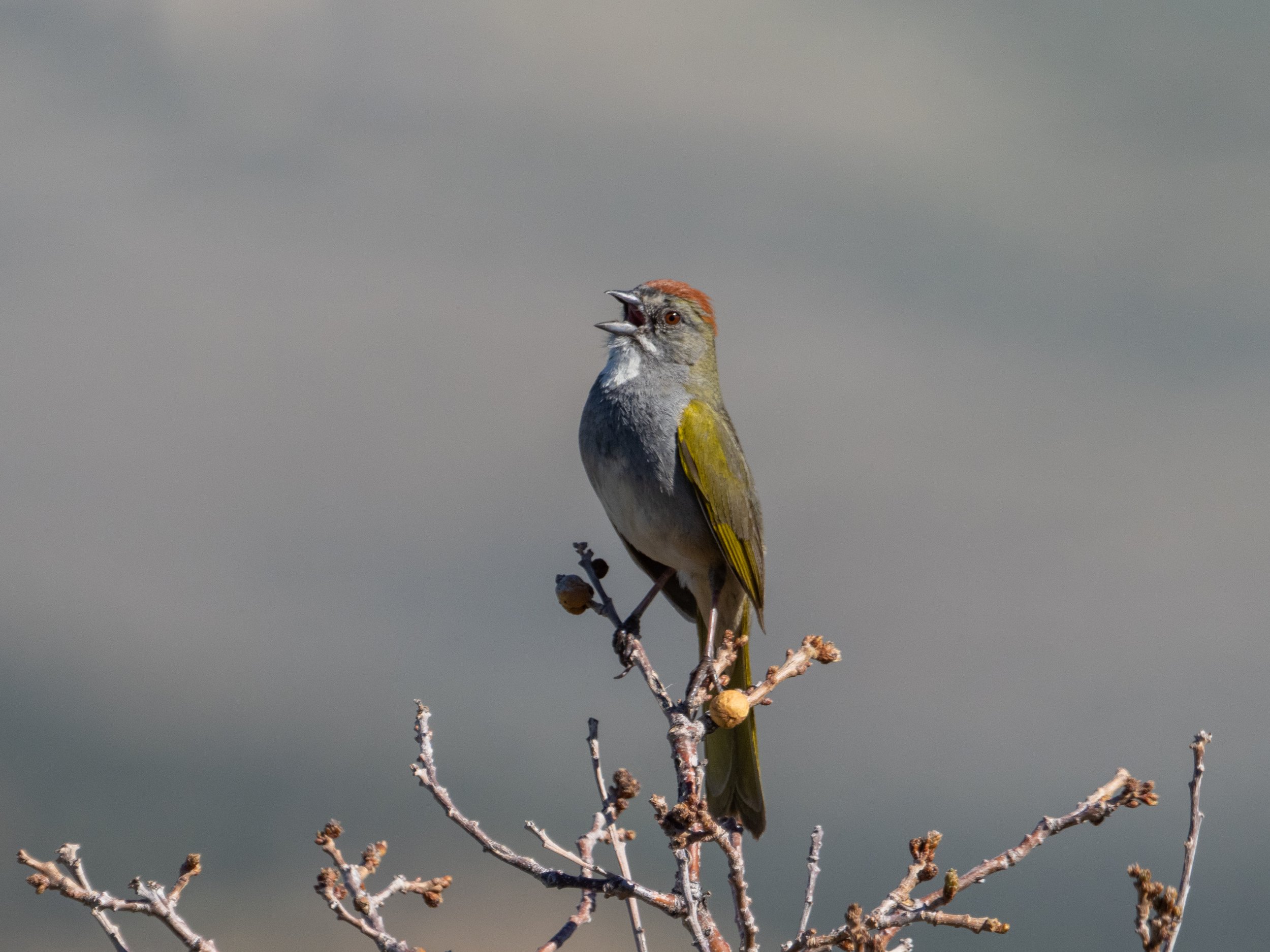
The Green-tailed Towhee - a great looking sparrow! I took this photo on a tour for the Ute Mountain Mesa Verde bird festival in 2024.
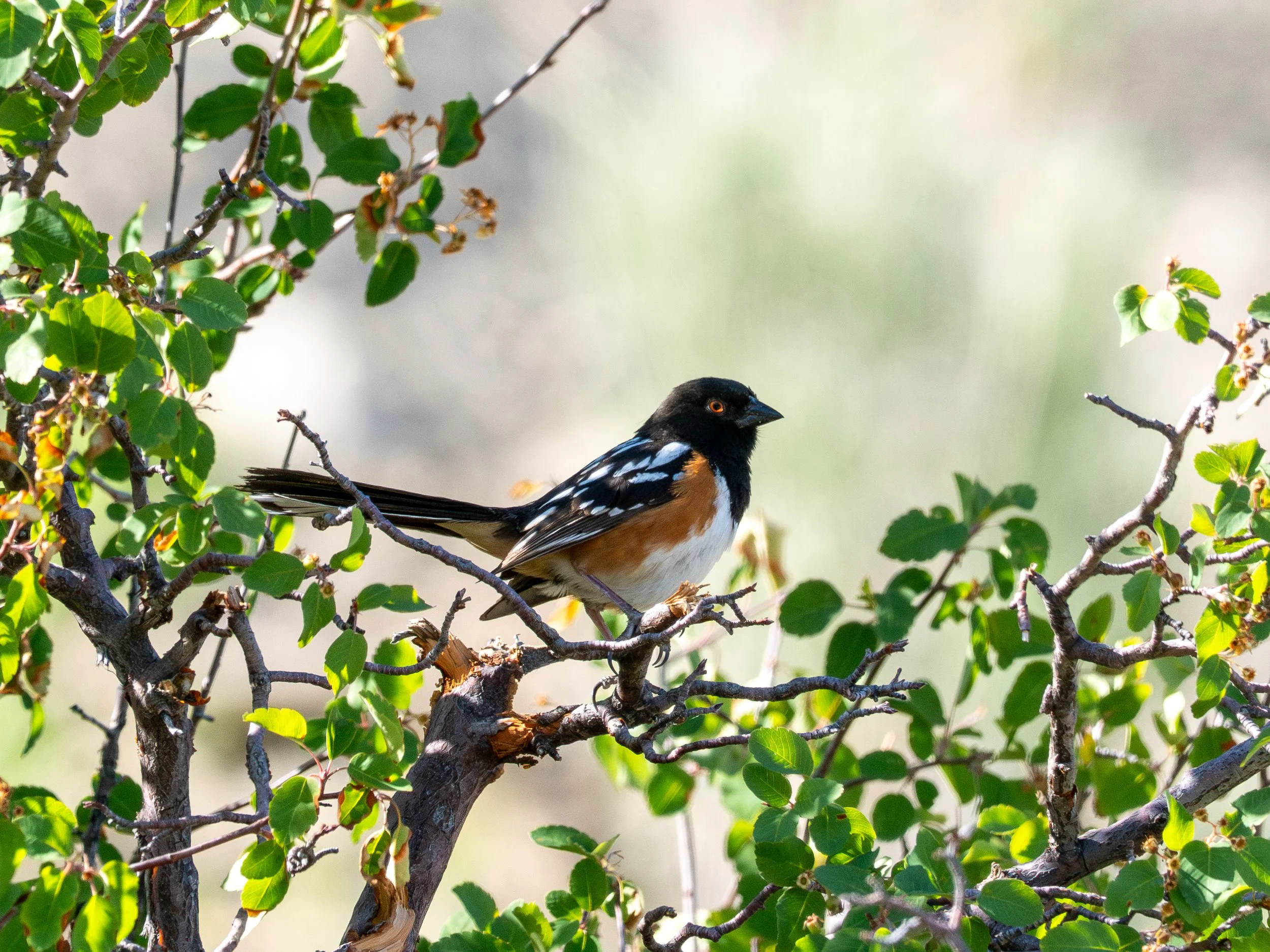
The Spotted Towhee - also a very sharp looking bird! It is more common in our area than the Green-tailed Towhee.
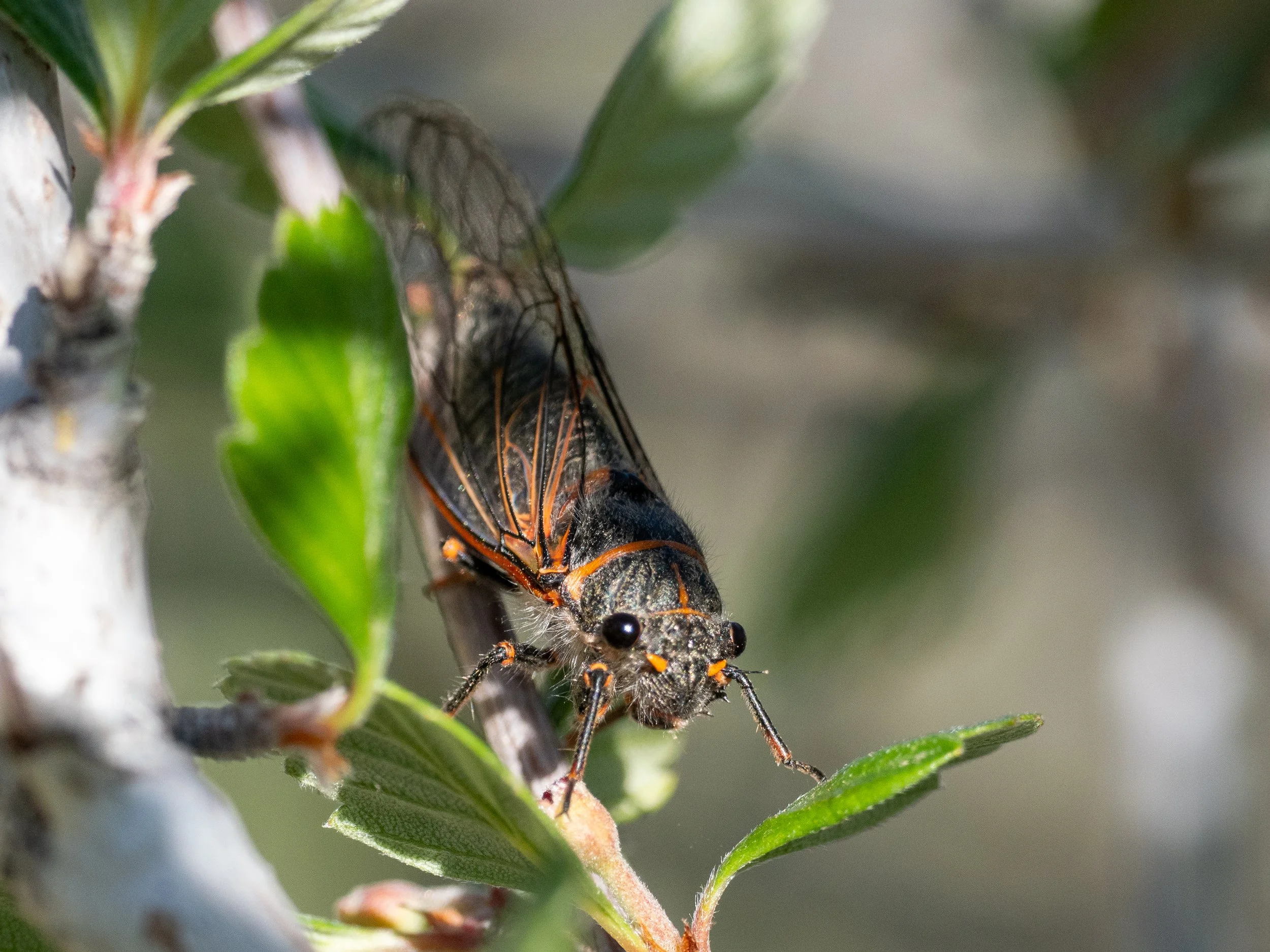
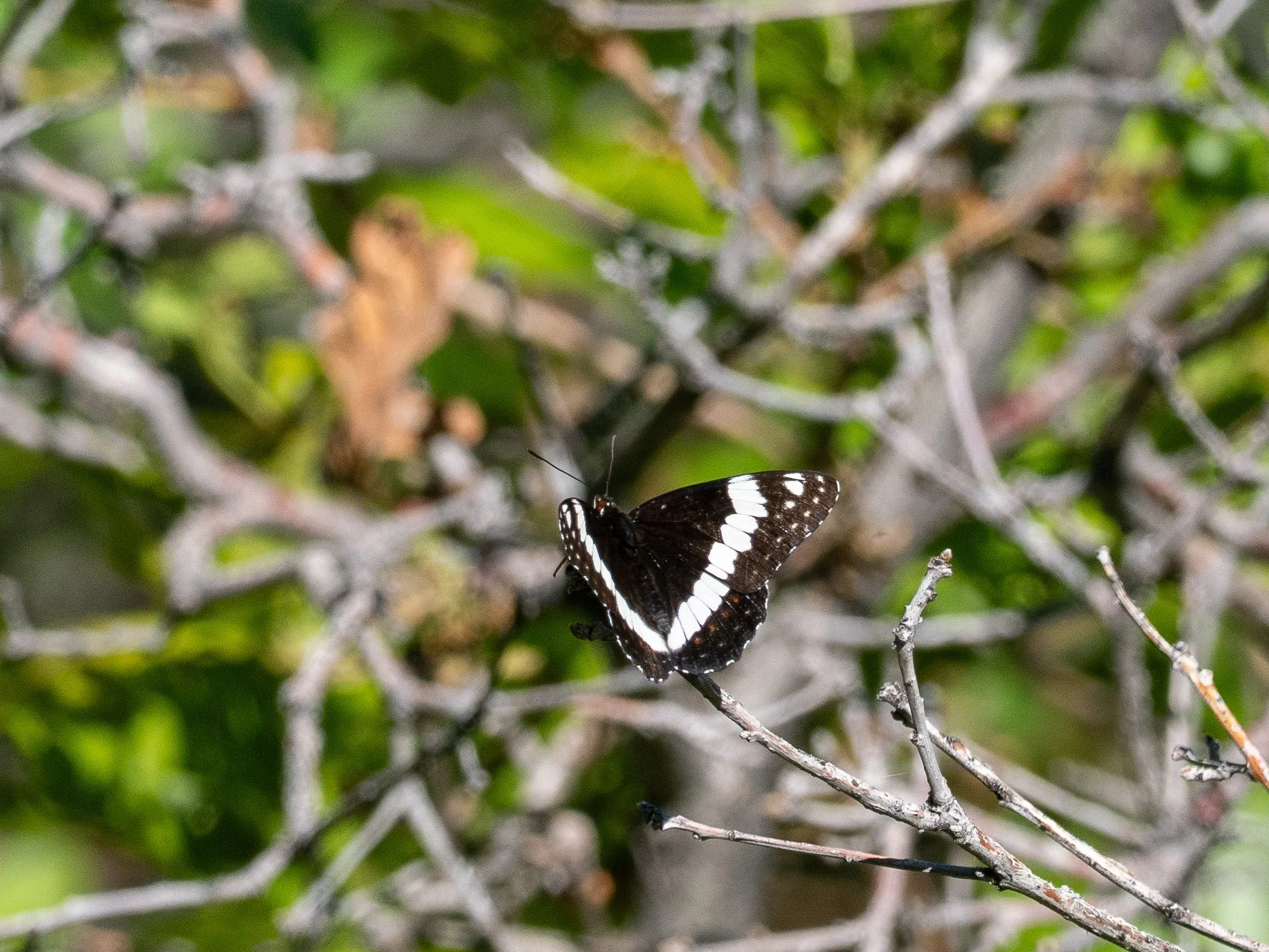
This time of year, the oaks are just leafing out and the place is really coming alive. The bugs are coming out too - today the cicadas were humming like crazy! Mostly they are an incessant buzz from the bushes but we got great looks at one today. I am not sure on the species - it looks like there are some similar-looking cicadas in the genus Platypedia, the wing-tapping cicadas. We also saw this butterfly, a Weidemeyer’s Admiral, the first we’ve seen this year.
A highlight of this hike this time of year is the high concentration of singing Virginia’s Warblers. The steep slope of pinyon pine, junipers and oak seems to be just about perfect for these little birds. These ground-nesting warblers are fairly difficult to see. Today we heard an estimated 9 singing birds but only got a few quick looks at these little guys as they moved through the vegetation.
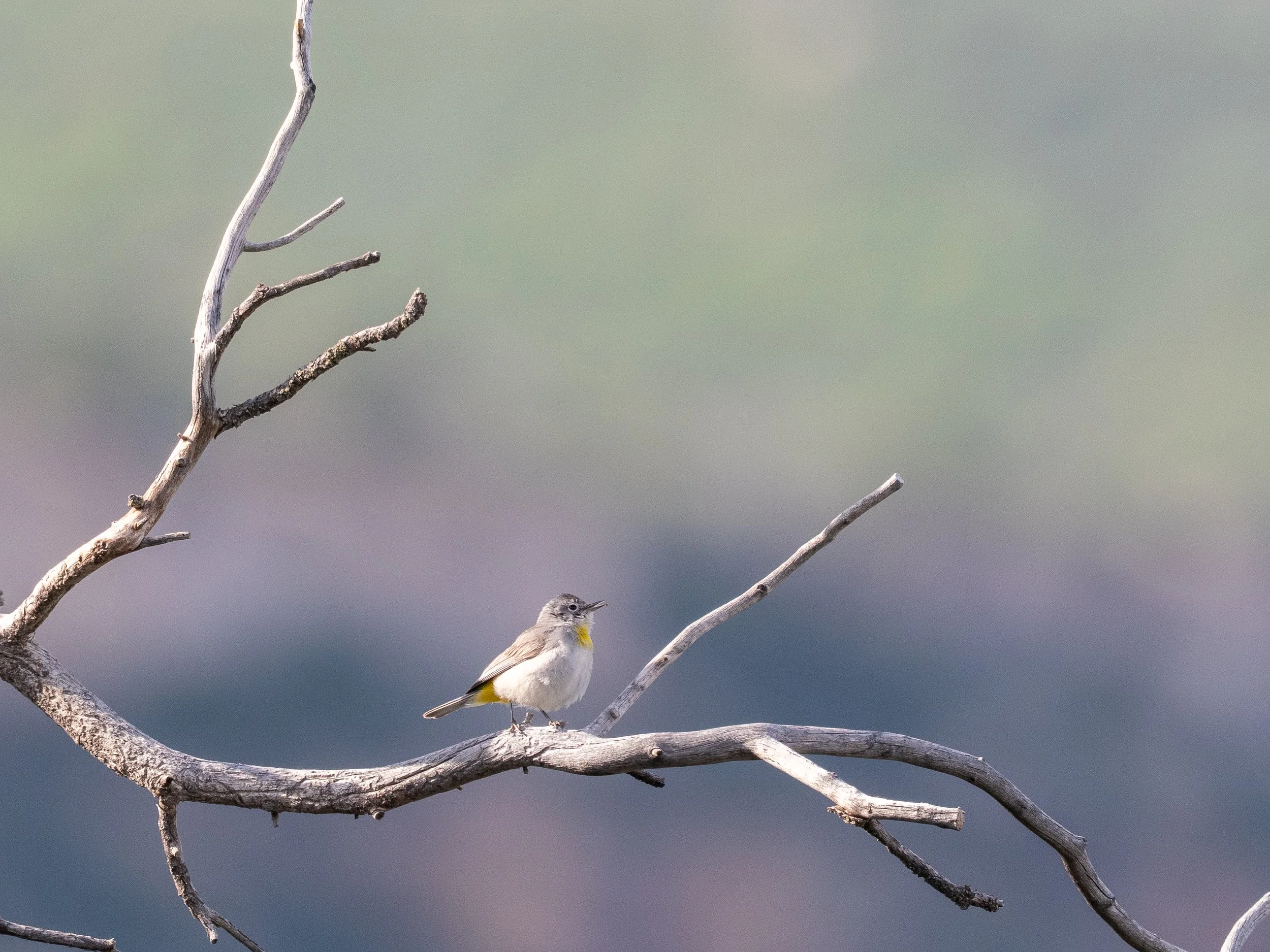
Virginia’s Warbler - very cute! I took this photo on the Point Lookout trail on the other side of the campground
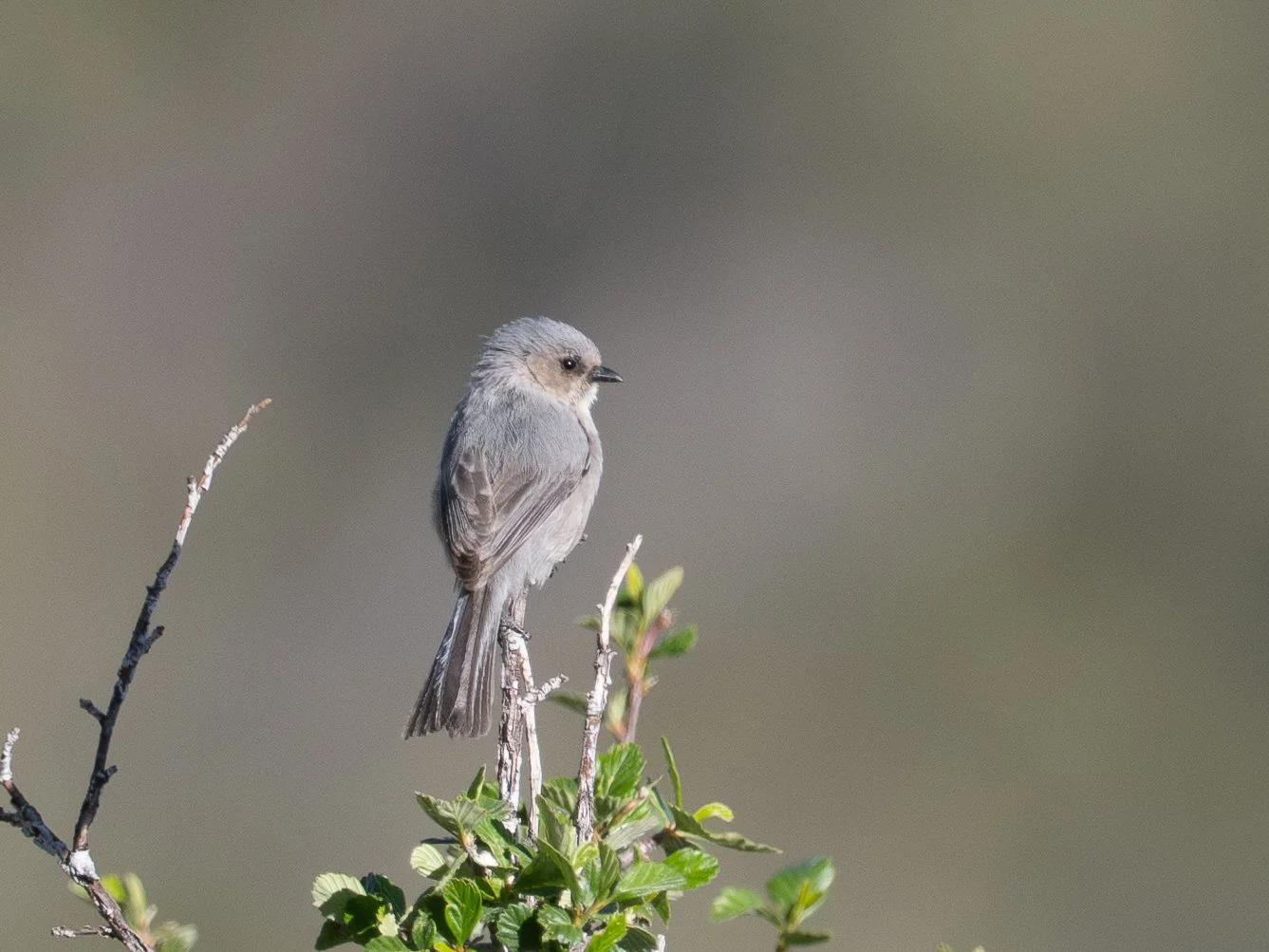
We also got a nice look at another small gray bird today - the Bushtit! A lot of personality in a small package. These tiny birds give frequent tinkling and buzzing vocalizations but rarely pose for a photo
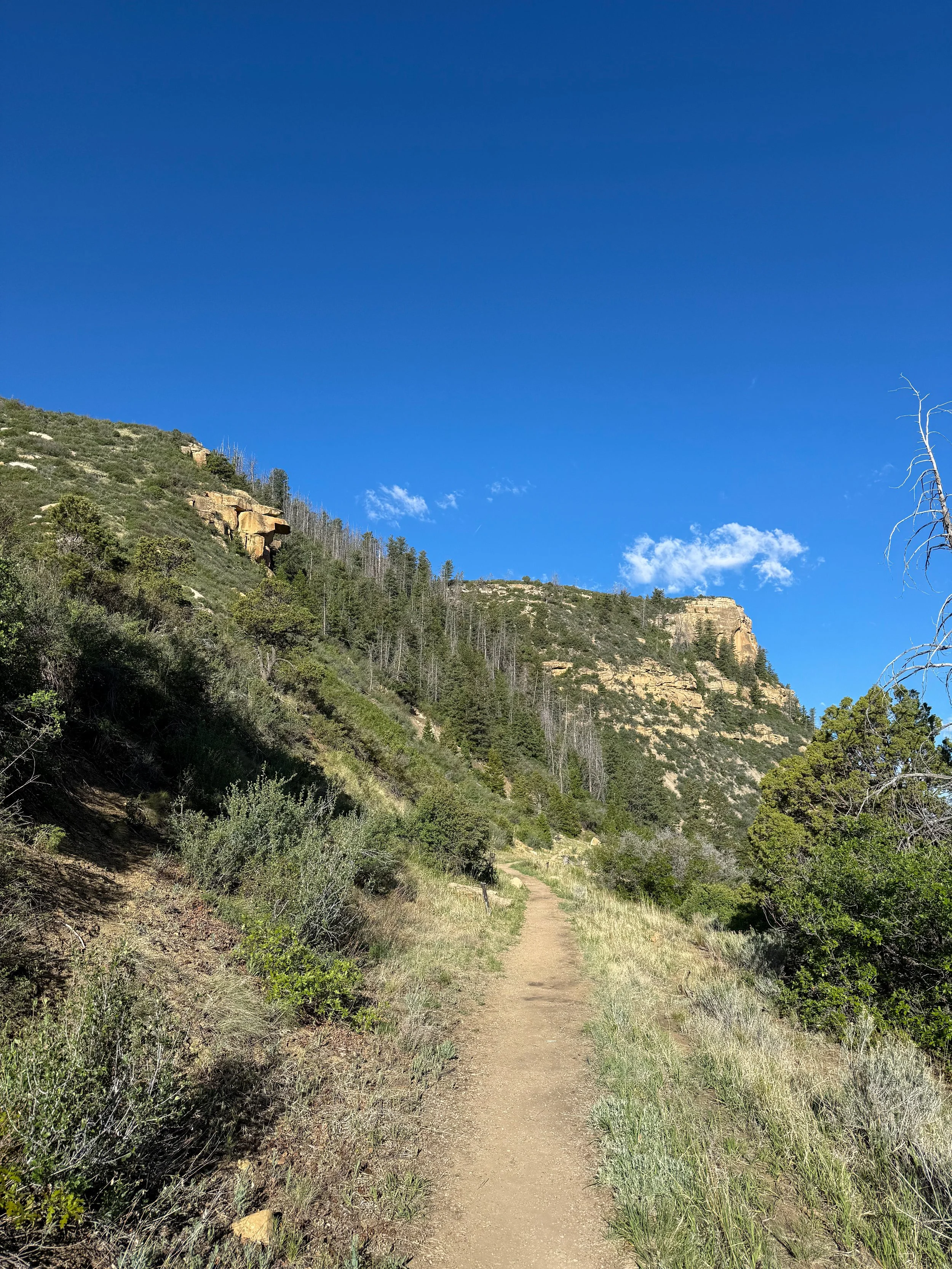
The tall pines ahead are a rare feature these days in the park with so much of it recently burned. I don’t know the history of this area well enough to know, but due to the mix of living and dead trees I suspect this patch also burned but at a lower intensity due to the shade and moisture boost from its Northern aspect. These trees always seem to hold a few unique species for the day. In particular, they seem to be a good spot for Western Tanagers. Today we also heard a singing Hermit Thrush in there.
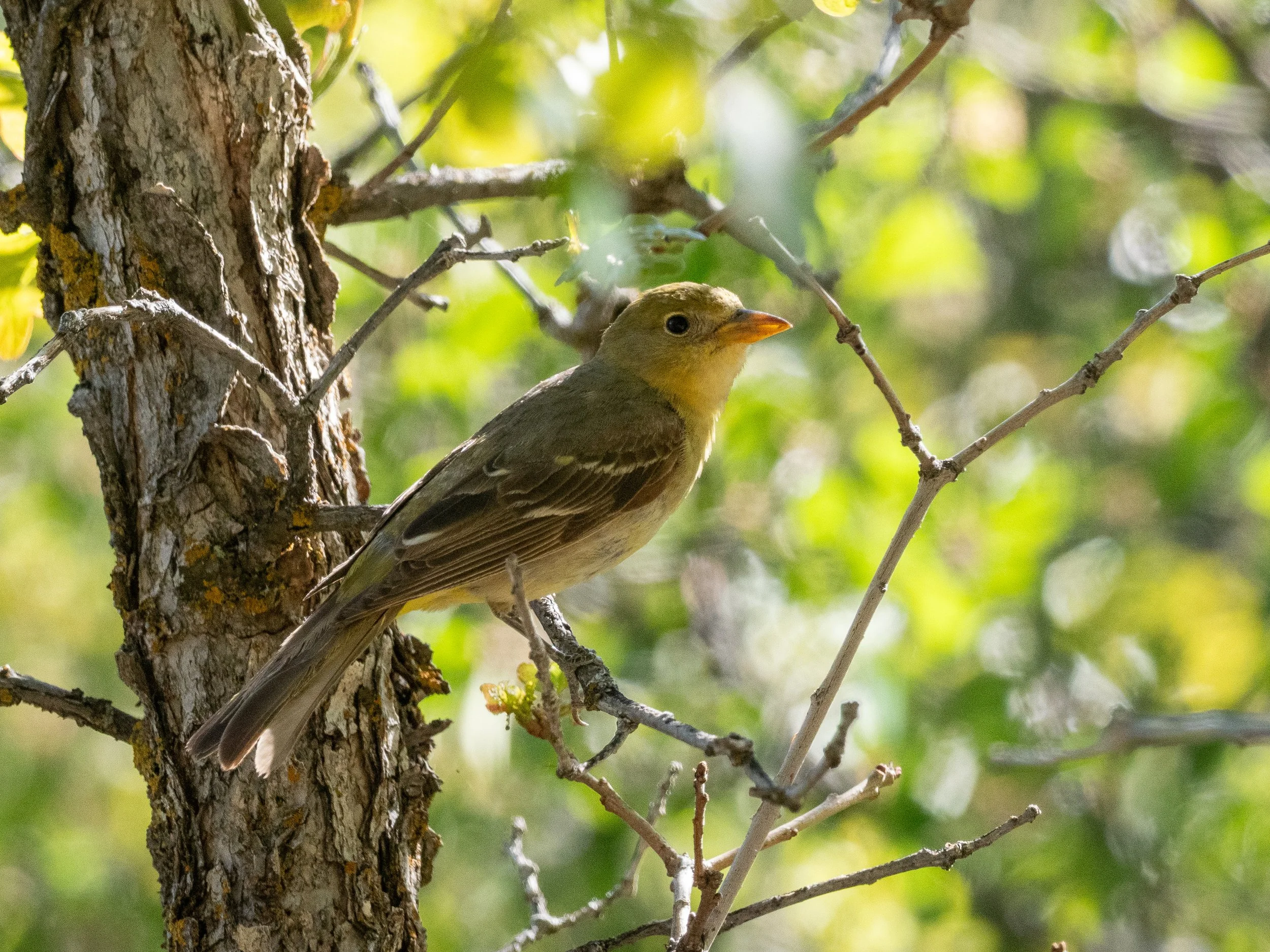
We had a close observation of this female Western Tanager today who came down to the shrubs below the tall pines.
The steep sandstone cliffs of Mesa Verde were formed over millions of years - however, as i was often reminded in my rock climbing days, geologic time includes now! We saw evidence of that today with evidence of multiple large rock slides that were not here last year. The trail generally runs below sandstone cliffs through the softer Mancos Shale, with sandstone rocks and boulders deposited down the hillside.
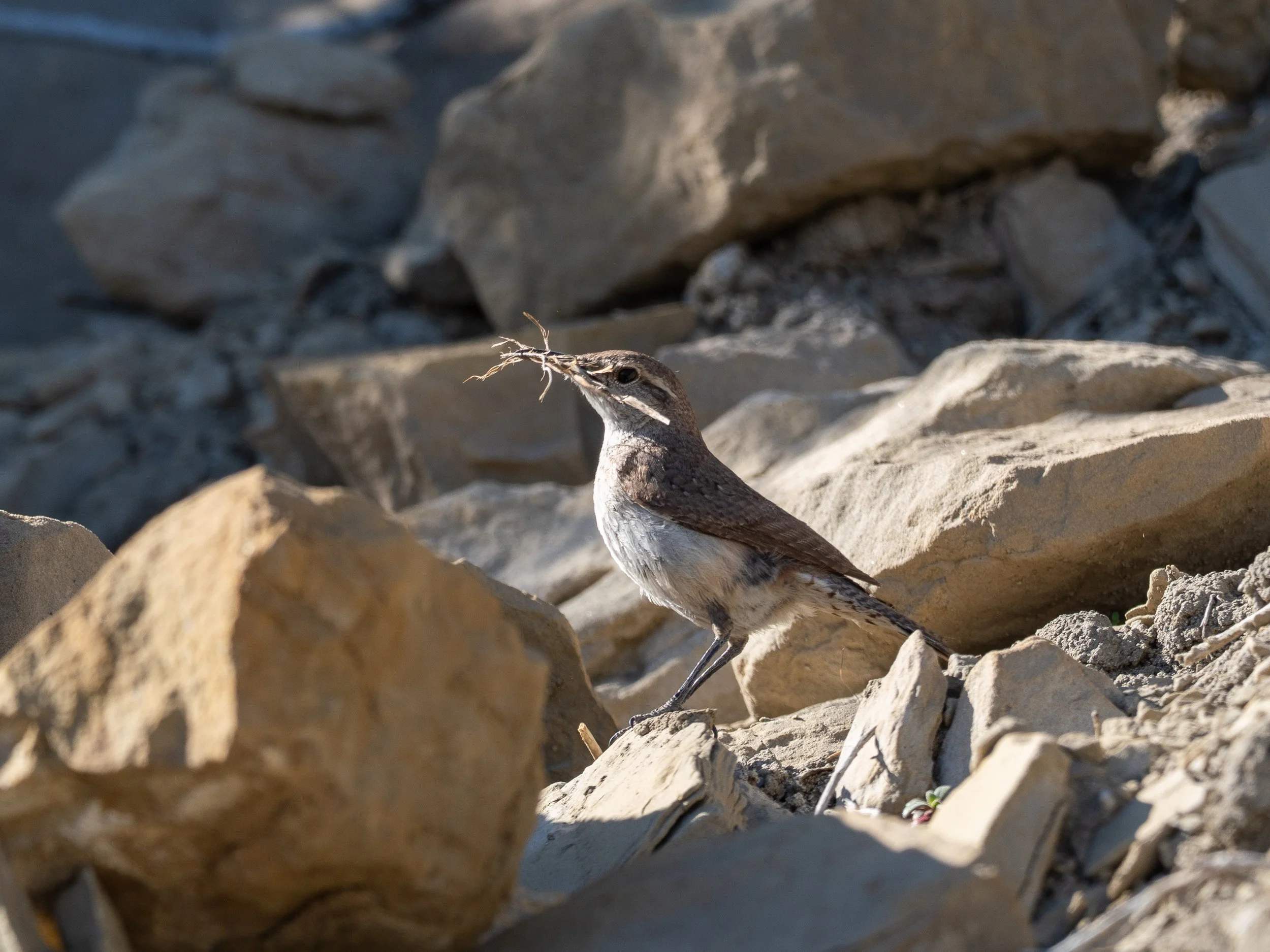
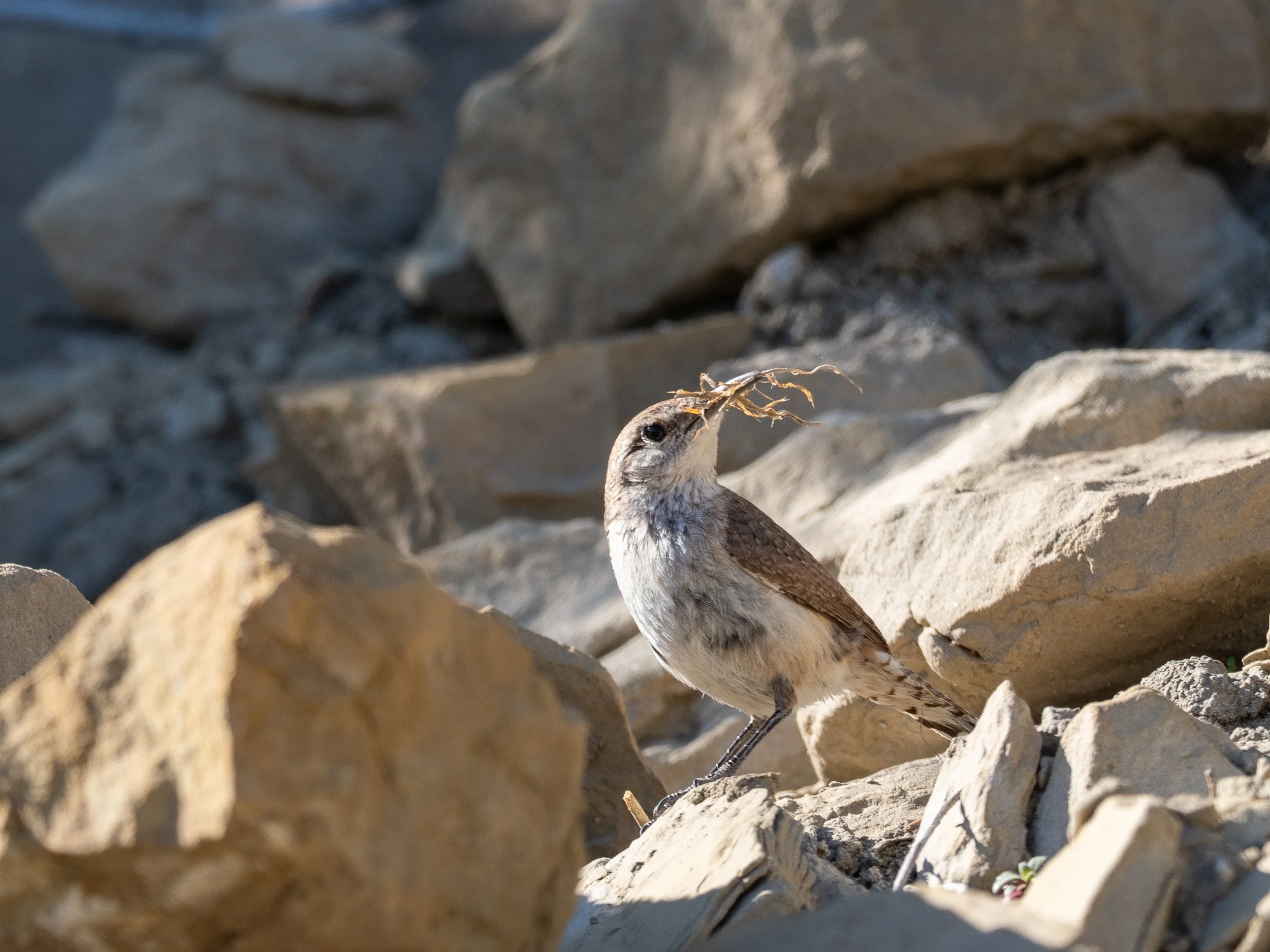
The rock slides are a good habitat for the aptly named Rock Wren. This one was carrying around some nesting material!
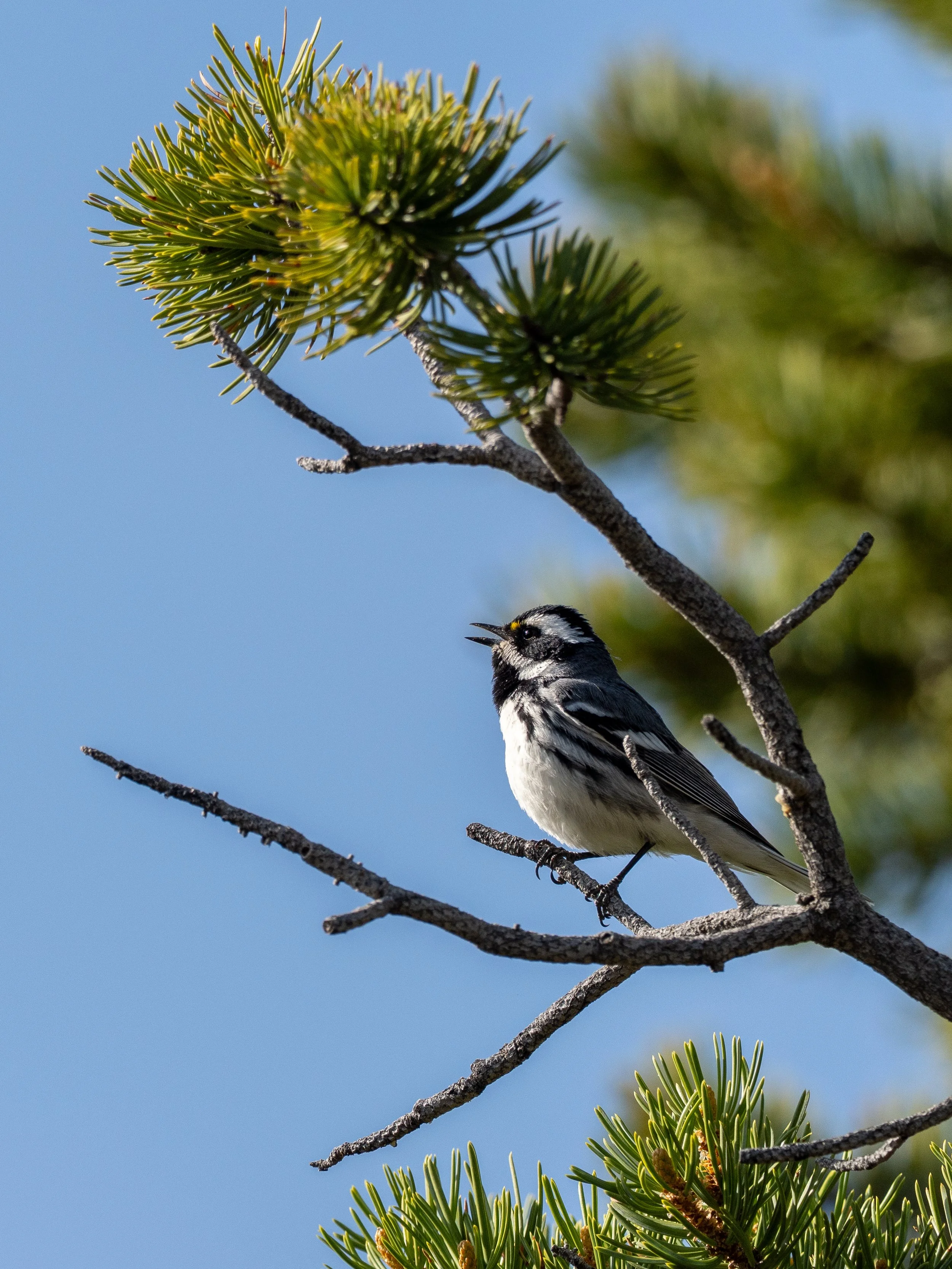
Black-throated Gray Warbler. We also heard the scratchy songs of this warbler, who is also a local breeder. These birds live on juniper and oak hillsides and Mesa Verde is a good place to find them.
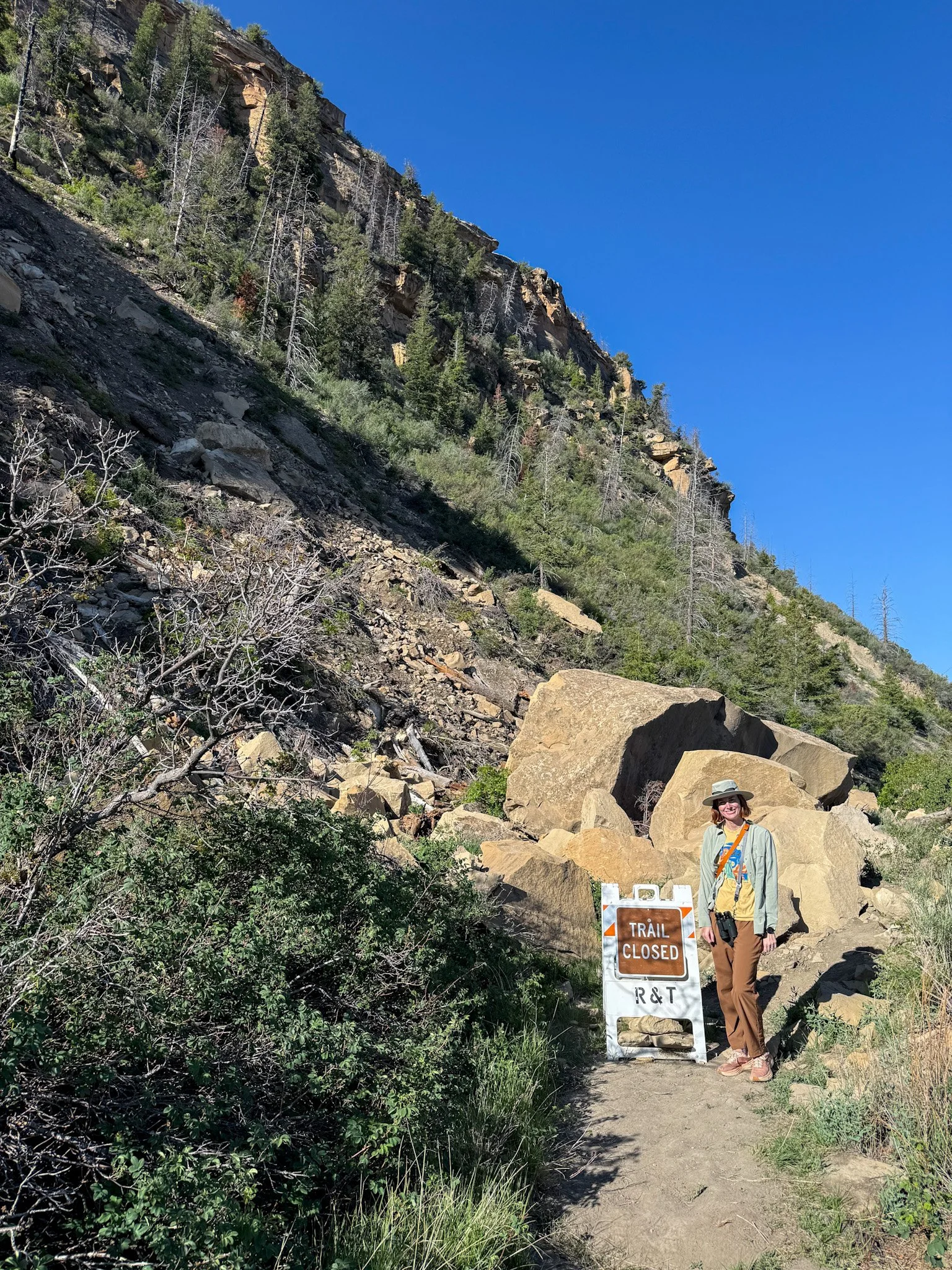
This rockslide buried the trail! I was glad to be able to hike as far as we did as we got about 80% of the way around and traversed through all the major habitat features.
